 ProMapRanker
Best Enterprise Ecommerce Platform in 2026

Key takeaways
- Shopify Plus is the most straightforward enterprise choice for fast-growing direct brands, with a published entry price.
- BigCommerce Enterprise suits catalog-heavy and B2B sellers that want a flat fee model without a revenue share.
- Adobe Commerce and Salesforce Commerce Cloud fit large teams with deep customization or existing enterprise systems.
- Commercetools, VTEX, and Elastic Path suit teams that want composable, API-first commerce and have engineering resources.
- Total cost includes implementation, apps, integrations, and staff time, not just the platform license.
Quick comparison
| Pick | Great for | Pricing starts at | Free tier | |
|---|---|---|---|---|
 Shopify Plus | Fast-growing direct brands | $2,300 per month | No | Visit |
 BigCommerce Enterprise | Catalog and B2B sellers | See website | Free trial | Visit |
 Adobe Commerce | Deep customization and B2B | See website | No | Visit |
 Salesforce Commerce Cloud | Salesforce-centered enterprises | See website | No | Visit |
 commercetools | Composable API-first builds | See website | No | Visit |
 VTEX | Global brands and marketplaces | See website | No | Visit |
 Elastic Path | Composable commerce experiences | See website | No | Visit |
 SAP Commerce Cloud | Large SAP-centered enterprises | See website | No | Visit |
The best enterprise ecommerce platforms
The best enterprise ecommerce platform depends less on a feature checklist and more on how your team sells, integrates, and changes. We compared official pricing pages, product documentation, and public platform comparisons for enterprise ecommerce software that supports high volume, multiple storefronts, B2B selling, and complex integrations.

Shopify Plus is the default shortlist pick for many enterprise brands because it combines hosted reliability with a large app and partner ecosystem. Merchants can run multiple storefronts, B2B pricing, discounts, and checkout customization without managing servers or security patches. For direct brands that need to move fast, that hosted model removes a large amount of operational work.
The limits appear at very high volume and in deeply custom builds. Variable fees can apply above thresholds set in the contract, and some checkout and backend customizations are more constrained than on Adobe Commerce or commercetools. If your team values speed, stability, and a wide app choice over full code control, Shopify Plus is usually the right starting point for comparison.
- Published entry price
- Large app ecosystem
- Fast setup for a hosted platform
- Variable fees above set volume thresholds
- Customization limits compared with open platforms
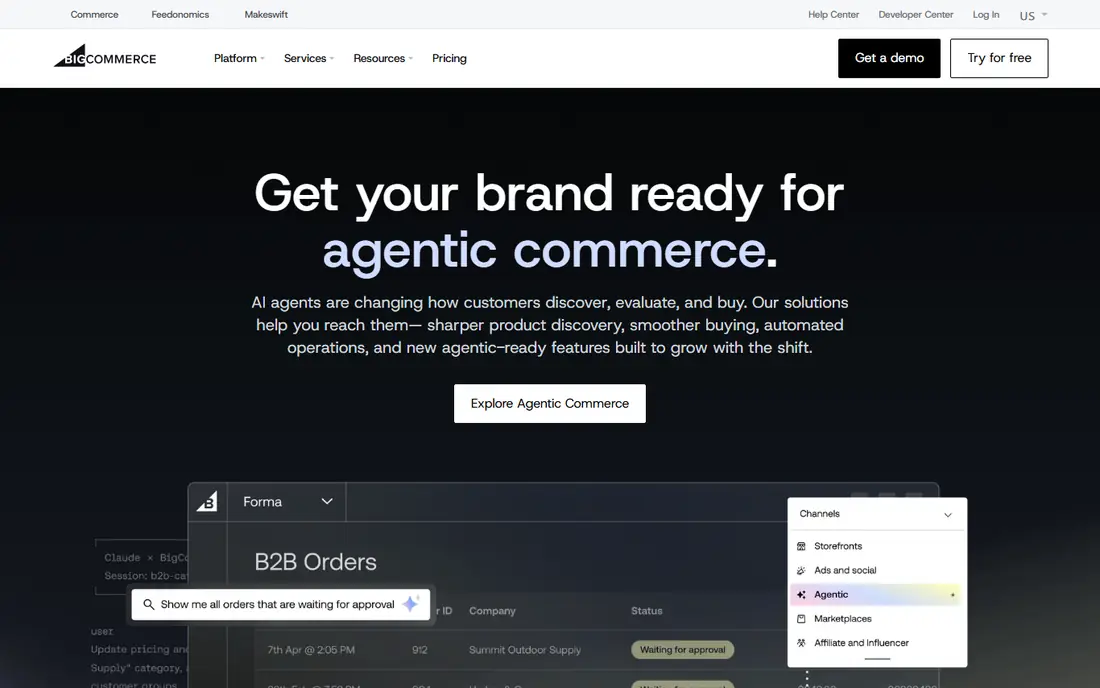
BigCommerce Enterprise, now often described under its Performance tier, suits sellers with large catalogs, complex product data, and B2B needs. It offers B2B pricing, customer groups, quotes, and multi-storefront tools without taking a percentage of sales as a platform fee. That flat-fee shape makes long-term budgeting easier for high-volume sellers.
Enterprise pricing is quote-based, so you will need a sales conversation to get a firm number. The app ecosystem is solid but smaller than Shopify, which can matter for niche tools. If your catalog is large, your B2B rules are complex, and you want predictable platform costs, BigCommerce deserves a detailed demo with your real product data.
- No platform transaction fee on enterprise plans
- Strong catalog and B2B tools
- Headless options
- Quote-based enterprise pricing
- Smaller app ecosystem than Shopify
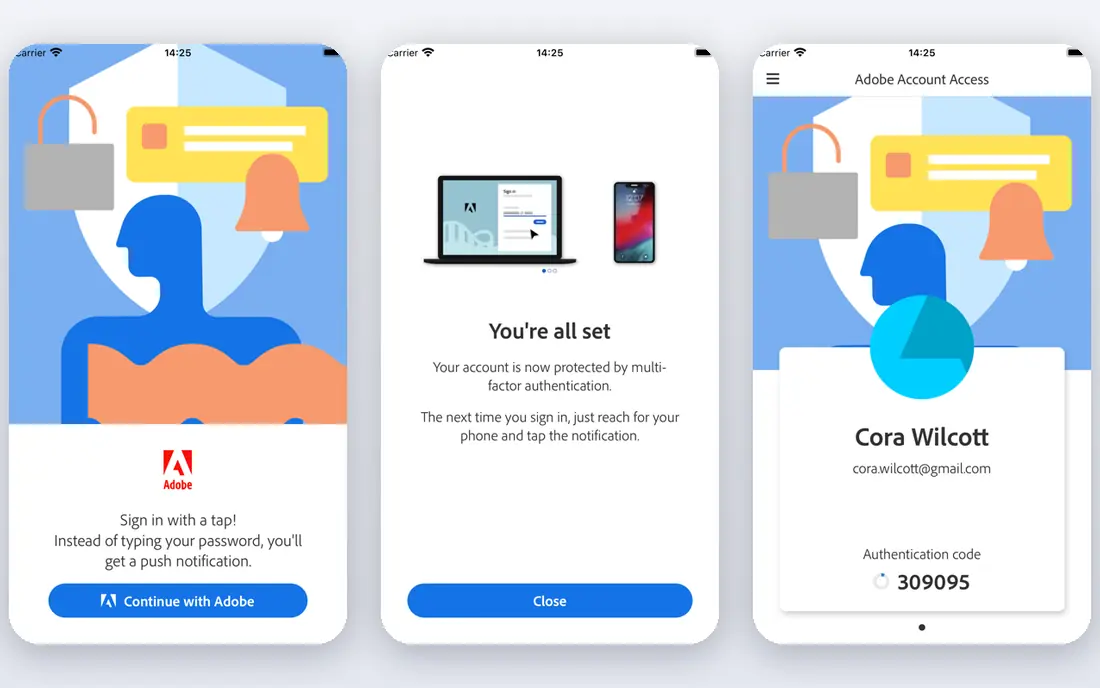
Adobe Commerce, formerly Magento, is built for enterprises that need full control over catalog, pricing, checkout, and integrations. It supports complex B2B workflows, multiple brands, and custom business logic that hosted platforms may not allow. A large agency ecosystem means experienced partners are available in most markets.
That control comes with cost and complexity. Licensing is quote-based, implementation can be long, and ongoing maintenance needs developers or a strong agency. Small teams and fast-moving direct brands often find the total cost hard to justify. For enterprises with in-house engineering and unusual requirements, Adobe Commerce remains a serious option.
- Very deep customization
- Mature B2B features
- Large agency ecosystem
- Quote-based pricing
- Needs a dedicated technical team
Salesforce Commerce Cloud fits companies already running Salesforce for CRM, service, or marketing. When customer data, order data, and service history live in the same ecosystem, personalization and support become easier to connect. It offers separate B2C and B2B editions, with tools for promotions, search, and AI-assisted shopping.
Pricing is the main barrier for companies outside Salesforce. A revenue-share model means platform cost grows with sales, and total annual cost can be high for large merchants. Implementation also needs Salesforce expertise. If your company is already committed to Salesforce, the integration value can justify the cost. If not, a standalone platform is usually simpler.
- Deep Salesforce integration
- Strong personalization and AI tools
- B2B and B2C editions
- Revenue-share pricing model
- Enterprise cost and complexity
Commercetools is a composable commerce platform, which means it provides commerce APIs and lets your team choose front ends, search, payments, and content tools separately. That flexibility suits large enterprises with several engineering teams, global storefronts, and a need to change parts of the stack without replatforming everything. It also supports headless builds where the storefront is fully custom.
The trade-off is effort. Commercetools is not a ready-made store with a theme and a checkout you switch on in a day. Your team must design, build, and maintain the assembled system, which raises staffing costs. If you have that engineering capacity and a long-term composable plan, it is a strong choice. If you need a fast launch, a hosted platform will be quicker.
- API-first and composable design
- Flexible front ends
- Strong for global and multi-brand setups
- Needs engineering resources
- You assemble much of the stack yourself
VTEX suits brands that sell across countries, run marketplaces, or manage many storefronts from one platform. It combines commerce, marketplace, and order management tools, which helps companies that sell both their own products and third-party products. Its modular design also lets teams add capabilities as they grow.
US teams should check partner availability, app coverage, and support hours for their market, since VTEX is more established in Latin America and Europe than in the US. Pricing is quote-based and often includes a share of sales, so model the cost at your expected volume. For global and marketplace-led businesses, VTEX is a credible alternative to the larger US platforms.
- Marketplace and multi-store tools
- Global selling support
- Modular platform
- Quote-based pricing
- Less familiar to some US teams than Shopify or BigCommerce
Elastic Path is another composable option for enterprises that want custom storefronts and flexible product, pricing, and promotion logic. It lets teams build commerce into apps, portals, and custom sites rather than forcing every sale through a standard store template. That is useful for B2B portals, subscriptions, and brands with unusual buying flows.
Like commercetools, Elastic Path requires engineering investment. You will need developers to build and maintain the front end and integrations, and the partner ecosystem is smaller than Shopify. If your buying experience is a competitive advantage and standard templates cannot express it, Elastic Path is worth evaluating. If a standard storefront is enough, a hosted platform will cost less to run.
- Composable APIs
- Flexible catalog and pricing
- Good for custom experiences
- Needs development resources
- Smaller ecosystem than hosted leaders
SAP Commerce Cloud fits large enterprises already running SAP for finance, supply chain, or manufacturing. When product, inventory, pricing, and order data must stay in sync with SAP systems, a native SAP commerce platform reduces integration risk. It supports B2B and B2C selling, multiple brands, and complex global operations.
For companies outside SAP, the case is weaker. Implementation is long, licensing is quote-based, and total cost is high. Teams also need SAP expertise to run it well. If SAP is already central to your business, Commerce Cloud can be the most coherent choice. If not, the integration benefit does not justify the complexity.
- Deep SAP ERP integration
- Strong for complex global operations
- Mature B2B tools
- Quote-based enterprise pricing
- Long implementation and high total cost
How we picked these
We compared official platform pages, pricing disclosures, and enterprise comparisons for commerce software that supports high order volume, B2B selling, multiple storefronts, and system integrations. We included hosted, open, and composable models so readers can see the full range, not just one approach. We did not claim hands-on testing. Where a vendor uses quote-based pricing, we wrote See website rather than presenting an estimate as a published price.
Choosing an enterprise ecommerce platform
Start with your operating model, not a demo. A direct brand with one storefront, a B2B seller with customer-specific pricing, and a marketplace operator have different needs, even if they all sell online. Write down your catalog size, order volume, countries, channels, and the systems that must connect, such as ERP, CRM, warehouse, and payments. That list will rule out several platforms quickly.
Model total cost, not just the license
Platform fees are only part of the bill. Add implementation, theme or front-end build, apps, integrations, hosting where relevant, support, and internal staff time. Revenue-share models grow with sales, while flat models stay steadier at high volume. Ask each vendor for a three-year cost model at your expected volume, including renewal terms, so you can compare like with like.
Test B2B, catalog, and checkout with real data
Demos often use clean sample products. Load a sample of your real catalog, including variants, bundles, and customer-specific prices, and run through search, checkout, and order management. Test B2B quotes, approvals, and tax rules if you sell to businesses. A platform that handles your hardest ten products well is more useful than one that handles a thousand simple products well.
Plan the team that will run it
Hosted platforms need fewer engineers but still need merchandising, content, and support staff. Open and composable platforms need developers, DevOps, and partners for the long term. Be honest about hiring and agency budgets before you choose a platform that assumes a large technical team. The best enterprise ecommerce software is the one your team can run well after launch, not just the one that looks best in a sales demo.
Frequently asked questions
What is the best enterprise ecommerce platform?
Shopify Plus is the best enterprise ecommerce platform for most fast-growing direct brands, while BigCommerce Enterprise suits catalog-heavy and B2B sellers. Adobe Commerce and Salesforce Commerce Cloud fit larger teams with deep customization or existing enterprise systems.
What are the best enterprise ecommerce platforms for B2B?
Adobe Commerce, BigCommerce Enterprise, Salesforce Commerce Cloud B2B, and SAP Commerce Cloud all offer strong B2B tools, including customer-specific pricing, quotes, and approvals. The right pick depends on your ERP, CRM, and catalog complexity, so test B2B workflows with real customer data.
What is the best ecommerce platform for enterprise scale?
Scale means more than traffic. It includes catalog size, order volume, global storefronts, and integrations. Shopify Plus and BigCommerce handle high volume on hosted infrastructure, while commercetools and Elastic Path offer composable scale for teams that want full front-end control.
How much does enterprise ecommerce software cost?
Costs vary widely. Shopify Plus publishes a starting price of $2,300 per month on a longer term, while most other enterprise platforms use quote-based pricing tied to volume, modules, and services. Always model implementation, apps, and staff costs alongside the license.
Should an enterprise choose headless or hosted commerce?
Hosted commerce is faster to launch and easier to run, while headless and composable commerce gives more front-end freedom at higher engineering cost. Choose headless when the buying experience is custom and strategic. Choose hosted when speed, stability, and lower maintenance matter more.
Sources
See where you really rank - block by block
ProMapRanker scans Google Maps across a grid of your service area. Simple monthly plans from $19, white-label on every plan.
Start freeKeep reading
 who has the best home internet service
Who Has the Best Home Internet Service in 2026
Who has the best home internet service in 2026? Compare fiber, cable, and 5G providers on speed, price, data caps, and availability at your address today.
Read → visio alternatives
Best Visio Alternatives in 2026
Compare 9 Visio alternatives for flowcharts, org charts, and network diagrams, with free plans, pricing, and the best pick for teams and solo users in 2026.
Read → top 10 logistics software
Top 10 Logistics Software in 2026
We compared the top 10 logistics software tools for transport, warehousing, visibility and shipping, for shippers, carriers and 3PL teams in 2026 today.
Read →