 ProMapRanker
Best Enterprise Accounting Software in 2026

Key takeaways
- Oracle NetSuite and SAP S/4HANA suit large, multi-entity firms that need one system for accounting, inventory, and operations.
- Microsoft Dynamics 365 Finance fits firms already deep in Microsoft 365, Teams, and Power BI.
- Sage Intacct is a strong pick for mid-sized firms with complex multi-entity accounting and a need for clean consolidation.
- Enterprise pricing is almost always quoted, so budget for implementation and training on top of the license fee.
Quick comparison
| Pick | Great for | Pricing starts at | Free tier | |
|---|---|---|---|---|
 Oracle NetSuite | Multi-entity ERP accounting | See website | No | Visit |
 SAP S/4HANA | Large global enterprises | See website | Free trial | Visit |
 Microsoft Dynamics 365 Finance | Microsoft-first enterprises | $210 per user per month | Free trial | Visit |
 Sage Intacct | Multi-entity mid-market accounting | See website | No | Visit |
 Workday Financial Management | Finance plus workforce planning | See website | No | Visit |
 Acumatica | Mid-market firms wanting flexible pricing | See website | No | Visit |
 QuickBooks Enterprise | Larger small firms outgrowing QuickBooks | $2,210 per year | Free trial | Visit |
 Oracle Fusion Cloud ERP | Large firms standardizing on Oracle | See website | No | Visit |
 Infor CloudSuite | Manufacturing and distribution firms | See website | No | Visit |
The best enterprise accounting software
Enterprise accounting is less about invoicing alone and more about consolidation, controls, audit trails, and reporting across entities, currencies, and countries. The systems below all handle that scope, but they differ in cost, implementation effort, and the kind of firm they suit best. This is not financial advice, and prices vary by modules, users, and contract terms, so treat quoted figures as a starting point for a vendor quote.
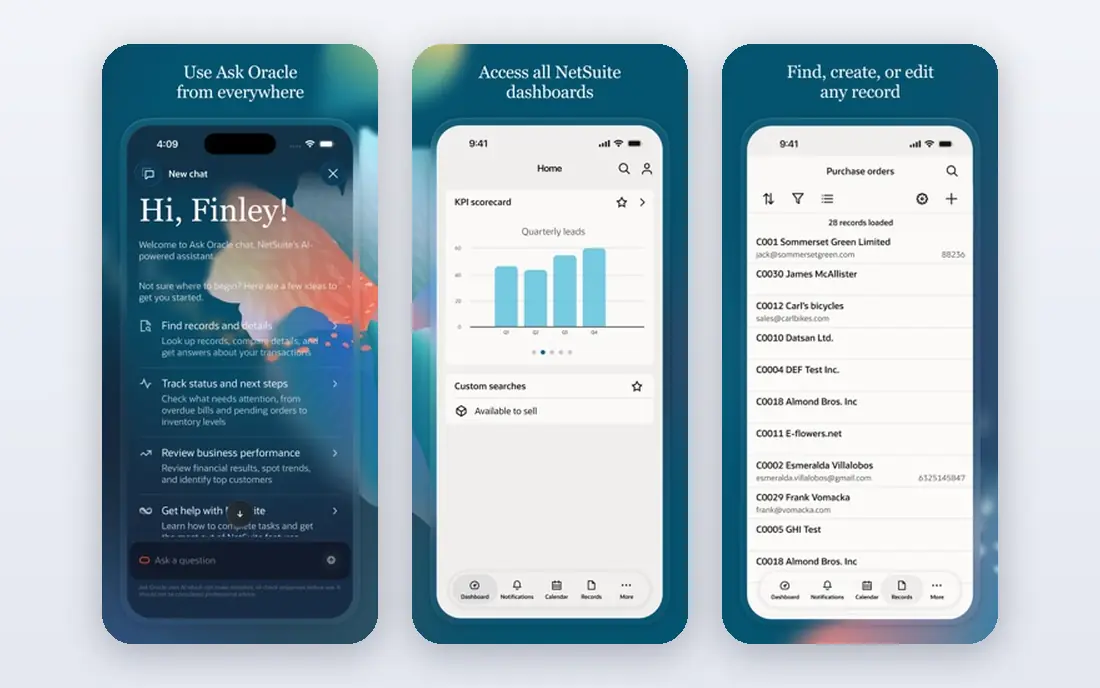
Oracle NetSuite is a common first shortlist pick for growing firms that have outgrown basic accounting software. It combines core accounting with billing, revenue management, inventory, and reporting in one cloud system, so finance teams do not need to stitch together several tools. The multi-entity features help firms with subsidiaries in different countries, since consolidation and currency handling sit inside the same system.
The catch is cost and effort. NetSuite pricing is quoted based on modules and users, and implementation often costs as much as a year of licenses. Firms that need heavy customization should budget for partner time and for training. For a mid-sized firm that wants a single cloud ERP and can fund a proper rollout, NetSuite is a solid, well-supported choice.
- One cloud system for accounting, inventory, and billing
- Strong multi-entity and multi-currency handling
- Large partner network for implementation
- Pricing is quoted, not published in full
- Implementation can take months and needs expert help
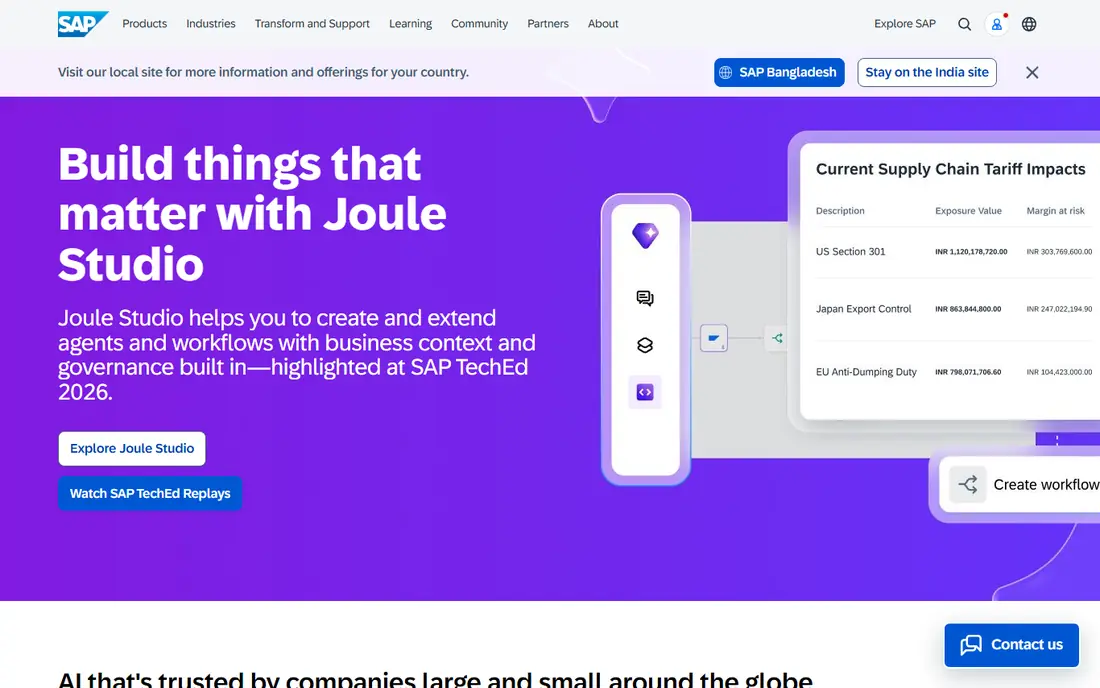
SAP S/4HANA is the heavyweight pick for large global firms. It handles financial accounting, close and consolidation, treasury, and risk in one platform, with industry templates for many sectors. The in-memory design gives finance teams faster reporting, and the system is built for firms operating across many countries, currencies, and tax rules. For a firm standardizing operations worldwide, that depth is hard to match.
The trade-off is scale. S/4HANA projects are large, costly, and slow, and they need experienced consultants. Small and mid-sized firms will find it too much system for their needs, and the cloud public edition still carries enterprise pricing. Pick SAP when the firm is large, complex, and ready to invest in a multi-year rollout, not when a simpler accounting system would do.
- Deep industry templates for manufacturing and retail
- Real-time reporting from an in-memory database
- Strong global tax and compliance coverage
- High total cost for large rollouts
- Long implementation timelines for complex firms
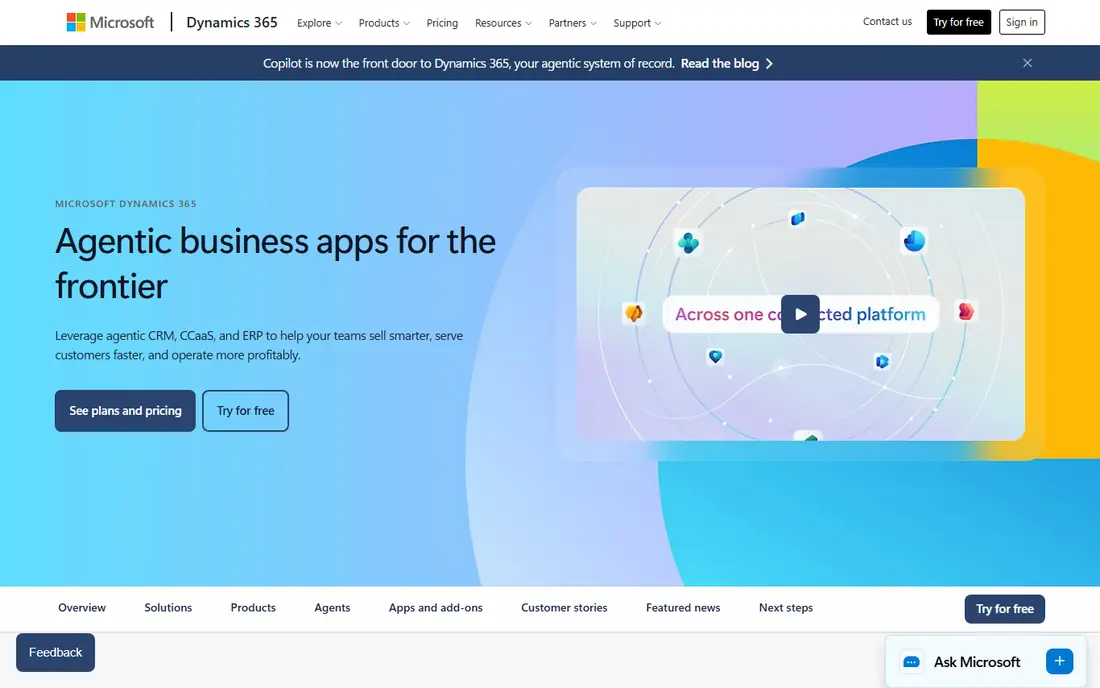
Microsoft Dynamics 365 Finance suits firms that already run on Microsoft tools. Finance staff can work in a familiar interface, pull reports into Power BI, and share data through Teams and Excel without a patchwork of integrations. The system covers multi-entity accounting, financial planning, cash management, and tax, which makes it a good fit for enterprises that want finance inside the Microsoft stack.
The price is published at about $210 per user per month when paid yearly, but total cost depends on modules and user counts, and larger firms will pay far more in total. Implementation also needs care, especially for firms with complex inventory or manufacturing needs. If your firm is already committed to Microsoft, Dynamics 365 Finance is often the lowest-friction enterprise choice.
- Deep links to Microsoft 365, Teams, and Power BI
- Multi-entity accounting with planning and tax tools
- Familiar interface for Microsoft users
- Pricing rises quickly with many users
- Implementation still needs partner expertise for complex firms
Sage Intacct is a finance-first system that shines for mid-sized firms with many entities. Its dimensional reporting lets finance teams slice results by department, location, or project without a tangle of spreadsheets, and consolidation across entities is a core strength rather than an add-on. For firms in services, nonprofits, and healthcare, that focus often matters more than full manufacturing ERP features.
The limit is breadth. Sage Intacct is excellent at accounting, but firms that need deep inventory, production, or supply chain tools may need other systems alongside it. Pricing is quoted, so you will need a sales conversation to get a real figure. If accounting quality and consolidation are the main drivers, Sage Intacct deserves a place on the shortlist.
- Strong multi-entity consolidation and dimensional reporting
- Cloud-native design for finance teams
- Good audit and compliance controls
- Pricing is quoted, not published
- Less broad as a full ERP than NetSuite or SAP
Workday Financial Management appeals to large firms that want finance and people data together. A services firm can plan headcount, payroll costs, and project revenue in the same system that handles core accounting and consolidation. That unified view helps finance and HR leaders work from the same numbers, and the cloud design suits firms with offices in many countries.
The drawback is scope and price. Workday is quoted, and costs are high, and it does not replace a manufacturing ERP for firms with complex production needs. Implementation also takes months. Pick Workday when the firm is services-led, large, and values a single view of finance and workforce, rather than when factory operations are the main concern.
- Unified finance and workforce data in one cloud system
- Strong global consolidation and reporting
- Good fit for services-led firms
- Pricing is quoted and often high
- Less suited to heavy manufacturing ERP needs
Acumatica is a mid-market cloud ERP that prices differently from most rivals. Instead of charging per user, it charges based on resources consumed, which can help firms with many occasional users, such as field staff or seasonal workers. The system covers core accounting, inventory, distribution, and project accounting, so it works for firms that need more than pure finance but are not ready for SAP-scale cost.
The catch is that quoted pricing makes comparison hard, and the partner network varies by region. Firms should get a clear quote for their transaction volume and check local support before committing. For a growing mid-market firm that dislikes per-user pricing, Acumatica is a practical alternative to the larger ERP names.
- Pricing based on resources used, not per user
- Cloud system covering finance, inventory, and projects
- Flexible workflows and customization
- Pricing is quoted and varies by edition
- Smaller partner network than NetSuite or SAP in some regions
QuickBooks Enterprise
Great for: Larger small firms outgrowing QuickBooks
QuickBooks Enterprise is the step up for firms that have outgrown standard QuickBooks but are not ready for a full ERP rollout. It adds advanced inventory, pricing controls, and reporting across companies, while keeping the interface that many small finance teams already know. The starting price of about $2,210 per year is far lower than NetSuite or SAP, which makes it a realistic bridge for larger small firms.
The limit is scale. QuickBooks Enterprise is not built for a large multinational with complex consolidation needs, and firms with heavy manufacturing or global operations will outgrow it. It also needs a hosting plan for smooth remote access. Use it as a strong mid-step, with a plan to move to a full ERP if the firm keeps growing fast.
- Familiar QuickBooks interface for existing users
- Advanced inventory and multi-company reporting
- Lower entry cost than full ERP systems
- Not a true enterprise ERP for very large firms
- Desktop roots mean hosting needs care for remote teams
Oracle Fusion Cloud ERP is Oracle's large-enterprise cloud suite, distinct from NetSuite in scale and target. It covers financial management, procurement, project management, and risk in one cloud platform, with strong controls for firms that face strict audit and regulatory demands. Firms already using Oracle databases or other Oracle cloud tools gain from the shared stack.
The drawback is the same as with SAP: cost, time, and complexity. Fusion projects are enterprise projects, with partner help and change management. Mid-sized firms should look at NetSuite or Sage Intacct instead. For a large firm standardizing on Oracle, Fusion is the natural enterprise pick.
- Full suite for finance, procurement, and projects
- Strong controls and global compliance
- Deep integration with other Oracle cloud tools
- Quoted pricing and long implementations
- Overkill for mid-sized firms
Infor CloudSuite suits firms where making and moving goods is the core work. Its industry editions add manufacturing, distribution, and supply chain depth on top of core accounting, so finance teams can see production costs and inventory in the same system as the ledger. That industry focus can shorten implementation compared with a generic ERP that needs heavy customization for a factory.
The limit is fit. A pure services or nonprofit firm may find Infor's manufacturing depth unnecessary, and pricing is quoted. Firms should check which CloudSuite edition matches their industry, since Infor sells several. For a manufacturer or distributor moving to the cloud, Infor is a strong enterprise contender.
- Industry-specific tools for manufacturing and distribution
- Cloud ERP with finance, supply chain, and operations
- Strong inventory and production planning
- Quoted pricing with implementation costs
- Industry focus means less fit for pure services firms
How we picked these
We compared vendor feature pages, pricing notes, and independent ERP guides, and we favored systems that are live in October 2026 with clear enterprise accounting scope. We looked for multi-entity handling, consolidation, audit controls, and reporting depth, and we included a range from mid-market to large global systems. We did not claim hands-on testing, and we based our view on public vendor pages and third-party comparisons. Prices vary by modules and users, so we used See website where vendors do not publish a full price.
How to choose without overspending
Start with the firm you actually are, not the firm you hope to be in five years. Count entities, currencies, and users who need full access, and list the must-have features, such as consolidation, project accounting, or inventory. A system that covers those needs well will beat a larger system that covers everything poorly for your team. Ask each vendor for a total cost quote that includes licenses, implementation, training, and first-year support.
Next, run a short pilot with real data. Give finance staff a month-end close, a consolidation, and a board report to produce in each finalist system. That test reveals interface friction, reporting gaps, and training needs far better than a sales demo. Check data migration costs too, since moving years of history from an old system can add weeks to a project.
Finally, plan for change management. Enterprise accounting changes how teams work, and a system that staff avoid will fail no matter how good its feature list looks. Budget time for training, name an internal owner, and set a go-live date that avoids year-end close. This is not financial advice, and a vendor quote with implementation scope is the only reliable price for your firm.
Frequently asked questions
What is the best enterprise accounting software?
There is no single best system for every firm. Oracle NetSuite and SAP S/4HANA suit large, complex firms, Microsoft Dynamics 365 Finance suits Microsoft-first firms, and Sage Intacct suits mid-sized firms focused on multi-entity accounting. The best pick depends on size, industry, and existing systems.
What is the top accounting software for enterprises?
Top enterprise accounting software usually means a full ERP with accounting at its core, such as NetSuite, SAP S/4HANA, Dynamics 365 Finance, Workday, or Oracle Fusion. Pure small-business accounting tools do not offer the same consolidation, controls, and multi-currency depth.
How much does enterprise accounting software cost?
Costs vary widely and are often quoted. Published starting points include about $210 per user per month for Dynamics 365 Finance and about $2,210 per year for QuickBooks Enterprise, but NetSuite, SAP, Sage Intacct, and Workday require a quote. Add implementation, training, and support to the license fee for a true total.
Is QuickBooks Enterprise enough for a large firm?
QuickBooks Enterprise works for larger small firms, but it is not a full enterprise ERP for a large multinational. Firms with many entities, complex global tax, or heavy manufacturing needs will usually need NetSuite, SAP, Dynamics 365, or a similar ERP system.
Should we pick a cloud or on-premise system?
Most firms now pick cloud systems for faster updates, remote access, and lower hardware costs. On-premise systems still suit firms with strict data rules or heavy customization needs, but they carry higher IT and maintenance costs. Check data residency and security needs before deciding.
Sources
See where you really rank - block by block
ProMapRanker scans Google Maps across a grid of your service area. Simple monthly plans from $19, white-label on every plan.
Start freeKeep reading
 zoho inventory alternatives
6 Alternatives to Zoho Inventory, Compared on Price and Fit
Zoho Inventory alternatives: 6 tools compared on price, free plans and fit. Katana leads the list for manufacturers. Fit and flaws are laid out for each entry.
Read → zoho crm alternatives
Best Zoho CRM Alternatives (2026)
Need Zoho CRM alternatives? We compare 7 tools on cost, free access and who each suits. Every pick gets a straight assessment. Built for quick decisions.
Read → zelle alternatives
Best Zelle Alternatives in 2026
Compare the best Zelle alternatives for sending money to friends, paying sellers and moving funds abroad, with honest notes on fees, speed and safety in 2026.
Read →