 ProMapRanker
Best Energy Management Software in 2026
Key takeaways
- EnergyCAP is the strongest pick for utility bill management, benchmarking, and cost tracking across many sites.
- Schneider EcoStruxure suits facilities that need live meter and equipment data in one building view.
- IBM Envizi and Honeywell Forge fit large portfolios that need carbon, compliance, and sustainability reporting together.
- ENERGY STAR Portfolio Manager is free and remains the best starting point for benchmarking buildings.
- Most enterprise tools are quote-only, so ask for pricing by building count, meter count, and reporting modules.
Quick comparison
| Pick | Great for | Pricing starts at | Free tier | |
|---|---|---|---|---|
 EnergyCAP | Utility bills and benchmarking | See website | No | Visit |
 Schneider EcoStruxure | Live building energy data | See website | No | Visit |
 Atrius Energy | Multi-site energy analytics | See website | No | Visit |
 Spacewell Energy | Portfolio optimization and compliance | See website | No | Visit |
 IBM Envizi | Carbon and sustainability reporting | See website | No | Visit |
 Honeywell Forge | Large building portfolios | See website | No | Visit |
 Johnson Controls OpenBlue | Connected building operations | See website | No | Visit |
 Lucid BuildingOS | Building performance dashboards | See website | No | Visit |
 ENERGY STAR Portfolio Manager | Free building benchmarking | Free | Yes | Visit |
The best energy management software
We compared official product pages and documentation for tools that collect utility, meter, and building data and turn it into cost, usage, and emissions insight. The list covers bill-focused tools, live building platforms, and free benchmarking, so readers can match the tool to portfolio size.
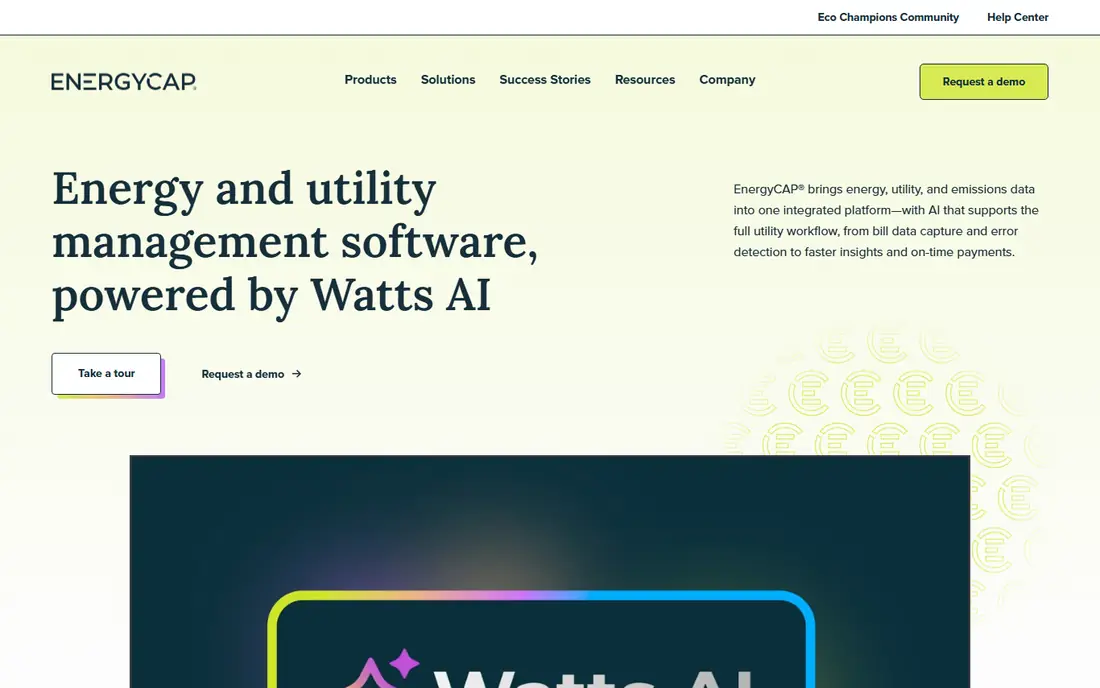
EnergyCAP replaces spreadsheets for utility data. Bills flow into one system, where the software checks for errors, tracks usage and cost, and benchmarks buildings against past performance. Finance, energy, and sustainability teams can work from the same numbers, which helps when budgets and savings claims need to match.
The platform rewards careful setup, especially when importing years of bills across many meters. Pricing is custom, so smaller portfolios should ask for a clear quote by site and meter count. For organizations where bill accuracy and benchmarking drive decisions, EnergyCAP is a proven choice.
- Strong utility bill capture and audit tools
- Benchmarking and budget tracking
- ENERGY STAR integration
- Quote-based pricing
- Setup takes effort for large bill histories
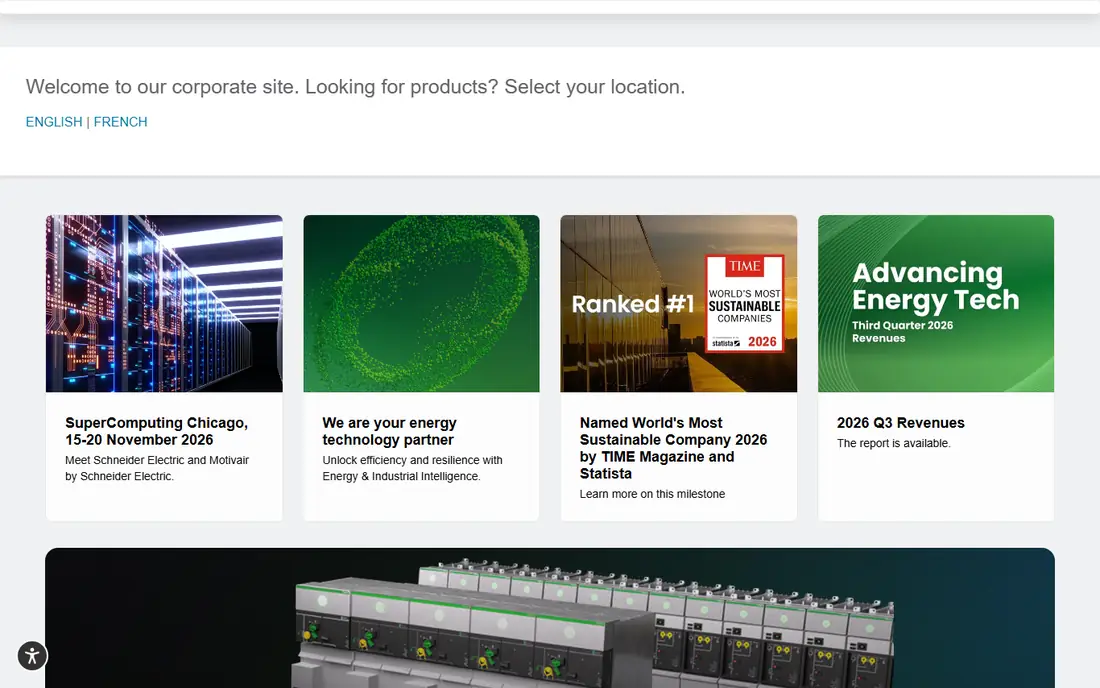
Schneider EcoStruxure Energy Hub gives facility teams a live view of energy use across buildings, floors, and assets. Data from meters, sensors, and electrical equipment flows into dashboards, and alerts flag usage outside expected ranges. That live view helps teams act during a problem, rather than learning about it from next month's bill.
EcoStruxure is a broad platform, not a single app, so scoping a project takes care. Hardware, software modules, and services can all affect the quote. For complex facilities with strong sustainability or compliance goals, that depth is a strength, not a drawback.
- Connects meters, sensors, and electrical equipment
- Live dashboards and alerts
- Broad Schneider hardware support
- Broad platform can be complex to scope
- Pricing depends on hardware and modules

Atrius Energy, from Acuity Brands, centralizes energy data across buildings and sites. It normalizes data for weather and occupancy, which makes fair comparisons between buildings possible, and it supports measurement and verification methods for energy projects. Dashboards and alerts help teams spot waste and track savings over time.
Single-site users may find simpler tools enough, since Atrius earns its keep across a portfolio. Pricing is custom. For universities, chains, and public portfolios managing many buildings, its normalization and verification features stand out.
- Automated data collection across sites
- Weather and occupancy normalization
- Project verification support
- Quote-based pricing
- Best value needs a multi-site portfolio
Spacewell Energy monitors energy use across a whole portfolio and uses anomaly detection to flag inefficiencies. Teams can benchmark sites, automate audits, and produce reports for sustainability and carbon disclosure. A large integration set helps pull data from meters and building systems into one view.
As with other enterprise platforms, pricing is custom and setup needs integration effort. Organizations with a large portfolio and formal reporting duties will get the most from it. Smaller teams should weigh whether they need that reporting depth before committing.
- Real-time portfolio monitoring
- Anomaly detection
- Compliance reporting for common standards
- Quote-based pricing
- Implementation needs data integration work
IBM Envizi focuses on the data behind sustainability claims. It gathers energy, emissions, and related data, applies calculation methods, and produces reports that auditors and stakeholders can check. That structure helps large companies that must report carbon data consistently across regions and business units.
Envizi is an enterprise purchase with enterprise setup needs. Teams must govern data sources and reporting rules carefully, or reports will reflect messy inputs. For large firms facing formal disclosure duties, it is one of the most complete options available.
- Strong emissions and sustainability data management
- Audit-ready reporting
- Broad data capture options
- Enterprise pricing and scope
- Needs dedicated data governance
Honeywell Forge brings building data together for owners and operators managing many properties. Energy analytics sit alongside operational insight, so teams can link high usage to equipment or maintenance issues rather than treating energy as a separate spreadsheet. That link helps prioritize fixes that save both energy and maintenance cost.
Pricing is custom, and integration is smoothest where Honeywell systems are already in place. Other building systems can connect, but buyers should confirm integration scope early. For large portfolios, Forge offers a practical operations view of energy.
- Building performance analytics at portfolio scale
- Ties energy to operations and maintenance
- Honeywell system integration
- Quote-based pricing
- Strongest with Honeywell building systems
OpenBlue connects building systems so energy, indoor conditions, and equipment health can be viewed together. Facility teams can track performance, spot failing equipment, and manage energy alongside comfort and safety goals. A large service network supports deployment across many sites.
The platform covers a lot of ground, so buyers should define which modules they need and get a quote for that scope only. Integration is strongest with Johnson Controls equipment, though other systems can be connected. For owners standardizing on connected buildings, OpenBlue is a serious contender.
- Connected building platform
- Energy, comfort, and equipment insight in one view
- Large service network
- Broad platform scope can complicate quotes
- Best with Johnson Controls equipment
Lucid BuildingOS gives building teams clear, shareable views of energy and building performance. Dashboards help managers compare sites, track trends, and report results to tenants or leadership without building custom reports each month. That clarity suits teams that need to communicate performance, not just analyze it.
It is less focused on detailed utility bill auditing than EnergyCAP, so bill-heavy teams may pair the two jobs or choose accordingly. Pricing is custom. For portfolio teams that live in dashboards and stakeholder reports, BuildingOS is easy to use and present.
- Clear dashboards for building teams
- Benchmarking across sites
- Useful for tenant and stakeholder reporting
- Quote-based pricing
- Less depth on utility bill auditing than EnergyCAP
ENERGY STAR Portfolio Manager is the free starting point every US building owner should know. It benchmarks buildings, tracks energy and water use, and gives eligible buildings an ENERGY STAR score that tenants and buyers recognize. For a small portfolio, it may be all the benchmarking you need.
It does not replace live monitoring or detailed bill auditing, and large portfolios may need automated data feeds from another tool. Still, even teams that buy an enterprise platform often keep Portfolio Manager for standard benchmarking. Start here, then add a paid tool when its limits slow you down.
- Free
- Widely used US benchmarking standard
- ENERGY STAR scores for eligible buildings
- Not a full bill management or live monitoring platform
- Manual data work for large portfolios
How we picked these
We checked vendor product pages and documentation for tools live in October 2026 that manage energy, utility, or building data as a core job. We kept a mix of bill management, live building platforms, carbon reporting, and free benchmarking, and we excluded generic analytics tools without energy-specific features. Where vendors do not publish prices, we wrote See website rather than repeating reseller figures that conflict.
What to check before you choose
Start with the decision you need to make. Bill auditing needs bill capture and error checks, live operations need meter data and alerts, and carbon reporting needs auditable emissions calculations. A tool strong in one area may be weak in another, so match the tool to your main job first.
Next, check data sources and effort. Ask which meters, utilities, and building systems connect automatically, and how much manual entry remains. Confirm pricing by building count, meter count, and reporting modules, and ask whether data feeds, benchmarking, and emissions modules are included or extra. Finally, test reporting with your own data, since a dashboard that looks good in a demo may not answer your finance or compliance questions.
Frequently asked questions
What is the best energy management software for a small business?
Start with ENERGY STAR Portfolio Manager for free benchmarking, then consider EnergyCAP if utility bills and budgets become hard to manage in spreadsheets. Small portfolios rarely need a full live building platform at first, and free benchmarking helps you learn where your costs sit.
What is the best software for energy management across many buildings?
EnergyCAP, Atrius Energy, Spacewell Energy, and Honeywell Forge all suit multi-site portfolios, with different strengths in bills, analytics, compliance, and operations. Shortlist by whether bills, live data, or reporting drives your work, then compare quotes at your site and meter count.
Do these tools track carbon emissions?
Yes, several do, with IBM Envizi offering the deepest carbon and sustainability reporting here. EnergyCAP, Spacewell, and Atrius also support emissions tracking in various forms. Confirm which emissions scopes and calculation methods each plan supports before you rely on it for disclosure.
Can energy software connect to my existing meters?
Often yes, but integration scope varies. Schneider EcoStruxure, Honeywell Forge, and Johnson Controls OpenBlue connect well to their own hardware and many third-party meters. Ask each vendor to confirm your meter types, data frequency, and whether integration is included in the quote.
How much does energy management software cost?
Most enterprise tools are quote-only, with price driven by buildings, meters, users, and modules. Free benchmarking through Portfolio Manager costs nothing. Always request a quote that separates software, data feeds, implementation, and support so you can compare totals fairly.
Will energy software actually save money?
It can, by finding billing errors, waste, and failing equipment, and by tracking whether projects deliver promised savings. Savings depend on acting on the data, not just viewing dashboards. Set a baseline, assign owners for alerts, and review results monthly to turn insight into lower bills.
Sources
See where you really rank - block by block
ProMapRanker scans Google Maps across a grid of your service area. Simple monthly plans from $19, white-label on every plan.
Start freeKeep reading
 zoro.to alternatives
Best Zoro.to Alternatives in 2026
We compare the best zoro.to alternatives in 2026, listing only legal licensed anime streaming services, from Crunchyroll to free options for fans today.
Read → zip alternatives
Best Zip Alternatives in 2026
We compare the best zip alternatives for buy now, pay later in 2026, covering pay-in-4 plans, fees, spending limits, and credit reporting options today.
Read → yesware alternatives
Best Yesware Alternatives in 2026
Compare the best yesware alternatives for sales email tracking, templates, and sequences, with current pricing and honest tradeoffs for small sales teams.
Read →