 ProMapRanker
Best Endpoint Detection and Response Tools in 2026


Cloud-native detection with managed options · Pricing starts at: See website
Key takeaways
- CrowdStrike Falcon, SentinelOne Singularity and Microsoft Defender for Endpoint are the three usual starting points, and your existing stack often decides among them.
- SentinelOne stands out for autonomous response and ransomware rollback, while Defender is the lowest added cost for teams already on Microsoft 365 E5.
- Most enterprise EDR pricing is quote-based or varies by tier, so compare the same tier across vendors and ask about managed detection add-ons separately.
- Small teams without a security staff should favor a managed option or a tool with strong automated response, because alerts alone do not stop an incident at 3 a.m.
Quick comparison
| Pick | Great for | Pricing starts at | Free tier | |
|---|---|---|---|---|
| CrowdStrike Falcon | Cloud-native detection with managed options | See website | Free trial | Visit |
 SentinelOne Singularity | Autonomous response and ransomware rollback | See website | No | Visit |
 Microsoft Defender for Endpoint | Microsoft 365 environments | See website | Free trial | Visit |
 Palo Alto Cortex XDR | Palo Alto network customers | See website | Free trial | Visit |
 Sophos Intercept X | Small and midsize teams on the Sophos stack | See website | Free trial | Visit |
 Trend Micro Vision One | Broad multi-layer protection | See website | Free trial | Visit |
 Bitdefender GravityZone | Cost-conscious multi-layer protection | See website | Free trial | Visit |
 VMware Carbon Black | Large enterprises with compliance needs | See website | No | Visit |
 ESET PROTECT | Lightweight protection for mixed fleets | See website | Free trial | Visit |
 Huntress | Small teams that want managed detection | See website | Free trial | Visit |
The best endpoint detection and response tools
We compared detection models, response automation, platform coverage, managed options and pricing transparency across official product pages and 2026 comparisons. The best endpoint detection and response tools for your team depend on team size, existing stack and whether you have analysts to chase alerts.
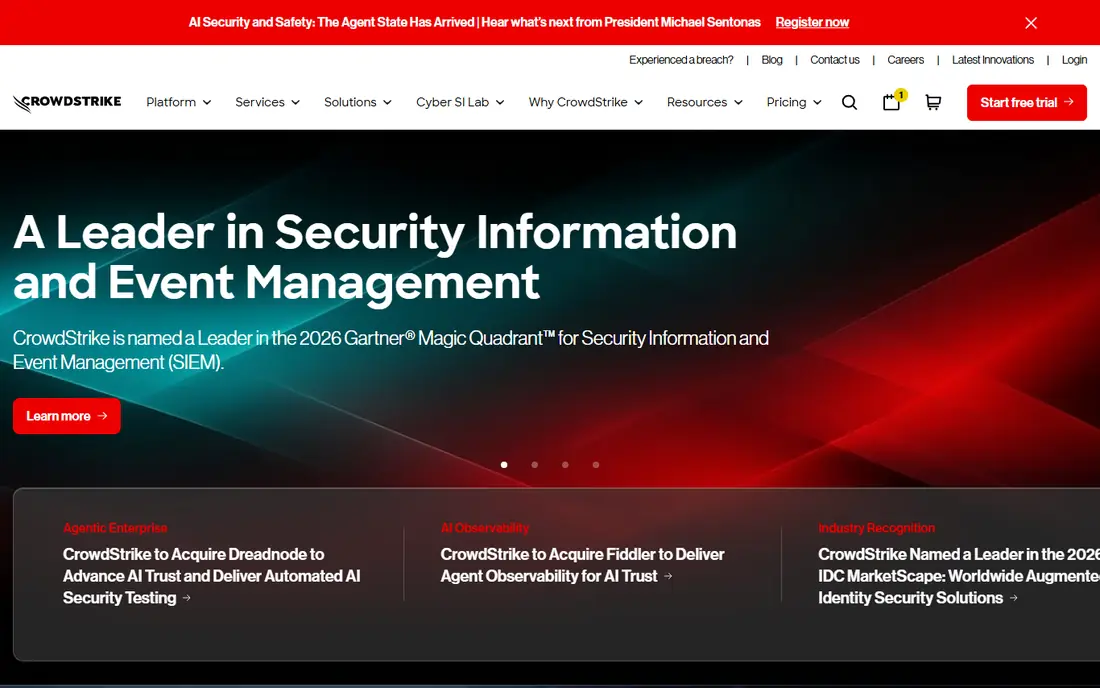
CrowdStrike Falcon is the default enterprise pick for a reason. A single lightweight agent feeds a cloud console with detection, investigation and response tools, plus threat intelligence drawn from a large telemetry base. Security teams can hunt across endpoints, isolate a host, and trace an incident without stitching together several consoles.
The catch is cost and staffing. Enterprise tiers are quote-based, and the full value of hunting tools shows up only if someone uses them, either in-house or through Falcon Complete. For a team with a real SOC or a managed budget, Falcon is hard to beat. For a small team with no analysts, a managed-first tool may be a better fit.
- Cloud-native single agent with broad OS coverage
- Deep threat intelligence and hunting tools
- Fully managed Falcon Complete option
- Quote-based enterprise pricing
- Best value needs a security team or a managed tier
- Some teams want simpler pricing

SentinelOne Singularity is built around a simple idea: the endpoint should stop and reverse an attack even when no analyst is watching. Its on-device AI detects and responds without a constant cloud connection, and ransomware rollback can restore encrypted files without a full restore from backup. That matters most for small teams and for incidents that start overnight.
Pricing is the honest drawback. Published enterprise list rates have run higher than CrowdStrike at some tiers, though negotiated pricing varies by volume and term. If offline resilience and rollback matter more to you than the lowest sticker price, SentinelOne deserves the top of your shortlist.
- On-device AI that works offline
- Autonomous response with one-click ransomware rollback
- Broad OS and cloud workload coverage
- Enterprise pricing is quote-based and can run higher than rivals at list
- Managed service is a separate Vigilance tier
- Console depth takes time to learn
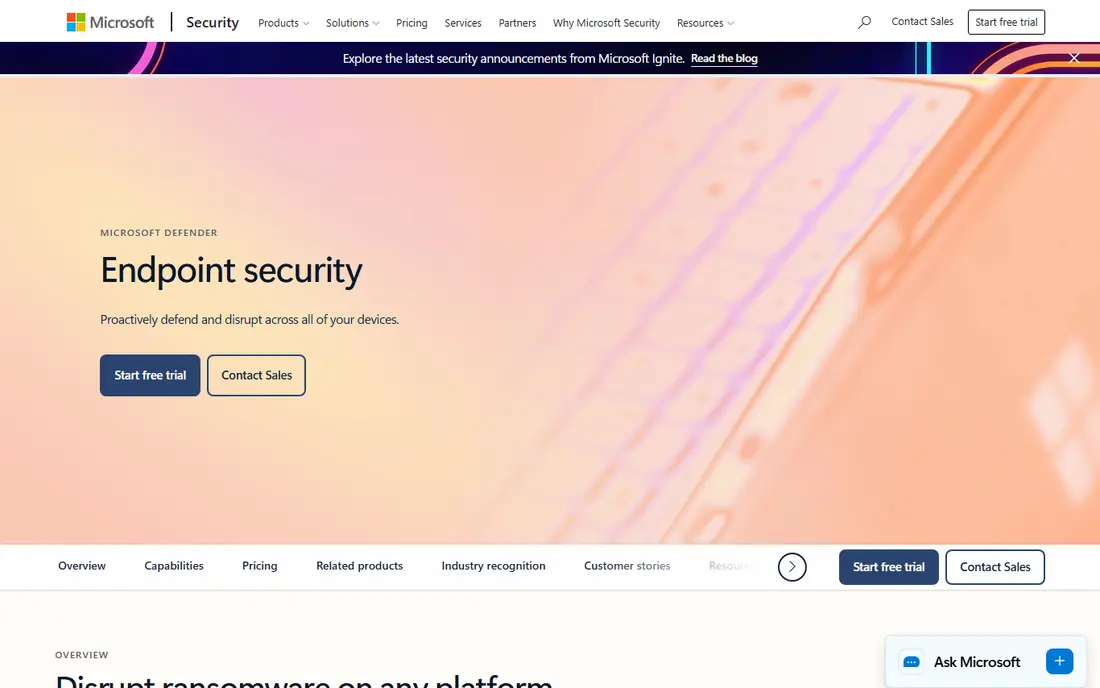
Microsoft Defender for Endpoint is the practical pick for teams already committed to Microsoft 365. If you pay for E5, Plan 2 is already included, which makes the added cost close to zero. Standalone Plan 2 pricing has been listed around $5.20 per device per month in 2026 comparisons, though you should confirm the current Microsoft list rate for your agreement.
The limit is stack fit. Defender works best when identity, email and endpoint data all live in Microsoft, and teams outside that stack may get more from a neutral vendor. For a Microsoft shop, though, starting with Defender and adding a second tool only for high-risk hosts is a sound, low-cost plan.
- Native Microsoft 365 and Windows integration
- Full EDR in Plan 2
- Low or zero added cost for E5 customers
- Deepest value is tied to the Microsoft stack
- Non-Windows coverage is less deep than Windows
- Advanced hunting needs Microsoft Sentinel for full SIEM use
Cortex XDR extends detection beyond the endpoint by pulling in network, cloud and identity signals. That broader view helps analysts connect an endpoint alert to a network event and see the full incident path, rather than chasing isolated alerts. Teams that already run Palo Alto firewalls get the most from that integration.
For a team with no Palo Alto network gear, the case is weaker, and pricing is quote-based. Cortex XDR is an enterprise tool, so small teams should weigh the implementation effort against a simpler managed EDR option before committing.
- Correlates endpoint, network and cloud data
- Strong investigation and response tools
- Good fit for Palo Alto firewall customers
- Quote-based pricing
- Best value needs other Palo Alto products
- Deployment can be complex for small teams
Sophos Intercept X suits a midsize team that wants strong endpoint protection without building a SOC. Deep learning models, exploit prevention and ransomware protection run on the endpoint, and Sophos MDR adds human analysts for teams that want a managed service. If you already use Sophos firewalls, the shared console is a plus.
The trade-off is tiering. Basic endpoint protection is not the same as full XDR with extended detection and response, so compare the exact bundle in a quote. For a team that wants a managed, mid-market option, Intercept X with MDR is a balanced choice.
- Deep learning detection with anti-ransomware features
- Managed detection option through Sophos MDR
- Familiar console for Sophos firewall users
- Quote-based pricing for many bundles
- Full XDR features sit on higher tiers
- Some advanced hunting tools are lighter than enterprise rivals
Trend Micro Vision One, built on Apex One endpoint protection, gives security teams a single view across email, endpoint, network and cloud layers. That breadth helps when an attack moves from a phishing email to an endpoint and then to a cloud workload, because the same platform can trace each step. It is a strong fit for enterprises that already use Trend Micro products.
Smaller teams may find the platform wider than they need, and pricing is quote-based. If your main need is endpoint-only EDR, compare the endpoint tier price against a focused rival before paying for the full XDR bundle.
- Multi-layer protection across endpoint, email, network and cloud
- Extended detection across those layers
- Broad platform support
- Quote-based pricing
- Console can feel broad for small teams
- Best value needs the wider Trend Micro stack
Bitdefender GravityZone is a good value pick for teams that want solid endpoint protection without enterprise pricing. The platform covers workstations, servers and mobile devices from one console, with risk analytics and response tools that suit midsize IT teams. For a cost-conscious team, the balance of protection and price is attractive.
The honest limit is that full XDR and managed detection are separate add-ons, not part of the base endpoint tier. Price the bundle you actually need, including any managed service, and compare that total with SentinelOne or Sophos before deciding on price alone.
- Strong malware and ransomware protection at a competitive price
- Centralized console for endpoints and servers
- XDR add-ons for larger teams
- Quote-based pricing for business bundles
- Advanced XDR and MDR features are add-ons
- Support experience varies by channel
VMware Carbon Black, now part of Broadcom, remains a serious enterprise EDR option. It focuses on behavioral analysis, live query and hunting across large Windows, macOS and Linux fleets, with the audit trails that regulated teams need. Organizations with VMware infrastructure and compliance duties often keep Carbon Black for that fit.
Small teams will find it heavy. Deployment, tuning and hunting all assume analyst time, and pricing is quote-based. For a large enterprise with a SOC and VMware estates, it belongs on the shortlist. For a small team, a managed EDR tool will be easier to run.
- Behavioral monitoring and threat hunting for large fleets
- Strong compliance and audit support
- Integration with VMware environments
- Quote-based pricing
- Enterprise deployment takes planning
- Console depth suits analysts more than small IT teams
ESET PROTECT suits teams that value a light agent and a clean console. Endpoints stay responsive, which matters for older hardware and for staff who notice every slowdown. The platform scales from basic endpoint protection to EDR and XDR tiers, so a team can start simple and add detection depth as needs grow.
The catch is that the top enterprise hunting and response tools are not as deep as CrowdStrike or SentinelOne at the highest tiers. For most small and midsize fleets, that gap rarely matters in daily use, but a high-risk enterprise should test detection depth in a proof of concept.
- Lightweight agent with low system impact
- Clear console for mixed Windows, macOS and Linux fleets
- EDR and XDR tiers for growth
- Detection depth at base tiers is lighter than top enterprise rivals
- Quote-based business pricing
- Managed detection is a separate offer
Huntress is the pick for a small team that knows it cannot staff a SOC. Human analysts review alerts, investigate incidents and guide response, so a small IT team gets enterprise-style triage without hiring analysts. Managed service providers also use Huntress to protect many small clients from one platform.
The trade-off is breadth and control. Huntress is a managed EDR service, not a full XDR platform with network and cloud correlation, and large enterprises with their own SOC will want a broader tool. For a team under a few hundred endpoints, managed coverage often beats a powerful console that no one watches.
- Fully managed detection with human analysts
- Built for small IT teams and MSPs
- Clear pricing model for managed service
- Managed model means less direct console control for some teams
- Endpoint coverage is focused rather than full XDR breadth
- Pricing is per endpoint and adds up at scale
How we picked these
We compared official product pages, detection and response models, managed options, platform coverage and 2026 pricing comparisons. We favored tools that are live and supported in October 2026, with real EDR capability rather than antivirus alone, and we included enterprise, mid-market and managed options. We did not claim hands-on testing we did not do, and prices that are quote-based or vary by agreement are shown as See website.
What to check before you choose
Start with staffing, not features. If no one will watch alerts overnight, buy managed detection or strong autonomous response first, and treat hunting tools as a second priority. If you have analysts, prioritize detection depth, hunting queries and data retention, because those tools will get daily use.
Next, run a proof of concept on your real fleet. Test Windows, macOS and Linux hosts, remote laptops that go offline, and servers if they are in scope. Check agent performance, false positive rates, rollback behavior and how long it takes to isolate a host. Ask about data retention, SIEM integration and what happens to detection when a laptop is offline for a week.
Finally, price the full tier. Compare endpoint protection, full EDR, XDR add-ons and managed service as separate lines, and ask about renewal increases. A low entry tier can look cheap until you add the EDR, retention and managed features you actually need.
Questions to ask in a trial
Ask how ransomware rollback works, what files it can restore, and what it cannot. Ask how the tool handles living-off-the-land attacks, script abuse and credential theft, not just malware files. Ask who responds at night under a managed tier, and how fast isolation happens after a confirmed incident.
Common mistakes to avoid
Do not buy on a single test score, and do not deploy to the whole fleet on day one. Roll out in stages, tune alert rules with your own data, and keep a rollback plan for agent updates. Make sure incident response contacts, isolation authority and backup restore steps are written down before an incident, not during one.
Frequently asked questions
What is the best endpoint detection and response software for a small business?
Huntress, Sophos Intercept X with MDR, or Microsoft Defender for Business are strong small-team picks, because they add managed or automated response to basic protection. Pick based on whether you want a managed service or a tool your own IT team runs.
What is the best endpoint detection response tool for an enterprise?
CrowdStrike Falcon and SentinelOne Singularity are the usual enterprise shortlist, with Palo Alto Cortex XDR and VMware Carbon Black for teams with those stacks. Run a proof of concept on detection depth and hunting before you commit.
Is Microsoft Defender for Endpoint enough on its own?
For many Microsoft 365 shops, yes, especially on E5 where Plan 2 is included. High-risk teams sometimes layer CrowdStrike or SentinelOne on their most sensitive hosts, but most teams should fully deploy Defender before adding a second agent.
What is the difference between EDR and XDR?
EDR focuses on endpoints: detection, investigation and response on laptops, desktops and servers. XDR extends that view across email, network, identity and cloud data, so analysts can trace an incident across layers from one console.
How much does EDR cost per endpoint?
Entry endpoint protection can start near $5 per device per month, full EDR often runs higher, and managed detection adds a further premium. Most enterprise pricing is quote-based, so get tier-matched quotes from at least three vendors.
Sources
- https://www.crowdstrike.com
- https://www.sentinelone.com
- https://www.microsoft.com/en-us/security/business/endpoint-security/microsoft-defender-endpoint
- https://www.paloaltonetworks.com
- https://www.sophos.com
- https://www.trendmicro.com
- https://www.bitdefender.com
- https://www.vmware.com
- https://www.eset.com
- https://huntress.com
See where you really rank - block by block
ProMapRanker scans Google Maps across a grid of your service area. Simple monthly plans from $19, white-label on every plan.
Start freeKeep reading
 zscaler alternatives
Best Zscaler Alternatives in 2026
Looking for zscaler alternatives? We compare 9 SASE and zero trust platforms on architecture, data protection, pricing, and fit for your network and team.
Read → zapier alternatives free
Best Zapier Alternatives Free in 2026
Nine automation tools for zapier alternatives free in 2026, all with genuinely free tiers, plus free plan limits, starting prices and upgrade paths explained.
Read → which platform is best for online reputation
Which Platform Is Best for Online Reputation in 2026
Wondering which platform is best for online reputation? We compare 8 review, listing, and response tools for small and multi-location businesses and agencies.
Read →