 ProMapRanker
7 Best Encryption Software for Cloud Storage Options for 2026


Straightforward zero-knowledge storage without managing keys · Pricing starts at: See website
Direct answer
NordLocker leads the list, best for straightforward zero-knowledge storage without managing keys. Alternatives: pCloud for lifetime-plan buyers who want one-time pricing, and Filen for cheapest zero-knowledge storage per terabyte. Prices, free plans and limits for all 7 tools follow.
Key takeaways
- NordLocker is the opening pick, best for straightforward zero-knowledge storage without managing keys.
- Proton Drive has the lowest monthly starting price in this list: $3.99 per month.
- Sync.com suits best value encrypted storage for teams.
- 7 out of 7 tools include a free plan, among them NordLocker, pCloud, Filen and Cryptomator.
- Before buying Filen, weigh this: smaller company with a shorter operating history.
Quick comparison
| Pick | Great for | Pricing starts at | Free tier | |
|---|---|---|---|---|
| NordLocker | Straightforward zero-knowledge storage without managing keys | See website | Yes | Visit |
 pCloud | Lifetime-plan buyers who want one-time pricing | See website | Yes | Visit |
 Filen | Cheapest zero-knowledge storage per terabyte | €1.99 a month (200 GiB) | Yes | Visit |
 Cryptomator | People who want to keep their current cloud storage | Free | Yes | Visit |
 VeraCrypt | Maximum control on your own devices | Free | Yes | Visit |
 Proton Drive | People already in the Proton privacy ecosystem | $3.99 a month (200 GB, billed yearly) | Yes | Visit |
 Sync.com | Best value encrypted storage for teams | See website | Yes | Visit |
Encryption Software for Cloud Storage profiles
Short on time? The summary and table above give the quick view of 7 tools for encryption software for cloud storage, and the profiles that follow give the detail behind each entry.
NordLocker
Great for: Straightforward zero-knowledge storage without managing keys
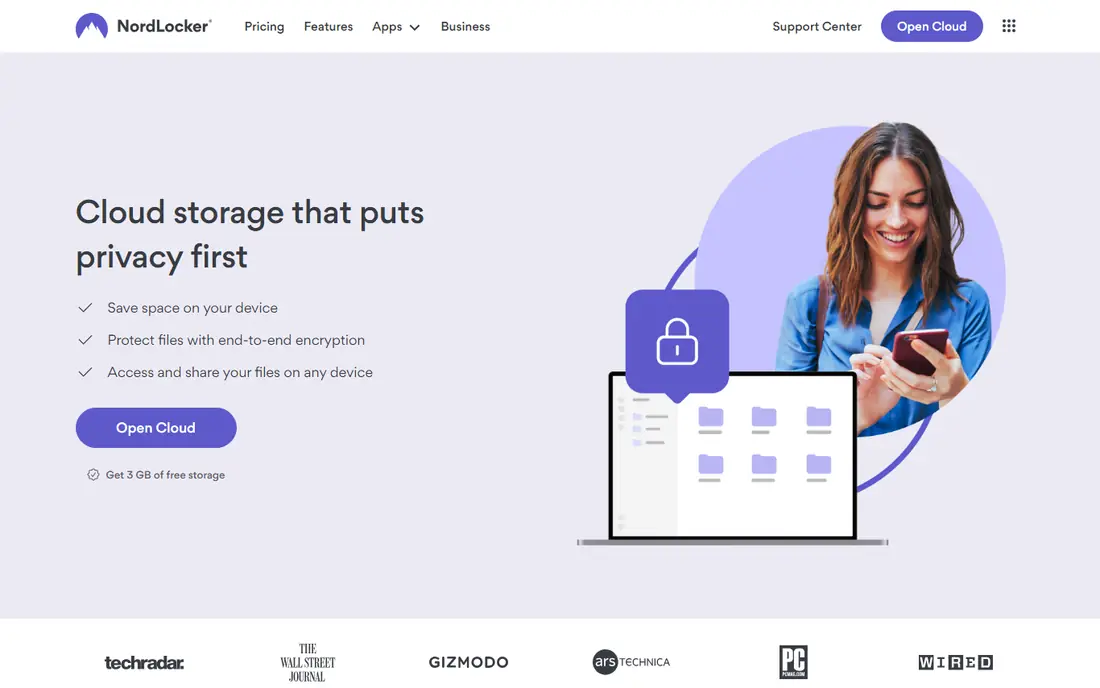
For straightforward zero-knowledge storage without managing keys, NordLocker is a natural candidate. NordLocker comes from Nord Security, the company behind NordVPN, and it feels like it: a consumer-friendly app that hides the cryptography fully.
For everyday use, the free plan bundles 3 GB of cloud storage plus unlimited local encryption, which makes it a genuinely handy free file-encryption tool even if you never pay. Also, there is still no Linux app, and the largest plan is 2 TB, so heavy media archives will outgrow it. This comparison lists no price for NordLocker; ask the vendor. NordLocker includes a free tier.
Honest limits: Storage tops out at 2 TB. Main advantages: Drag-and-drop simplicity.
- Unlimited local file encryption on the free plan
- Android and the web
- No Linux app
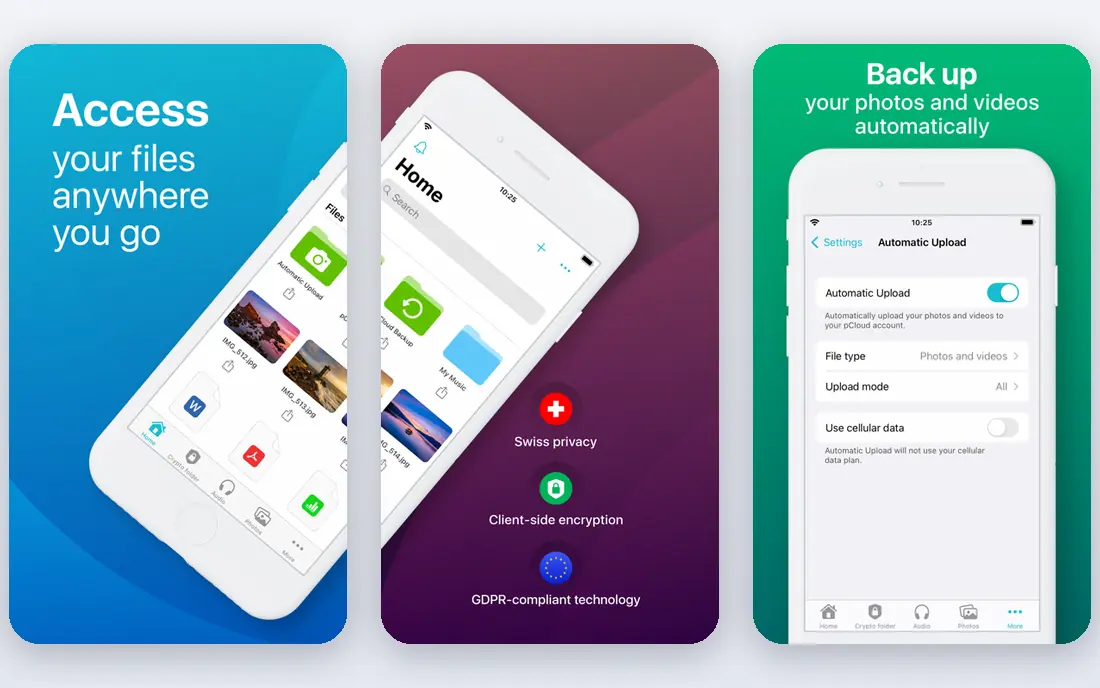
pCloud works best for lifetime-plan buyers who want one-time pricing. The free plan opens at 2 GB and can grow to 10 GB through referrals and setup tasks.
Drawbacks to consider: True client-side encryption is a premium add-on handling a single folder.
As for the details, the Crypto add-on hands you one client-side encrypted Crypto Folder, sold separately as a yearly or lifetime license. For buyers who hate subscriptions, nothing else here provides that model. pCloud does not show a starting price in this comparison, so check the vendor site for current pricing. pCloud includes a free tier.
- Choice of US or EU data region
- One-time lifetime licenses up to 10 TB
- Past security findings remain unaddressed
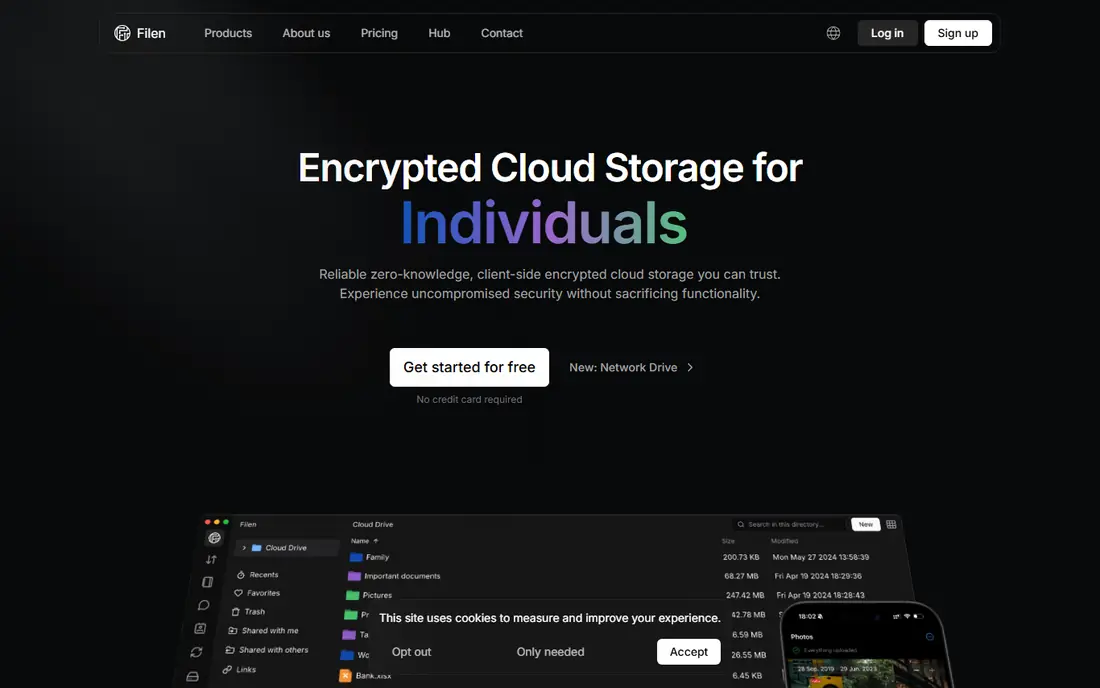
Where Filen fits: cheapest zero-knowledge storage per terabyte. The honest catch is company size.
From a buyer's view, Filen is a German provider that does one thing and does it cheaply: zero-knowledge, client-side encrypted cloud storage on every level, beginning at 1.99 euros per month for 200 GiB. As for the details, the free level contains 10 GB. On cost, Filen starts like this: €1.99 per month. Filen offers a free plan.
Where it is weaker: Smaller company with a shorter operating history.
- Zero-knowledge encryption included on every plan
- CLI and developer SDKs
- Support is email and knowledge base only
Pick Cryptomator if this describes you: people who want to keep their current cloud storage. It does not sell you storage. Instead, it produces encrypted vaults inside the Dropbox, Google Drive, OneDrive or iCloud folders you already use.
Files are encrypted with AES-256 on your device before the sync client ever touches them. So your provider keeps only scrambled file names and ciphertext. Also, there is no account to build and no subscription required for the desktop apps on Windows, Mac and Linux. That design is both the strength and the catch. The mobile apps are premium, and there is no web access to encrypted files. Cryptomator starts at: Free. Cryptomator offers a free plan.
Watch-outs: you need your own cloud plan; No storage included.
- Works with any cloud provider
- Encrypts file names plus contents
- Mobile apps cost additional
VeraCrypt makes the most sense for maximum control on your own devices. The trade-off is that you are the whole IT department.
Also, VeraCrypt is not cloud storage software at all, which is exactly why it belongs here. It is free, open source, audited, and descended from the legendary TrueCrypt project. The starting price for VeraCrypt: Free. VeraCrypt has a free plan.
Trade-offs to know: No official mobile apps.
- Free and open source
- Hidden volumes for plausible deniability
- A forgotten password means permanent data loss
Proton Drive is aimed squarely at people already in the Proton privacy ecosystem. Proton Drive makes the most sense as part of a bundle. More specifically, on its own, the Drive Plus plan costs $3.99 per month for 200 GB with a 5 GB free level, which is costly per gigabyte next to Google Drive or OneDrive.
But step up to Proton Unlimited at $9.99 per month and you get 500 GB of storage plus Proton VPN, Proton Mail, Proton Calendar and Proton Pass, all end-to-end encrypted under Swiss privacy law. If you were going to pay for a VPN and encrypted email anyway, the bundle math works. Weaknesses are familiar: no native Linux client, search restricted to metadata, and 200 GB fills quick with photos and video. Entry price for Proton Drive: $3.99 per month. Proton Drive includes a free tier.
Honest limits: No native Linux desktop client.
- Bundles VPN
- Open-source clients
- Search is restricted to metadata due to encryption
Sync.com is designed for best value encrypted storage for teams. Plan names and storage levels have shifted over time, so confirm the current lineup on the pricing page.
For teams that want encrypted storage without the enterprise price tag, Sync.com remains the default recommendation. Also, the setting can be disabled, but most buyers never look. Check the vendor site for Sync.com pricing; none is listed in this comparison. A free plan is available with Sync.com.
Points against: Sync accelerates are mid-pack.
What works well: GDPR and PIPEDA compliance support.
- Capable storage per dollar on premium plans
- Office 365 integration and live backup
- Premium plans enable email password reset by default, which briefly exposes keys to automatic systems
How these tools were picked
For each of the 7 tools we noted price, free plan or trial, fit for encryption software for cloud storage and the main limit, using vendor pages and documentation. Plan names, prices and limits change often. Treat the figures here as a starting point and verify them with the vendor. The order reflects how well each tool fits the most common buying scenario for encryption software for cloud storage, then price clarity, then free plan access. It is a starting point, not a verdict.
Things to verify first
- Get a written quote from NordLocker, pCloud and Sync.com; the list shows no starting price for them.
- Look at free plan limits closely: NordLocker, pCloud, Filen and others have one, and the caps decide whether it is usable for real work.
- Read the limits listed for NordLocker first: no Linux app.
- Look at the renewal terms for VeraCrypt: auto-renewal, notice periods and price changes can matter more than the first-year price.
- Ask the daily users to test NordLocker on a live task before you roll it out to everyone.
Frequently asked questions
What is zero-knowledge encryption?
It means your files are encrypted on your own device before they are uploaded, and only you hold the decryption key. On top of that, the cloud provider keeps ciphertext it cannot read.
What is the cheapest option for encryption software for cloud storage in this list?
On published monthly entry prices, Proton Drive is the lowest here at $3.99 per month. Entry price is only part of the cost, because seats, add-ons and billing terms can change the total.
How are the tools for encryption software for cloud storage ordered?
The order follows typical fit for encryption software for cloud storage, with NordLocker first and Sync.com last, then price clarity and free access. It is editorial judgement, not a score, so another team could rank the tools differently.
Is NordLocker the right pick for everyone comparing encryption software for cloud storage?
No single tool suits every team. NordLocker comes first because it fits simple zero-knowledge storage without managing keys, while pCloud suits lifetime-plan buyers who want one-time pricing and Filen suits cheapest zero-knowledge storage per terabyte. Match the tool to your own size, budget and workflow before deciding.
Is free encryption software safe to use?
"Free" in this category normally means open source instead of ad-supported, which is a decent sign. Be more cautious with free levels from commercial vendors: check what is actually encrypted and whether the free plan quietly uses weaker defaults.
Do I need encryption software if my provider already encrypts my files?
It relies on your threat model. Provider-side encryption guards against someone stealing a hard drive from a data center. For tax records, legal documents and business IP, that additional layer is worth it.
Sources
See where you really rank - block by block
ProMapRanker scans Google Maps across a grid of your service area. Simple monthly plans from $19, white-label on every plan.
Start freeKeep reading
 zscaler alternatives
Best Zscaler Alternatives in 2026
Looking for zscaler alternatives? We compare 9 SASE and zero trust platforms on architecture, data protection, pricing, and fit for your network and team.
Read → zapier alternatives free
Best Zapier Alternatives Free in 2026
Nine automation tools for zapier alternatives free in 2026, all with genuinely free tiers, plus free plan limits, starting prices and upgrade paths explained.
Read → which platform is best for online reputation
Which Platform Is Best for Online Reputation in 2026
Wondering which platform is best for online reputation? We compare 8 review, listing, and response tools for small and multi-location businesses and agencies.
Read →