 ProMapRanker
Best Emissions Management Software in 2026

Key takeaways
- Emissions software is only as good as its activity data, so check how each tool collects energy, travel, supplier and product data.
- Most leading tools are quote-based, so budget for implementation and data work, not just the subscription.
- Scope 3 supplier emissions are the hardest part, and tools differ widely in how much supplier data they can actually gather.
- Reporting frameworks change, so choose a tool that updates its templates and audit trails rather than one built for a single report.
Quick comparison
| Pick | Great for | Pricing starts at | Free tier | |
|---|---|---|---|---|
 Persefoni | Carbon accounting and audit | See website | No | Visit |
 Watershed | Enterprise climate reporting | See website | No | Visit |
 Sweep | Supplier and reduction planning | See website | No | Visit |
 IBM Envizi | Large ESG data management | See website | No | Visit |
 Microsoft Sustainability Manager | Microsoft-based reporting | See website | Free trial | Visit |
 Workiva | Reporting and assurance | See website | No | Visit |
 Greenly | Mid-market carbon accounting | See website | No | Visit |
 Normative | Carbon accounting for growing firms | See website | No | Visit |
The best emissions management software
Emissions management software helps a company measure greenhouse gas emissions, set reduction targets and report results in a form auditors and customers can trust. We compared official product pages and public documentation, and we favoured tools still sold in October 2026 that cover carbon accounting, data collection and reporting, not just a single calculator.
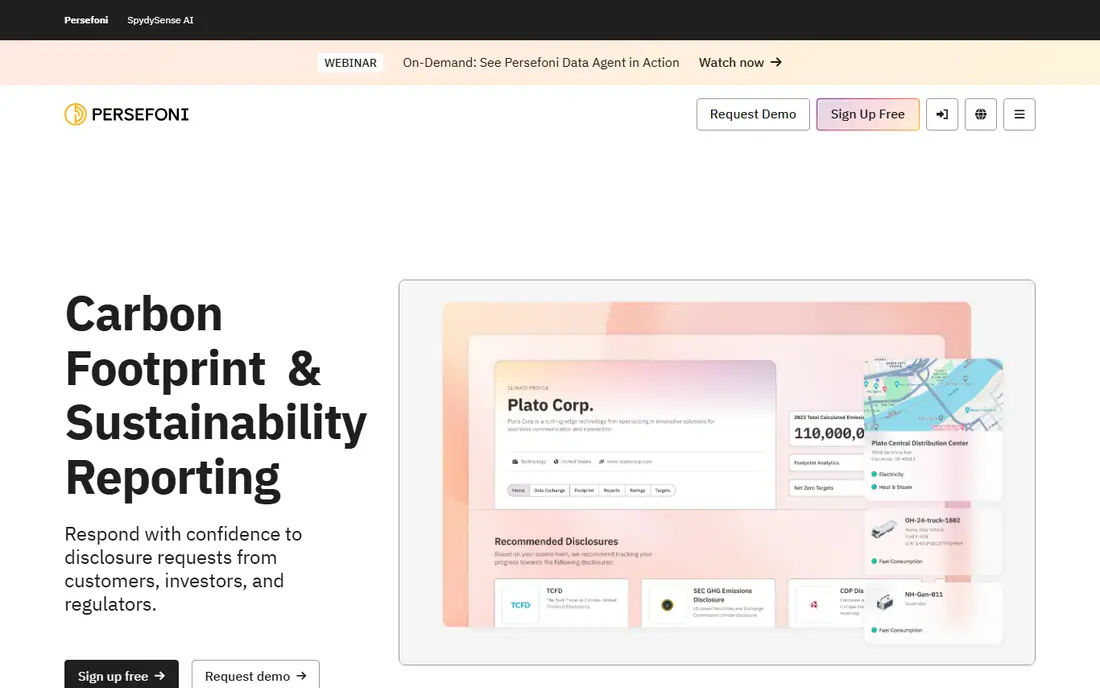
Persefoni is built for companies that need carbon numbers an auditor can test. Its platform covers scope 1, 2 and 3 emissions, with calculation methods, data controls and reporting templates designed to support assurance work. Finance teams often like the structure, because emissions data is treated with similar discipline to financial data, including approvals, version history and audit trails.
The cost of that discipline is preparation. A company must gather energy bills, travel records, procurement data and supplier information before the software can produce useful results, and pricing is quote-based. Persefoni suits a mid-market or large company facing customer, investor or regulatory reporting pressure. A very small company with a simple footprint may find a lighter tool faster to adopt.
- Carbon accounting depth
- Audit-ready reporting
- Strong finance-grade controls
- Quote-based pricing
- Implementation needs data preparation
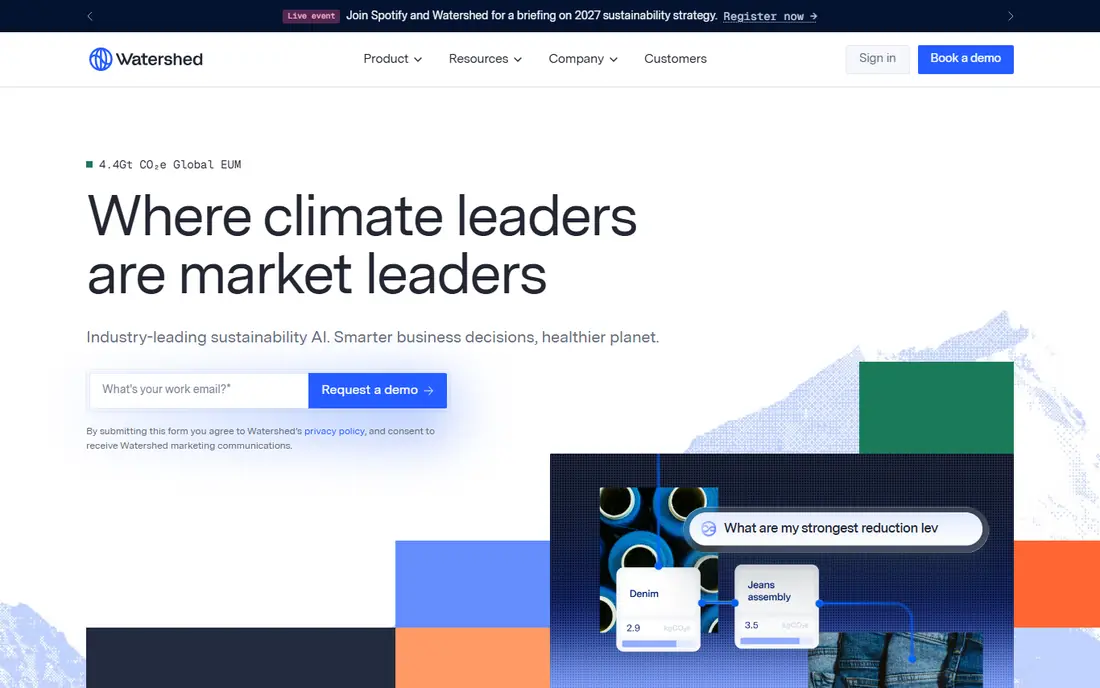
Watershed helps large companies measure a full carbon footprint and plan reductions across operations and supply chains. Its platform supports detailed emissions calculations, supplier engagement and climate reporting, with tools to model how changes in energy, materials or suppliers affect total emissions. That planning view is valuable once measurement is in place, because a report alone does not reduce emissions.
Pricing is quote-based and rollout is enterprise-oriented, so a buyer should expect a scoping and data onboarding process. Smaller companies may find the platform more than they need, especially if their main requirement is a single annual inventory. For a large company with complex operations and a public reduction target, Watershed offers depth that simpler calculators cannot match.
- Detailed emissions measurement
- Reduction planning
- Strong reporting support
- Quote-based pricing
- Enterprise-oriented rollout
Sweep focuses on turning measurement into action. Its platform covers carbon accounting across scopes, with tools for setting targets, tracking reduction actions and collecting data from suppliers and internal teams. Collaborative data collection is a practical strength, because emissions work often stalls when one sustainability lead has to chase spreadsheets from every department.
The limit is shared by every tool in this category: supplier data is only as good as supplier response. Sweep can structure requests and track progress, but it cannot force a supplier to report accurately. Pricing is quote-based. Sweep suits a company that already has a basic inventory and now needs to manage reductions and supplier engagement in one place.
- Clear reduction planning
- Supplier data tools
- Collaborative data collection
- Quote-based pricing
- Data quality still depends on suppliers
IBM Envizi is an environmental, social and governance data platform that handles far more than carbon alone. It captures energy, water, waste and other sustainability data, applies calculations and supports reporting across multiple frameworks. For a large organisation with many sites, meters and data sources, that central data management is the main value, because scattered spreadsheets cannot support consistent reporting.
Setup is complex, and smaller teams may find the platform heavy for a simple carbon inventory. Pricing is quote-based and usually part of a wider IBM engagement. Envizi suits an enterprise that needs one governed system for ESG data across many locations, with integration into existing enterprise software. A single-site company should look at a lighter carbon accounting tool first.
- Broad ESG data capture
- Strong enterprise integration
- Reporting across frameworks
- Quote-based pricing
- Complex setup for smaller teams
Microsoft Sustainability Manager helps organisations record, calculate and report emissions within the Microsoft ecosystem. It ingests activity data, applies calculation models, and presents emissions by scope, source and business unit in dashboards that finance and sustainability teams can share. For a company already using Microsoft 365, Dynamics or Azure, that fit reduces integration work and training time.
Pricing varies by licence and plan, with a free trial available for evaluation, so confirm the exact entitlement before budgeting. Teams outside the Microsoft stack may find less advantage, and data collection still requires work from operations and procurement. Choose this tool when Microsoft fit matters and the goal is a governed emissions record alongside existing business reporting.
- Microsoft 365 and Azure fit
- Built-in calculation models
- Dashboard reporting
- Pricing varies by licence
- Best value inside Microsoft stack
Workiva is best known for connected financial and regulatory reporting, and its sustainability tools sit inside that wider reporting platform. Emissions data can be linked to narrative reports, tables and disclosures, with controls, version history and review workflows that support assurance. That linkage matters when the same emissions figure must appear consistently in an annual report, a customer questionnaire and a regulatory filing.
Workiva is not primarily a standalone carbon calculator, so a company that only needs an inventory may find a dedicated accounting tool simpler. Pricing is quote-based. Workiva suits a company already reporting under regulatory or investor frameworks, where consistency and audit trails across the whole report matter as much as the calculation itself.
- Connected reporting
- Audit trails
- Strong for regulated disclosures
- Quote-based pricing
- Emissions calculation is one part of a wider platform
Greenly aims to make carbon accounting accessible to mid-market companies that do not have a large sustainability team. Its platform imports accounting and operational data, estimates emissions across scopes, and presents a footprint with reduction suggestions. Automated imports reduce manual data entry, which is often the barrier that stops a first inventory from being completed.
Pricing is quote-based, so a buyer should confirm what is included in the entry plan and what requires an upgrade. Depth for complex supply chains or product-level analysis may be less than an enterprise platform, but for a first or second inventory, accessibility is a genuine advantage. Greenly suits a growing company that needs a credible footprint and a clear next step, without an enterprise rollout.
- Accessible carbon accounting
- Automated data imports
- Clear footprint reports
- Quote-based pricing
- Depth varies by plan
Normative provides carbon accounting with an emphasis on science-based methods and supplier engagement. Its platform helps companies measure emissions, understand hotspots and work with suppliers on reduction, which is important because purchased goods and services often dominate a footprint. Clear reporting helps a company explain its results to customers and partners without overstating progress.
Pricing is quote-based, and like every tool here, Normative needs good activity data to produce good results. A company with messy procurement or energy records should budget time to clean data before expecting precise supplier emissions. Normative suits a growing firm that wants a methodical carbon programme and is ready to engage suppliers, not just publish a single total.
- Science-based accounting approach
- Supplier engagement tools
- Clear reporting
- Quote-based pricing
- Implementation needs good activity data
How we picked these
We compared official product pages and public documentation, and we chose tools still sold in October 2026 that cover emissions measurement, data collection and reporting. Where a vendor does not publish a price, we wrote See website rather than presenting a third-party estimate as a vendor price. We also weighed scope 3 coverage and audit readiness, because those factors separate a serious emissions platform from a simple calculator.
How to choose an emissions tool
Start with the reporting requirement. List the frameworks, customers or regulators that will read the results, and check whether the tool supports those templates and audit trails. Then list the data sources: energy meters, fuel cards, travel bookings, procurement records and key suppliers. A tool that cannot ingest those sources will create manual work.
Next, run a pilot on one year of data for one business unit. Check whether the results can be explained, whether suppliers can respond to data requests, and whether finance can review the calculations. A pilot will reveal data gaps faster than any sales demo, and it gives a realistic basis for the full rollout cost.
Frequently asked questions
What are scope 1, 2 and 3 emissions?
Scope 1 covers direct emissions from sources a company owns or controls, such as company vehicles and on-site fuel use. Scope 2 covers indirect emissions from purchased energy, such as electricity. Scope 3 covers other indirect emissions in the value chain, including purchased goods, travel and product use.
How accurate is emissions management software?
Accuracy depends on activity data quality and emission factors used. Direct metered energy data gives stronger results than spend-based estimates, and supplier-specific data gives stronger scope 3 results than industry averages. A good tool shows its methods and data sources so results can be checked.
Can small companies use emissions software?
Yes, but a small company should start with a simple inventory and a tool matched to its size. Enterprise platforms may be too complex and costly, while mid-market tools such as Greenly or Normative are designed for smaller teams.
What is the difference between carbon accounting and carbon offsetting?
Carbon accounting measures emissions, while offsetting pays for emission reductions or removals elsewhere. A credible programme measures and reduces first, and treats offsets as a separate step with clear disclosure, not as a replacement for measurement.
Do these tools guarantee compliance?
No tool alone guarantees compliance, because reporting rules vary by jurisdiction and framework. A tool can support calculation, controls and reporting, but the company remains responsible for checking the current rules that apply to it and for the accuracy of its data.
Sources
See where you really rank - block by block
ProMapRanker scans Google Maps across a grid of your service area. Simple monthly plans from $19, white-label on every plan.
Start freeKeep reading
 what’s the best risk software for enterprises
What Is the Best Risk Software for Enterprises in 2026
We compared what’s the best risk software for enterprises on risk registers, controls, third-party risk, and reporting, with pricing notes for large teams.
Read → what's the best pam software for enterprises
What is the Best PAM Software for Enterprises in 2026
Find what's the best pam software for enterprises, with vaulting, session recording, just in time access and pricing compared for large enterprise IT teams.
Read → what’s the best grc software
What Is the Best GRC Software in 2026
We compared what’s the best grc software on risk, compliance, audit and vendor risk, so teams can pick a platform that fits their frameworks and budget.
Read →