 ProMapRanker
Best Embedded Payments Software in 2026


Most SaaS platforms and marketplaces · Pricing starts at: See website
Key takeaways
- Stripe Connect is our pick for most platforms because it pairs broad country coverage with mature developer tools and hosted onboarding.
- Adyen for Platforms and Checkout.com suit larger platforms that need unified acquiring, local payment methods and payout control across markets.
- Finix, Rainforest and Tilled give US platforms more control over pricing and revenue share than a flat-rate processor, at the cost of a longer sales and setup process.
- Mangopay and Mollie are strong choices for marketplaces and European platforms, while the right pick depends on payout rules, split payments and compliance support.
- Always confirm the full fee schedule, payout timing and who holds the merchant accounts before signing, since headline rates rarely tell the whole story.
Quick comparison
| Pick | Great for | Pricing starts at | Free tier | |
|---|---|---|---|---|
| Stripe Connect | Most SaaS platforms and marketplaces | See website | No | Visit |
 Adyen for Platforms | Enterprise platforms with global reach | See website | No | Visit |
 Finix | US platforms that want pricing control | See website | No | Visit |
 Checkout.com | Platforms needing flexible global acquiring | See website | No | Visit |
 Rapyd | Platforms with cross-border payouts | See website | No | Visit |
 Mollie | European platforms and simpler setups | See website | No | Visit |
 Mangopay | Marketplaces with split payments and escrow-style flows | See website | No | Visit |
 Rainforest | Vertical SaaS platforms that want a managed program | See website | No | Visit |
 Tilled | US platforms that want published PayFac pricing | See website | No | Visit |
The best embedded payments software
Embedded payments let a software platform offer payment acceptance inside its own product, so its customers can charge their customers without leaving the platform. We compared official product pages, pricing pages and platform documentation, and focused on onboarding, payouts, split payments, compliance support and pricing transparency.
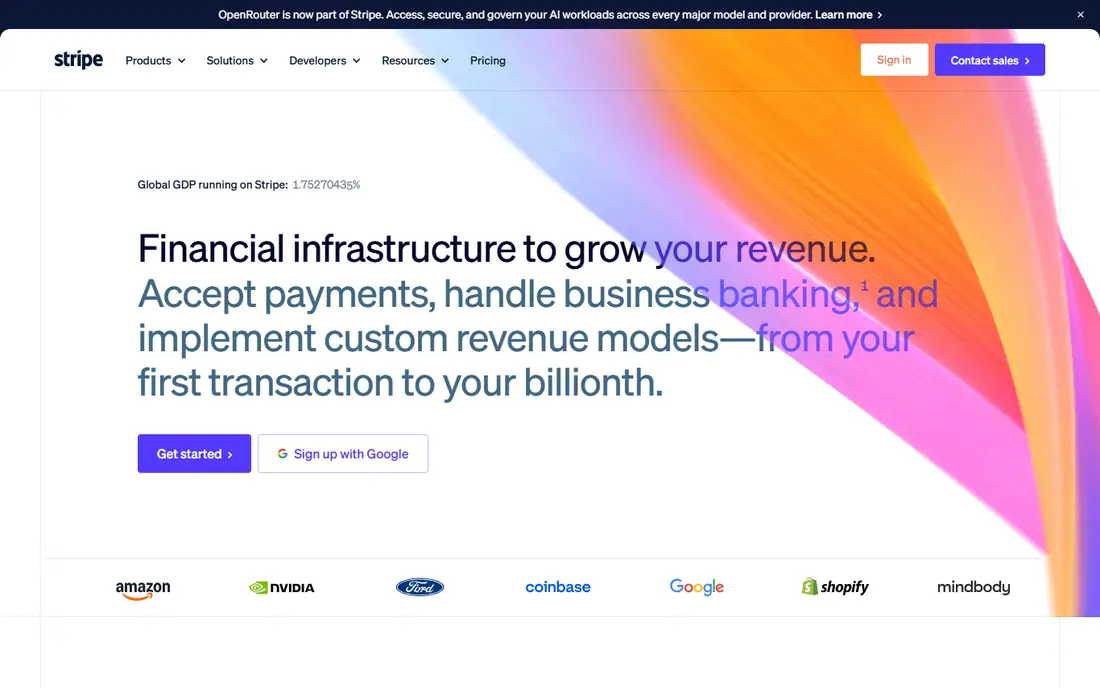
Stripe Connect is the default choice for many platforms for a simple reason. It covers onboarding, payment acceptance, payouts and account management in one system, and its documentation is detailed enough that most development teams can build without a long consulting engagement. Platforms can choose hosted onboarding, embedded components or fully custom flows, depending on how much control they want over the experience.
The catch is cost and complexity at scale. Standard card pricing is published on Stripe's pricing page, while Connect platform fees vary by account type and feature, so a platform with high volume should model total cost rather than assume the headline rate. Stripe also sets the rules for connected accounts, which means platforms must understand verification, payout schedules and restricted business rules before launch. For most teams, though, the breadth of payment methods, currencies and developer tooling makes Stripe Connect the safest starting shortlist entry.
- Broad country coverage
- Mature APIs and hosted onboarding components
- Strong fraud tools and payout options
- Flat-rate pricing can get expensive at scale
- Platform fees and account types need careful review

Adyen for Platforms is built for platforms that operate across countries and channels. It combines online, in-person and marketplace payments on one platform, which helps finance teams reconcile activity without stitching together several processors. Local acquiring and local payment methods matter here, because they can improve authorization rates and reduce cross-border fees for customers in different markets.
This is not a quick self-serve signup for most teams. Pricing is negotiated, onboarding is more involved, and the platform expects a serious volume or growth case. Smaller platforms may find the process slower than Stripe or a US-focused PayFac-as-a-service provider. For larger platforms that already think in terms of multi-country payouts, split payments and unified reporting, Adyen is a strong enterprise option.
- Unified acquiring across channels
- Wide local payment method coverage
- Strong payout and reporting tools
- Enterprise pricing is negotiated
- Implementation tends to take longer than simpler tools
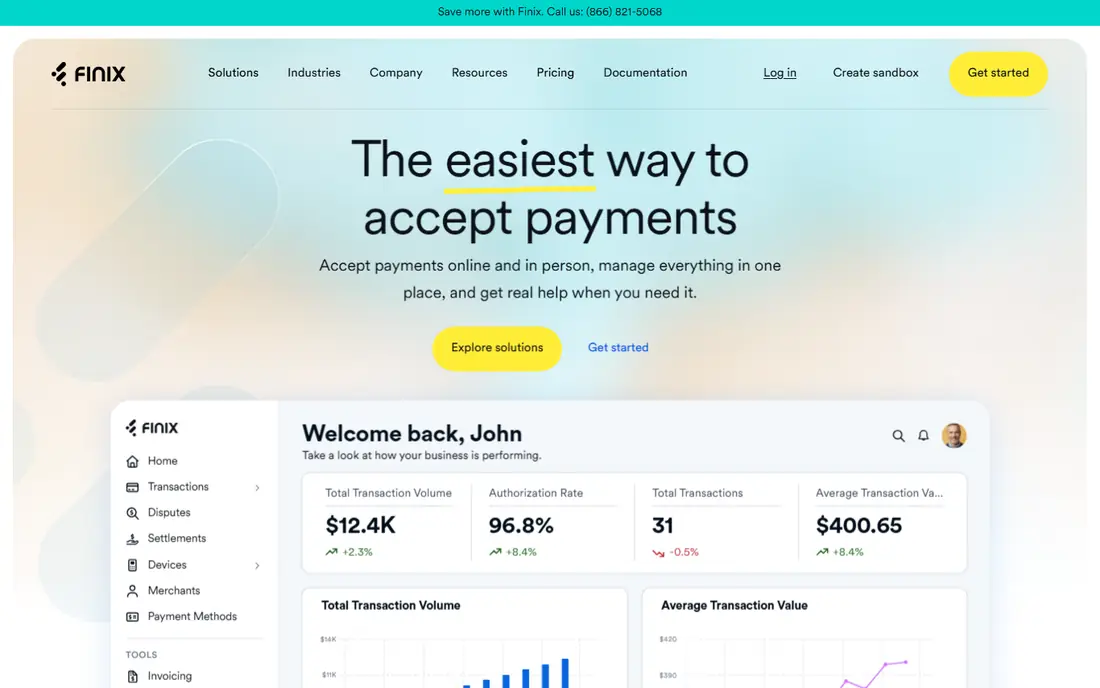
Finix appeals to platforms that want payments to become a real revenue line rather than a pass-through feature. It offers a managed payment facilitation model with a path toward becoming a full payment facilitator, and it lets platforms set pricing for their merchants in more detail than a flat-rate provider. That control matters when a platform serves a specific vertical and knows its customers' margins.
The trade-off is geography and effort. Finix focuses on the United States and Canada, so global platforms will need another provider for other regions. Setup also involves underwriting, compliance and pricing discussions that take longer than a developer-only integration. Platforms that plan to scale payment volume in North America and want to keep more of the margin should put Finix near the top of the list.
- Path from managed facilitation to full PayFac
- Interchange-plus style economics
- Configurable fee structures
- US and Canada focus
- Pricing and setup require a sales conversation
Checkout.com is a global payment processor that also serves platforms and marketplaces. Its strength is acquiring depth: direct connections in many markets, a wide set of local payment methods and granular transaction data that finance and product teams can use to improve authorization rates. Platforms that already handle complex payment flows often value that data and control.
Pricing is custom, and the sales process reflects that. Small platforms with low volume may find it harder to get started than with a self-serve tool, and support models vary by contract. For mid-size and large platforms that need global coverage without building multiple processor relationships, Checkout.com deserves a serious look.
- Global acquiring and local payment methods
- Detailed payment data
- Flexible integration options
- Pricing is negotiated
- Smaller platforms may get less hand-holding
Rapyd is useful when a platform must both collect money and pay people out across borders. It supports card and local payment acceptance in many markets, plus payouts through bank transfers, wallets and cards in supported corridors. That combination suits gig platforms, creator platforms and marketplaces with sellers in several countries.
The complexity is real. Fees depend on payment method, currency and corridor, so a single headline rate will not describe total cost. Platforms should test the exact corridors they need, confirm payout timing and verify supported currencies before committing. When those checks pass, Rapyd can reduce the number of payout partners a platform must manage.
- Broad payout network
- Many local payment methods
- APIs for collect and disburse flows
- Pricing varies by method and corridor
- Compliance details need careful checking per market
Mollie is a European payment provider that many platforms choose for simplicity. It supports major European payment methods alongside cards, and its documentation and dashboard are easy for small teams to use. For a platform based in Europe, or serving mainly European customers, that focus is an advantage rather than a limit.
Platforms with complex marketplace needs, such as multi-party splits, escrow-style holds or large-scale seller onboarding across many countries, may need a more specialized marketplace provider. Mollie does offer platform and marketplace features, but teams should confirm split and payout rules for their exact model. For straightforward embedded acceptance in Europe, Mollie is a practical and well-documented pick.
- Clear European payment method coverage
- Straightforward integration
- Transparent published pricing for core methods
- Strongest in Europe
- Marketplace features are less deep than some specialists
Mangopay was built specifically for marketplaces and crowdfunding platforms, and that focus shows in its wallet and payout model. Platforms can hold funds in wallets, split payments between sellers and the platform, and manage payouts to sellers with clear transaction records. That structure fits marketplaces that need to separate platform fees from seller funds.
The main limits are pricing transparency and geography. Mangopay pricing is typically agreed by contract, and while it serves platforms beyond Europe, teams should verify coverage for their seller and buyer countries. For a European marketplace, or a marketplace with a strong European presence, Mangopay is one of the most purpose-built options on this list.
- Built for marketplaces
- Split payments and wallet structures
- European regulatory grounding
- Pricing is custom
- Global coverage outside Europe needs checking
Rainforest is a payment-facilitation-as-a-service provider aimed at vertical software platforms. It lets a platform embed payments under its own brand, set merchant pricing and earn a share of the payment margin, while Rainforest handles much of the underlying facilitation, risk and compliance work. Its component-based integration is designed to fit inside an existing product without a full rebuild.
Because Rainforest focuses on the United States, global platforms will need a separate approach elsewhere. As a smaller provider than Stripe or Adyen, it also deserves extra diligence on support coverage, uptime and contract terms. For a US vertical SaaS company that wants payment revenue without becoming a full payment facilitator on day one, Rainforest is a credible managed option.
- Purpose-built PayFac-as-a-service
- Component-based integration
- Revenue share on payment margin
- US focus
- Smaller provider, so diligence on scale and support matters
Tilled offers payment facilitation as a service for software platforms, with a clearer published pricing stance than many competitors in this space. Platforms can embed payments, onboard merchants and share in payment revenue, while Tilled manages the facilitation layer. That clarity helps smaller platforms budget before entering a long sales cycle.
Coverage is centered on the United States and Canada, so international platforms should look elsewhere for other regions. Teams should also confirm which features, such as specific payout rails or reporting tools, are included in their integration tier. For a North American platform that values pricing transparency, Tilled is worth comparing directly against Finix and Rainforest.
- Published pricing approach
- PayFac-as-a-service model
- Revenue share for platforms
- US and Canada focus
- Feature depth varies by integration type
How we picked these
We compared official vendor pages, pricing pages, platform documentation and public product descriptions, and we kept only providers that currently offer embedded payments or payment facilitation for software platforms. We favored providers with documented onboarding, payout and split-payment features, and we included a mix of global leaders, European specialists and US-focused facilitation providers so different platform sizes and regions are covered. We did not claim hands-on testing, and where pricing is negotiated we wrote See website rather than guessing a rate.
What to check before you choose
Start with your business model, not the feature list. A marketplace that splits every transaction needs different wallet and payout logic than a SaaS tool that simply lets customers pay a subscription inside the product. Write down who the merchant of record is, who handles refunds and chargebacks, and how platform fees are separated from seller funds, then ask each vendor to confirm those points in writing.
Next, model total cost at your expected volume. Compare processing rates, platform fees, payout fees, chargeback fees and any monthly minimums, and ask how pricing changes as volume grows. A flat rate that looks simple at low volume can become the most expensive option once volume rises, while an interchange-plus model may need more finance time to forecast.
Onboarding, compliance and payouts
Onboarding speed matters for conversion, but compliance cannot be skipped. Ask how identity verification works, what documents sellers must provide, how long verification usually takes, and what happens when a seller fails a check. Also confirm payout timing, payout methods, reserve or hold policies and reporting, since these affect seller trust more than any dashboard feature.
Integration and support
Check whether the provider offers hosted onboarding, embedded components or a full API, and how much engineering time each path needs. Review sandbox access, documentation quality, webhook reliability and support hours, and ask for references from platforms in your vertical. A short pilot with real transactions, even at low volume, will reveal more than a sales demo.
Frequently asked questions
What is the best embedded payments software for a small SaaS platform?
For most small platforms, Stripe Connect or Mollie (for European customers) are the easiest starting points because they offer documented integrations and hosted onboarding. US platforms that expect payment revenue to matter should also compare Finix, Rainforest and Tilled before choosing a flat-rate model.
What is the difference between embedded payments and payment facilitation?
Embedded payments is the product experience: payments inside your software. Payment facilitation is the underlying model where the platform onboards sub-merchants and shares in payment economics, either through a provider or as a registered facilitator. Many providers offer facilitation as a service, so a platform gets the economics without taking on the full regulatory and risk burden.
How do platforms make money from embedded payments?
Platforms typically earn a margin between what merchants pay and the underlying processing cost, plus platform fees for features such as onboarding or payouts. The exact margin depends on pricing model, volume, payment methods and the provider agreement, so it should be modeled in writing before launch.
Do I need to become a payment facilitator to embed payments?
No. Most platforms start with a provider that acts as facilitator, such as Stripe Connect, Finix or Rainforest, and only consider full facilitation later at large scale. Full facilitation brings more control and margin, but also more compliance, risk and operational responsibility.
What should I check about payouts and split payments?
Confirm payout timing, payout methods, split rules, refund handling and reserve policies for your exact model. Marketplaces should also check wallet structures, seller fund separation and reporting, since these affect accounting and seller trust.
Which embedded payment platform is best for marketplaces?
Stripe Connect, Adyen for Platforms and Mangopay are strong marketplace choices, with Mangopay especially suited to wallet-based split flows in Europe. The best pick depends on seller countries, payout rails, escrow-style needs and how much pricing control the platform wants.
Sources
See where you really rank - block by block
ProMapRanker scans Google Maps across a grid of your service area. Simple monthly plans from $19, white-label on every plan.
Start freeKeep reading
 zoro.to alternatives
Best Zoro.to Alternatives in 2026
We compare the best zoro.to alternatives in 2026, listing only legal licensed anime streaming services, from Crunchyroll to free options for fans today.
Read → zip alternatives
Best Zip Alternatives in 2026
We compare the best zip alternatives for buy now, pay later in 2026, covering pay-in-4 plans, fees, spending limits, and credit reporting options today.
Read → yesware alternatives
Best Yesware Alternatives in 2026
Compare the best yesware alternatives for sales email tracking, templates, and sequences, with current pricing and honest tradeoffs for small sales teams.
Read →