 ProMapRanker
Best Email Service for Privacy in 2026

Key takeaways
- Proton Mail is our pick for most people, with end-to-end encryption between Proton users, a free plan and polished apps.
- Tuta encrypts more of the mailbox than most rivals, including subject lines, but it only works in its own apps.
- mailbox.org and Posteo suit people who want private email in any standard mail app over IMAP.
- No email service can encrypt mail to a regular inbox end to end unless the recipient also uses encryption, so check how each service handles outside mail.
- Jurisdiction, open-source code, data retention and business model all matter, not just the word private on a homepage.
Quick comparison
| Pick | Great for | Pricing starts at | Free tier | |
|---|---|---|---|---|
 Proton Mail | Best overall privacy email | $3.99 per month | Yes | Visit |
 Tuta | Maximum mailbox encryption | See website | Yes | Visit |
 Mailfence | PGP control and productivity | See website | Yes | Visit |
 Posteo | Low-cost green email | See website | No | Visit |
 mailbox.org | Private IMAP email | See website | No | Visit |
 StartMail | Unlimited aliases | See website | No | Visit |
 Fastmail | Polished private-leaning email | See website | No | Visit |
 Runbox | Own domain on a budget | See website | No | Visit |
 Hushmail | Secure mail for professionals | See website | No | Visit |
The best email services for privacy
These services are compared on encryption, tracking, jurisdiction, app support and price, with a focus on services that do not scan mail for advertising. A note on limits: email to people on Gmail, Outlook or other regular services travels without end-to-end encryption unless you use password-protected messages or compatible PGP, and metadata such as sender, recipient and timing is hard to hide fully. Choose a service that is honest about those limits.
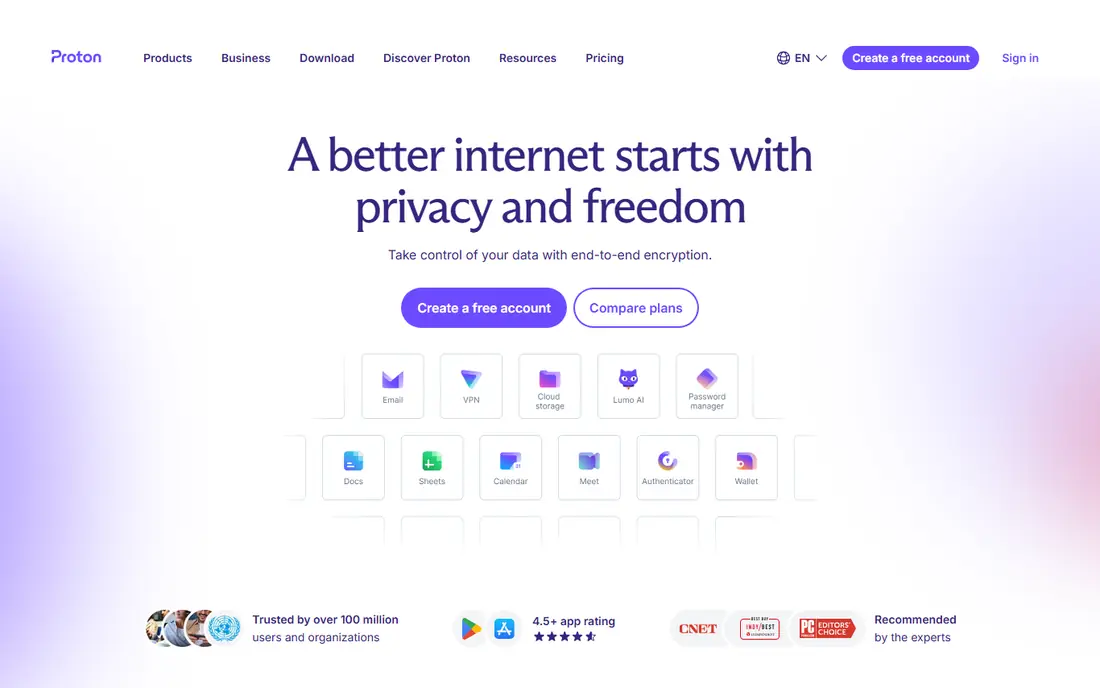
Proton Mail, based in Switzerland, is the easiest private email service for most people to adopt. Mail between Proton users is end-to-end encrypted automatically, the mailbox uses zero-access encryption so Proton cannot read your stored mail, and the apps for web, mobile and desktop are polished and well maintained. The free plan gives 1 GB of storage and one address, which is enough to test the service properly before paying.
Paid plans start at $3.99 per month billed annually for Mail Plus, with 15 GB of storage, more addresses and a custom domain. The main catch is desktop client access: using Proton Mail in Apple Mail, Outlook or Thunderbird requires Proton Mail Bridge, which is a paid feature and works on desktop only. If you live in a browser or the Proton apps, that will not matter. If you live in Thunderbird, consider mailbox.org or Posteo instead.
- End-to-end encryption between Proton users
- Zero-access mailbox design
- Free plan with 1 GB storage
- Full desktop mail client access needs a paid Bridge plan
- Subject lines are not end-to-end encrypted
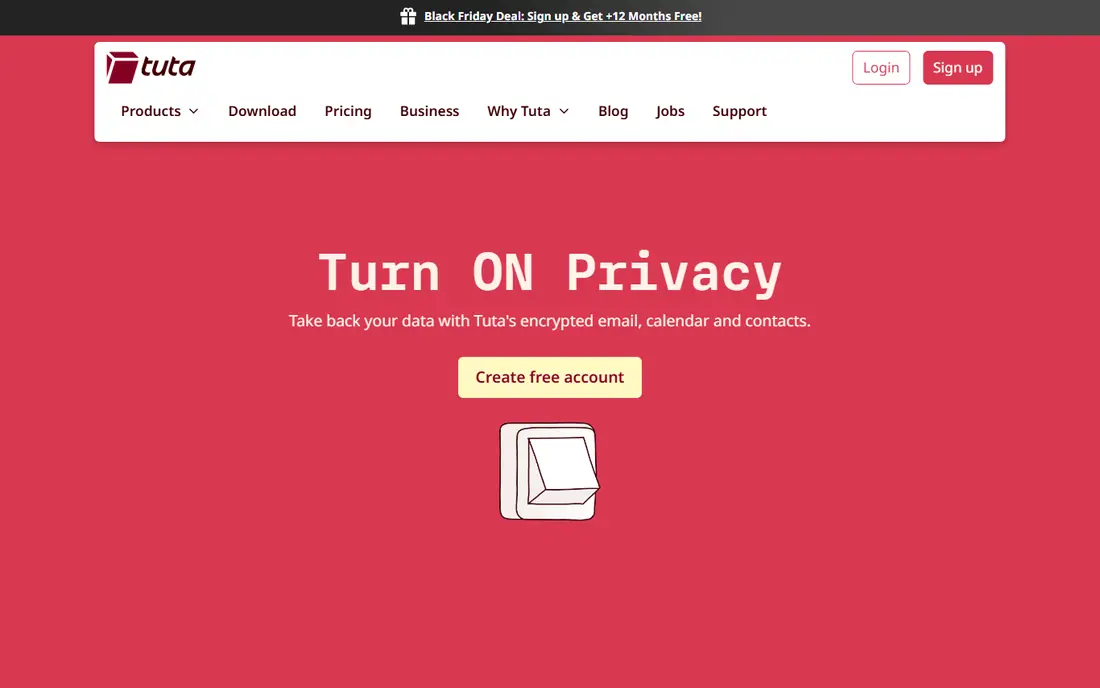
Tuta, formerly Tutanota and based in Germany, encrypts more of your mailbox than almost any rival, including subject lines, contacts and calendar entries, not just message bodies. Its clients are open source, it runs on renewable energy, and it carries no advertising or tracking. For a user whose priority is the strongest mailbox encryption at a low price, Tuta is the most thorough option here.
The price of that design is flexibility. Tuta does not support IMAP, POP or SMTP, so you cannot read it in Apple Mail, Outlook or Thunderbird, and exports run through its desktop app. Free accounts also need regular logins to stay active. If you accept Tuta's own apps as your inbox, it is excellent. If you need standard mail app support, it is a poor fit.
- Encrypts mailbox content including subject lines, contacts and calendars
- Open-source clients
- No ads or tracking
- No IMAP support, so you must use Tuta apps
- Free plan storage is 1 GB and search is limited

Mailfence, based in Belgium, is the choice for users who want control over their own encryption keys. It supports OpenPGP, lets you manage keys and digital signatures, and bundles calendar, contacts and document storage alongside mail. Unlike Tuta, it works over IMAP, so you can use it in a standard mail client as well as in the browser.
The trade-off is effort. True end-to-end encryption to outside recipients requires PGP setup on both sides, which most casual contacts will not do, so everyday mail to regular inboxes still travels without that protection. The free plan is also small, at 500 MB, which suits a light inbox but not a large archive. Mailfence suits a technically comfortable user who values key control over one-click simplicity.
- OpenPGP encryption with user-controlled keys
- Calendar, contacts and documents included
- IMAP support
- End-to-end encryption needs PGP setup for outside mail
- Free plan storage is small at 500 MB
Posteo is a German provider that keeps things simple and cheap: a private mailbox with no advertising, no tracking and IMAP support, hosted on green energy, for around 1 euro per month for the entry plan. You can use it in any standard mail app, add aliases and calendars, and pay anonymously in some cases, which appeals to users who want privacy without a large subscription.
There is no free plan, so you pay from day one, though the price is low enough that a trial month costs less than a coffee in most places. Storage starts small and upgrades cost extra, and the web interface is functional rather than beautiful. Posteo suits a budget-conscious user who wants a private IMAP mailbox and does not need end-to-end encryption built in by default.
- Very low monthly price
- No ads and no tracking
- IMAP support and green energy hosting
- No free plan
- Storage upgrades cost extra
- Setup is plainer than Proton or Fastmail
mailbox.org, also based in Germany, is the private email service for power users who live in Thunderbird or another standard mail client. It offers full IMAP, CalDAV and CardDAV support, PGP encryption options, spam protection and metadata stripping on outgoing mail, plus office tools for documents and spreadsheets. If your workflow depends on a desktop mail client, this is the most capable private option here.
The interface is business-like rather than inviting, and there is no free plan, with entry plans starting at around 1 euro per month. As with Mailfence, end-to-end encryption to outside mail requires PGP on both ends, so the privacy gain over a regular provider comes mainly from no tracking, no advertising and German jurisdiction, not from automatic encryption of every message.
- Full IMAP and standard protocol support
- PGP options and privacy features
- Office tools included
- No free plan
- Interface feels business-like
- End-to-end encryption needs PGP for outside mail
StartMail, from the makers of the Startpage search engine and based in the Netherlands, is built around aliases. Unlimited aliases let you give every service a different address, so a breach or spam source is easy to trace and shut off, and disposable aliases add a further layer for sign-ups you do not trust. PGP encryption is built in, and custom domains are supported on paid plans.
There is no permanent free plan, only a trial period, after which you pay a monthly or annual subscription. Storage is more modest than Proton's paid tiers, and the interface is straightforward rather than feature-rich. StartMail suits alias-heavy users who sign up for many services and want to control which address each one holds.
- Unlimited aliases
- PGP encryption built in
- Custom domains supported
- Netherlands jurisdiction
- No free plan, only a trial
- Storage and interface are less generous than Proton
Fastmail is the best choice if you want a private-leaning service that feels like a premium mainstream inbox. Its webmail and apps are fast and well designed, custom domains and masked email addresses are easy to manage, and its filtering, rules and search are stronger than most privacy-first rivals. It does not scan mail for advertising, and it is based in Australia with servers in the US.
The honest limit is encryption. Fastmail does not offer end-to-end or zero-access encryption of stored mail, so it protects your privacy mainly through its business model, policies and security practices, not through cryptography that locks the provider out. If automatic end-to-end encryption is your top requirement, choose Proton Mail or Tuta. If polish, speed and control matter more, Fastmail is excellent.
- Fast, polished apps and webmail
- Custom domains and masked email
- Strong spam filtering and rules
- No end-to-end encryption of stored mail
- No free plan, only a trial
Runbox, based in Norway, is a low-cost way to run private email on your own domain. Entry plans are inexpensive, custom domains are supported, and standard IMAP access means you can use any mail client. Hosting runs on renewable energy, and the service has a long operating history, which counts for a provider you trust with years of mail.
The interface feels dated next to Fastmail and Proton Mail, and there is no end-to-end encryption by default, so privacy rests on policy, jurisdiction and no-advertising practices rather than cryptography. Runbox suits a budget user who wants their own domain and standard mail access without paying a premium brand price.
- Low-cost plans with custom domain support
- IMAP support
- Norwegian jurisdiction and green hosting
- Interface feels dated
- No end-to-end encryption by default
- Smaller support team than larger rivals
Hushmail is a long-running secure email service with a focus on professionals, including healthcare and legal users who need encrypted communication and secure web forms. It offers OpenPGP-based encryption, custom domains on business plans, and a straightforward webmail experience. For a small practice that needs secure mail without running its own server, Hushmail remains a credible option.
For general consumers, it is harder to recommend over Proton Mail or Tuta. There is no free plan, the interface feels dated, and everyday features such as mobile apps and calendar integration lag behind newer rivals. Choose Hushmail if its professional features match your work. Otherwise, start with Proton Mail or mailbox.org.
- Encrypted mail and secure forms for professional use
- Healthcare-friendly features
- Custom domains on business plans
- No free plan
- Interface is dated
- Consumer features lag behind Proton and Fastmail
How we picked these
We compared privacy email services on encryption design, tracking and advertising policies, jurisdiction, open-source availability, standard protocol support, app quality and price, using provider privacy pages, pricing pages and public reviews. We favoured services with a clear no-advertising business model and honest statements about encryption limits, and we left out services that scan mail for advertising or that had ceased operating. Prices are given where we could verify them, with See website used where a price could not be confirmed at the time of writing.
How to choose a private email service
Start with how you read mail. If you are happy in a browser or a provider app, Proton Mail and Tuta offer the strongest encryption with the least friction. If you depend on Apple Mail, Outlook or Thunderbird, narrow the list to mailbox.org, Posteo, Mailfence, Fastmail and Runbox, since Tuta will not work in those clients at all.
Next, decide what privacy means to you. Automatic end-to-end encryption matters most if you email other users of the same service or use password-protected messages. If your contacts mostly use regular mail, a no-tracking provider with strong security, good spam filtering and a clear jurisdiction may serve you better in practice than a cryptographic feature you rarely trigger.
Finally, test migration before committing. Import a small set of mail first, check that your important senders reach the new inbox, set up aliases and a custom domain if you use one, and keep the old address forwarding for a few months. Moving an email address you have used for years is harder than moving a streaming subscription, so a short trial saves regret later.
Frequently asked questions
What is the best email service for privacy?
Proton Mail is the best email service for privacy for most people, thanks to end-to-end encryption between Proton users, zero-access storage, a free plan and polished apps. Tuta encrypts more of the mailbox, including subject lines, but only works in its own apps. mailbox.org and Posteo are better if you need private email in a standard mail client.
What are the best email services for privacy with a free plan?
Proton Mail, Tuta and Mailfence all offer free plans, with Proton Mail offering the most polished free experience at 1 GB of storage. Free plans are smaller and lack custom domains, so they suit a personal inbox or a trial rather than a large archive or a business address. Paid plans add storage, addresses and custom domains.
Is Proton Mail really private?
Proton Mail uses end-to-end encryption for mail between Proton users and zero-access encryption for stored mail, and it does not scan mail for advertising. Mail to regular inboxes is not end-to-end encrypted unless you use a password-protected message or PGP, and subject lines are not end-to-end encrypted. Those limits apply to every provider here, and Proton Mail states them openly.
What is the best email service privacy option for a custom domain?
Proton Mail's paid plans support custom domains with good app support, while mailbox.org, Posteo, StartMail, Fastmail and Runbox also support custom domains at low cost. Choose Proton Mail if you want encryption with your domain, or mailbox.org or Posteo if you want standard IMAP access with your domain. Check the plan page for domain limits before buying.
Can I use a private email service with Outlook or Apple Mail?
It depends on the service. mailbox.org, Posteo, Mailfence, Fastmail and Runbox support IMAP, so they work in Outlook, Apple Mail and Thunderbird. Proton Mail needs its paid Bridge tool for desktop clients, and Tuta does not support IMAP at all, so it only works in Tuta's own apps. Check client support before subscribing if you depend on a desktop mail app.
Sources
See where you really rank - block by block
ProMapRanker scans Google Maps across a grid of your service area. Simple monthly plans from $19, white-label on every plan.
Start freeKeep reading
 zscaler alternatives
Best Zscaler Alternatives in 2026
Looking for zscaler alternatives? We compare 9 SASE and zero trust platforms on architecture, data protection, pricing, and fit for your network and team.
Read → zapier alternatives free
Best Zapier Alternatives Free in 2026
Nine automation tools for zapier alternatives free in 2026, all with genuinely free tiers, plus free plan limits, starting prices and upgrade paths explained.
Read → which platform is best for online reputation
Which Platform Is Best for Online Reputation in 2026
Wondering which platform is best for online reputation? We compare 8 review, listing, and response tools for small and multi-location businesses and agencies.
Read →