 ProMapRanker
Best Email Marketing Tool for Growing Startup in 2026

Key takeaways
- Brevo offers the most room to grow for free, with a large contact store and 300 emails per day on its free plan.
- MailerLite is the simplest paid upgrade for a small team, with clear pricing and useful automation at a low monthly cost.
- Mailchimp is the most widely known platform, but its free plan is now limited to 250 contacts and 500 emails per month.
- Klaviyo and Omnisend suit online stores, while Kit suits creators who sell newsletters, courses, and digital products.
- Price should follow your sending model, since some platforms charge by contacts stored and others charge by emails sent.
Quick comparison
| Pick | Great for | Pricing starts at | Free tier | |
|---|---|---|---|---|
 Mailchimp | Widely known all rounder | Free | Yes | Visit |
 Brevo | Growing lists on a budget | Free | Yes | Visit |
 MailerLite | Simple newsletters and automation | Free | Yes | Visit |
 Kit | Creators and paid newsletters | Free | Yes | Visit |
 ActiveCampaign | Advanced automation and CRM | See website | Free trial | Visit |
 Klaviyo | Ecommerce email and SMS | Free | Yes | Visit |
 Constant Contact | Small business support and events | See website | Free trial | Visit |
 Omnisend | Online store automations | Free | Yes | Visit |
 GetResponse | Webinars plus email marketing | See website | Free trial | Visit |
The best email marketing tool for growing startup teams
We compared official feature pages, pricing pages, and public reviews to find the best email marketing tool for growing startup teams. Our list favors platforms with clear free or trial limits, useful automation, signup forms, segmentation, and reporting, since a startup needs to grow a list and learn from each send without hiring a specialist first.
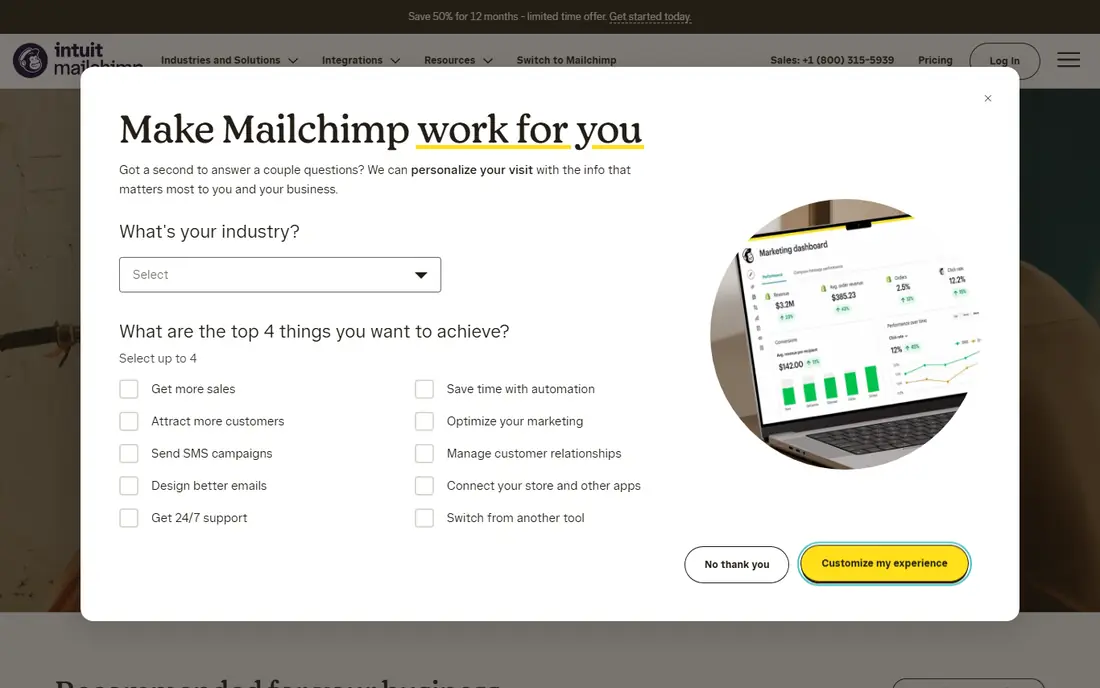
Mailchimp remains the name most founders recognize first, and that familiarity helps when hiring freelancers or finding tutorials. The editor is visual, templates cover common campaign types, and integrations span online stores, websites, and customer tools. Reporting shows opens, clicks, and unsubscribes in a format that a small team can read without training.
The free plan is the weak point in 2026. Recent listings put it at 250 contacts and 500 emails per month, with a daily sending cap, and no automation flows. That makes Mailchimp a poor free starting point compared with Brevo or MailerLite, though paid plans add automation, segmentation, and testing. If your team already uses Mailchimp, or you need its integration range, paid plans make sense. If you are starting from zero, test a more generous free plan first.
- Large template library
- Wide integration range
- Clear reporting for beginners
- Free plan now very limited
- Price rises fast as contacts grow
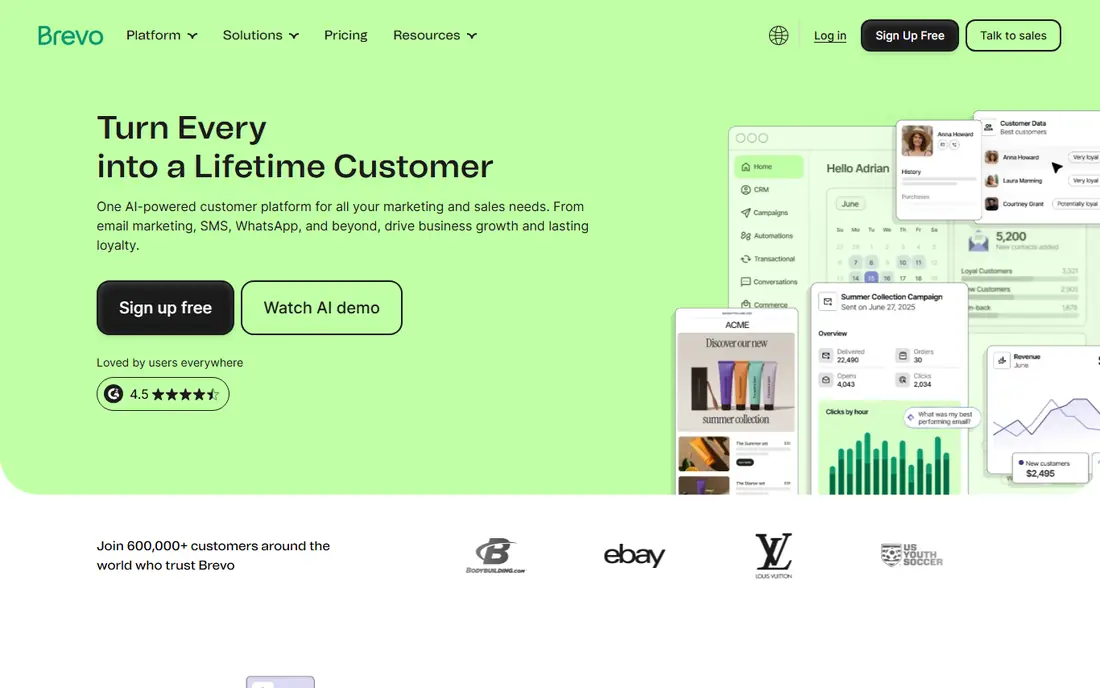
Brevo, formerly Sendinblue, is our pick for a startup that is collecting contacts faster than it emails them. The free plan stores a large contact list and allows 300 emails per day, with automation for up to 2,000 contacts in active flows in recent listings. That structure suits a team that sends a weekly newsletter and a few automated welcome messages, rather than daily blasts to the whole list.
Paid Starter plans start around $9 per month in recent comparisons and remove the daily cap. Brevo also handles transactional emails, such as order confirmations and password resets, plus SMS and WhatsApp in higher plans, which reduces the number of tools a startup must manage. The interface packs many features into one dashboard, so allow time to learn where automation, contacts, and campaigns live.
- Stores up to 100,000 contacts on the free plan
- Automation included
- Transactional email in the same account
- Daily send limit on the free plan
- Interface feels busy at first
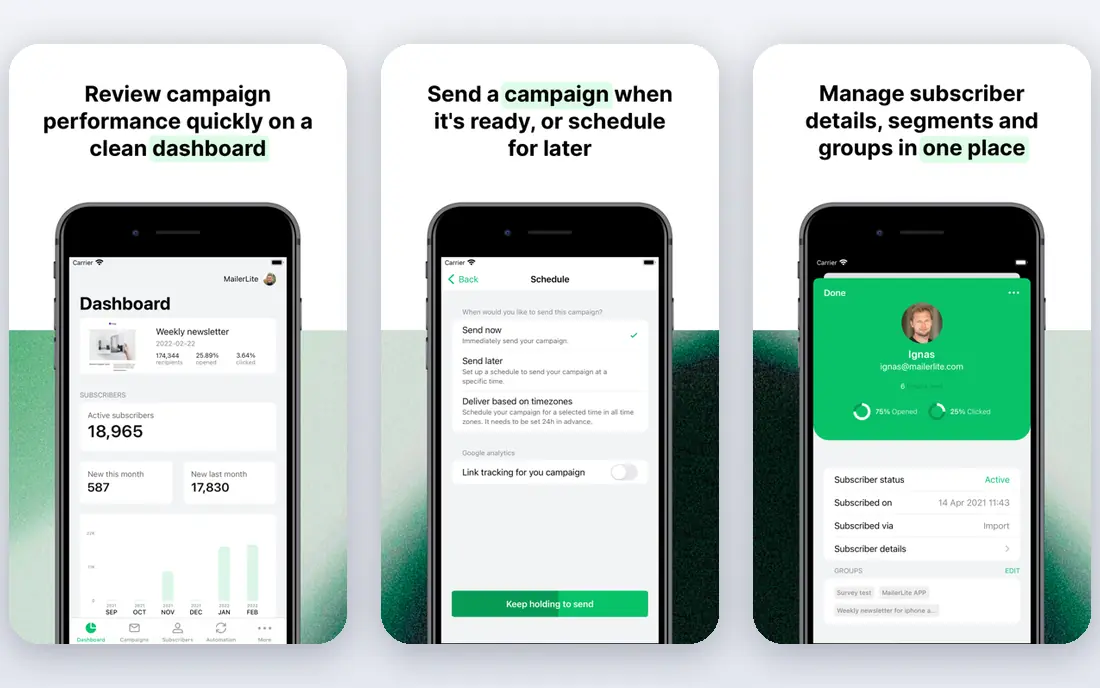
MailerLite suits founders who want a calm, clear tool without a long setup. The drag and drop editor, landing pages, and signup forms cover the basics well, and paid plans add automation, segmentation, and more sending volume. Recent listings put paid plans from $12 per month, after a 2026 restructure, with the free plan at 250 subscribers and 2,500 emails per month.
That free limit is smaller than Brevo for contact storage, but MailerLite wins on simplicity. A small team can build a welcome series, a newsletter template, and a signup form in an afternoon. The honest catch is growth math. As subscribers pass a few thousand, compare MailerLite with Brevo and Kit at your actual list size, since pricing tiers differ by contacts, not just by features.
- Clean editor and signup forms
- Useful automation on paid plans
- Low cost paid tiers
- Free plan limited to 250 subscribers
- Support is limited on the free plan
Kit, formerly ConvertKit, is built for creators, authors, and small teams that grow through newsletters, lead magnets, and digital products. The free plan in recent listings covers up to 10,000 subscribers for unlimited broadcasts, which is generous for a creator starting out, though automation and some features sit in paid plans. The visual automation builder makes it easy to map a welcome path, a course launch, and a paid product offer.
Design is simpler than Mailchimp, with a focus on clean text emails that land well in inboxes. That simplicity is a feature for creators, but a limit for teams that need heavy visual templates or deep store segmentation. If your startup sells knowledge, courses, or a paid newsletter, Kit deserves a shortlist spot. If you run a large online store, Klaviyo or Omnisend will fit better.
- Free plan covers up to 10,000 subscribers for broadcasts
- Visual automation builder
- Paid product and commerce tools
- Less suited to complex ecommerce segmentation
- Design options are simpler than Mailchimp
ActiveCampaign is the pick when a startup outgrows simple newsletters and needs behavior based automation. You can trigger messages from site visits, purchases, tag changes, and deal stages, then score leads and hand them to sales in the same system. The built in CRM keeps contact history, deals, and notes together, which helps a small sales team stay organized.
That depth has a cost in learning time and price. The interface offers many options, and a new user can feel lost without a clear automation plan. Use the free trial to build one real flow, such as onboarding or trial conversion, before committing. For a team with a sales led motion and a growing pipeline, ActiveCampaign can replace separate email and CRM tools, which may justify the higher tier.
- Deep automation and segmentation
- Built in CRM and sales tools
- Strong reporting
- Higher learning curve
- Price and plan details need careful checking
Klaviyo is built for online stores, and its flows show it. Abandoned cart, browse abandonment, welcome, post purchase, and win back flows connect directly to store data, so messages can reference products viewed, order history, and predicted value. Reporting ties campaigns and flows to revenue, which helps a founder see which emails actually pay for the tool.
The free plan in recent listings covers 250 active profiles and 500 emails per month, with flows included, which is enough to test the system on a small store. Paid pricing scales with active profiles, and at 1,000 contacts it sits around $30 per month in recent comparisons, so costs grow with success. If your startup is not an online store, Klaviyo will feel overpowered. If it is, few tools match its store depth.
- Deep store integrations
- Strong flows for cart and post purchase
- Revenue reporting
- Price rises fast with active profiles
- Free plan limited to 250 profiles and 500 emails
Constant Contact suits small businesses that value human support and simple tools over advanced automation. Templates cover local services, nonprofits, events, and retail, and the platform adds event registration, surveys, and social posting in one account. Support by phone and chat is a real advantage for a founder who wants help from a person, not just help articles.
Automation and segmentation are more basic than ActiveCampaign or Klaviyo, and there is no permanent free plan, only a trial. Check current pricing on the vendor page, since plans are tiered by contacts. For a service business, a nonprofit, or a local startup that sends regular updates and event invites, Constant Contact is a steady, low stress choice.
- Strong customer support
- Event and survey tools
- Simple templates for local businesses
- Automation is less deep than rivals
- No permanent free plan
Omnisend is a strong Klaviyo alternative for smaller stores, because its free plan includes the core ecommerce flows, including abandoned cart, welcome, and post purchase messages. That is unusual at this price, and it lets a new store set up proper automation before paying. Email, SMS, and web push live in the same flows, so a customer journey can use more than one channel.
The limits are clear. Free covers 250 contacts and 500 emails per month in recent listings, with Omnisend branding, and paid Standard pricing sits around $20 per month at 1,000 contacts. For a store that is just starting, Omnisend gives more automation per dollar than most rivals. As the list grows, compare it with Klaviyo at your actual profile count and SMS volume, since those costs decide the long term winner.
- All core ecommerce flows on the free plan
- Email, SMS, and push in one place
- 24/7 support even on free
- Free plan limited to 250 contacts and 500 emails
- Branding on free emails
GetResponse stands out by bundling webinars with email marketing, which suits startups that sell through live demos, workshops, and courses. You can build landing pages, run a webinar, and follow up with automated emails without stitching three tools together. The automation builder supports tagging, scoring, and multi step journeys, and reporting covers opens, clicks, and conversions.
The breadth is also the drawback, since the dashboard holds many tools that a simple newsletter team may never use. There is a free trial rather than a permanent free plan, so check current pricing and trial length on the vendor page. If webinars are central to your growth plan, GetResponse can save money and setup time. If you only send newsletters, a simpler tool will feel faster.
- Email, landing pages, and webinars in one account
- Automation builder
- Good for course and event launches
- Interface has many features to learn
- Free trial, not a permanent free plan
How we picked these
We compared official feature pages, pricing pages, app store listings, and public reviews for each platform. We favored tools that are still maintained in 2026, offer a clear free plan or trial, support automation, signup forms, segmentation, and deliverability basics such as SPF, DKIM, and DMARC guidance. We also weighed how pricing scales, since a startup plan that looks cheap at 500 contacts can become costly at 5,000. We did not claim hands on testing, and prices can change, so check the vendor page before you buy.
How to choose an email platform as you grow
Start from your sending model, not the headline price
Some platforms charge by contacts stored, others by emails sent or active profiles. If you email rarely to a large list, a send based model like Brevo can be cheaper. If you email often to a small, engaged list, a contact based plan may fit better. Model your cost at 1,000, 5,000, and 10,000 contacts before you commit, and include SMS if you plan to use it.
Build the list before you buy advanced features
A welcome flow, a signup form, and a regular newsletter matter more than advanced scoring in the first months. Pick a tool that makes those three easy, then add segmentation by interest, purchase history, or engagement once you have data. Clean the list regularly, remove hard bounces, and confirm consent, since deliverability depends more on list hygiene and sending habits than on any single platform claim.
Test deliverability with a real campaign
Send a real campaign to a small segment first, check spam placement, and review bounce and complaint rates. Authenticate your domain, use a consistent sender name, and avoid purchased lists, which harm deliverability on every platform. A tool with good templates cannot fix a list built the wrong way, so treat permission and relevance as part of the platform choice.
Plan the upgrade path in advance
Ask what happens when you cross the next pricing tier, whether automation limits change, and whether you can export contacts and automation data. A startup should be able to leave a tool without losing its list, so test export early. Also check integrations with your website, store, and CRM, since a tool that fits today should still fit after your next hire or product launch.
Frequently asked questions
What is the best email marketing platform for small business startups?
Brevo is our pick for most startups starting from zero, thanks to its large free contact store and included automation. MailerLite is the simplest paid step up, while Kit suits creators. The best email marketing platform for small business teams is the one that fits your list size, sending frequency, and store or creator model, not just the lowest headline price.
What is the best email marketing software for a growing list?
Brevo and MailerLite scale well for newsletters, while Klaviyo and Omnisend scale well for stores. The best email marketing tools for growth share clear pricing tiers, automation that grows with you, and easy export, so you are not trapped as contacts increase. Compare cost at your next list size, not only at your current size, before you choose.
Is Mailchimp still a good best email marketing company choice?
Mailchimp remains a solid paid platform with a large template library and wide integrations, but its free plan is now much smaller than rivals. The best email platforms for a new startup in 2026 often start with Brevo, MailerLite, or Kit, then move to Mailchimp or ActiveCampaign when a specific integration or automation need justifies the price. Test the free plan limits against your actual list before deciding.
What is the best email campaign software for automation?
ActiveCampaign offers the deepest automation and CRM combination on this list, while Klaviyo and Omnisend offer the strongest store flows. For simple welcome and onboarding flows, Brevo, MailerLite, and Kit cover the basics well. The best email software for business automation is the one your team can build and maintain, so start with one flow and expand from there.
How much should a startup pay for email marketing?
For lists of 1,000 to 5,000 contacts, expect roughly $10 to $50 per month on most platforms, depending on features and SMS use. Free plans can cover the first months, but paid plans remove branding, raise send limits, and add automation. Budget for growth, and review the price each time you cross a tier, since contact based pricing can rise faster than expected.
Which platform is best for ecommerce email marketing?
Klaviyo is the deepest ecommerce choice, with store data, flows, and revenue reporting built in. Omnisend is the best value alternative for smaller stores, since its free plan includes core flows. The best email marketing platform for a store depends on profile count, SMS plans, and whether you need advanced segmentation, so compare Klaviyo and Omnisend at your actual store size.
Sources
See where you really rank - block by block
ProMapRanker scans Google Maps across a grid of your service area. Simple monthly plans from $19, white-label on every plan.
Start freeKeep reading
 youtube alternatives
Best YouTube Alternatives in 2026
Looking for youtube alternatives in 2026? We compare Vimeo, Dailymotion, Twitch, Rumble, and more on price, audience, monetization, control and privacy.
Read → what's the best ai tool for photo editing
What Is the Best AI Tool for Photo Editing in 2026
What is the best AI tool for photo editing? We compare ten tools for 2026, from Photoshop and Lightroom to Luminar, Topaz, Canva and mobile editors today.
Read → twitter alternatives
Best Twitter Alternatives in 2026
Compare the best twitter alternatives for 2026, from Bluesky, Threads, and Mastodon to Reddit, Tumblr, and Micro.blog, with free plans and audience notes.
Read →