 ProMapRanker
7 Best Email Marketing Platforms for Newsletters for 2026


Small companies that want the familiar all-rounder · Pricing starts at: Free (250 contacts, 500 sends/month); Essentials from $13/month
Direct answer
Mailchimp is the first pick on this list for small firms that want the familiar all-rounder. For a different need, Constant Contact covers non-technical firms that value human support and Substack covers writers who want to publish free without paying anything. The other 4 tools in the list cover narrower or pricier cases.
Key takeaways
- This list starts with Mailchimp, which is built for small companies that want the familiar all-rounder.
- Buttondown is the one to check for technical writers who want a minimalist Markdown newsletter.
- Mailchimp, Substack, beehiiv, MailerLite, Buttondown: these are the 5 tools out of 7 that offer a free plan.
- Constant Contact is the lowest-priced starter here at $12/month.
- The main caution on Substack: 10% revenue cut on premium subscriptions adds up quick.
Quick comparison
| Pick | Great for | Pricing starts at | Free tier | |
|---|---|---|---|---|
| Mailchimp | Small companies that want the familiar all-rounder | Free (250 contacts, 500 sends/month); Essentials from $13/month | Yes | Visit |
 Constant Contact | Non-technical firms that value human support | $12/month (Lite, 500 contacts) | Free trial (60 days) | Visit |
 Substack | Writers who want to publish free without paying anything | Free (10% fee on premium subscriptions plus Stripe fees) | Yes | Visit |
 beehiiv | Newsletter operators building a real media business | Free to 2,500 subscribers (Launch); Scale from $49/month | Yes | Visit |
 Ghost | Publishers who want to own their product outright | $15/month (Starter, 500 members) | Free trial (14 days) | Visit |
 MailerLite | Small companies wanting automation on a budget | Free (500 subscribers, 12,000 emails/month); Growing Business from $10/month | Yes | Visit |
 Buttondown | Technical writers who want a minimalist Markdown newsletter | Free to 100 subscribers; premium from $9/month | Yes | Visit |
Email Marketing Platforms for Newsletters compared in detail
Short on time? The summary and table above give the quick view of 7 email marketing platforms for newsletters, and the profiles that follow give the detail behind each entry.
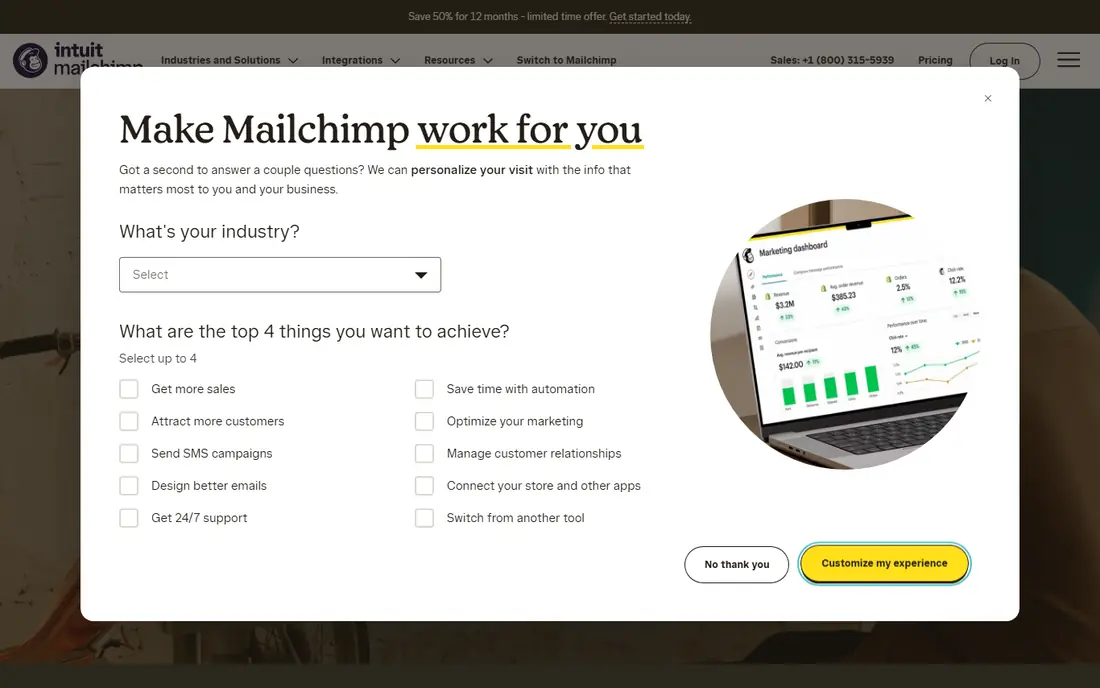
Choose Mailchimp for small companies that want the familiar all-rounder. The free plan is now a trial in all but name: 250 contacts, 500 sends per month, no automation or scheduling. And Mailchimp counts unsubscribed contacts toward your billing level until you manually archive them.
It remains a solid pick for companies already in its ecosystem, but budget alternatives now beat it on price at every list size. Mailchimp made newsletters normal for small firms, and it still has the broadest toolkit: campaigns, landing pages, signup forms, retargeting ads, predictive analytics. Two 2026 realities to know. Beyond that, essentials from $13 per month includes 500 contacts with entry-level automation and A/B testing. Standard from $20 layers on the journey builder, advanced segmentation and send-time optimization. Starting cost for Mailchimp: Free. A free plan is available with Mailchimp.
What to check first: Bills for unsubscribed contacts except when you archive them.
- Customer Journey builder for multi-step automation on Standard
- The deepest template library and 300-plus integrations
- Free plan slashed to 250 contacts and 500 sends with no automation
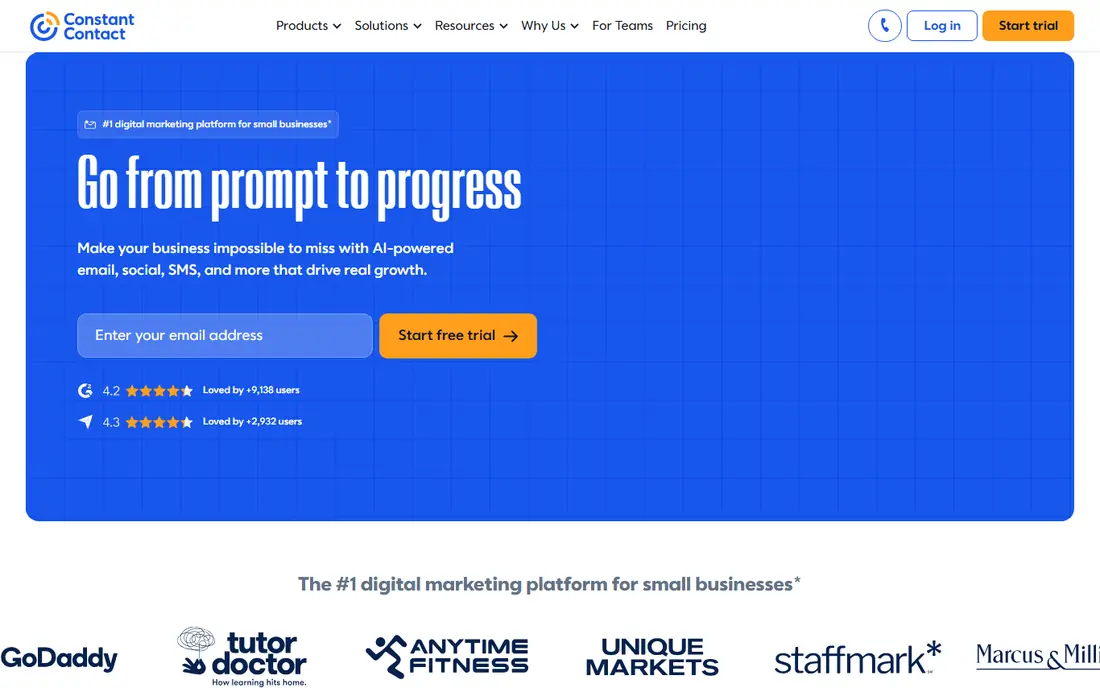
Constant Contact targets non-technical firms that value human support. List-size scaling is the steepest here: Lite hits $50 per month at just 2,500 contacts. More specifically, Constant Contact is the oldest name here.
Limits to weigh: Automation depth lags behind rivals.
Best features of Constant Contact: rare at this price.
Its pitch has not changed: email marketing for people who do not think of themselves as marketers. Pick it when simplicity and a human on the phone matter more than features per dollar. More specifically, Lite at $12 per month spans 500 contacts with entry-level broadcasts. Standard at $35 adds segmentation and automation; Premium at $80 brings advanced automation and SMS. Starting cost for Constant Contact: $12/month. Trial and free access: Free trial (60 days).
- Phone support on all premium plans
- Event management and social tools bundled in
- No permanent free plan
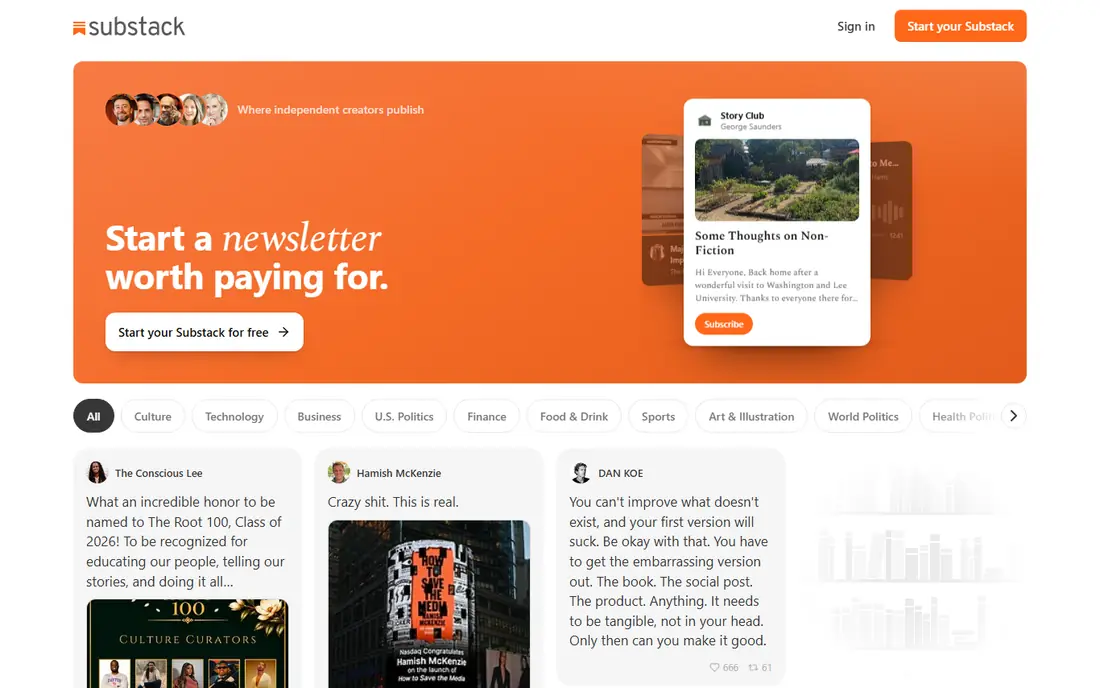
Where Substack fits: writers who want to publish free without paying anything. The price appears when you monetize. Substack takes 10 percent of premium subscription revenue on top of Stripe's processing fees.
Also, at $1,000 per month in subscriptions, that is $100 to Substack. Also, start here if the writing is the product; move to beehiiv or Ghost when the 10 percent starts to hurt. What you pay to start with Substack: Free. Substack includes a free tier.
The main drawbacks: 10% revenue cut on premium subscriptions brings up quick.
- Fully free at any list size at no cost newsletters
- Built-in discovery network brings readers you did not find yourself
- Restricted design customization and automation compared to email products
beehiiv serves newsletter operators building a real media business. beehiiv is the system for people who treat newsletters as firms. More specifically, launch is genuinely free to 2,500 subscribers with unlimited email sends, a website, custom domain and the recommendation network.
Watch-outs: Free plan excludes automations and monetization features.
The math favors beehiiv the moment you charge readers: its flat fee beats Substack's 10 percent once subscription revenue passes roughly $490 per month at small list sizes. Scale opens at $49 per month for up to 1,000 subscribers and brings monetization, automations, the ad network and surveys, with 0 percent taken from your premium subscriptions. From a buyer's view, the main limit is the climb: Scale hits $109 per month at 10,000 subscribers and $199 at 50,000. On cost, beehiiv starts like this: Free to 2,500 subscribers. Free access exists with beehiiv.
- 0% take rate on premium subscriptions from Scale up
- Ad network
- Scale pricing climbs with list size ($109/month at 10,000 subs)
Think of Ghost for publishers who want to own their platform outright. Ghost Pro's Starter plan at $15 per month handles 500 members with unlimited email sends; Publisher at $29 brings premium memberships and automation.
More specifically, the 2026 price rise moved Starter from $9 to $15, and the member-based scaling gets steep at large lists. Everything runs on 0 percent product fees. The starting price for Ghost: $15/month. Trial and free access: Free trial (14 days).
Honest limits: No permanent free hosted level.
- Website
- Blog and newsletter in one open-source system
- Pricing scales steeply with member count ($199/month at 100,000 members)
MailerLite serves small firms wanting automation on a budget. Expanding Business from $10 per month removes branding, layers on templates, RSS campaigns and dynamic content, with unlimited sends.
What to check first: Free plan cut to 500 subscribers in 2025.
The gaps are at the edges: no custom HTML editor or AI writing assistant below the $20 Advanced plan, and no phone support on any level. What you pay to start with MailerLite: Free. A free plan is available with MailerLite.
- Unlimited emails on premium plans
- Clean
- Advanced automation triggers and AI features need the $20 Advanced plan
Buttondown
Great for: Technical writers who want a minimalist Markdown newsletter
Buttondown works best for technical writers who want a minimalist Markdown newsletter. Premium plans start at $9 a month for up to 1,000 subscribers. The pricing is modular: tagging, analytics, RSS-to-email and premium subscriptions are each small extras.
Points against: Free level caps at 100 subscribers.
That modularity is both the charm and the trap. Also, Buttondown suits solo technical writers who want a tool, not a product, and who value privacy (no tracking pixels, no ad network). More specifically, the free level includes 100 subscribers with full features. On top of that, there are no design templates to speak of and no discovery network. Price to start with Buttondown: Free to 100 subscribers. Buttondown includes a free tier.
- Charges only for active subscribers, with 0% revenue share on premium levels
- Markdown-native editor that developers love
- Features like analytics and automations are premium extras that stack up
How we built this list
For each of the 7 tools we noted price, free plan or trial, fit for email marketing platforms for newsletters and the main limit, using vendor pages and documentation. Treat prices as a snapshot: vendors change plans often, so check the vendor site for the figure that applies today. We ordered the tools by general fit, then by how clearly pricing is shown, then by free access. A buyer with unusual needs may reorder them.
Pre-purchase checklist
- Check the vendor page for the current price: Constant Contact starts at $12/month here, and seats or billing terms can move it.
- Check what the free option really includes: Mailchimp, Substack, beehiiv and others offer a free plan, and usage caps differ.
- Use real work to test the free trial from Constant Contact and Ghost, rather than a demo project.
- Read the limits listed for Mailchimp first: free plan slashed to 250 contacts and 500 sends with no automation.
- Ask Mailchimp how an export works before you move any records in; an easy exit lowers the risk.
- Run a one or two week pilot of MailerLite with the people who will use it every day.
Frequently asked questions
Do these tools publish their prices?
Yes. Every tool from Mailchimp to Buttondown shows a starting price, though seats, add-ons and billing terms still change the final cost.
What is the cheapest option for email marketing platforms for newsletters in this list?
On published monthly entry prices, Constant Contact is the lowest here at $12/month. Entry price is only part of the cost, because seats, add-ons and billing terms can change the total.
How are the tools for email marketing platforms for newsletters ordered?
The order follows typical fit for email marketing platforms for newsletters, with Mailchimp first and Buttondown last, then price clarity and free access. It is editorial judgement, not a score, so another team could rank the tools differently.
Is Mailchimp the right pick for everyone comparing email marketing platforms for newsletters?
No single tool suits every team. Mailchimp comes first because it fits small businesses that want the familiar all-rounder, while Constant Contact suits non-technical businesses that value human support and Substack suits writers who want to publish free without paying anything. Match the tool to your own size, budget and workflow before deciding.
What is the best free newsletter product?
Mailchimp is the pick this page puts first, mainly for small businesses that want the familiar all-rounder. If your situation differs, Constant Contact suits non-technical companies that value human support, and Substack suits writers who want to publish free without paying anything. Compare price and limits before you decide.
Sources
See where you really rank - block by block
ProMapRanker scans Google Maps across a grid of your service area. Simple monthly plans from $19, white-label on every plan.
Start freeKeep reading
 zoho inventory alternatives
6 Alternatives to Zoho Inventory, Compared on Price and Fit
Zoho Inventory alternatives: 6 tools compared on price, free plans and fit. Katana leads the list for manufacturers. Fit and flaws are laid out for each entry.
Read → zoho crm alternatives
Best Zoho CRM Alternatives (2026)
Need Zoho CRM alternatives? We compare 7 tools on cost, free access and who each suits. Every pick gets a straight assessment. Built for quick decisions.
Read → zelle alternatives
Best Zelle Alternatives in 2026
Compare the best Zelle alternatives for sending money to friends, paying sellers and moving funds abroad, with honest notes on fees, speed and safety in 2026.
Read →