 ProMapRanker
Best Email Marketing Platforms for Ecommerce in 2026

Key takeaways
- Klaviyo suits data-heavy ecommerce brands, while Omnisend suits smaller stores that want email plus SMS at a lower entry price.
- Mailchimp suits general small businesses, while Drip and ActiveCampaign suit deeper automation for growing stores.
- Pricing rises with contacts, profiles, or sends, so model costs at your list size in six months, not just today.
- Free tiers help for testing, but ecommerce automation and branding removal usually need a paid plan.
Quick comparison
| Pick | Great for | Pricing starts at | Free tier | |
|---|---|---|---|---|
 Klaviyo | Data-heavy ecommerce marketing | $20 per month | Yes | Visit |
 Omnisend | Ecommerce email plus SMS | $16 per month | Yes | Visit |
 Mailchimp | General small business email | $13 per month | Yes | Visit |
 ActiveCampaign | Advanced automation | $15 per month | Free trial | Visit |
 Drip | Ecommerce automation | $39 per month | Free trial | Visit |
 Brevo | Budget multichannel sending | $9 per month | Yes | Visit |
 MailerLite | Simple value email | $12 per month | Yes | Visit |
 Sender | Affordable automation | $9 per month | Yes | Visit |
 Shopify Email | Simple Shopify sending | $1 per 1,000 emails | Yes | Visit |
The best email marketing platforms for ecommerce
We compared platforms that connect to online stores, trigger emails from shopping behaviour, and handle welcome series, abandoned carts, and post-purchase flows. The list covers ecommerce-first tools and strong general tools that work well for stores, so you can match depth, price, and ease of use to your store size.
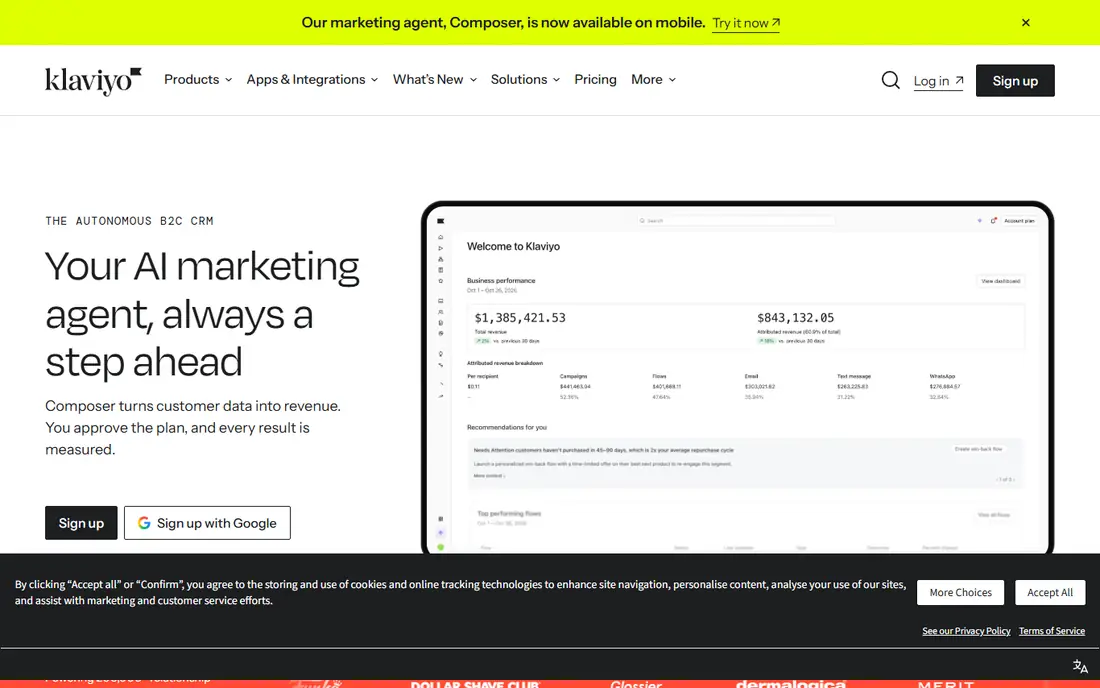
Klaviyo is the default pick for ecommerce brands that want to use purchase, browsing, and customer data in every email. It builds segments from store behaviour, triggers flows for welcome, cart abandonment, and post-purchase messages, and adds SMS beside email when a store needs it. For a growing store, that depth turns a simple newsletter tool into a retention engine.
The price model needs care. Klaviyo charges on active profiles, so a large list with many inactive contacts can cost more than expected. Clean your list regularly and model costs at your expected profile count before committing. For data-driven stores, the extra cost often pays for itself in better targeting.
- Deep Shopify and WooCommerce data
- Strong segmentation and flows
- SMS and email in one platform
- Costs rise steeply with active profiles
- Learning curve for advanced flows
- Free tier is limited to small lists
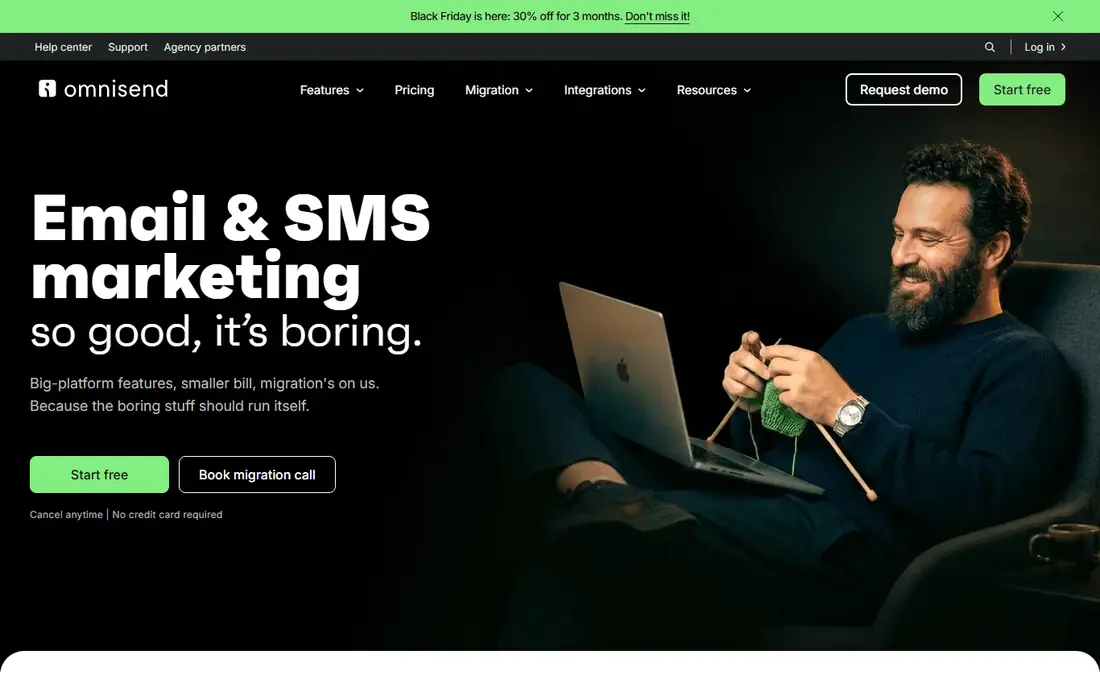
Omnisend is the value rival to Klaviyo for smaller stores. It offers ecommerce automation, product recommendations, and SMS plus push beside email, with a lower entry price for a similar contact count. Setup is straightforward, and store integrations cover the main platforms without a long implementation.
Larger brands may miss Klaviyo depth in segmentation and analytics, but many small and mid-size stores will not need that depth yet. For a store that wants solid automation and omnichannel messages without Klaviyo pricing, Omnisend is a strong first choice.
- Built for ecommerce from the start
- Email, SMS, and push in one tool
- Easier entry price than Klaviyo
- Reporting depth is thinner than Klaviyo
- Advanced segmentation needs higher plans
- Free tier has sending limits
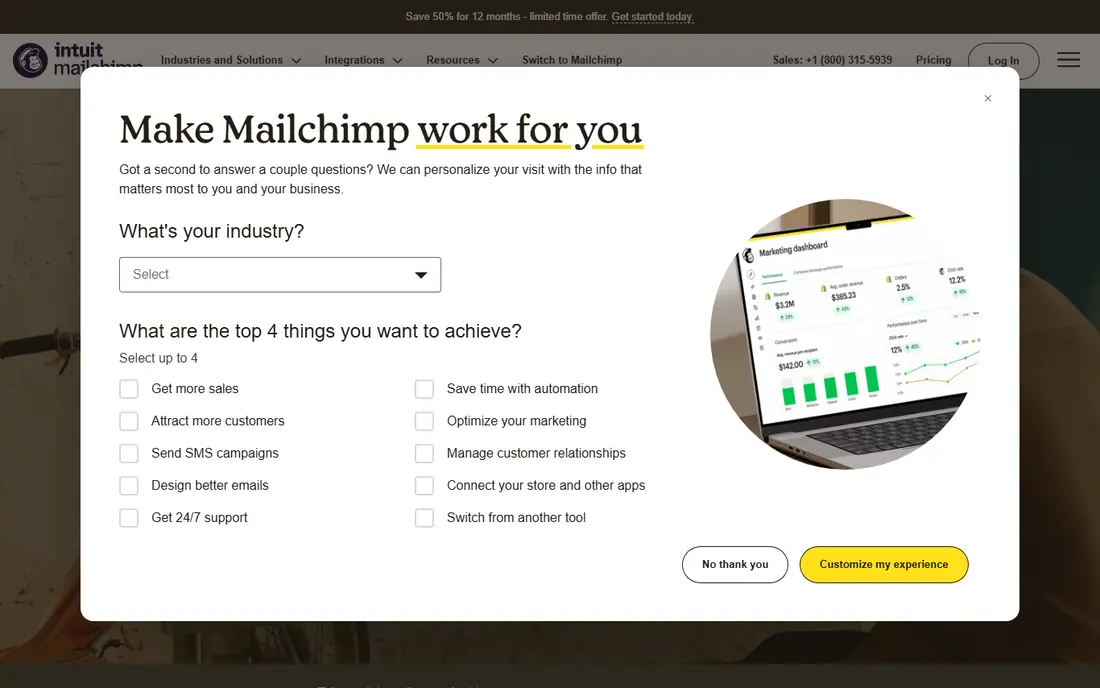
Mailchimp remains the best-known general email tool, and it works well for stores that mainly send campaigns and simple automations. Its editor is easy to learn, templates are plentiful, and integrations cover most store platforms and apps. For a small business that also sends non-store emails, that breadth is useful.
For deep ecommerce flows, Mailchimp is less specialised than Klaviyo, Omnisend, or Drip. Product data and segmentation are present but not as deep, and higher plans are needed for advanced automation. Choose Mailchimp for simplicity and familiarity, not for the deepest store automation.
- Huge integration base
- Easy templates and editor
- Familiar to many small teams
- Ecommerce automation is thinner than ecommerce-first tools
- Pricing rises with contacts
- Some features need higher plans
ActiveCampaign suits stores and businesses that need complex automation beyond standard welcome and cart flows. Its builder supports conditional paths, scoring, and CRM stages, which helps when a customer journey splits by behaviour, purchase history, or support contact. That flexibility is valuable for stores with varied product lines.
The trade-off is complexity and the lack of a free tier. A trial is enough to test the builder, but a team should budget time to learn it. For a store that mainly needs standard ecommerce flows, a simpler ecommerce tool may be faster. For a store with complex journeys, ActiveCampaign earns its price.
- Deep automation builder with conditional logic
- CRM tools included
- Strong for complex customer journeys
- No ongoing free plan, trial only
- Learning curve for advanced workflows
- Ecommerce depth varies by integration
Drip is built only for ecommerce, and that focus shows in its workflows and reporting. It tracks revenue from emails and flows, builds automation around store behaviour, and suits brands that judge email by sales, not just opens. For a store that lives on repeat purchases, that revenue lens is useful.
Entry price is higher than Klaviyo or Omnisend for a small list, and there is no ongoing free plan, only a trial. Drip fits best once a store has enough volume to justify its price with automation revenue. Smaller stores should start with a cheaper ecommerce tool and revisit Drip as they grow.
- Purpose-built for ecommerce automation
- Revenue-focused reporting
- Strong workflow builder for stores
- Higher entry price than many rivals
- No ongoing free plan
- Less suited to general newsletter use
Brevo, formerly Sendinblue, is a budget multichannel platform that covers email, SMS, WhatsApp, and a basic CRM. Its send-based pricing suits stores with large lists but lower send frequency, since cost follows emails sent rather than contacts stored. That model can save money for seasonal stores.
Ecommerce segmentation is not as deep as Klaviyo, so stores that rely on detailed purchase behaviour may find it limiting. For a store that wants affordable multichannel messages and simple automation, Brevo is a strong value pick. Check the contact caps and send limits on the chosen plan before committing.
- Email, SMS, WhatsApp, and CRM in one place
- Priced on sends rather than contacts on many plans
- Low entry price
- Ecommerce data depth is thinner than Klaviyo
- Some features need approval or higher plans
- Interface can feel broad
MailerLite suits small stores and beginners who want a clean, affordable email tool without a steep learning curve. Its editor is fast, templates are tidy, and basic automation covers welcome emails and simple sequences. For a store just starting email marketing, that simplicity keeps momentum up.
It is not an ecommerce specialist. Product recommendations, deep store segmentation, and SMS are thinner or absent, so a growing store may outgrow it. Use MailerLite while simplicity and price matter most, and move to an ecommerce-first tool when store automation becomes central to revenue.
- Simple editor and automation
- Good value for small lists
- Easy to learn for beginners
- Ecommerce features are thinner than ecommerce-first tools
- SMS is not included
- Advanced automation needs higher plans
Sender is a budget option that includes automation at a low price, which many budget tools gate behind higher plans. Small stores can build welcome flows, cart reminders, and newsletters without paying for a premium tier first. Setup is quick, and the free tier covers testing and very small lists.
The integration base and reporting are thinner than Klaviyo or Mailchimp, so larger stores may miss depth. For a small store on a tight budget, Sender offers a fair balance of price and automation. Compare its store integration with your platform before committing, since that connection matters most.
- Low entry price with automation included
- Free tier for small lists
- Easy setup for small stores
- Smaller integration base than larger rivals
- Reporting depth is basic
- Support options vary by plan
Shopify Email is the simplest option for a Shopify store that only needs basic campaigns. It lives inside Shopify admin, uses store data directly, and includes a free monthly allowance before per-email charges apply. For a new store sending occasional campaigns, it avoids another subscription entirely.
It is not a replacement for a full platform. Automation, segmentation, and SMS are basic, and it only works for Shopify stores. Use Shopify Email while your needs are simple, and move to Klaviyo or Omnisend when flows, segmentation, and multichannel messages become important.
- Built into Shopify with no separate tool to learn
- Free monthly email allowance
- Simple templates for store campaigns
- Shopify only
- Automation and segmentation are basic
- Not a full email marketing platform
How we picked these
We compared official feature pages, pricing pages, and store integration docs, and we favoured platforms with live ecommerce integrations, automation for store behaviour, and clear pricing or free tiers. We kept a mix of ecommerce-first and general tools, and we excluded tools with no credible store integration. Where a price could not be confirmed from a vendor page in our checks, we wrote See website.
How to choose an email platform for your store
Start with your store platform and list size, since those two facts narrow the list fast. A Shopify-only tool is useless on WooCommerce, and a tool priced on contacts will cost very differently from one priced on sends. Check the native integration first, then test a real flow, such as an abandoned cart email, before paying.
Test the flows that earn money
Welcome, cart abandonment, browse abandonment, and post-purchase flows usually drive more revenue than a weekly campaign. Build one of each in a trial and check how easy it is to personalise product blocks, set delays, and exclude recent buyers. A platform that makes those flows hard will cost sales even if its campaign editor looks good.
Model price at your next list size
Most platforms rise with contacts, profiles, or sends, so a price that looks cheap at 500 contacts can jump at 5,000. Model costs at your expected size in six months, including SMS if you plan to use it. Clean inactive contacts regularly, since many tools charge for profiles you no longer email.
Protect deliverability from day one
Use a custom sending domain, authenticate it, and warm up sending gradually rather than blasting a full list at once. Keep list hygiene tight, remove hard bounces, and honour unsubscribes promptly. A good platform helps with authentication, but sender reputation still depends on how you send.
Frequently asked questions
What is the best email marketing platform for ecommerce?
Klaviyo is the strongest pick for data-heavy ecommerce brands, while Omnisend suits smaller stores that want email plus SMS at a lower price. For a Shopify-only store with simple needs, Shopify Email is enough to start. Choose based on list size, automation depth, and budget.
What is the best email marketing tool for ecommerce on a budget?
Brevo, MailerLite, and Sender all offer low entry prices with free tiers for small lists. Brevo suits multichannel sending, MailerLite suits simplicity, and Sender suits affordable automation. Compare store integrations and send limits before choosing, since those matter more than a small price gap.
What is the best ecommerce email marketing software for automation?
Drip and ActiveCampaign offer the deepest automation on this list, with Drip focused on ecommerce revenue and ActiveCampaign on complex customer journeys. Klaviyo also offers strong ecommerce flows with deep store data. Test a cart abandonment flow in each trial before deciding.
What is the best email marketing platform for a Shopify store?
Klaviyo and Omnisend both integrate deeply with Shopify and suit most stores, with Klaviyo deeper on data and Omnisend cheaper at entry level. Shopify Email suits very simple Shopify sending with no extra subscription. Pick Klaviyo or Omnisend once automation drives a meaningful share of sales.
How much should a small store pay for email marketing?
Many small stores start free or at $9 to $20 per month, then pay more as contacts, profiles, or sends grow. Model costs at your expected list size, not just today, and include SMS separately if you use it. A platform that looks cheap at 500 contacts can become costly at 5,000.
Sources
See where you really rank - block by block
ProMapRanker scans Google Maps across a grid of your service area. Simple monthly plans from $19, white-label on every plan.
Start freeKeep reading
 zoho inventory alternatives
6 Alternatives to Zoho Inventory, Compared on Price and Fit
Zoho Inventory alternatives: 6 tools compared on price, free plans and fit. Katana leads the list for manufacturers. Fit and flaws are laid out for each entry.
Read → zoho crm alternatives
Best Zoho CRM Alternatives (2026)
Need Zoho CRM alternatives? We compare 7 tools on cost, free access and who each suits. Every pick gets a straight assessment. Built for quick decisions.
Read → zelle alternatives
Best Zelle Alternatives in 2026
Compare the best Zelle alternatives for sending money to friends, paying sellers and moving funds abroad, with honest notes on fees, speed and safety in 2026.
Read →