 ProMapRanker
Best Email Marketing Platforms for E-Commerce in 2026

Key takeaways
- Klaviyo is our pick for growth-stage stores that will use deep segmentation and revenue reporting, while Omnisend suits smaller stores that want email and SMS in one simpler plan.
- Pricing scales with contacts or sends, so model your cost at your real list size, not at the starter tier shown on a pricing page.
- Abandoned cart, welcome, browse abandonment, and post-purchase flows drive most store value, so test those flows before you judge design polish.
- A generic newsletter tool can send store emails, but store-native tools sync orders, products, and customer behaviour, which makes automation far easier.
Quick comparison
| Pick | Great for | Pricing starts at | Free tier | |
|---|---|---|---|---|
 Klaviyo | Growth-stage DTC stores | $20 per month | Yes | Visit |
 Omnisend | Smaller stores wanting email and SMS | $16 per month | Yes | Visit |
 Mailchimp | Simple store newsletters | See website | Yes | Visit |
 Drip | E-commerce automation at a flatter price | See website | No | Visit |
 ActiveCampaign | Advanced automation beyond email | See website | Free trial | Visit |
 Brevo | Budget stores sending by volume | See website | Yes | Visit |
 Constant Contact | Small stores wanting simple campaigns | See website | Free trial | Visit |
 Shopify Email | Shopify stores starting out | Free | Yes | Visit |
The best email marketing platforms for e-commerce
We compared the platforms below on store integrations, automation, segmentation, reporting, deliverability tools, and pricing at real list sizes.
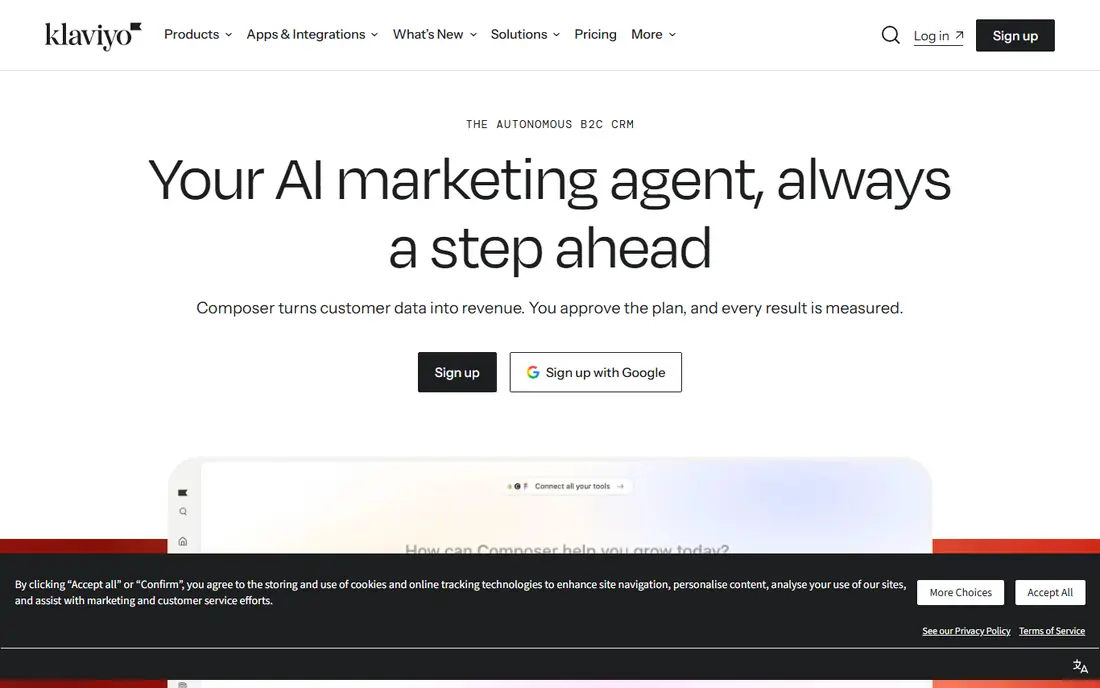
Klaviyo is the default choice for serious direct-to-consumer stores, and the reason is the data model underneath it. Orders, products, browsing, and purchase history sync from Shopify in near real time, so segments can target people who viewed a product, bought twice, or have not ordered in ninety days. Predictive tools for lifetime value and churn risk help larger teams decide who gets a discount and who gets a plain reminder.
The honest catch is cost. Klaviyo bills on active profiles, so a messy list costs real money, and SMS, reviews, and analytics add-ons sit on top of the email plan. The free plan covers up to 250 profiles with 500 sends a month, and the paid email plan starts at $20 per month for 251 to 500 profiles in recent listings. If your store sends a monthly newsletter only, Klaviyo is overkill. If email drives a large share of revenue, the reporting alone can justify it.
- Deep Shopify data sync
- Strong segmentation and predictive tools
- Per-flow revenue reporting
- Cost rises fast as lists grow
- SMS and add-ons are billed separately
- Setup takes time
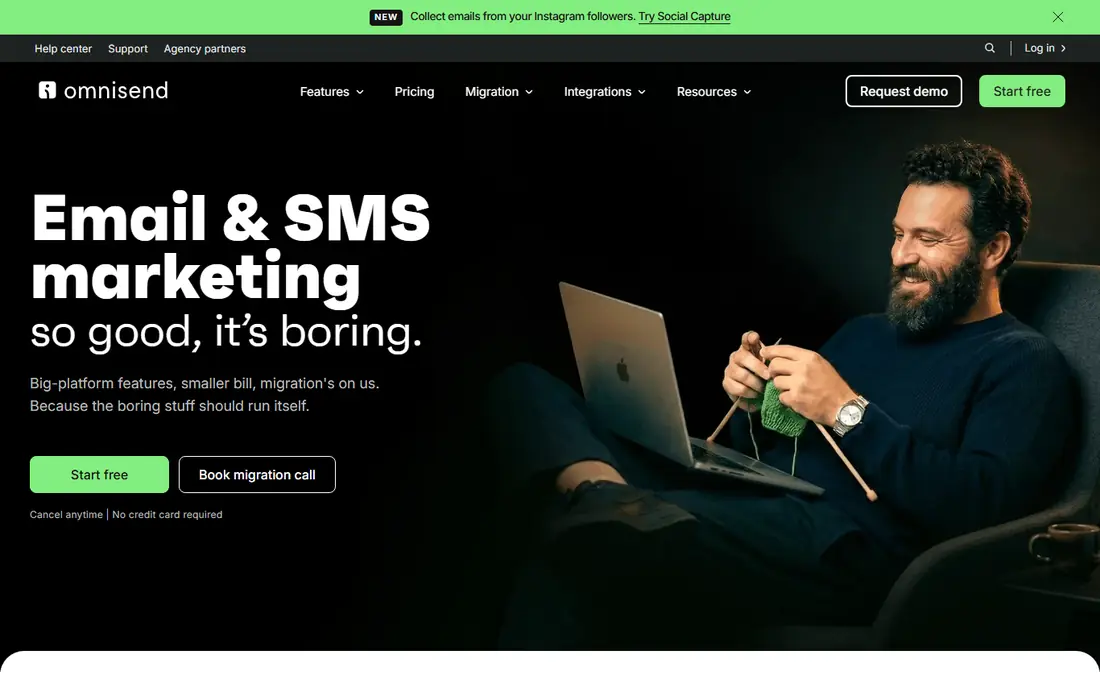
Omnisend is the best balance for many small and mid-size stores. It covers email, SMS, and web push in one dashboard, with prebuilt flows for welcome series, abandoned carts, browse abandonment, and post-purchase follow-up. Setup is faster than Klaviyo, and support is available on every plan, including free, which is rare in this group. Shopify, WooCommerce, and BigCommerce integrations cover the main store platforms.
Pricing is clearer than most rivals at small sizes. The free plan covers 250 contacts and 500 emails a month, Standard starts at $16 per month, and Pro starts at $59 per month with unlimited emails in recent listings. The main limit is depth: segmentation and predictive tools do not match Klaviyo for large, complex stores. For a store that wants solid automation without a long setup, Omnisend is the easier buy.
- Email, SMS, and push in one place
- Fast setup with prebuilt flows
- Support on all plans
- Segmentation depth trails Klaviyo
- SMS needs the Pro plan for newer subscribers
Mailchimp is the easiest tool here to start with. The editor is friendly, templates look polished, and a new user can send a decent first campaign without reading a manual. For a store that mainly sends newsletters, announcements, and simple promotions, that ease matters more than advanced segmentation. Integrations with major store platforms cover the basics, including order data and simple customer journeys.
The limit shows up as a store grows. Abandoned cart and product-based automation exist, but they do not run as deep as store-native rivals, and revenue reporting is more basic. Pricing also scales with contacts, so a large list can cost more than a specialist tool at the same size. Pick Mailchimp for simplicity and design, not for the deepest store automation.
- Friendly editor and templates
- Easy onboarding
- Broad integrations
- E-commerce automation is shallower than Klaviyo or Omnisend
- Pricing scales with contacts
Drip is built for e-commerce from the start, with workflows for abandoned carts, post-purchase sequences, and win-back campaigns. Its pricing model is a key difference: paid plans include unlimited email sends and every feature, so you are billed for people, not for each send. That suits stores that send often, since a busy month does not push the bill up in the same way as a send-metered plan.
The downside is the lack of a permanent free plan, so you need a trial to test it properly. The template library is also smaller than Mailchimp, though the workflow builder makes up for that for automation-focused teams. If you send frequently and want predictable pricing, Drip deserves a trial next to Klaviyo and Omnisend.
- Unlimited sends on paid plans
- All features included in the price
- Strong e-commerce workflows
- No permanent free plan
- Smaller template library than Mailchimp
ActiveCampaign suits stores that want email plus customer relationship tools in one place. The automation builder handles multi-step journeys with conditions, splits, and scoring, which goes beyond simple cart reminders. Built-in CRM features help small sales teams track wholesale or high-value customers alongside email subscribers. Segmentation is strong, and reporting covers the full journey rather than a single send.
That power comes with complexity. Setup takes longer than Omnisend, and store data needs careful mapping to get the most from it. Pricing also depends on contacts and the feature tier, so get a quote at your real list size. If your store also runs sales outreach or a service arm, ActiveCampaign can replace two tools. If you only need store email, a specialist tool is simpler.
- Powerful automation builder
- CRM features in the same tool
- Strong segmentation
- Steeper learning curve
- E-commerce features need setup
- Pricing varies by contacts and features
Brevo, formerly Sendinblue, is a budget-friendly option for stores that watch send volume more than list size. Some plans price by monthly sends, which can suit a store with a large but quiet list. Email, SMS, and chat tools sit in one account, and a free tier lets you test sending before paying. The editor covers the usual campaign needs without a long learning curve.
The trade is depth. Store automation and product-based flows exist, but they feel less native than Klaviyo or Omnisend, and templates are plainer than Mailchimp. For a store on a tight budget that sends regular campaigns, Brevo is a sound pick. For a store that lives on complex flows, pay for a specialist instead.
- Prices by sends rather than contacts in some plans
- Email plus SMS and chat
- Free tier to start
- E-commerce automation is less store-native than Klaviyo
- Templates are plainer
Constant Contact is the simplest tool in this list for a small store owner who does everything alone. Campaigns are quick to build, templates are clean, and support is easy to reach. Extra tools for events, surveys, and social posting help a local store that also runs in-person events or markets. If email is one job among many, that simplicity is a real benefit.
Automation is the limit. Welcome and cart flows exist, but they do not match the depth of Klaviyo, Drip, or ActiveCampaign. Pricing also rises as contacts grow, so a growing list needs regular cost checks. Pick Constant Contact for ease and support, not for advanced automation.
- Very easy campaign builder
- Good support
- Event and survey tools
- Automation is basic compared with rivals
- Pricing rises with list size
Shopify Email is the right starting point for a new Shopify store. It lives inside the Shopify admin, pulls products and customer data automatically, and needs no integration setup. A free monthly sends allowance covers early campaigns, which keeps costs at zero while a store finds its feet. For a store sending simple promotions and order updates, that is often enough.
The limits appear quickly as marketing grows. Automation, segmentation, and reporting are basic next to Klaviyo or Omnisend, and it only works for Shopify stores. Treat Shopify Email as a launch tool, not a long-term platform for a large store. When flows and segments start to matter, migrate to a specialist before bad habits build up.
- Built into Shopify
- No separate tool to learn
- Free monthly sends allowance
- Shopify only
- Automation and segmentation are basic
- Limited design depth
How we picked these
We compared official pricing pages, feature pages, and store integration docs for platforms that serve e-commerce stores in October 2026. We favoured tools with store data sync, abandoned cart flows, and revenue reporting, and we noted where pricing scales with contacts, sends, or add-ons. Where pricing varied by list size or changed recently, we wrote See website rather than quoting a tier that may not match your list.
What to check before you choose
Price it at your list size in six months
Starter prices look small until your list doubles. Check the price at 1,000, 5,000, and 25,000 contacts, and add SMS, reviews, or analytics costs if you plan to use them. Clean your list before you migrate, since inactive profiles cost money on contact-based plans.
Test the flows that earn money
Build a welcome series, an abandoned cart flow, and a post-purchase sequence during the trial. Check whether product blocks pull real images and prices, whether discounts apply correctly, and whether revenue shows up per flow. A pretty template means little if the cart flow misses orders.
Check deliverability basics
Confirm the tool supports a custom sending domain, authentication setup, and list hygiene tools. Ask how it handles bounces, unsubscribes, and spam complaints, and whether support helps with deliverability on your plan. A cheap plan that lands in spam is not cheap.
Frequently asked questions
What is the best email marketing platform for e-commerce?
Klaviyo is the best pick for growth-stage stores that will use deep segmentation and revenue reporting. Omnisend is the best pick for smaller stores that want email and SMS without a steep setup. The right answer depends on list size, store platform, and how much automation you will actually use.
What is the best email marketing software for e-commerce on a budget?
Omnisend and Brevo are the strongest budget picks. Omnisend gives small stores a useful free plan and a $16 per month Standard start, while Brevo suits stores that prefer send-based pricing. Shopify Email is free to start for Shopify stores, but it is basic.
What are the best e-commerce email marketing tools for abandoned carts?
Klaviyo, Omnisend, and Drip all include strong abandoned cart flows with product blocks and timing controls. Test the flow with a real cart during a trial, since timing, discount rules, and product data handling differ between tools.
Is Klaviyo or Omnisend better for Shopify?
Klaviyo has the deeper Shopify sync and reporting, which suits larger stores. Omnisend is faster to set up and cheaper at small sizes, which suits new and mid-size stores. If you run a large store with complex segments, Klaviyo usually wins. If you want solid flows fast, Omnisend wins.
How much does e-commerce email marketing cost?
Costs vary widely by list size and sends. Small stores can start free or at $16 to $20 per month, while a store with 10,000 contacts may pay $150 per month or more on Klaviyo in recent listings. Always price the plan at your real contact count and add SMS costs separately.
Can I switch email platforms without losing subscribers?
Yes, if you export subscribers, consent records, and segments carefully and set up domain authentication on the new tool. Warm up sending on the new platform, rebuild key flows before you switch off the old one, and keep unsubscribes and bounces in the import. A rushed switch hurts deliverability more than a slow one.
Sources
See where you really rank - block by block
ProMapRanker scans Google Maps across a grid of your service area. Simple monthly plans from $19, white-label on every plan.
Start freeKeep reading
 outreach alternatives
Outreach Alternatives in 2026
Compare outreach alternatives for 2026, from Salesloft and Apollo to HubSpot and Lemlist, with pricing, channels, features, limits, and honest trade-offs.
Read → best web conference tools
Best Web Conference Tools in 2026
Compare the best web conference tools for meetings, webinars and team calls, with current pricing, free plans and honest limits for each option here today.
Read → best voice cloning tools
Best Voice Cloning Tools in 2026
Compare the best voice cloning tools in 2026, from ElevenLabs and Descript to Resemble and Cartesia, with consent rules, pricing, licenses, and limits.
Read →