 ProMapRanker
Best Email Marketing Automation Tools in 2026

Key takeaways
- ActiveCampaign suits teams that need deep automation, while Mailchimp suits beginners who want a simple start.
- Klaviyo is built for e-commerce, with purchase data and flows that follow the customer journey from browse to repeat order.
- Brevo is the budget pick for large lists with infrequent sends, because it prices by email volume rather than by contact count.
- Pricing rises with list size on most platforms, so compare the cost at your actual list size, not just the entry price.
Quick comparison
| Pick | Great for | Pricing starts at | Free tier | |
|---|---|---|---|---|
 Mailchimp | Beginners and small teams | $13 per month | Yes | Visit |
 Klaviyo | E-commerce automation | $20 per month | Yes | Visit |
 ActiveCampaign | Deep automation workflows | $15 per month | Free trial | Visit |
 Brevo | Budget volume pricing | $9 per month | Yes | Visit |
 HubSpot Marketing Hub | CRM plus email automation | $20 per month | Yes | Visit |
 Kit | Creator newsletters | See website | Yes | Visit |
 Constant Contact | Simple campaigns and events | $12 per month | Free trial | Visit |
 GetResponse | Email plus funnels | $19 per month | Free trial | Visit |
 Omnisend | E-commerce flows and SMS | $16 per month | Yes | Visit |
 MailerLite | Clean and low-cost sending | See website | Yes | Visit |
The best email marketing automation tools
Email automation means sending the right message after a trigger, such as a signup, a purchase, or an abandoned cart, without writing each email by hand. We compared official pricing pages, automation builders, and integration lists for tools that U.S. small businesses can buy today.
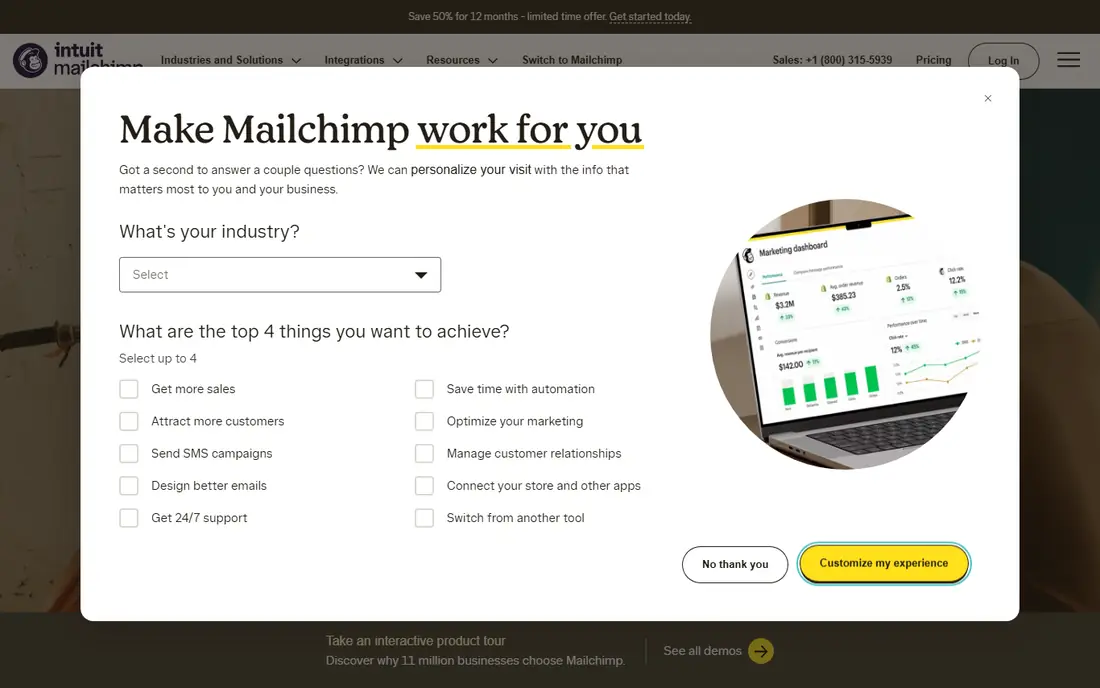
Mailchimp remains the easiest entry point for email marketing automation. Its templates, drag-and-drop builder, and guided setup help a small team send a first campaign without hiring a specialist. Basic automations cover welcome emails, abandoned carts, and simple follow-ups, and send-time optimisation can improve open rates for small lists.
The drawback appears as you grow. Mailchimp counts contacts in ways that can raise your bill faster than rivals, and its automation builder is less flexible than ActiveCampaign or Klaviyo for multi-branch journeys. If your list stays small and your flows stay simple, Mailchimp is a fine pick. If you plan complex segmentation and many branches, start with a tool built for that work.
- Easy campaign builder and templates
- Free plan for up to 500 contacts in many listings
- Send-time optimisation and basic automations
- Price rises steeply as lists grow
- Automation builder feels limited for complex journeys

Klaviyo is built for online stores, and that focus shows in every flow. It pulls purchase, browse, and cart data into segments, so you can send a welcome series, a post-purchase flow, a win-back flow, and a replenishment reminder that all react to what a customer actually did. Predictive features can flag likely buyers and likely churn, which helps stores focus effort where it matters.
The price is the honest catch. Klaviyo starts at a modest level for small lists, but costs climb as profiles grow, and SMS is priced separately. Non-e-commerce teams will find many features they never use. If you run a store on Shopify or WooCommerce and email drives a large share of revenue, Klaviyo is often worth its price. If you send a simple monthly newsletter, a cheaper tool will do.
- Deep Shopify and WooCommerce integrations
- Purchase-based flows and predictive data
- Strong segmentation by behaviour
- Costs rise quickly at larger list sizes
- Overkill for simple newsletters
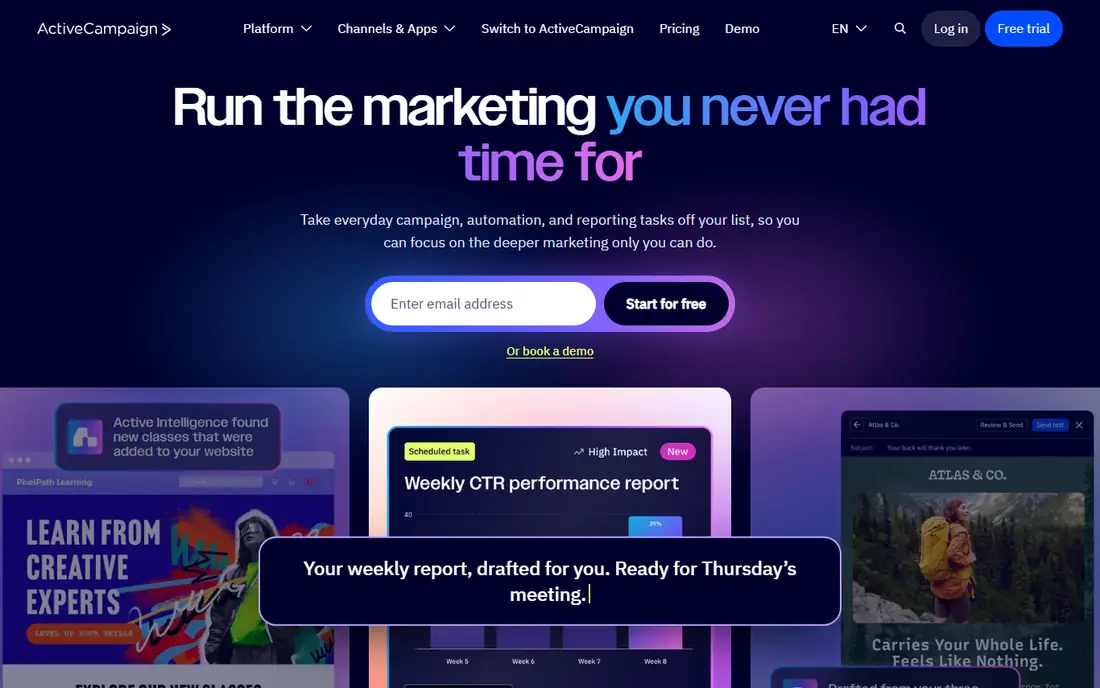
ActiveCampaign is our pick for teams that need real automation, not just scheduled campaigns. Its builder supports branching by behaviour, tags, scores, and goals, so a lead can move through different paths based on clicks, site visits, and form answers. Built-in CRM and lead scoring help sales teams follow up at the right time, without a separate tool.
The trade-off is complexity and price. There is no free plan, and new users may need a few hours to learn the builder and the tagging system. Small teams that send only a newsletter will not use most of what ActiveCampaign offers. Teams that run nurture sequences, onboarding flows, and sales follow-ups will find it one of the most capable tools at its price.
- Flexible automation builder with branching and goals
- CRM and lead scoring built in
- Good deliverability tools
- No free plan, only a trial
- Learning curve is steeper than Mailchimp
Brevo, formerly Sendinblue, suits teams with large lists who send infrequently. Because paid plans price by email volume rather than by contact count, a list of 20,000 contacts that receives one email a month can cost far less than on a contact-priced rival. The free plan, with 300 emails per day, is enough for very small senders to test the platform.
Automation is serviceable rather than standout. You can build welcome flows, transactional messages, and basic journeys, but complex branching and scoring are weaker than in ActiveCampaign or Klaviyo. Brevo is best for newsletters, announcements, and transactional mail where cost control matters more than deep journey design.
- Unlimited contacts on paid plans in many listings
- Free plan allows 300 emails per day
- SMS and transactional email in the same platform
- Automation builder is thinner than ActiveCampaign
- Template design is less polished than Mailchimp
HubSpot Marketing Hub fits teams that already use HubSpot CRM or that want marketing and sales in one place. Contacts, deals, forms, and email live in the same system, so a workflow can react to a deal stage change or a form submission without syncing data between tools. Reporting ties email opens and clicks to pipeline, which helps teams show what email actually contributes.
The price jump is the warning. Starter plans are affordable, but advanced automation, A/B testing depth, and custom reporting sit in Pro plans that cost far more. Small teams should start on Starter or the free CRM tools and move up only when they need Pro features. If your team already lives in HubSpot, the integration value often outweighs the higher price.
- Free CRM included
- Email, forms, landing pages, and reporting in one system
- Strong integration with sales tools
- Pro features jump sharply in price
- Full power needs time to set up
Kit, formerly ConvertKit, is built for creators who sell courses, books, and paid newsletters. Its automation builder is visual and easy to follow, with sequences that welcome new subscribers, deliver a free course, and pitch a paid product in order. Landing pages and forms are included, so a creator can grow a list without a separate page builder.
The limit is e-commerce depth. Kit does not match Klaviyo for purchase-based flows, product recommendations, or store data. Pricing also varies by tier, so check the current price for your subscriber count before you commit. For writers, podcasters, and course sellers, Kit is a calm, focused choice. For stores, Klaviyo or Omnisend fits better.
- Simple subscriber management for creators
- Visual automation builder for sequences
- Landing pages and paid newsletter options
- E-commerce automation is thinner than Klaviyo
- Pricing varies by subscriber tier and billing term
Constant Contact suits small businesses that want to send newsletters, promote events, and post to social media without learning a complex platform. Its editor is straightforward, its templates cover common small business needs, and its support is a plus for teams without a marketing specialist. Event registration and surveys add value for local businesses and nonprofits.
Automation is the weak spot. You can set up welcome emails and simple series, but branching journeys and behavioural scoring are limited. Constant Contact is best for teams that send regular campaigns and simple automations, and that value ease and support over deep workflow design. Larger teams with complex journeys should look at ActiveCampaign or HubSpot.
- Very easy campaign and event tools
- Good support and templates
- Social posting in the same account
- Automation is basic compared with ActiveCampaign
- No free plan, only a trial
GetResponse is a broad platform that covers email, funnels, landing pages, and webinars. That breadth suits small businesses that want one account for a lead magnet, a landing page, a webinar, and a follow-up sequence. Its automation builder supports scoring and branching, and its templates help teams launch campaigns quickly.
The entry price is higher than budget rivals, and the interface packs many features into one dashboard, which can overwhelm new users. GetResponse is best for teams that will use at least two of its tools, such as email plus webinars or email plus funnels. If you need email alone, a simpler tool may cost less and feel cleaner.
- Email, landing pages, webinars, and funnels in one platform
- Automation builder with scoring
- Good template library
- Entry price is higher than Brevo for small lists
- Interface can feel busy for new users
Omnisend is a strong Klaviyo alternative for smaller stores. It offers pre-built flows for abandoned carts, browse abandonment, welcome series, and post-purchase follow-ups, and it can combine email and SMS in the same workflow. That combination helps stores reach customers who ignore email but read texts, without managing two separate tools.
The focus is e-commerce, so B2B teams that need lead scoring, CRM, and long nurture journeys will find Omnisend thinner than ActiveCampaign or HubSpot. Pricing also rises with contacts, so compare Omnisend and Klaviyo at your actual list size. For a store that wants ready-made flows and SMS in one place, Omnisend is a practical, lower-friction pick.
- Pre-built e-commerce flows for cart, browse, and post-purchase
- Email plus SMS in one workflow
- Shopify integration
- Less suited to B2B lead nurture
- Pricing rises with contact count
MailerLite appeals to teams that want a clean tool at a low price. Its editor is easy to use, its automation builder covers welcome sequences and basic journeys, and its paid plans stay affordable for growing lists. The free plan lets small senders start without a card, which is useful for new blogs and small shops.
Depth is the trade-off. Segmentation, scoring, and complex branching are simpler than in ActiveCampaign, and the integration list is smaller than Mailchimp. MailerLite is best for newsletters, simple sequences, and small teams that value a tidy interface and predictable pricing over advanced workflow features.
- Clean editor and simple automation
- Free plan for small lists
- Low-cost paid plans for growing teams
- Segmentation and automation depth are less than ActiveCampaign
- Fewer native integrations than Mailchimp
How we picked these
We compared official pricing pages, automation builders, and integration lists for email marketing platforms that U.S. businesses can buy today. We kept only tools that offer true automation, such as triggered flows and branching sequences, and we left out simple bulk senders with no automation. We weighed ease of use, automation depth, e-commerce features, deliverability tools, and price at small and mid-size lists.
We did not send live campaigns for this roundup, and we did not claim deliverability scores we could not verify. Instead we compared published features and pricing, and we noted where pricing depends on list size or send volume. Email prices change, so check the pricing page for your exact contact or send volume before you buy, and test deliverability with your own domain setup.
How to choose an email automation platform
Start with your list size and your main flow. A store needs cart and post-purchase flows, a creator needs welcome and sales sequences, and a B2B team needs lead nurture and scoring. Pick the platform that does your main flow well, rather than the platform with the longest feature list. A tool that handles your top three flows cleanly will serve you better than a tool with twenty flows you never open.
Next, compare total cost, not just the entry price. Check the price at 1,000, 5,000, and 10,000 contacts, and check how unsubscribed contacts are counted. Some platforms charge for contacts who have opted out, which can raise your bill for no benefit. Also check SMS pricing separately, since SMS is often an add-on that can double a small bill.
Finally, protect deliverability from day one. Set up domain authentication, use a recognisable sender name, clean bounces and unengaged contacts regularly, and start new flows with your most engaged subscribers. A good platform helps with authentication and list hygiene, but it cannot fix a list bought from a third party or a sender domain with a poor reputation. Build your list with clear consent, and your automations will perform better on any platform here.
Frequently asked questions
What is the best email marketing automation platform?
ActiveCampaign is a strong pick for deep automation, Klaviyo leads for e-commerce, and Mailchimp suits beginners. The best platform depends on your main flow, your list size, and how much complexity your team will actually use.
What is the best email marketing software with automation for small business?
MailerLite and Brevo are good low-cost picks for small teams, while Constant Contact suits teams that value ease and support. ActiveCampaign is better if you need branching nurture sequences from the start.
Is there a free email marketing automation tool?
Yes, for small lists. Mailchimp, Klaviyo, Brevo, Kit, Omnisend, and MailerLite all offer free plans with limits on contacts or sends, and HubSpot offers free CRM tools with limited email features. Paid plans are needed for larger lists and advanced automation.
How much does email marketing automation cost?
Entry prices on this list range from $9 to $20 per month for small lists, but costs rise with contacts or send volume. Compare the price at your actual list size, check SMS pricing separately, and watch for charges on unsubscribed contacts.
What is the best platform for email marketing automation for e-commerce?
Klaviyo is the leading pick for e-commerce automation, with Omnisend as a strong alternative for smaller stores. Both offer purchase-based flows, cart recovery, and post-purchase sequences tied to store data.
Can I automate welcome emails and abandoned carts?
Yes, all tools on this list offer welcome flows, and most offer cart recovery for stores. Klaviyo, Omnisend, and ActiveCampaign offer the most flexible versions, with branching by behaviour and timing.
Sources
See where you really rank - block by block
ProMapRanker scans Google Maps across a grid of your service area. Simple monthly plans from $19, white-label on every plan.
Start freeKeep reading
 zoho inventory alternatives
6 Alternatives to Zoho Inventory, Compared on Price and Fit
Zoho Inventory alternatives: 6 tools compared on price, free plans and fit. Katana leads the list for manufacturers. Fit and flaws are laid out for each entry.
Read → zoho crm alternatives
Best Zoho CRM Alternatives (2026)
Need Zoho CRM alternatives? We compare 7 tools on cost, free access and who each suits. Every pick gets a straight assessment. Built for quick decisions.
Read → zelle alternatives
Best Zelle Alternatives in 2026
Compare the best Zelle alternatives for sending money to friends, paying sellers and moving funds abroad, with honest notes on fees, speed and safety in 2026.
Read →