 ProMapRanker
Best Email Automation Tools in 2026

Key takeaways
- ActiveCampaign is our pick for deep automation, with branching workflows, lead scoring and a built-in CRM, but it has no free plan.
- Brevo is the best value for large lists that mail lightly, because its free plan allows unlimited contacts with a daily send limit.
- Klaviyo suits ecommerce stores that want purchase-based flows, while Mailchimp suits beginners who want a simple start.
- Kit suits creators and newsletter writers, and MailerLite suits small teams that want a simple, low-cost tool.
- Price rises with contacts, profiles or sends, so compare platforms at your real list size, not just at the entry tier.
Quick comparison
| Pick | Great for | Pricing starts at | Free tier | |
|---|---|---|---|---|
 Mailchimp | Beginners and small businesses | $13 per month | Yes | Visit |
 Klaviyo | Ecommerce brands with purchase data | $20 per month | Yes | Visit |
 ActiveCampaign | Advanced automation and CRM | $15 per month | Free trial | Visit |
 Brevo | Large lists, low send volume | $9 per month | Yes | Visit |
 Kit | Creators and newsletter writers | See website | Yes | Visit |
 MailerLite | Simple, low-cost email marketing | $12 per month | Yes | Visit |
 Omnisend | Small stores using email and SMS | $16 per month | Yes | Visit |
 Constant Contact | Small businesses and events | See website | Free trial | Visit |
 HubSpot | Teams already using HubSpot CRM | See website | Yes | Visit |
The best email automation tools
Email automation covers welcome series, abandoned cart emails, lead nurture sequences and post-purchase follow-ups. The best platform depends on your list size, your store or CRM, and how complex your workflows need to be. We compared official pricing pages and feature pages for platforms still available in October 2026.
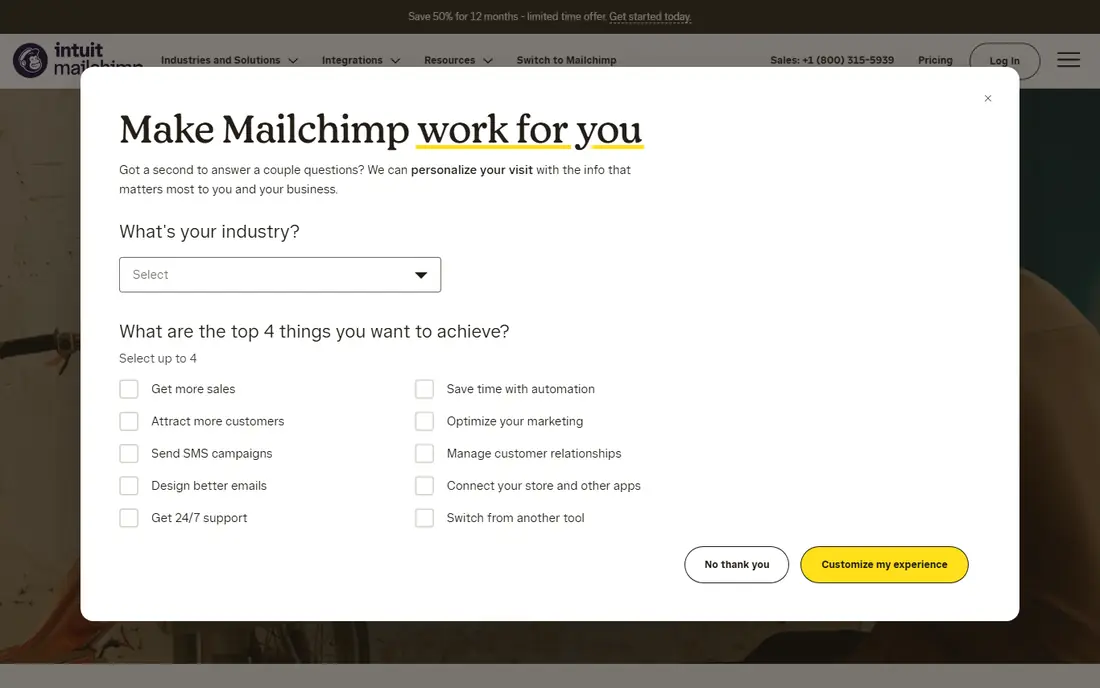
Mailchimp remains the easiest on-ramp for many small businesses. You can import a list, pick a template, set up a welcome email, and send a campaign without learning a complex builder. The free plan covers small lists, which makes it a low-risk way to test email marketing.
The limits appear as you grow. Contact-based pricing means a larger list can push you into a higher tier, and advanced automation features sit on higher plans. Mailchimp fits best when you want a reliable all-round tool and your workflows are fairly simple.
- Easy setup and templates
- Basic automations on paid plans
- Large integration library
- Price rises quickly as contacts grow
- Automation depth is limited for complex branching workflows
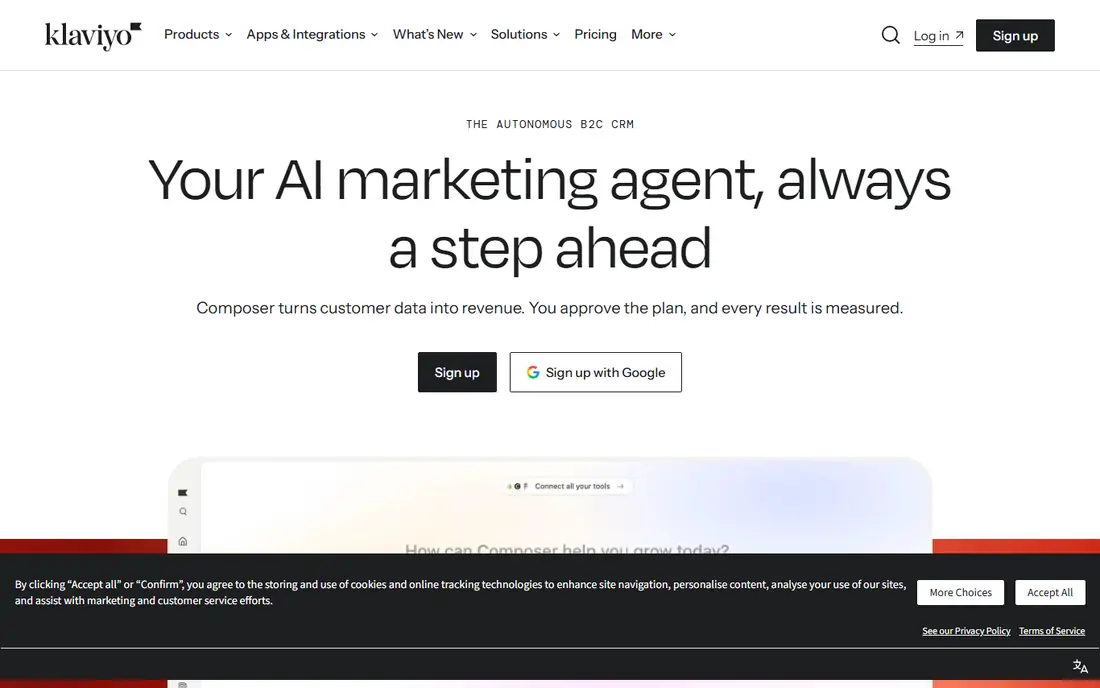
Klaviyo is built around store data. It pulls in purchases, browsing and customer behavior, then lets you build flows such as welcome series, abandoned cart reminders and post-purchase emails based on what a customer actually did. That data link is why many direct-to-consumer brands choose it over a general email tool.
The price model needs care. Klaviyo counts active profiles, so a large list of past buyers can raise the bill even if you mail them rarely. For stores with real purchase volume, the revenue from flows often covers the cost. For a new store with a tiny list, a cheaper tool may be wiser until sales grow.
- Strong ecommerce integrations
- Purchase-based segments and flows
- Predictive analytics on higher plans
- Cost grows with active profiles
- Can be more than a small store needs at the start
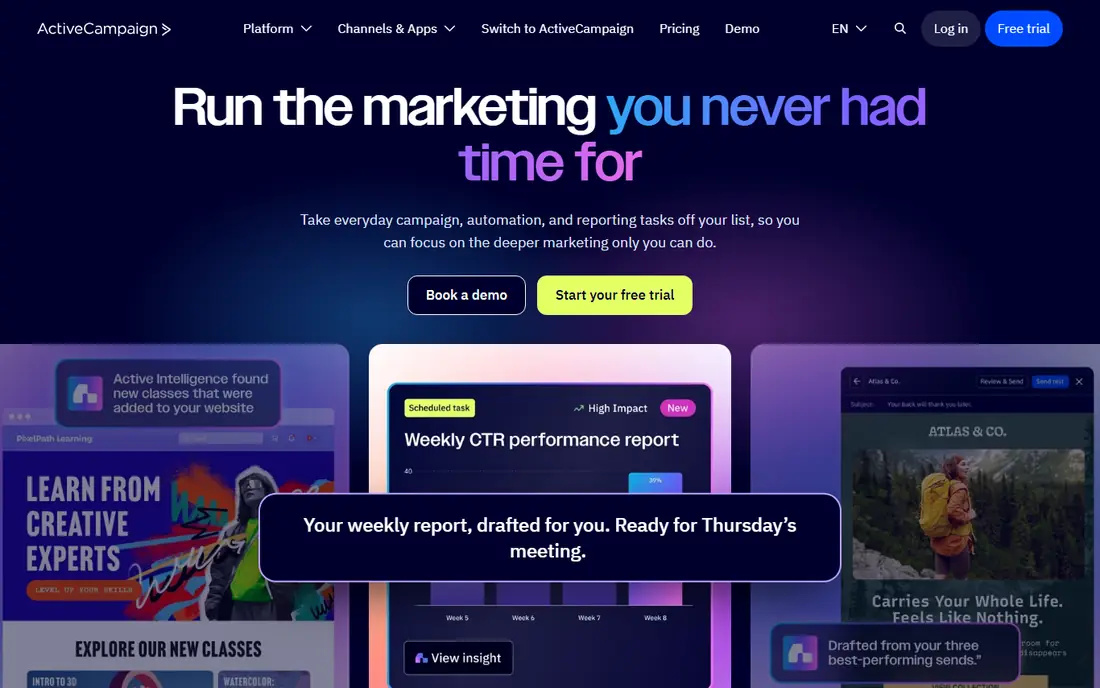
ActiveCampaign is the pick when your workflows need real logic. You can branch on opens, clicks, site visits, form answers and deal stage, then move contacts into a CRM pipeline without a separate tool. That combination suits business-to-business teams and service businesses with longer sales cycles.
The trade-off is complexity and price structure. There is no free plan, and the number of plans can confuse a first-time buyer. ActiveCampaign fits best when you have someone who will own the automation setup, rather than a team that wants a tool to run itself.
- Deep branching automation
- Lead scoring and CRM features
- Large integration library
- No free plan, only a trial
- Learning curve is steeper than simpler tools
Brevo, formerly Sendinblue, takes a different pricing path from most rivals. Its free plan allows unlimited contacts, but limits sends to 300 per day, which suits a large list that you mail only a few times a month. Paid plans are priced mainly on email volume, not on contact count.
That model makes Brevo a strong value pick for newsletters and small businesses with big, slow-growing lists. The platform also adds SMS, WhatsApp and a simple CRM, so you can run more channels without extra tools. Heavy daily senders should check the paid tiers, since the free cap will not cover a daily campaign.
- Free plan with unlimited contacts and 300 emails per day
- Email, SMS and WhatsApp in one platform
- Built-in CRM features
- Daily send cap on the free plan
- SMS costs extra
- Advanced automation sits on higher plans
Kit, formerly ConvertKit, is built for creators who write newsletters and sell digital products. The free plan is generous on subscriber count, which lets a new creator build an audience before paying. Forms, landing pages and simple sequences cover the core creator workflow without a lot of setup.
The catch is that automations need a paid plan, so the free tier works best for simple broadcasts. Kit fits writers, podcasters and course sellers who want a clean list tool, rather than stores that need purchase-based flows. Check the current paid price on the site, since creator pricing has changed over time.
- Free plan for up to 10,000 subscribers without automations
- Simple forms and landing pages
- Paid newsletters and commerce features
- Automations and sequences need a paid plan
- Less suited to complex ecommerce flows
MailerLite is a good middle ground between a bare-bones sender and a complex platform. The editor is clear, the automation builder covers welcome series and basic branching, and the price stays low for small lists. For a newsletter or a small business campaign, that simplicity saves time every week.
The limits show up when you need event-based logic tied to a store or app. MailerLite can handle common flows, but it is not built for the deep purchase modeling that Klaviyo offers. If your needs are simple and your budget is tight, MailerLite is a sensible pick.
- Simple editor and automation builder
- Low entry price
- Free plan for small lists
- Limited depth for complex event-based automation
- Fewer advanced ecommerce features than Klaviyo
Omnisend is made for online stores that want email and SMS together. Pre-built workflows cover welcome emails, abandoned carts, order follow-ups and win-back campaigns, so a small store can launch useful automation without building each flow from scratch. The free plan covers small contact lists, which helps a new store test the tool.
SMS is the extra cost to watch. Message credits and carrier fees can raise the bill beyond the subscription price, especially on sale campaigns. Omnisend fits best when your store already uses SMS or plans to, and when you want one place for both channels.
- Email, SMS and push messages in one tool
- Pre-built ecommerce workflows
- Free plan for small stores
- SMS costs add up
- Best suited to stores, less so to general business-to-business lists
Constant Contact has long served small businesses, nonprofits and event organizers. The campaign builder is straightforward, and tools for events, sign-up forms and social posting help a small team grow a list without learning a complex platform. Support options are also a plus for teams without a marketing specialist.
The main drawback is value for advanced automation. Constant Contact covers welcome emails and basic sequences, but it does not match the branching depth of ActiveCampaign. Check the current trial and paid price on the site, since plans have changed, and choose it when simplicity and support matter more than advanced logic.
- Simple campaign builder
- Event and list growth tools
- Phone and chat support options
- No permanent free plan
- Automation depth is lighter than ActiveCampaign or Klaviyo
HubSpot makes most sense if you already use HubSpot CRM. Email automation then sits alongside contacts, deals and sales activity, so a workflow can trigger on deal stage or lifecycle stage without syncing data between tools. The free tools cover basic email sending with HubSpot branding, which is enough to test the fit.
The risk is cost at scale. Marketing Hub pricing rises with marketing contacts and seats, and the higher tiers reach levels that small teams may not need. HubSpot fits business-to-business teams that want marketing and sales in one system, rather than a team that only needs email.
- Email automation tied to a full CRM
- Free tools for small teams
- Strong reporting across marketing and sales
- Higher tiers are expensive
- Pricing depends on marketing contacts and seats
How we picked these
We compared official pricing pages, feature pages and recent platform comparisons for email automation tools still available in October 2026. We kept platforms that offer automated workflows, not just one-off campaign sending, and that serve small businesses, creators or stores. Where pricing varied by list size or billing period, we used the entry tier shown by vendors, and See website where pricing depended on contacts or seats.
How to choose an email automation platform
Start with your list and your sending rhythm. A platform priced per contact suits a small, active list, while a platform priced per send suits a large list that you mail rarely. Write down your current subscriber count, your monthly send volume, and how fast your list is growing, then compare each platform at that size, not at the smallest tier.
Next, check the data you need for automation. A store needs purchase and browsing data, a creator needs subscriber tags and forms, and a business-to-business team needs CRM stages and lead scoring. Pick the platform whose native integrations cover your store or CRM, since a workaround integration often breaks or delays a workflow.
Finally, test deliverability basics before you commit. Set up a welcome flow, check spam and authentication settings, and send a test to your own inbox on phone and desktop. A platform that is easy to set up but lands in spam will cost more than a slightly harder tool that reaches the inbox. Also confirm that the platform supports the consent and unsubscribe handling your region requires.
Frequently asked questions
What is the best email automation platform?
ActiveCampaign is the best email automation platform for deep, branching workflows, while Klaviyo is best for ecommerce stores. Mailchimp suits beginners, Brevo suits large lists on a budget, and Kit suits creators. The best platform depends on your list, your store or CRM, and how complex your flows need to be.
What is the best email marketing automation software for small business?
MailerLite and Brevo are strong choices for a small business, because both offer free plans and low entry prices. Mailchimp is also a safe pick for a first tool. Compare each platform at your real list size, since contact-based pricing can change the cheapest option quickly.
What is the best automated email marketing software for ecommerce?
Klaviyo is the best automated email marketing software for most ecommerce stores, because it builds flows from purchase and browsing data. Omnisend is a good alternative for small stores that also want SMS. Both offer pre-built flows for abandoned carts and post-purchase emails.
What is the best software for email automation on a free plan?
Brevo offers a useful free plan with unlimited contacts and a daily send limit, while Kit offers a free plan for up to 10,000 subscribers without automations. Mailchimp, MailerLite and Omnisend also offer free plans for small lists. Check send limits, not just contact limits, before you choose.
How much do email automation platforms cost?
Entry prices on this list start around $9 to $20 per month, but the real cost depends on contacts, profiles or sends. A small list may stay on a free or low plan, while a large list can cost far more. Always model the price at your list size in six months, not just today.
Do I need a CRM with email automation?
You do not need a separate CRM if your email platform includes contact stages and tags, as ActiveCampaign, Brevo and HubSpot do. A separate CRM helps when sales staff manage deals outside email, since it keeps deal stage and email activity in one record. For a newsletter or a small store, a CRM is often unnecessary.
Sources
See where you really rank - block by block
ProMapRanker scans Google Maps across a grid of your service area. Simple monthly plans from $19, white-label on every plan.
Start freeKeep reading
 outreach alternatives
Outreach Alternatives in 2026
Compare outreach alternatives for 2026, from Salesloft and Apollo to HubSpot and Lemlist, with pricing, channels, features, limits, and honest trade-offs.
Read → best web conference tools
Best Web Conference Tools in 2026
Compare the best web conference tools for meetings, webinars and team calls, with current pricing, free plans and honest limits for each option here today.
Read → best voice cloning tools
Best Voice Cloning Tools in 2026
Compare the best voice cloning tools in 2026, from ElevenLabs and Descript to Resemble and Cartesia, with consent rules, pricing, licenses, and limits.
Read →