 ProMapRanker
Best ELT Tools for Data Integration in 2026

Key takeaways
- ELT loads raw data into the warehouse first, then transforms it there, which keeps source data intact and makes rework easier.
- Fivetran leads on managed reliability and connector breadth, while Airbyte leads on open source flexibility and self hosting.
- Pricing models differ sharply, with rows, events, volume, and credits all used, so compare cost on your own data volume.
- Change data capture matters for databases, because it keeps warehouse tables current without full reloads.
- Transformation still needs a plan, whether that plan uses dbt, SQL in the warehouse, or built in pipeline steps.
Quick comparison
| Pick | Great for | Pricing starts at | Free tier | |
|---|---|---|---|---|
 Fivetran | Managed ELT reliability | Free | Yes | Visit |
 Airbyte | Open source flexibility | See website | Yes | Visit |
 Hevo Data | No code ELT for smaller teams | See website | Yes | Visit |
 Stitch | Simple SaaS to warehouse loads | $100 per month | Free trial | Visit |
 Matillion | Warehouse native transformation | See website | Free trial | Visit |
 Estuary Flow | Real time streaming CDC | Free | Yes | Visit |
 Rivery | ELT plus orchestration | See website | Free trial | Visit |
 Skyvia | No code integration and sync | $79 per month | Yes | Visit |
 Integrate.io | Flat fee pipelines at scale | $1,999 per month | No | Visit |
The best ELT tools for data integration
ELT tools extract data from apps and databases, load it into a cloud warehouse or lakehouse, then transform it inside that destination. That order suits modern warehouses, because storage and compute scale separately and raw data stays available for new models. We compared official feature pages, pricing pages, and public documentation.
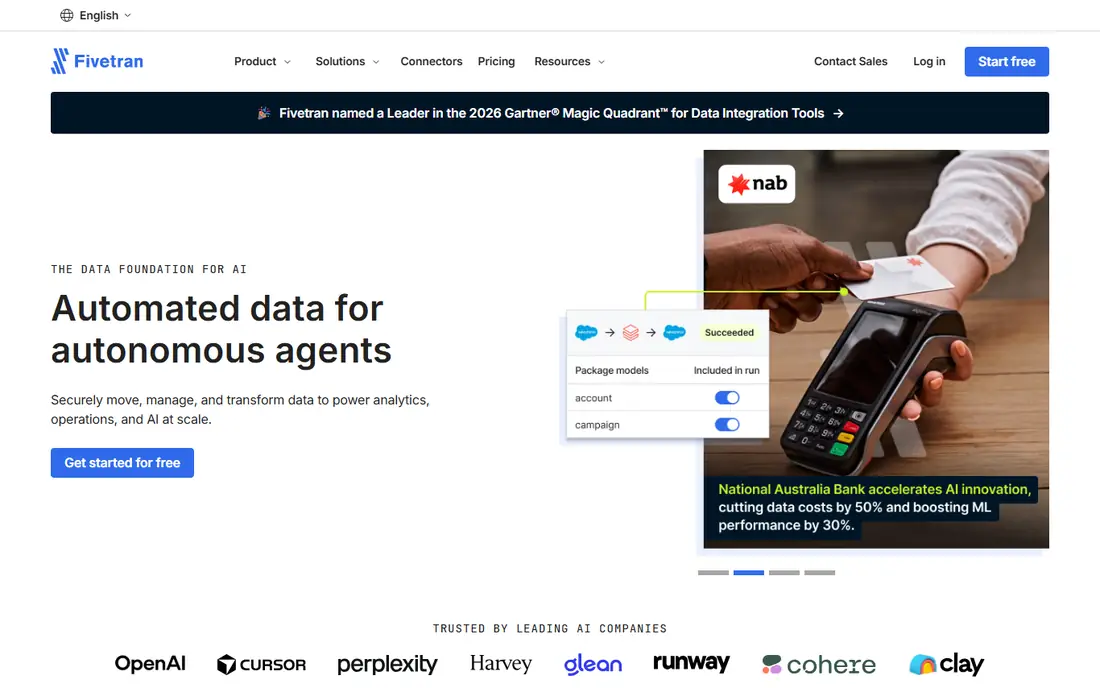
Fivetran is the managed default for many data teams. Connectors handle schema changes, incremental loads, and retries without manual pipeline code, and database connectors use change data capture to keep warehouse tables current. A free tier up to a monthly active row allowance lets small teams test real pipelines before paying.
Cost is the main watch point, because pricing follows monthly active rows and transformation runs. Teams with wide tables or frequent updates should model cost on real row counts, not on connector counts alone. For business critical pipelines where reliability matters more than the lowest bill, Fivetran remains the safest pick.
- Broad connector catalog
- Automated schema handling
- Managed CDC for databases
- Usage based pricing can grow fast
- Transformation add ons cost extra
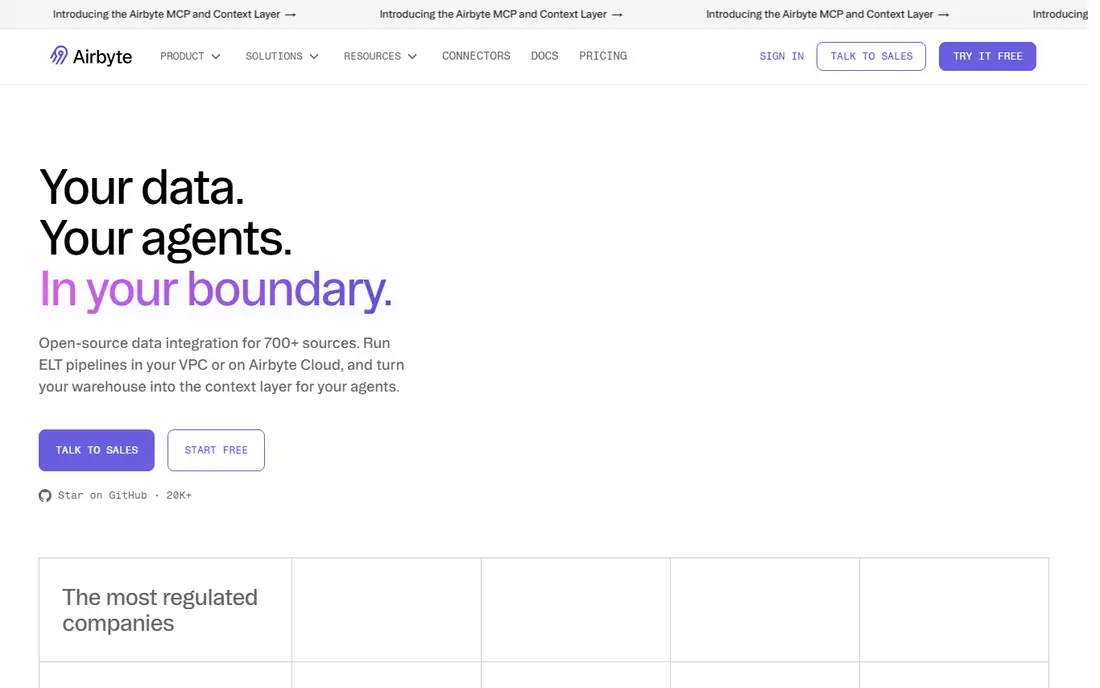
Airbyte gives teams a choice that most rivals do not: run it yourself for free, or use Airbyte Cloud and pay for volume or capacity. The connector catalog is large, and the builder tools help teams create custom connectors for internal apps. That flexibility suits engineering teams that want control over where data runs and how it is processed.
Self hosting shifts cost from license to engineering time, since upgrades, monitoring, and scaling become your job. Cloud plans remove that burden but need a volume check. We would pick Airbyte when custom connectors, data control, or self hosting matter more than a fully managed setup.
- Large connector catalog
- Self hosted option
- Custom connector builder
- Self hosting needs engineering time
- Cloud pricing depends on volume and capacity
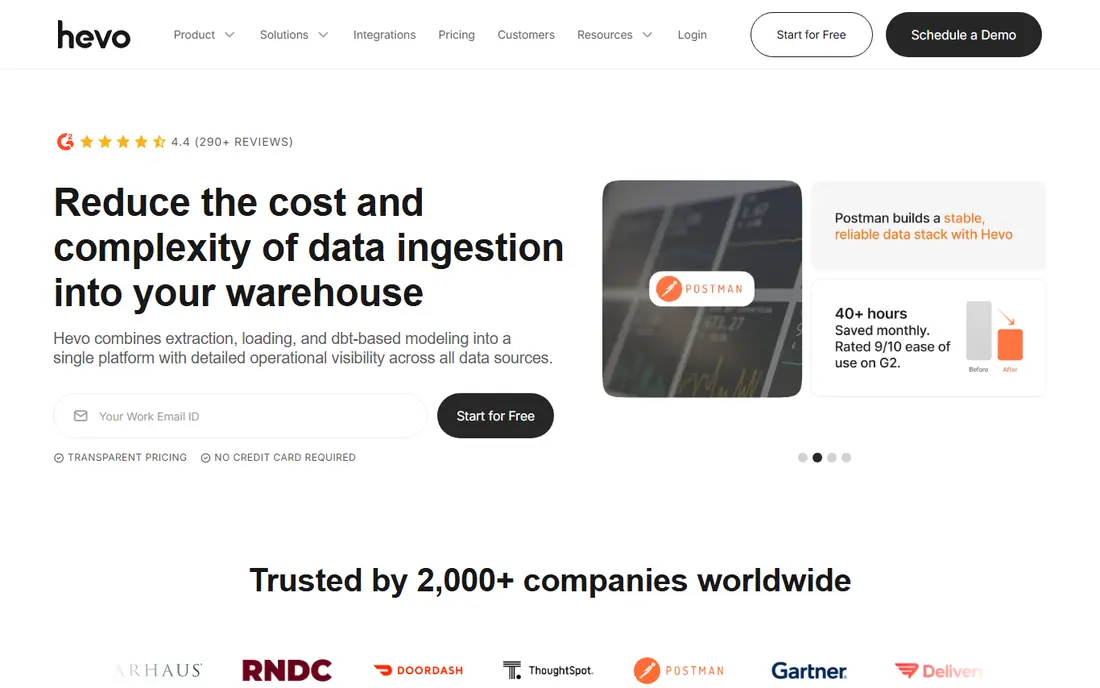
Hevo Data suits teams without a dedicated data engineer. Pipelines are set up through a visual interface, sources and destinations are picked from lists, and transformations can be built with drag and drop steps or Python. A free tier up to one million events per month lets small teams run real loads before committing.
Event based pricing needs care, because every insert, update, and delete counts. High churn tables can push a team into a higher tier sooner than row based estimates suggest. For lean teams that want automated ELT without writing pipeline code, Hevo is a strong, approachable option.
- No code pipeline setup
- Event based pricing with a free tier
- Drag and drop transformations
- Event counts can grow quickly
- Advanced dbt work sits on higher plans
Stitch, now part of Qlik, keeps ELT deliberately simple. Pick a source, pick a warehouse, set a replication schedule, and data flows. That simplicity suits early stage teams with standard SaaS sources and modest transformation needs, where the goal is a warehouse that analysts can query, not a complex pipeline platform.
Teams that need heavy in pipeline transformation or advanced database replication will outgrow it. We would pick Stitch when the job is straightforward loading, when the source list is standard, and when a low maintenance tool beats a feature rich one.
- Simple setup
- Predictable row tiers
- Solid SaaS source coverage
- Limited transformation features
- CDC support is limited compared with rivals
Matillion runs transformations inside the warehouse, using its compute rather than a separate processing layer. That warehouse native design suits analytics engineering teams that already work in SQL and Python and want visual pipelines with version control. Agentic pipeline building features in newer versions aim to speed up routine pipeline creation.
Pricing is not published as a simple entry price, since it depends on credits and task hours, and warehouse compute is billed separately. We would pick Matillion when transformation depth matters as much as loading, and when the team already runs a modern cloud warehouse.
- Warehouse native ELT
- Visual pipeline builder
- Push down SQL and Python
- Pricing is quote based
- Warehouse compute costs sit on top of Matillion
Estuary Flow is built for real time data, not just nightly batches. It captures database changes as they happen and streams them to warehouses, lakes, or other systems, with derivations in SQL or TypeScript for in flight transformation. A free tier covers a monthly data allowance plus a small connector count, which makes testing a streaming pipeline low risk.
The streaming model needs more planning than a simple batch loader, especially around ordering, backfills, and error handling. We would pick Estuary Flow when freshness matters, such as operational dashboards or systems that need current data within minutes, not hours.
- Streaming CDC with low latency
- Free tier with data allowance
- SQL and TypeScript derivations
- Streaming design adds concepts to learn
- Connector pricing adds to volume cost
Rivery combines loading, transformation, orchestration, and reverse ETL, so a team can move data in, model it, schedule it, and push results back to business apps from one platform. SQL and Python logic steps give engineers room to build custom work, while log based CDC keeps database tables current without full reloads.
Credit based pricing means cost depends on data volume and task runs, so a trial on real data is essential before committing. We would pick Rivery when orchestration matters, when reverse ETL is on the roadmap, and when the team wants fewer separate data tools.
- ELT, orchestration, and reverse ETL in one platform
- SQL and Python logic steps
- Log based CDC
- Credit pricing needs volume modeling
- Interface covers many jobs at once
Skyvia suits business users and small data teams that need integration without code. Visual builders create pipelines, sync data between apps, and back up cloud data, all from a browser interface. A free tier covers small volumes, which helps a team prove a use case before paying.
Very large or streaming workloads will suit specialist tools better, and engineers who want code first pipelines may find the visual approach limiting. For straightforward SaaS to warehouse loads, sync jobs, and backups, Skyvia offers a clear, low friction path.
- Visual no code builder
- Data sync and backup features
- Free tier for small volumes
- Less suited to very large streaming pipelines
- Advanced engineering features are thinner
Integrate.io stands out for its flat fee model, which removes the row or event meter that makes other tools hard to forecast at scale. Pipelines cover ETL and ELT, CDC, and reverse ETL, with visual steps in SQL and Python for transformation. For a mid size company with growing data volume, predictable cost can outweigh a lower entry price elsewhere.
The entry price puts it out of reach for small teams, and the platform suits teams that already know their sources and destinations. We would pick Integrate.io when data volume is large or growing fast, and when a stable monthly bill matters more than a cheap start.
- Flat fee with no volume cap on the headline plan
- ETL, ELT, CDC, and reverse ETL
- Visual pipeline steps
- Entry price is high for small teams
- Setup suits teams with defined pipeline needs
How we picked these
We compared official feature pages, pricing pages, and public documentation for tools that load data into a warehouse or lakehouse before transforming it there. We kept only tools that exist and work today, and we used See website where pricing depended on volume, credits, or a quote. We did not claim hands on testing, and we favored tools with clear connector coverage, CDC support, and a transformation path that a real team can maintain.
What to check before you pay
Start with a volume model, not a feature list. Count rows, events, or gigabytes for your largest sources over a full month, including updates and deletes, then price each tool on that same volume. A tool that looks cheap on a connector count can become expensive on a high churn database table.
Next, check connectors and CDC for your actual sources. A long catalog means little if your CRM, billing system, or main database lacks a supported connector or needs a custom build. Test the top three sources in a trial, check schema change handling, and confirm how backfills work after an outage.
Finally, decide who owns transformation. If analysts own SQL models, pair a loader with dbt or warehouse native transforms. If engineers own pipelines, built in SQL and Python steps may be enough. Pick the loader that fits that ownership model, or transformation work will stall after loading succeeds.
Frequently asked questions
What is the difference between ETL and ELT?
ETL transforms data before loading it into the destination, while ELT loads raw data first and transforms it inside the warehouse. ELT suits cloud warehouses because raw data stays available, compute scales separately, and models can be rebuilt without reloading sources.
Do I need a warehouse before I buy an ELT tool?
Yes, in most cases. ELT tools load into a destination such as Snowflake, BigQuery, Databricks, or Redshift, so choose or confirm that destination first. Some tools also support lakes and databases as destinations, but the warehouse is the common case.
How does change data capture work?
Change data capture reads database logs or change feeds to find inserts, updates, and deletes, then applies only those changes to the warehouse. That keeps tables current without a full reload, and it reduces load on the source database compared with frequent full extracts.
Can a small team run ELT without a data engineer?
Yes, for standard SaaS sources. No code tools such as Hevo Data and Skyvia, plus managed tools such as Fivetran, let small teams set up pipelines visually. A data engineer still helps when sources are custom, volumes are large, or transformation logic grows complex.
How do I keep ELT costs under control?
Model cost on real monthly volume, limit high churn tables to needed columns, and set replication frequency to match business need rather than defaulting to the fastest schedule. Review row, event, or credit use monthly, and pause or archive pipelines that no longer feed a decision.
Sources
See where you really rank - block by block
ProMapRanker scans Google Maps across a grid of your service area. Simple monthly plans from $19, white-label on every plan.
Start freeKeep reading
 zoro.to alternatives
Best Zoro.to Alternatives in 2026
We compare the best zoro.to alternatives in 2026, listing only legal licensed anime streaming services, from Crunchyroll to free options for fans today.
Read → zip alternatives
Best Zip Alternatives in 2026
We compare the best zip alternatives for buy now, pay later in 2026, covering pay-in-4 plans, fees, spending limits, and credit reporting options today.
Read → yesware alternatives
Best Yesware Alternatives in 2026
Compare the best yesware alternatives for sales email tracking, templates, and sequences, with current pricing and honest tradeoffs for small sales teams.
Read →