 ProMapRanker
Best ELN Software in 2026: 8 Tools Compared

Key takeaways
- Benchling leads for molecular biology, while LabArchives offers the clearest published pricing here.
- SciNote and RSpace offer free or open starting points for smaller and academic teams.
- Labguru, eLabNext and LabCollector combine notebook records with inventory or sample tools.
- Compliance features such as signatures and audit trails vary by tier, so confirm scope in writing.
Quick comparison
| Pick | Great for | Pricing starts at | Free tier | |
|---|---|---|---|---|
 Benchling | Biotech research and development | See website | Yes | Visit |
 LabArchives | Academic and institutional labs | $575 per user per year | Yes | Visit |
 SciNote | Open and flexible lab records | See website | Yes | Visit |
 RSpace | Research data and compliance | See website | Yes | Visit |
 Labguru | Lab management plus notebook | See website | Free trial | Visit |
 eLabNext | Digital lab platform for growing labs | See website | Free trial | Visit |
 Labfolder | Simple team notebooks | See website | Free trial | Visit |
 LabCollector | Chemistry and inventory-minded labs | See website | Free trial | Visit |
The best ELN software
This article is about electronic lab notebook software: digital notebooks for recording experiments, protocols, samples and results in research and quality labs. We kept only live ELN products and marked quote-only pricing as See website.
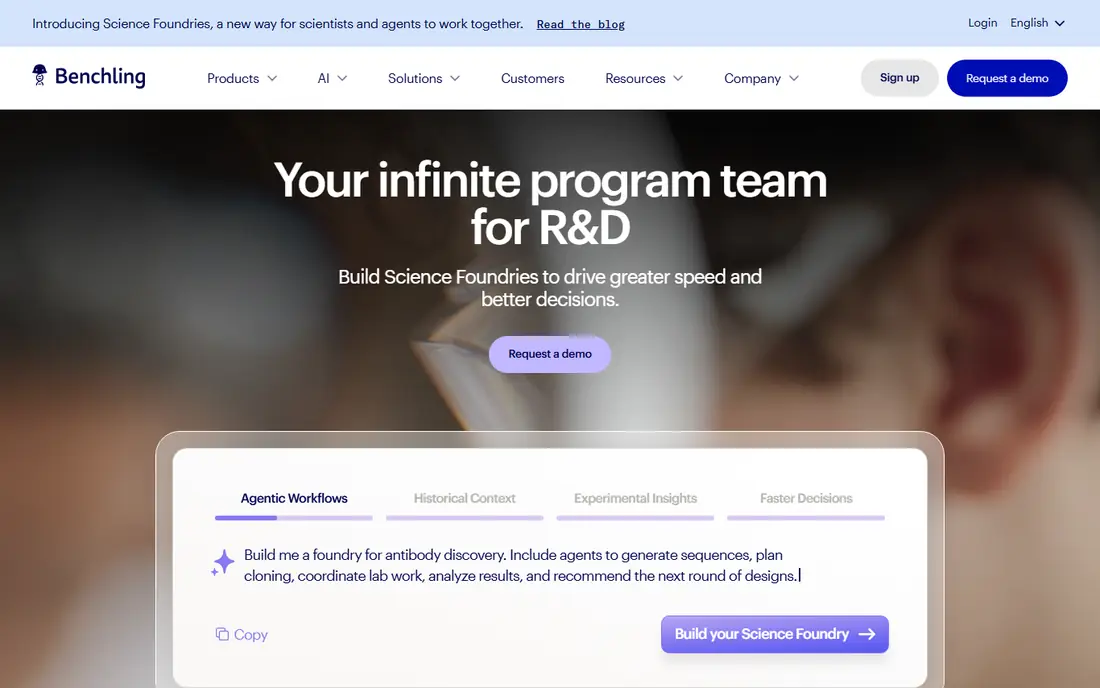
Benchling is the strongest choice for life science teams that design sequences as well as record experiments. It fits biotech and pharmaceutical research groups that need plasmid maps, sequence tools and experiment records in one system. We compared its public feature pages, pricing and user reviews rather than claiming hands-on testing, and the pattern that stood out was how clearly it states who it serves. Its molecular biology suite sits beside the notebook, so researchers can move from design to record without copying data between separate tools. That focus matters in daily use, because a tool that tries to cover every hiring, lab, editing or filing need at once often makes the common task harder to find. Commercial pricing is quoted on request and can be high, and the breadth of features means a small academic lab may use only a fraction of what is offered. Before you commit, run a short trial with real work from your own team, check the renewal price in writing, and confirm that export, support and permission controls meet your needs.
- Molecular biology tools
- Notebook and registry in one place
- Free academic access
- Commercial pricing is quote-only
- Depth can overwhelm small labs
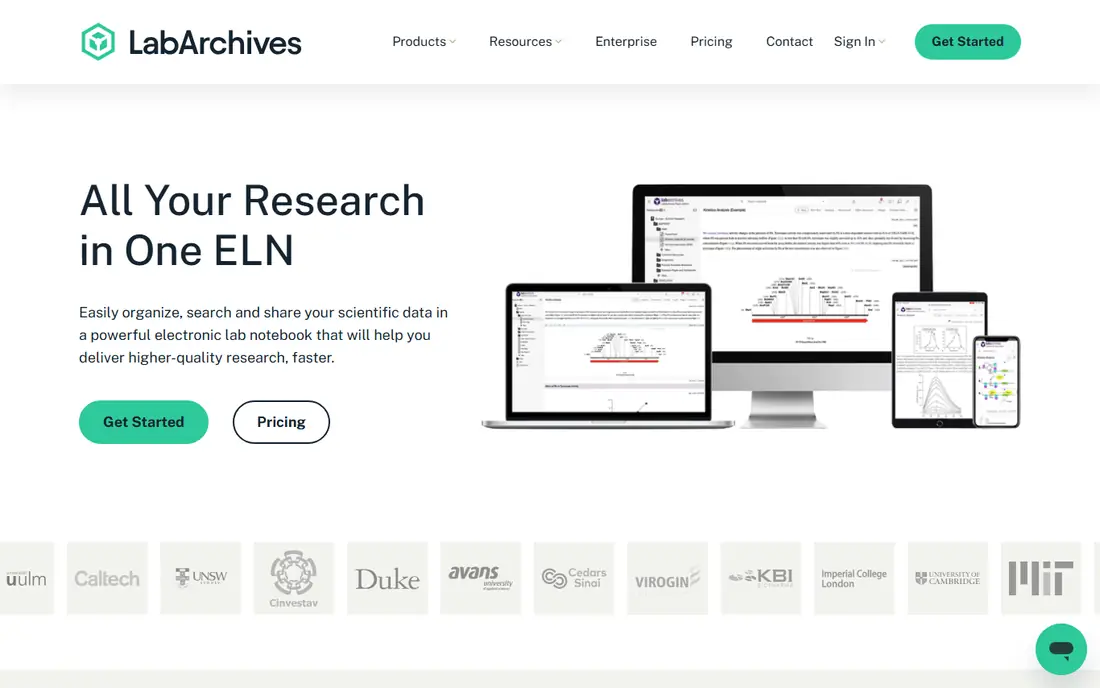
LabArchives suits universities and institutions that need a dependable, widely used notebook with clear pricing. It fits research groups that share records across a department and need signatures and audit trails for regulated work. We compared its public feature pages, pricing and user reviews rather than claiming hands-on testing, and the pattern that stood out was how clearly it states who it serves. Its published pricing removes a negotiation step for many buyers, and its sharing and signature tools suit collaborative and compliance-minded labs. That focus matters in daily use, because a tool that tries to cover every hiring, lab, editing or filing need at once often makes the common task harder to find. The interface is practical rather than polished, and teams that want deep inventory or molecular tools may need companion products. Before you commit, run a short trial with real work from your own team, check the renewal price in writing, and confirm that export, support and permission controls meet your needs.
- Published academic and corporate pricing
- Electronic signatures
- Strong sharing controls
- Interface is functional rather than modern
- Some features need higher tiers
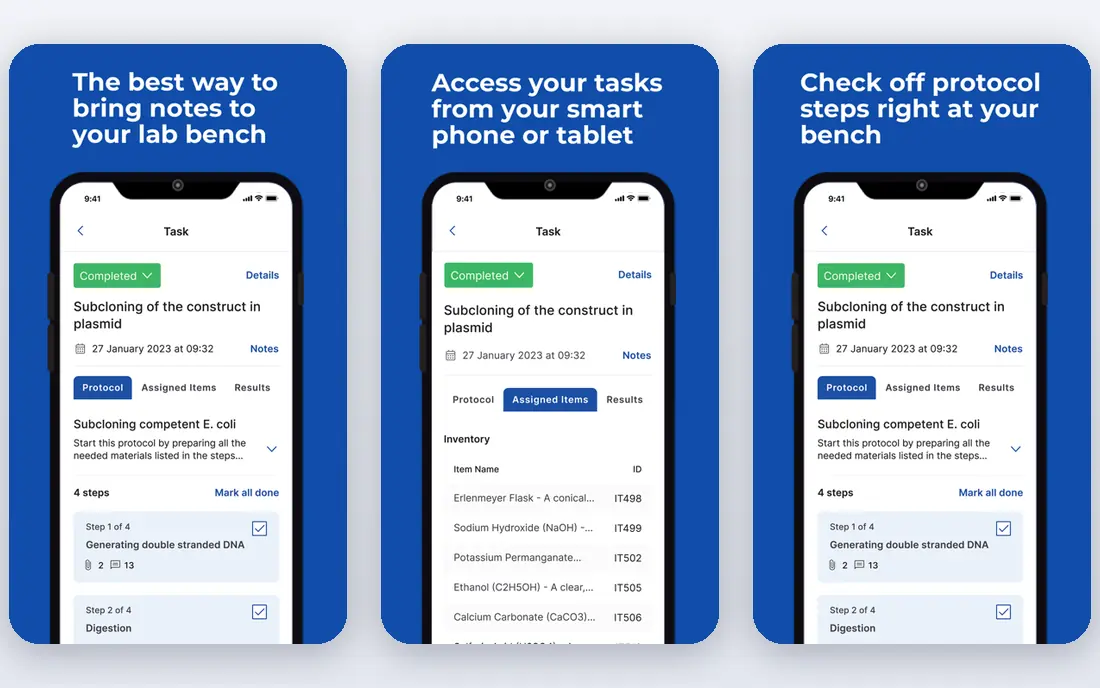
SciNote appeals to labs that want an open, flexible notebook without a heavy enterprise contract. It fits small research teams, core facilities and groups that value inventory tracking beside experiment records. We compared its public feature pages, pricing and user reviews rather than claiming hands-on testing, and the pattern that stood out was how clearly it states who it serves. Its free tier lets an individual or small team start properly, and its inventory and protocol features keep materials and methods tied to results. That focus matters in daily use, because a tool that tries to cover every hiring, lab, editing or filing need at once often makes the common task harder to find. Paid and regulated pricing is quoted on request, and a lab with strict validation needs should confirm compliance scope in writing for the tier it buys. Before you commit, run a short trial with real work from your own team, check the renewal price in writing, and confirm that export, support and permission controls meet your needs.
- Free tier for individuals
- Inventory and protocol tools
- Open approach
- Paid and regulated plans are quote-only
- Setup needs planning
RSpace suits institutions that want control over research data and a clear audit trail. It fits academic and enterprise teams that need structured records, chemical sketching and links to reference tools. We compared its public feature pages, pricing and user reviews rather than claiming hands-on testing, and the pattern that stood out was how clearly it states who it serves. Its audit trail and version history help labs show how a result was reached, and the open-source edition gives self-hosting teams a real starting point. That focus matters in daily use, because a tool that tries to cover every hiring, lab, editing or filing need at once often makes the common task harder to find. Hosted team subscriptions carry a high annual minimum, and self-hosting saves licence cost but adds maintenance work for IT staff. Before you commit, run a short trial with real work from your own team, check the renewal price in writing, and confirm that export, support and permission controls meet your needs.
- Self-hosted open-source edition
- Audit trails
- Integrations with research tools
- Hosted team pricing starts at a high annual minimum
- Admin effort for self-hosting
Labguru fits labs that want the notebook, sample tracking and inventory in one system rather than three separate tools. It fits mid-size research and quality labs that track samples from receipt to result. We compared its public feature pages, pricing and user reviews rather than claiming hands-on testing, and the pattern that stood out was how clearly it states who it serves. Its combined ELN, LIMS and inventory design reduces duplicate entry, since a sample record can link to experiments, storage and orders. That focus matters in daily use, because a tool that tries to cover every hiring, lab, editing or filing need at once often makes the common task harder to find. Pricing is quoted on request, and the breadth of the platform means onboarding takes longer than a notebook-only tool. Before you commit, run a short trial with real work from your own team, check the renewal price in writing, and confirm that export, support and permission controls meet your needs.
- Notebook plus LIMS and inventory
- Sample tracking
- Workflow tools
- Quote-only pricing
- Breadth needs onboarding time
eLabNext, whose ELN line continues under the SciSure name, suits labs that want a connected digital lab platform. It fits growing labs that need experiment records, sample management and inventory without stitching many tools together. We compared its public feature pages, pricing and user reviews rather than claiming hands-on testing, and the pattern that stood out was how clearly it states who it serves. Its platform approach links notebook entries to samples and stock, which helps teams trace a result back to the material and method used. That focus matters in daily use, because a tool that tries to cover every hiring, lab, editing or filing need at once often makes the common task harder to find. Pricing is quoted on request, and the rebrand history means buyers should confirm exactly which product and tier they are being quoted for. Before you commit, run a short trial with real work from your own team, check the renewal price in writing, and confirm that export, support and permission controls meet your needs.
- ELN plus LIMS and inventory under the SciSure platform
- Workflow support
- Quote-only pricing
- Product naming can confuse new buyers
Labfolder suits research teams that want a simple, tidy notebook without enterprise complexity. It fits small and mid-size teams that record experiments, share protocols and keep results searchable. We compared its public feature pages, pricing and user reviews rather than claiming hands-on testing, and the pattern that stood out was how clearly it states who it serves. Its straightforward structure makes adoption easier, since new members can find entries and templates without a long training period. That focus matters in daily use, because a tool that tries to cover every hiring, lab, editing or filing need at once often makes the common task harder to find. Team pricing is quoted on request, and labs needing deep molecular, inventory or compliance tooling may outgrow it. Before you commit, run a short trial with real work from your own team, check the renewal price in writing, and confirm that export, support and permission controls meet your needs.
- Straightforward notebook structure
- Team sharing
- Template support
- Quote-only pricing for teams
- Fewer advanced lab tools than rivals
LabCollector suits chemistry-heavy labs that need structure search beside their notebook records. It fits labs that manage chemicals, samples and instruments and want those records linked to experiments. We compared its public feature pages, pricing and user reviews rather than claiming hands-on testing, and the pattern that stood out was how clearly it states who it serves. Its chemical structure handling and modular inventory tools address a gap in general notebooks, which often treat chemistry as plain text. That focus matters in daily use, because a tool that tries to cover every hiring, lab, editing or filing need at once often makes the common task harder to find. Pricing is quoted on request and modules add cost, so a lab should price the full module set it needs, not just the base notebook. Before you commit, run a short trial with real work from your own team, check the renewal price in writing, and confirm that export, support and permission controls meet your needs.
- Chemical structure search
- Inventory and sample modules
- Modular design
- Quote-only pricing
- Modules add cost as needs grow
How we picked these
We compared official feature pages, pricing pages and public user reviews for tools that are live in October 2026, and we kept only products that truly fit the topic. We favoured clear pricing, a usable free plan or trial where one is offered, and honest limits over broad marketing claims. We did not claim hands-on testing that did not happen, and where a price was quoted only on request or varied by plan, we wrote See website rather than guessing a figure.
Choosing the right option for your team
Start with the job you will do most often, not the longest feature list. A product that handles that core task cleanly will save more time than a larger platform whose best features sit behind setup work your team will not finish. Check the total cost at your real team size, including add-ons, storage, seats and renewal rates. Ask what happens to your data if you cancel, how exports work, and whether support replies come from people who know the product. Run a short pilot with real files, real candidates, real documents or real projects before you move a whole team. The pilot should test permissions, sharing, search and the one workflow you cannot afford to break.
Frequently asked questions
What is ELN software?
Electronic lab notebook software is a digital replacement for paper lab books. It records experiments, protocols, data, samples and signatures in searchable, shareable form, with version history so a result can be traced back to its method.
Which ELN is best for a small lab?
SciNote and Labfolder suit many small teams because they start simply and do not require an enterprise contract. Benchling suits life science teams that also need sequence tools, while LabArchives suits institutions that want published pricing.
Do ELNs meet 21 CFR Part 11?
Some ELNs offer electronic signatures, audit trails and access controls that support 21 CFR Part 11 work, but scope varies by tier and setup. Confirm the exact compliance features in writing for the tier you buy, and check validation needs with your quality team.
Can we migrate paper notebooks?
Most vendors offer import and onboarding help, but scanning, structuring and validating old records takes longer than software setup. Plan migration as its own project with a clear cutoff date for paper use.
Is a free ELN enough?
A free tier or open-source edition can suit an individual or small team, but storage, users, signatures and support are often limited. Price the tier that covers your team size and compliance needs, not just the free starting point.
Sources
See where you really rank - block by block
ProMapRanker scans Google Maps across a grid of your service area. Simple monthly plans from $19, white-label on every plan.
Start freeKeep reading
 what’s the best risk software for enterprises
What Is the Best Risk Software for Enterprises in 2026
We compared what’s the best risk software for enterprises on risk registers, controls, third-party risk, and reporting, with pricing notes for large teams.
Read → what's the best pam software for enterprises
What is the Best PAM Software for Enterprises in 2026
Find what's the best pam software for enterprises, with vaulting, session recording, just in time access and pricing compared for large enterprise IT teams.
Read → what’s the best grc software
What Is the Best GRC Software in 2026
We compared what’s the best grc software on risk, compliance, audit and vendor risk, so teams can pick a platform that fits their frameworks and budget.
Read →