 ProMapRanker
Best Electrical Takeoff Software for Contractors


Cloud takeoff and estimating teams · Pricing starts at: $299 per user per month (billed annually)
Key takeaways
- STACK Premium is the most complete cloud option, at $299 per user per month billed annually, with a free plan for one active project a month.
- PlanSwift Essential is the value pick for a Windows shop, at $2,000 per seat per year, with material and labor assemblies built in.
- Bluebeam Revu is the cheapest published-price route into on-screen measurement, with Basics at $260 per user per year, but full takeoff features need Complete at $440.
- Esticom and Countfire are the only tools here built for electrical work first, and both hide their prices behind a quote.
- On-Screen Takeoff and eTakeoff suit estimators who want a desktop tool with a live Excel link, while ProEst suits firms that want takeoff plus full estimating in one system.
Quick comparison
| Pick | Great for | Pricing starts at | Free tier | |
|---|---|---|---|---|
| STACK | Cloud takeoff and estimating teams | $299 per user per month (billed annually) | Yes | Visit |
 PlanSwift | Windows shops with custom assemblies | $2,000 per seat per year | Free trial (14 days) | Visit |
 Bluebeam Revu | Low-cost PDF measurement and markup | $260 per user per year | Free trial (14 days) | Visit |
 Esticom | Electrical contractors in the cloud | quote only | No | Visit |
 Countfire | Automatic symbol counts on drawings | quote only | No | Visit |
 eTakeoff | Desktop takeoff with Excel export | quote only | No | Visit |
 On-Screen Takeoff | On-screen measurement with Quick Bid | quote only | No | Visit |
 ProEst | Takeoff plus full estimating | quote only | No | Visit |
The best electrical takeoff software

STACK is a cloud takeoff and estimating platform that many electrical contractors now use as their main bidding tool. An estimator uploads PDF plans, measures lengths, areas and counts on screen, and lets the AI features make a first pass at walls, rooms, doors and fixtures. The takeoff then flows into a worksheet-style estimate and a proposal in the same place, so numbers are not re-keyed between tools.
The pricing page lists a free plan that includes 7 days of the Pro tier, then drops to one active project per month, up to 300 plan pages and 50 measurements per project. Subscription plans start at $299 per user per month for Premium and $349 for Pro, both billed annually on 12-month terms, which comes to $3,588 a year for one Premium seat. The honest drawback is the per-seat cost. A three-person estimating team pays more than $10,000 a year before add-ons, so a small shop should test the free plan on a real bid before committing to a full team license.
- Cloud takeoff with AI-assisted counts
- Free plan covers one active project a month
- Per-seat price climbs fast for a team
- 12-month terms on subscription plans
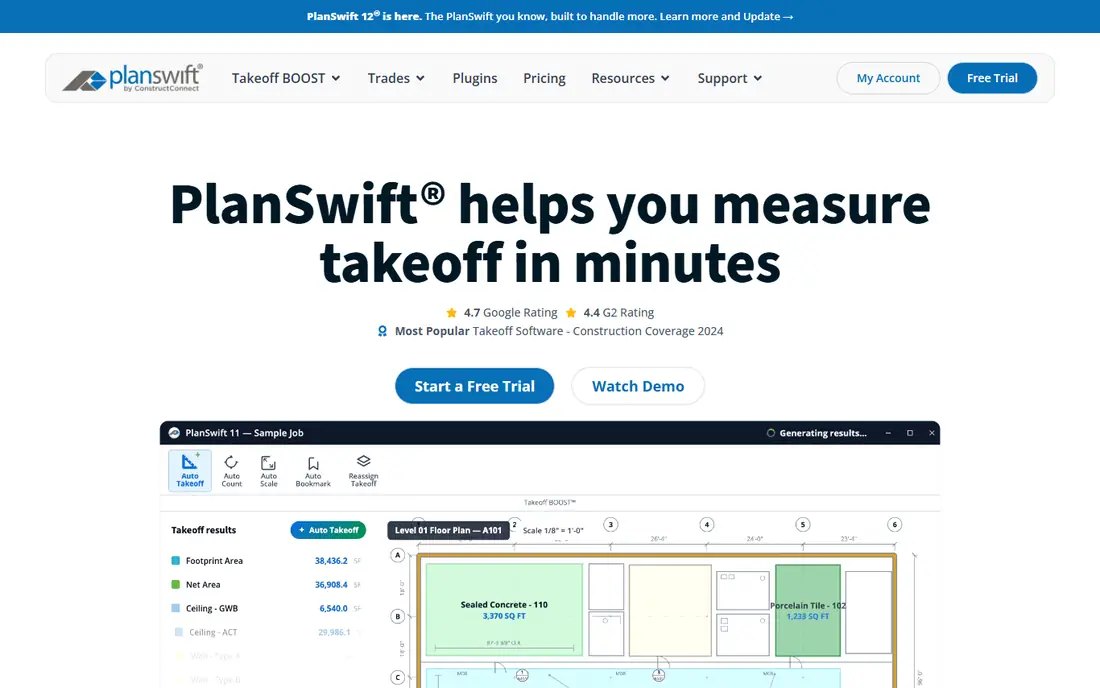
PlanSwift is Trimble's takeoff product and was the de facto digital takeoff standard for a decade before cloud tools took the lead. An estimator measures on screen, drops in material and labor assemblies, and the estimate builds as the work goes on. The live Excel link sends quantities straight to a spreadsheet, which suits electrical estimators who price from their own cost library rather than a vendor database.
The pricing page lists two annual plans. Essential costs $2,000 per seat per year for the first seat and $1,500 for each additional seat, while Core costs $3,000 and $2,500. Both plans include updates, support and training, and the 14-day trial of Core needs no credit card. PlanSwift is best understood as a takeoff tool with light estimating attached, not a full estimating system, so a firm that needs bid management, change orders and job costing will pair it with another tool. It is Windows desktop software, so a Mac-based office needs a virtual machine.
- Material and labor assemblies built in
- Live Excel link for estimates
- Windows desktop only, so Mac users need a virtual machine
- Estimating layer is shallow next to full estimating systems
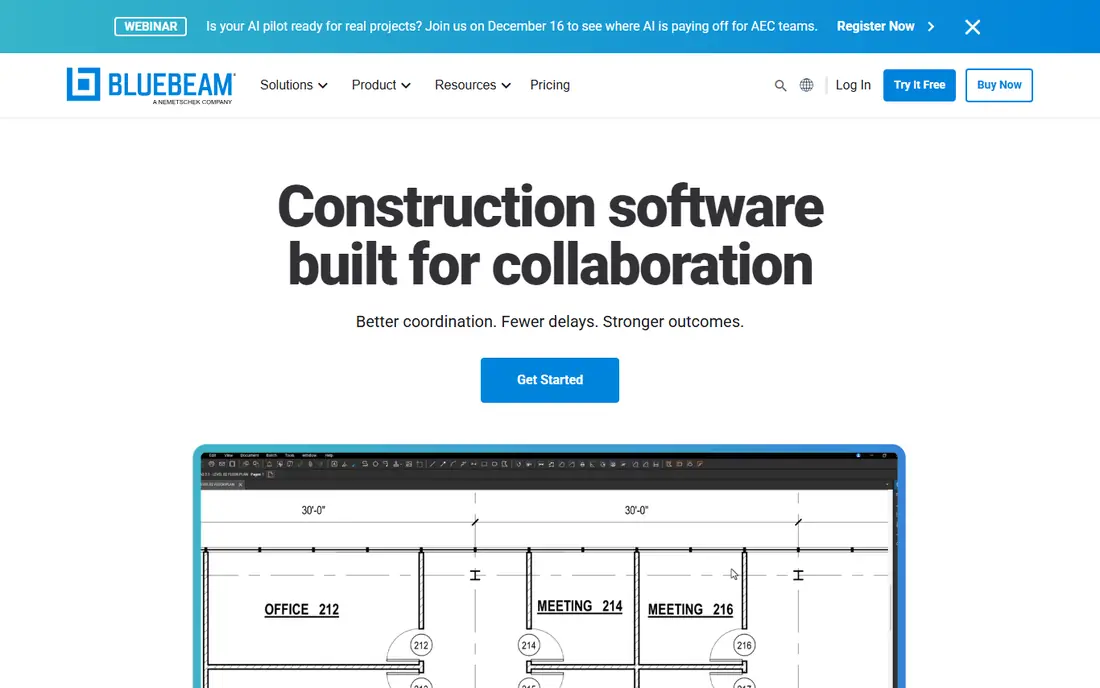
Bluebeam Revu is a PDF markup and measurement tool first, and many electrical estimators use it as their takeoff tool because the measurement set is precise and the price is low. The vendor lists four annual per-user plans. Basics costs $260 per user per year and covers length and area measurement. Core costs $330 and adds perimeter, count, angle and volume measurement plus drawing overlay and comparison. Complete costs $440 and adds Dynamic Fill and Quantity Link, which sends quantities live into Microsoft Excel.
That tiering is the thing to check. Basics measures length and area only, with no counts, so an electrical estimator who counts fixtures, panels and devices needs Core at least, and the Excel link that makes the takeoff useful needs Complete. A 14-day free trial unlocks the Complete plan, which is the right tier to test. Revu has no estimating, pricing or proposal tools, so the estimate still lives in Excel or another system, but for measurement alone it is the cheapest published-price tool in this guide.
- Precise PDF measurement with counts and areas
- Quantity Link sends takeoff data to Excel
- Full takeoff features need Complete at $440 a year
- No estimating or proposal tools built in
Esticom is a cloud takeoff and estimating platform built for electrical contractors, and it is one of the few tools in this guide that starts from electrical work rather than general construction. Estimators measure on screen from PDF plans, build takeoffs by system and area, and move the quantities into an estimate without leaving the platform. The vendor also offers project management and field tools, so a firm can keep the bid, the schedule and the job in one system.
Because Esticom is trade-specific, its templates and assemblies reflect how electrical contractors actually price work, with fixtures, panels, conduit runs and devices grouped the way an estimator thinks about them. The drawback is price transparency. Esticom publishes no list price, so a firm has to request a quote and compare it with STACK and PlanSwift on the same seat count. The user community is also smaller than the big general tools, which means fewer forum answers and fewer third-party training videos when a new estimator joins the team.
- Cloud takeoff built for electrical contractors
- Integrates with estimating and project management
- Pricing is quote only
- Smaller user community than STACK or PlanSwift
Countfire does one job and does it well. It reads electrical drawings and counts symbols automatically, so an estimator gets a count of lights, sockets, switches, panels and devices without clicking each one by hand. The counts export direct to Excel, where the estimator applies prices from the firm's own cost library. For a firm that bids a lot of commercial electrical work, that automatic count can cut hours off each bid and catch items that a manual count would miss.
The limit is scope. Countfire counts, and it counts well, but it is not a full estimating system, so the pricing, the proposal and the bid management still live elsewhere. It also works best on clean, well-layered drawings, and a poor-quality scan or a hand-marked plan will need more manual checking. Pricing is quote only, set by firm size and usage, so a contractor should ask for a quote based on the number of bids per month and test the counting accuracy on a past project before signing.
- Automatic counting of symbols on electrical drawings
- Exports counts direct to Excel
- Focused on counting, not full estimating
- Pricing is quote only
eTakeoff is a desktop on-screen takeoff tool that has served estimators for years. It lets an estimator measure lengths, areas and counts from digital plans and send the quantities into Excel, where the estimate is built. The workflow is simple and direct, which suits an estimator who wants to measure, export and price in a spreadsheet without learning a cloud platform or a full estimating suite.
The interface shows its age, and the tool has no cloud collaboration, so two estimators cannot work on the same takeoff at the same time, and plans have to be shared by file rather than by link. That is a fair trade for a solo estimator who bids from one desk, and a poor fit for a team that needs shared access and version control. Pricing is quote only, so a buyer should ask for the full figure, including any annual support charge, and check which plan formats the current version supports before buying.
- On-screen takeoff with Excel integration
- Works with common plan formats
- Dated interface
- No cloud collaboration
On-Screen Takeoff, from On Center Software, is a desktop takeoff tool built around measuring directly on digital plans. Estimators trace lengths and areas, count items and assign them to assemblies, and the quantities flow into Quick Bid, the companion estimating product from the same vendor, which turns the takeoff into a priced bid. That pairing is the reason many electrical contractors have used the combination for years.
The measurement tools are thorough, with support for conditions, assemblies and layers that match how electrical work is grouped on a job. The learning curve is real, though. A new estimator needs training time to set up conditions and assemblies properly, and the tool is Windows only, so a mixed-device office needs a plan for Mac users. Pricing is quote only, and the cost depends on whether the firm buys takeoff alone or the bundle with Quick Bid, so ask for both figures and compare the bundle against STACK Pro on the same seat count.
- Purpose-built for on-screen measurement
- Integrates with Quick Bid estimating
- Windows only
- Learning curve for new estimators
ProEst is a cloud estimating platform that includes takeoff, estimating, bid management and reporting in one system. An estimator measures on screen, prices from a cost database, builds the bid and tracks its status without exporting to another tool. That matters for a firm that bids a high volume of work, because the handoff between takeoff and estimate is where numbers get lost and small items get missed.
The platform is built for commercial contractors, and electrical firms use it for the same reason general contractors do: the estimate, the proposal and the bid log stay in one place, and managers can see which bids are out and which are due. The trade-off is cost and setup. ProEst does not publish a price, and third-party reports place it at the top of this list on a per-seat basis. Implementation also takes longer than a takeoff-only tool, because the cost database and templates need to be built before the first real bid. A firm should budget for that setup time and ask for a fixed implementation quote.
- Takeoff plus full estimating and bid management
- Cloud access for distributed teams
- Price sits at the top of this list
- Setup takes longer than a takeoff-only tool
How we chose
We compared vendor pricing pages, product documentation and feature lists for eight electrical takeoff tools, and we checked each vendor's homepage to confirm the product is still sold. Prices in this guide come from the vendor's own pricing page where the vendor publishes one, and we mark the rest as quote only rather than repeating a third-party figure as fact. We gave weight to counting speed, measurement accuracy, how the takeoff moves into an estimate, and whether the tool is built for electrical work or for general construction. We did not test any tool on a live bid, and we did not count review-site ratings as evidence, because those scores mix products, regions and years.
What to check before you buy
Start with a past bid. Take a completed project, run its plans through the trial of each shortlisted tool, and compare the counts and the time taken against the original manual takeoff. That test shows whether the automatic counting is accurate on the firm's real drawings, and whether the tool saves time or just moves the work to a different screen. A tool that miscounts on a messy scan will cost more in missed items than it saves in speed.
Next, check the full yearly cost, not the headline monthly figure. STACK Premium at $299 per user per month billed annually is $3,588 a year for one seat, and a three-seat team pays $10,764. PlanSwift Essential is $2,000 for the first seat and $1,500 for each additional seat, so three seats cost $5,000 in year one. Bluebeam Complete is $440 per user per year, so three seats cost $1,320, but it has no estimating tools, so the firm still needs a spreadsheet or a second system.
| Team size | Best starting point | Yearly cost to expect | | 1 estimator | Bluebeam Complete plus Excel | Around $440 | | 1 estimator, cloud takeoff | STACK Premium, one seat | Around $3,588 | | 3 estimators | PlanSwift Essential, three seats | Around $5,000 | | 3 estimators, cloud | STACK Premium, three seats | Around $10,764 | | 5 estimators, full estimating | ProEst, quoted | Quote only, at the top of this list |
Finally, check the export. The takeoff is only useful if the quantities land in the estimate without re-keying, so confirm the Excel link works with the firm's existing spreadsheet, that counts export by system and area, and that the tool keeps a version history when plans change mid-bid. A tool that cannot export cleanly will slow the bid down, however fast its counting looks in a demo.
Frequently asked questions
What is electrical takeoff software?
Electrical takeoff software measures quantities from construction plans so an estimator can price a job. It counts fixtures, panels, devices and outlets, measures conduit and cable runs, and calculates areas for lighting and power layouts. The quantities then feed an estimate, which is how a contractor turns a set of drawings into a bid price that covers material, labor and margin.
How is electrical takeoff different from general takeoff software?
General takeoff tools measure any trade, while electrical takeoff tools are built around electrical symbols, systems and assemblies. Tools such as Esticom and Countfire group items the way an electrical estimator thinks, with panels, circuits, fixtures and devices, and they count symbols automatically. A general tool can do the same work, but the estimator sets up more of the structure by hand.
Can I do electrical takeoffs in Bluebeam Revu?
Yes, and many estimators do. Bluebeam Revu measures lengths, areas and counts on PDF plans, and the Complete plan at $440 per user per year adds Quantity Link, which sends quantities live into Excel. The limit is that Revu has no estimating or pricing tools, so the estimate itself still lives in a spreadsheet or another system, and the estimator builds the cost library by hand.
How much does electrical takeoff software cost?
Published prices in this guide run from $260 per user per year for Bluebeam Basics to $299 per user per month billed annually for STACK Premium, which is $3,588 a year for one seat. PlanSwift Essential is $2,000 per seat per year. Four tools here publish no price, so a buyer should request quotes from Esticom, Countfire, eTakeoff, On-Screen Takeoff and ProEst on the same seat count before deciding.
Do I need a free plan or a trial before buying?
A trial is the best way to test a takeoff tool, because counting accuracy depends on the firm's real drawings. STACK offers a free plan with one active project a month, and PlanSwift and Bluebeam Revu offer 14-day trials. Run a past bid through the trial, compare the counts with the original takeoff, and check the Excel export before signing a 12-month term.
Sources
See where you really rank - block by block
ProMapRanker scans Google Maps across a grid of your service area. Simple monthly plans from $19, white-label on every plan.
Start freeKeep reading
 best invoicing software for roofers
Best Invoicing Software for Roofers
The best invoicing software for roofers compared on price, card fees, and job billing, so a roofing company can send invoices fast and collect money sooner.
Read → best invoicing software for auto repair shops
Best Invoicing Software for Auto Repair Shops
Compare the best invoicing software for auto repair shops, with real starting prices, repair-ready templates, and payment links that get invoices settled fast.
Read → best insulation contractor software
Best Insulation Contractor Software 2026
Compare the best insulation contractor software for spray foam, fiberglass and cellulose crews in 2026. See prices, trials and the right fit for your team size.
Read →