 ProMapRanker
Best Ecommerce Platform for Grocery in 2026

Key takeaways
- A grocery store needs different features from a general store, including weight-based products, substitutions, delivery slots and pickup options.
- Grocery-native platforms cost more to set up and usually quote privately, while general platforms start cheaper but need apps for grocery-specific jobs.
- SNAP and EBT online payment support varies by platform and processor, so confirm eligibility, product tagging and fees before you choose.
- The best ecommerce platform for a grocery store is the one that handles fresh, variable-weight and perishable goods without manual workarounds every day.
Quick comparison
| Pick | Great for | Pricing starts at | Free tier | |
|---|---|---|---|---|
 Shopify | Fast general store launch | $29 per month | Free trial | Visit |
 WooCommerce | WordPress stores with full control | Free | Yes | Visit |
 BigCommerce | Scaling stores with built-in features | $29 per month | Free trial | Visit |
 Square Online | Small stores already using Square | See website | Yes | Visit |
 Wix | Simple small grocery stores | $29 per month | No | Visit |
 Ecwid | Adding a store to an existing site | $19 per month | Yes | Visit |
 Mercatus | Grocery and pharmacy chains | See website | No | Visit |
 Instacart Platform | Chains using Instacart delivery | See website | No | Visit |
 Freshop | Grocery stores on NCR Voyix | See website | No | Visit |
 Rosie | Independent grocery retailers | See website | No | Visit |
The best ecommerce platform for grocery
We compared public product descriptions, grocery-specific features and pricing for platforms that are live in October 2026. The list mixes grocery-native platforms, which are built for food retail, with general platforms that can run a grocery store with the right apps and setup. Grocery-native pricing is often quote-based, so those entries use See website rather than an invented figure.

Shopify is the fastest route to a working online grocery store for a specialty retailer, a farm shop or a small grocer that sells a limited range. Hosting, security, checkout and payments are handled in one platform, and the app store covers delivery slots, pickup, subscriptions and local delivery. Basic starts at $29 per month on annual billing, with higher tiers adding reports and lower card fees.
The gap is grocery depth. Shopify does not natively handle variable-weight products, item substitutions or SNAP online payments in the way a grocery-native platform does, so those jobs need apps or custom work. For a store with a modest catalog and simple fulfillment, that trade-off is acceptable. For a full supermarket range with fresh departments, a grocery-native platform will save more manual work over time.
- Fast setup and reliable hosting
- Large app store for delivery, pickup and subscriptions
- Strong checkout and payments
- Grocery features need apps
- Variable-weight and substitution handling is not native
- Transaction fees apply without Shopify Payments
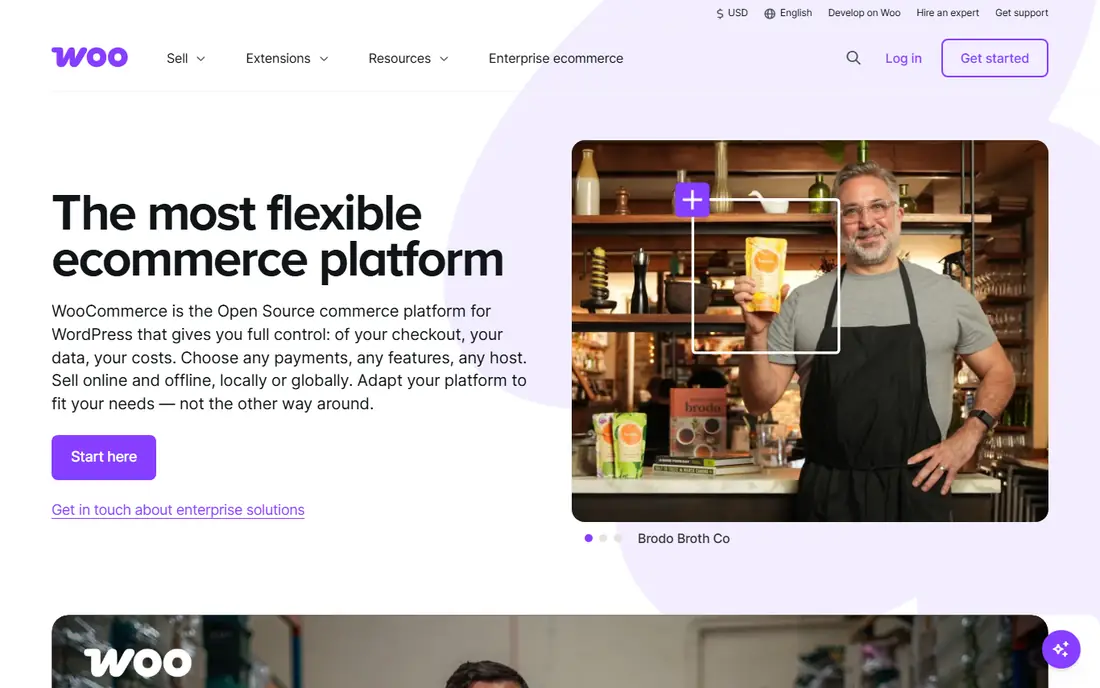
WooCommerce turns a WordPress site into an online store, and it suits a grocer that already runs WordPress or wants full control over content and search visibility. The core plugin is free, though hosting, a payment gateway, extensions and maintenance all cost money and time. Delivery slots, pickup, variable products and subscriptions are available through extensions, so a store can build a grocery setup piece by piece.
That flexibility is also the main cost. A WooCommerce grocery store needs someone to keep WordPress, plugins and payment tools updated and tested, especially when SNAP or EBT support is involved. For a store with technical help and a content-led site, WooCommerce is a strong, low-license-cost choice. For a store that wants a managed service, a hosted platform will be simpler.
- Free core plugin
- Full control over data and design
- Large extension range for delivery and pickup
- Hosting, maintenance and security are your job
- Grocery features need extensions
- Setup takes more technical time

BigCommerce suits a grocery retailer that is scaling beyond a small store and wants more built-in features than Shopify offers at the same price. Its Core plan starts at $29 per month on annual billing, with Growth and Scale tiers above it, and it does not charge its own transaction fee on top of payment gateway fees. Large catalogs, complex promotions and business-to-business ordering are handled well.
Grocery depth still needs attention. Variable-weight products, substitutions and delivery slot management are not core strengths, so a grocer should test those workflows with apps before committing. BigCommerce also applies annual sales thresholds that can move a store to a higher tier as revenue grows. For a mid-size grocer with a large catalog and a team to manage apps, it is a solid hosted option.
- Strong built-in catalog and promotion features
- No platform transaction fees
- Good for larger catalogs
- Grocery-specific features still need apps
- Sales thresholds apply on some plans
- Design flexibility needs more work than WooCommerce
Square Online is a natural choice for a small grocer or specialty food shop that already uses Square at the counter. Online orders, in-store inventory and payments can sit in one system, which reduces double entry and keeps stock counts closer to reality. A free plan is available for a basic store, with paid plans adding more features and removing Square branding.
The limits show up as the catalog grows. Square Online is simpler than Shopify or BigCommerce, and a full supermarket range with fresh departments, substitutions and complex delivery rules will stretch it. For a small store, a deli, a bakery or a farm shop selling online for the first time, that simplicity is a strength. Start here if Square already runs your till, and move up only when grocery complexity demands it.
- Ties online orders to Square point of sale and inventory
- Simple setup for small stores
- Pickup and delivery options
- Less flexible than Shopify or WooCommerce for large catalogs
- Grocery features are basic
- Design options are limited
Wix suits a very small grocery business that wants a simple online store up quickly, such as a local farm shop, a specialty food seller or a single store with a limited range. Its Core commerce plan starts at about $29 per month on annual billing, with hosting, checkout and basic store tools included. The builder is easy to use, and a non-technical owner can manage products and orders without developer help.
Wix is not built for a full grocery operation. Variable-weight items, substitutions, delivery slot capacity and SNAP support are not its strengths, and a large catalog with many departments will be harder to manage than on a grocery-native platform. For a small store testing online ordering, Wix is a low-friction start. For a supermarket, look at the grocery-native options below.
- Easy drag-and-drop store builder
- Hosting and checkout included
- Good for a small, simple catalog
- Less suited to large grocery catalogs
- Grocery-specific tools are limited
- Scaling beyond a small store can be hard
Ecwid is useful when a grocer already has a website and only needs to add online ordering. The store can be embedded into an existing site, and a free plan covers a small number of products, with paid plans from $19 per month adding more products and features. That makes it a low-cost way to test online sales without rebuilding a site.
Like Wix, Ecwid is a general store tool, not a grocery platform. It handles standard products well, but fresh, variable-weight and substitution workflows need workarounds. For a small grocer with a simple range and an existing site, Ecwid is a practical, low-cost start. For a full grocery range, a grocery-native platform will handle daily operations with less manual effort.
- Free plan for a small store
- Embeds into an existing website
- Simple product and order management
- Grocery features are basic
- Design and checkout control are limited
- Not built for large fresh catalogs
Mercatus is a grocery-native platform with a long record serving grocery and pharmacy chains. It is built around the way food retailers actually sell, including departments, promotions, loyalty and integrations with point of sale and inventory systems that general platforms do not offer out of the box. That depth matters for a chain that needs consistent online ordering across many stores.
Pricing is quote-based, and implementation is a project rather than a signup, so Mercatus suits a chain or a larger independent group rather than a single small shop. A buyer should ask about integration with its current point of sale, loyalty and inventory systems, and about the timeline from contract to launch. For a chain, that integration work is the main reason to choose a grocery-native platform.
- Built for grocery and pharmacy retail
- Strong integrations with grocery systems
- Loyalty and promotion tools
- Quote-based pricing
- Implementation takes time
- Aimed at chains rather than single small stores
Instacart Platform, including its Storefront offering, lets a grocery retailer run its own branded online store while using Instacart's delivery network and shopper fleet. That combination suits a large chain that wants delivery scale without building its own driver network. Retail media options can also offset platform fees for some retailers, though terms vary by agreement.
The trade-off is control and cost structure. A retailer using Instacart's network depends on its shoppers and service levels for the delivery experience, and platform fees, commissions and media terms need careful review before signing. Pricing is quote-based. For a large chain that already sells through Instacart, a branded storefront on the same platform is a logical next step. For a small independent, a simpler platform will usually be cheaper and easier to run.
- Access to Instacart delivery network and shoppers
- Storefront and fulfillment options
- Retail media options
- Quote-based pricing
- Retailer gives up some control over the customer experience
- Fees and media terms need careful review
Freshop is a grocery-specific ecommerce platform, now part of NCR Voyix, that is built for online grocery ordering, pickup and delivery. Its workflows cover the jobs that general platforms handle poorly, such as fresh departments, substitutions, pickup time slots and delivery scheduling. That focus makes it a strong candidate for an independent grocer or a regional chain that wants a purpose-built store.
Pricing is quote-based, and the right fit depends on integration with the store's point of sale, inventory and loyalty systems. A buyer should ask for a demo using its own departments and products, including a substitution and out-of-stock flow, since those edge cases decide whether a grocery platform works in daily use. For a grocer that lives or dies by pickup and delivery accuracy, Freshop deserves a shortlist place.
- Built specifically for grocery ecommerce
- Pickup and delivery workflows
- Now part of NCR Voyix
- Quote-based pricing
- Integration depends on your existing systems
- Aimed at grocery retailers, not general stores
Rosie is built exclusively for independent grocery retailers, which gives it a clear focus. It covers online ordering, pickup and delivery for a single store or a small group, without the chain-scale complexity of larger platforms. That scope suits an independent grocer that wants grocery-native features, such as department browsing and pickup slots, without a large enterprise project.
Pricing is quote-based, so a buyer needs a conversation to get a firm figure. The main question is fit: does Rosie integrate with the store's point of sale and inventory, and does it handle the store's fresh and variable-weight products well. For an independent grocer that finds Shopify too general and Mercatus too large, Rosie sits in a useful middle ground.
- Built only for independent grocers
- Online ordering, pickup and delivery
- Simpler scope than chain platforms
- Quote-based pricing
- Smaller scale than Mercatus or Instacart
- Feature depth depends on the plan
How we picked these
We compared public product descriptions, grocery-specific features and pricing for platforms that are live in October 2026. We favored platforms with a clear grocery use case, including pickup, delivery, substitutions or fresh product handling, and we included general platforms that a small grocer can realistically run. We used See website where a vendor quotes privately, which is common for grocery-native platforms, rather than inventing a price.
What a grocery store should test before launch
Test the hard grocery jobs, not just the homepage. Add a variable-weight product, mark an item out of stock, and run a substitution flow to see what the customer sees and what the picker sees. Book a pickup slot and a delivery slot at peak times, and check how capacity limits work. Test SNAP and EBT eligibility if you plan to accept online SNAP payments, including which products are tagged as eligible and which processor you must use.
Also test the daily operations view. A picker needs a clear list by department and location, a manager needs to see orders by slot and status, and a customer needs clear updates when an item changes. If any of those views requires a spreadsheet workaround, the platform will cost staff time every day. Run a small live pilot with real orders before a full launch, and fix the workflows that break first.
Frequently asked questions
What is the best ecommerce platform for grocery store use?
The best ecommerce platform for a grocery store depends on size. A small specialty store can start on Shopify, Square Online or WooCommerce. A full supermarket or chain usually needs a grocery-native platform such as Mercatus, Freshop or Rosie, which handles fresh products, substitutions and pickup slots better.
What is the best grocery ecommerce platform for an independent grocer?
For an independent grocer, Rosie and Freshop are strong grocery-native options, since both are built for food retail rather than general ecommerce. Shopify and WooCommerce are cheaper starting points if the catalog is small and the store has technical help, but they need apps for grocery-specific jobs.
Can a grocery store accept SNAP online?
A grocery store can accept SNAP online only through an approved processor and with eligible products tagged correctly. Only a small number of third-party processors are approved for SNAP online, and platform support varies, so confirm processor, product eligibility and fees with the platform and processor before launch.
Do grocery platforms handle delivery slots and substitutions?
Grocery-native platforms usually handle delivery and pickup slots, substitutions and out-of-stock flows as core features. General platforms can add those jobs with apps, but the workflow may be less smooth. Test a substitution and a slot booking during a trial, since those flows decide daily staff workload.
How much does a grocery ecommerce platform cost?
General platforms start at about $19 to $29 per month, plus apps, hosting and payment fees where they apply. Grocery-native platforms usually quote privately, and cost depends on store count, integrations and order volume. Ask for a written quote that lists platform fees, transaction fees and any integration or setup costs.
Sources
See where you really rank - block by block
ProMapRanker scans Google Maps across a grid of your service area. Simple monthly plans from $19, white-label on every plan.
Start freeKeep reading
 zoho inventory alternatives
6 Alternatives to Zoho Inventory, Compared on Price and Fit
Zoho Inventory alternatives: 6 tools compared on price, free plans and fit. Katana leads the list for manufacturers. Fit and flaws are laid out for each entry.
Read → zoho crm alternatives
Best Zoho CRM Alternatives (2026)
Need Zoho CRM alternatives? We compare 7 tools on cost, free access and who each suits. Every pick gets a straight assessment. Built for quick decisions.
Read → zelle alternatives
Best Zelle Alternatives in 2026
Compare the best Zelle alternatives for sending money to friends, paying sellers and moving funds abroad, with honest notes on fees, speed and safety in 2026.
Read →