 ProMapRanker
Best Ecommerce Platform in 2026

Key takeaways
- Shopify is the safest default for most product stores, with hosted checkout, a large app store, and plans that scale from a first store to a large brand.
- WooCommerce suits WordPress users who want full control and no platform subscription, as long as they accept hosting and maintenance work.
- BigCommerce suits growing and business-to-business stores that want more built-in features and no extra fee for using outside payment providers.
- Squarespace and Wix suit design-led small stores, while Square Online and Ecwid suit sellers who already have a shop, a website, or a point-of-sale setup.
- The true cost includes the plan, payment fees, apps, and themes, so compare the full monthly total, not just the headline plan price.
Quick comparison
| Pick | Great for | Pricing starts at | Free tier | |
|---|---|---|---|---|
 Shopify | Most product stores | $39 per month | Free trial | Visit |
 WooCommerce | WordPress users wanting control | Free | Yes | Visit |
 BigCommerce | Growing and B2B stores | $39 per month | Free trial | Visit |
 Wix | Small stores on a simple builder | $29 per month | No | Visit |
 Squarespace | Design-led brands | $19 per month | Free trial | Visit |
 Square Online | Local sellers using Square POS | Free | Yes | Visit |
 Ecwid | Adding a store to an existing site | $5 per month | Yes | Visit |
 Shift4Shop | Feature-rich stores without app sprawl | $41 per month | No | Visit |
 Adobe Commerce | Enterprise and complex B2B | See website | No | Visit |
 PrestaShop | Open-source stores with developers | Free | Yes | Visit |
The best ecommerce platforms in 2026
The best ecommerce platform is the one that fits your catalogue, your technical comfort, and your sales channels, not simply the cheapest plan. The ten platforms below cover hosted builders, open-source software, and enterprise tools, so you can compare like with like before you commit to a migration.

Shopify remains the default recommendation for a dedicated online store, and the reason is practical: hosting, security, checkout, and updates are handled for you. Basic costs $39 a month billed monthly, or $29 a month billed yearly, with higher plans for growing and advanced stores. The app store covers shipping, reviews, email, accounting, and most other needs a store will meet.
The main cost trap is payments. Using Shopify Payments avoids an extra platform transaction fee, while using another provider adds a fee that is 2% on Basic. Add app costs to the plan price before judging value. Even with those costs, Shopify is the easiest platform to run well at scale.
- Hosted checkout and security
- Huge app store
- Built-in point of sale and multichannel selling
- Third-party payment fee applies outside Shopify Payments
- Many features need paid apps
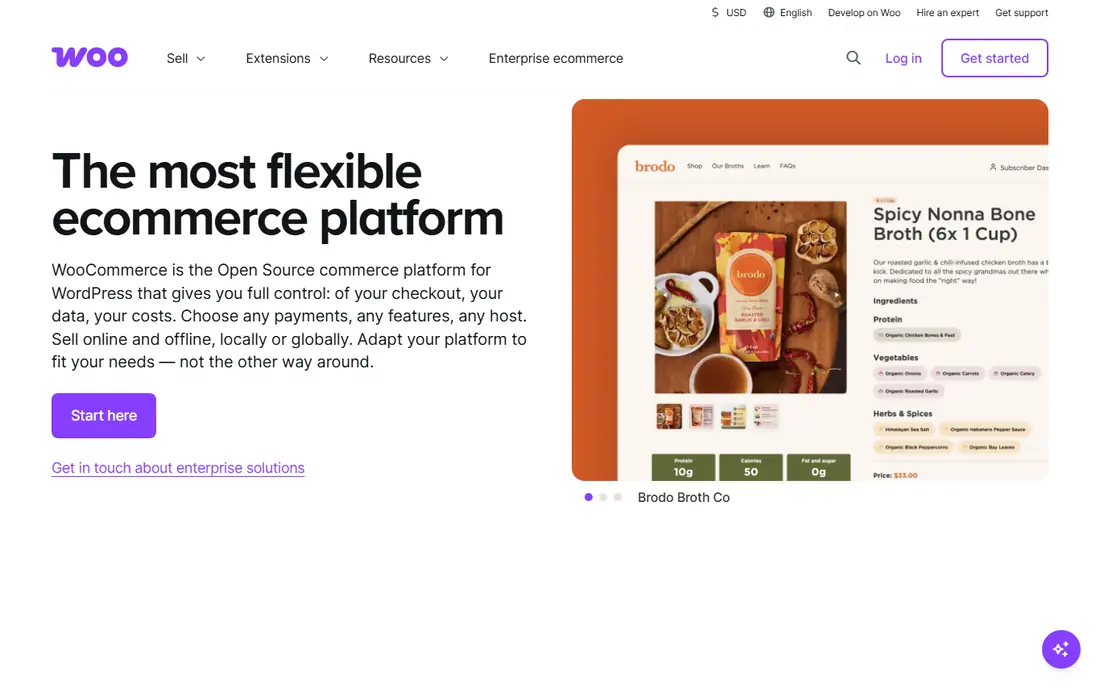
WooCommerce is a free plugin that turns a WordPress site into a store, which makes it the natural choice for sites already built on WordPress. There is no platform subscription and no platform transaction fee, and you own your data and design choices in a way hosted platforms do not allow. Content, search, and blogging strength are also strong, since the store sits on a full content system.
Freedom brings work. You pay for hosting, and you handle updates, backups, security, and compatibility between plugins. A small store can run cheaply, but a busy store needs good hosting and someone to maintain it. If you like that control, WooCommerce repays it. If you want a platform that just works, a hosted builder will suit you better.
- Free core plugin
- Full control over design and data
- Huge WordPress plugin range
- Hosting, security, and updates are your job
- Costs rise with extensions and hosting
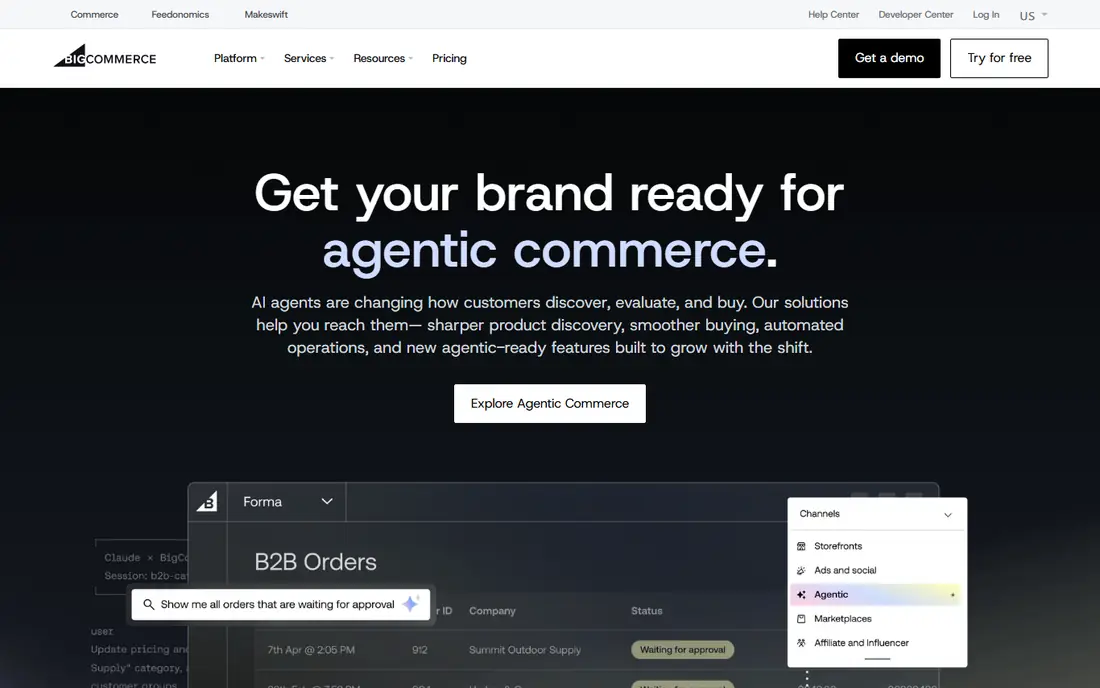
BigCommerce is the strongest hosted rival to Shopify for stores that expect to grow. Core costs $39 a month billed monthly, or $29 a month billed yearly, for stores up to a yearly sales threshold, with higher plans as sales rise. Built-in features cover more ground than Shopify at the same tier, including product options, customer groups, and business-to-business tools on higher plans.
The sales threshold is the part to plan for. Plans move up automatically as trailing sales grow, so budget for the tier you will reach, not only the tier you start on. For mid-market and B2B sellers, that trade is often worth it, since fewer paid apps are needed to reach the same feature set.
- Strong built-in features
- No extra platform fee for outside payment providers
- B2B and multi-storefront options
- Plans move up as yearly sales grow
- Design and app range are smaller than Shopify
Wix suits a small business that wants a full website and a store in one builder. The Core plan, at $29 a month billed yearly, is the first plan that supports online payments, while the lower Light plan does not list payments. Templates are varied, the editor is approachable, and a small catalogue can be live quickly without developer help.
Wix is less convincing for very large catalogues or complex B2B needs, where Shopify, BigCommerce, or WooCommerce offer more depth. It also locks design choices into its builder, which makes a later move harder. For a small store that values speed and simplicity, those limits rarely matter.
- Easy drag-and-drop builder
- Core plan includes online payments
- Good for small catalogues
- Less suited to very large catalogues
- Switching platforms later takes work
Squarespace is the best ecommerce platform for many design-led brands because its templates look polished with little effort. The Basic commerce plan costs $19 a month billed yearly, with a 2% transaction fee, while the Core plan at $29 a month billed yearly removes that fee. The same builder handles pages, blogging, and selling, which suits creators who want one home for everything.
The app and integration range is smaller than Shopify, and complex catalogue or B2B needs can hit limits sooner. For a small brand where design matters as much as features, Squarespace is an excellent balance. For a large product store, a dedicated commerce platform will scale better.
- Strong, polished templates
- Commerce built into the website builder
- Good for creators and small brands
- Basic commerce plan carries a 2% transaction fee
- App range is smaller than Shopify
Square Online is the natural online store for a shop, cafe, or restaurant already using Square for in-person payments. Inventory, orders, and payments can share one Square account, which avoids the double entry that comes from running separate systems. A free plan lets a local seller start selling online without a monthly subscription.
The free plan carries a higher online card rate, and paid plans add features at higher monthly prices. Design and app options are also narrower than on Shopify or WooCommerce. If Square already runs your shop, though, the shared inventory and simple setup often outweigh those limits.
- Free plan to start
- Tight link to Square point of sale and payments
- Simple setup for local shops
- Higher card rate on the free plan
- Fewer design and app options than Shopify
Ecwid answers a different question from most platforms here: how do I add selling to a site I already have? It embeds a store into WordPress, Wix, Squarespace, or a custom site, with central inventory and order management. The Starter plan costs $5 a month billed yearly, and a free plan covers a small product range.
Ecwid is less complete as a standalone website builder, so it suits bloggers, restaurants, and small businesses that already have a site. If you are starting from scratch, a full builder such as Shopify or Squarespace may be simpler. If the site already exists, Ecwid avoids a rebuild.
- Adds a store to any website
- Free plan available
- No platform transaction fee
- Less of a full website builder
- Advanced features need paid plans
Shift4Shop, formerly 3dcart, offers a single plan approach with many features built in, including marketing tools, inventory management, search optimisation, real-time shipping, and fraud protection. That breadth suits merchants who dislike paying for a stack of apps to reach basic functionality. Pricing is listed at $41 a month for its main plan, with a free option tied to using Shift4 payments in some cases.
The ecosystem is smaller than Shopify, and the interface can feel dated next to newer builders. For a US seller who wants enterprise-style features at a mid-market price, and who prefers built-in tools to app sprawl, Shift4Shop is worth a trial.
- Many features built in rather than added by apps
- Real-time shipping and fraud tools
- Free themes
- Smaller app ecosystem than Shopify
- Interface feels less modern in places
Adobe Commerce, formerly Magento Commerce, is the enterprise end of this list. It handles complex catalogues, multiple storefronts, business-to-business pricing, and deep customisation that hosted builders cannot match. Large brands with dedicated development teams use it precisely because it can be shaped to unusual business rules.
That power comes with cost and complexity. Pricing is quoted per customer and sits well above hosted plans, and running the platform needs developers, hosting, and ongoing maintenance. Adobe Commerce is the wrong choice for a first store. For an enterprise team with complex needs, it is one of the few platforms that can meet them.
- Very flexible for complex catalogues and B2B
- Multi-storefront support
- Deep customisation
- Quote-based enterprise pricing
- Needs developers and a serious budget
PrestaShop is free, open-source ecommerce software with a long history, particularly in Europe. It offers a wide module range for payments, shipping, and marketing, and it gives owners full control over code and data. For a developer-led team that wants open-source freedom without WooCommerce or WordPress, it is a credible option.
As with WooCommerce, freedom brings maintenance. Hosting, security, updates, and module costs fall to the owner, and paid modules can add up. PrestaShop suits teams with technical help and a clear reason to choose it over WooCommerce. Without that help, a hosted platform will be easier to run.
- Free open-source software
- Large module range
- Strong in European markets
- Hosting and maintenance are your job
- Many useful modules are paid
How we picked these
We compared official feature pages, pricing pages, app store listings, privacy policies, and public reviews for platforms that are actively sold and supported in October 2026. We included hosted builders, open-source software, and an enterprise option, and we favoured platforms with clear pricing, real checkout support, and a track record of serving small to mid-sized stores. We did not claim hands-on testing, and we treated promotional prices with care, favouring standard monthly and yearly rates.
Platform prices vary by region and billing term, so the figures here are starting points for comparison. Check the vendor pricing page for your country, including transaction fees and payment processing rates, before you choose. A plan that looks cheap in one region can cost more once fees and apps are added.
How to choose the best ecommerce platform for your store
Count the true monthly cost
Add the plan, payment processing, transaction fees, apps, themes, and any email or shipping tools you will need. A $29 plan with several $20 apps costs more than a $39 plan with those features built in. Run this total for each shortlisted platform before you decide.
Match the platform to your catalogue and channels
A small catalogue on one website needs a different tool from a large catalogue sold on a website, marketplaces, social channels, and in store. Check that your must-have channels, payment methods, and shipping options work natively, not only through a paid app that may break on update.
Test checkout on a phone
Most shoppers buy on phones, so test the full checkout on a mobile device during your trial. Check guest checkout, payment options, shipping choices, and error messages. A beautiful desktop store that frustrates mobile buyers will lose sales every day.
Plan for migration before you build
Export products, customers, and order history from your current setup, and test imports early. Changing platforms later is possible, but it takes time and can affect search rankings if URLs and redirects are not handled. Choose for where your store will be in two years, not only for launch week.
Frequently asked questions
Which ecommerce platform is best for beginners?
Shopify is the safest beginner choice for a dedicated store, because hosting, checkout, and security are handled for you. Wix and Squarespace are also easy for small stores, especially when design matters. WooCommerce is powerful, but beginners should only choose it if they are comfortable with WordPress and hosting.
What are the best ecommerce platforms for small business?
Shopify, WooCommerce, BigCommerce, Wix, and Squarespace cover most small businesses, with Square Online and Ecwid as strong options for local sellers and existing websites. The best ecommerce software for a given business depends on catalogue size, sales channels, and technical comfort. Compare total monthly cost, not just the plan price.
What are the best online store platforms with no transaction fees?
BigCommerce charges no extra platform fee for outside payment providers, and WooCommerce and PrestaShop charge no platform transaction fee, though payment processors still charge card fees. Shopify avoids its extra fee only when you use Shopify Payments. Always separate platform fees from card processing fees when comparing.
Is WooCommerce really free?
The WooCommerce plugin itself is free, but a store still needs hosting, a domain, security, and often paid extensions. Those costs vary widely, from a low-cost shared host to managed WooCommerce hosting for busy stores. WooCommerce is low-cost and flexible, but it is not free to run well.
What are the best ecommerce apps for selling on social media?
Shopify, BigCommerce, WooCommerce, and Square Online all support selling through social and marketplace channels, either natively or through apps. Check that your chosen channels work in your country and that inventory stays in sync across channels. A channel that creates manual work will cost more than it earns.
When should I choose Adobe Commerce over Shopify?
Choose Adobe Commerce only when you have complex B2B rules, multiple storefronts, or customisation needs that hosted platforms cannot meet, plus developers and budget to run it. For most stores, Shopify or BigCommerce will be faster to launch and cheaper to maintain. Enterprise power is only worth its cost when you actually need it.
Sources
- https://www.shopify.com/pricing
- https://woocommerce.com/pricing/
- https://www.bigcommerce.com/pricing/
- https://www.wix.com/plans
- https://www.squarespace.com/pricing
- https://squareup.com/online-store/pricing
- https://www.ecwid.com/pricing
- https://www.shift4shop.com/pricing.html
- https://business.adobe.com/products/commerce.html
- https://www.prestashop.com/pricing
See where you really rank - block by block
ProMapRanker scans Google Maps across a grid of your service area. Simple monthly plans from $19, white-label on every plan.
Start freeKeep reading
 youtube alternatives
Best YouTube Alternatives in 2026
Looking for youtube alternatives in 2026? We compare Vimeo, Dailymotion, Twitch, Rumble, and more on price, audience, monetization, control and privacy.
Read → what's the best ai tool for photo editing
What Is the Best AI Tool for Photo Editing in 2026
What is the best AI tool for photo editing? We compare ten tools for 2026, from Photoshop and Lightroom to Luminar, Topaz, Canva and mobile editors today.
Read → twitter alternatives
Best Twitter Alternatives in 2026
Compare the best twitter alternatives for 2026, from Bluesky, Threads, and Mastodon to Reddit, Tumblr, and Micro.blog, with free plans and audience notes.
Read →