 ProMapRanker
Best Ecommerce Marketing Companies in 2026

Key takeaways
- Full-service agencies suit stores that want SEO, paid media, email and web work under one contract, while specialists win when one channel drives most revenue.
- WebFX, SmartSites and Thrive are practical starting points for small and mid-sized stores, while NP Digital, Tinuiti and Power Digital suit larger brands.
- Most agencies price by monthly retainer or project scope rather than a fixed public price, so a written brief is needed for a fair quote.
- This is a guide based on publicly reported services, budgets and client focus, not a verified ranking, and results vary by store, budget and market.
- Ask who will work on your account, how reporting works, and what happens to your ads, content and data if you leave.
Quick comparison
| Pick | Great for | Pricing starts at | Free tier | |
|---|---|---|---|---|
 WebFX | Full-service growth with revenue tracking | See website | No | Visit |
 SmartSites | SEO, PPC and web design for smaller stores | See website | No | Visit |
 Thrive Internet Marketing Agency | Large full-service team for SMBs | See website | No | Visit |
 Coalition Technologies | Ecommerce SEO and store development | See website | No | Visit |
 Tinuiti | Marketplace and retail media | See website | No | Visit |
 NP Digital | Enterprise and international performance | See website | No | Visit |
 Disruptive Advertising | Paid media and conversion work | See website | No | Visit |
 Power Digital | Full-funnel growth for scaling brands | See website | No | Visit |
 OuterBox | Catalog and parts stores | See website | No | Visit |
The best ecommerce marketing companies
We compared these firms on service range, store size fit, published pricing signals and ecommerce focus, using their own service pages and public agency profiles. Treat this as a shortlist for outreach, not a league table.
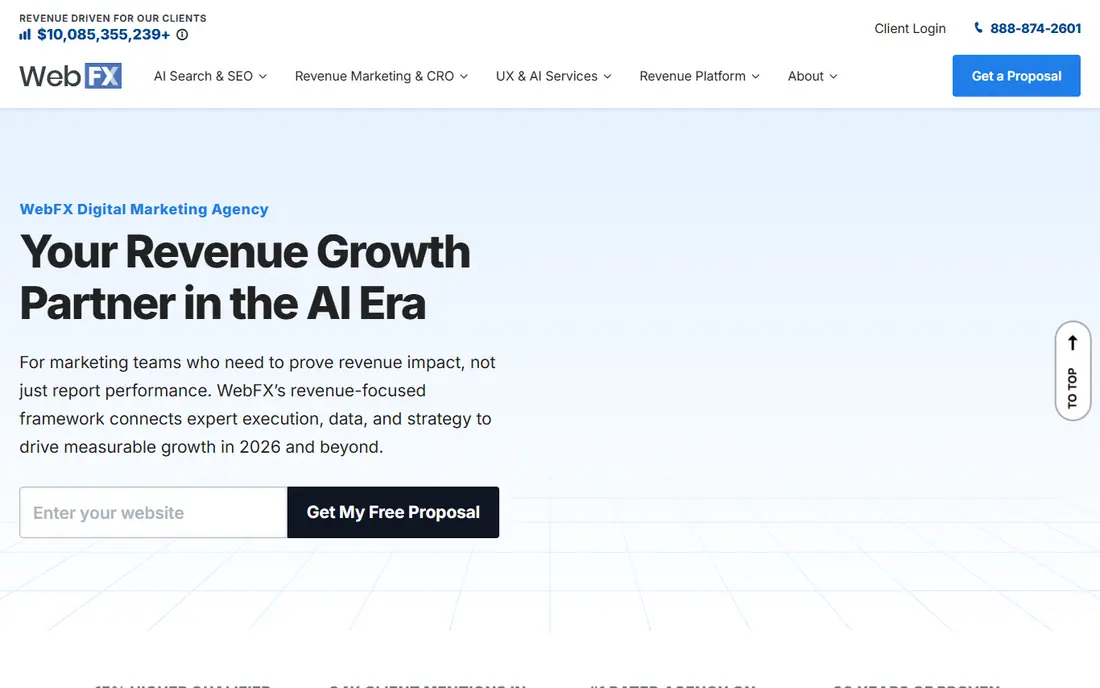
WebFX is the most commonly named ecommerce marketing company in current roundups, and the reason is breadth. It covers ecommerce SEO, paid search, paid social, email, SMS, conversion work and web development, and it ties results back to revenue through its MarketingCloudFX platform. For a store doing steady volume that wants one partner instead of four vendors, that breadth is the main selling point.
The trade-off is fit and cost. Published pricing signals put ecommerce marketing retainers commonly in the range of 2,500 dollars a month and up, which prices out very small stores. A large agency also assigns account teams, so the senior strategist on the sales call may not be the person doing the weekly work. Ask for the actual team, the reporting cadence and a sample report before signing.
- Broad service range under one roof
- Proprietary revenue tracking platform
- Large team with deep ecommerce experience
- Retainers suit mid-market budgets more than tiny stores
- A large team can mean less senior time on small accounts
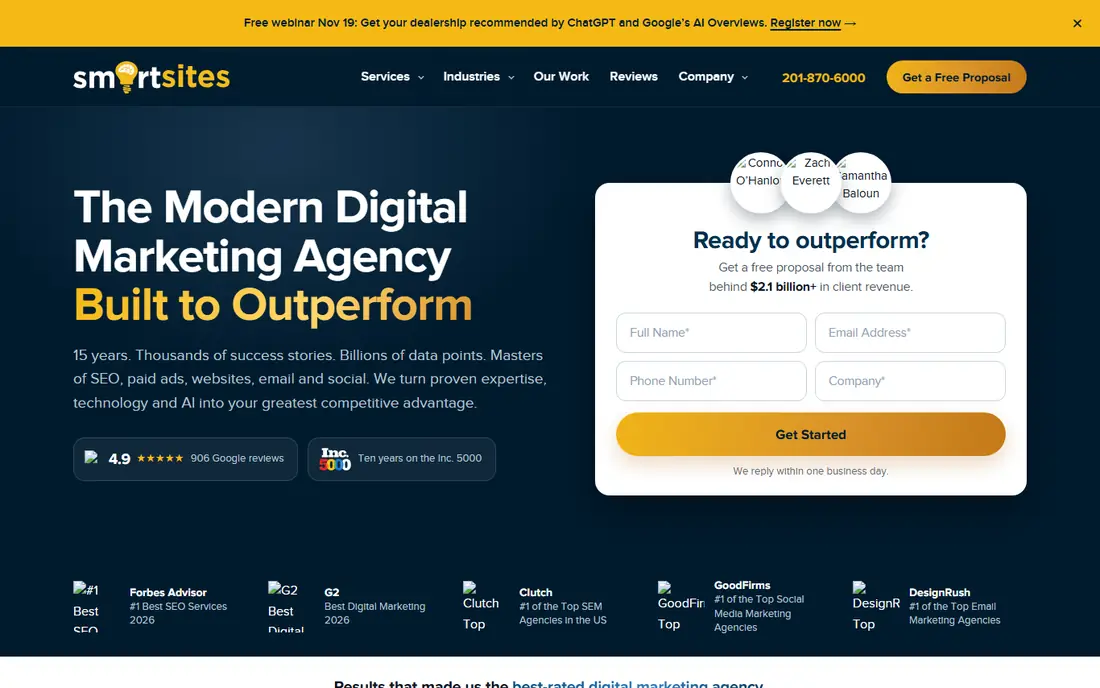
SmartSites is a practical first call for a smaller store that needs a new or improved site plus the marketing to drive traffic to it. Its core work spans SEO, pay-per-click advertising and web design, with Shopify experience that matters for many independent stores. Keeping design and marketing with one team avoids the usual blame game between a designer and an ads manager.
The limitation is scale. SmartSites is built for small and mid-sized businesses, so a large brand with international stores or complex marketplace needs may outgrow it. Pricing is quoted per project or retainer, with public profiles listing minimum projects around 1,000 dollars. Get a written scope that separates design, SEO and ad management, so you can see what each part costs.
- Strong fit for small and mid-sized stores
- Combines web design with SEO and PPC
- High review volume on agency platforms
- Less suited to large enterprise programs
- Smaller budgets may get a narrower service mix
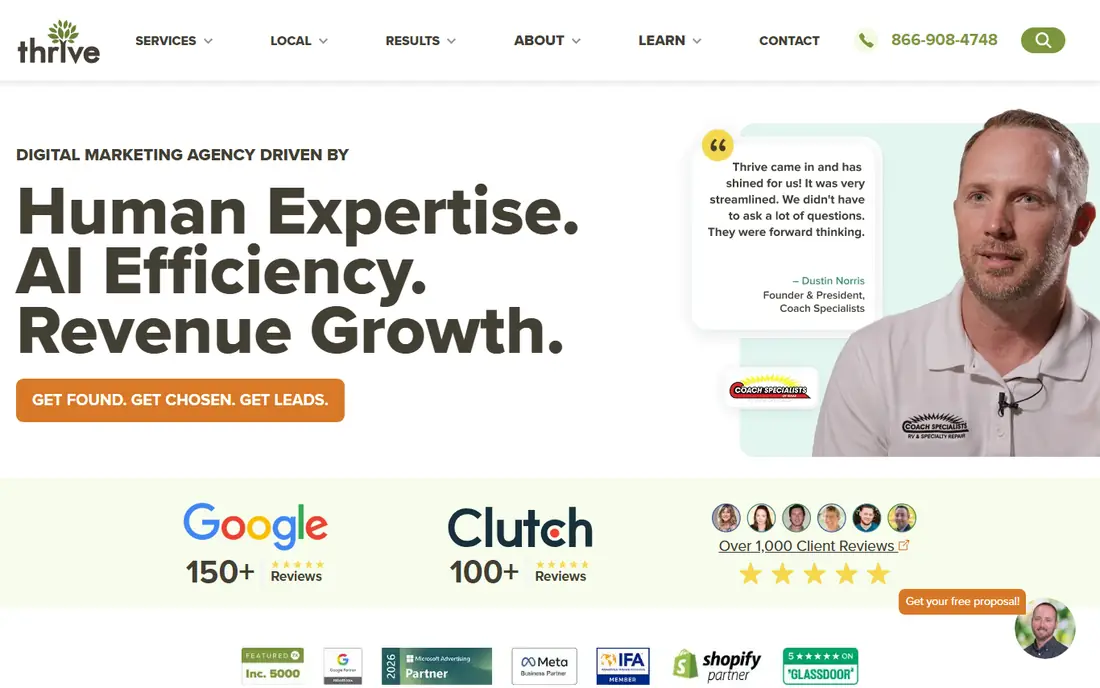
Thrive is another full-service option for small and mid-sized stores, with services covering SEO, paid media, social media, email, content and web design. Its size is a genuine advantage when a store needs several channels at once, since work does not have to be handed to outside contractors. Public profiles list minimum projects around 1,000 dollars, which keeps it accessible to smaller stores than enterprise-only firms.
The honest catch is consistency. With a large team, the quality of your experience depends on who runs your account. Thrive's breadth also means it is not a deep specialist in any single niche, such as marketplace advertising or complex catalog SEO. Stores with one dominant channel may get better value from a specialist further down this list.
- Very broad service menu
- Large in-house team
- Month-to-month style engagements reported for some services
- Size can mean process-heavy communication
- Results depend heavily on the assigned team
Coalition Technologies
Great for: Ecommerce SEO and store development
Coalition Technologies is the SEO-first pick in this list. It is repeatedly named for ecommerce SEO, including technical SEO and Shopify optimization, and it also handles PPC, email, social and web development. For a store whose main problem is organic visibility, product page structure or site speed, that depth matters more than a generalist's broad menu.
Typical ecommerce SEO campaigns are reported around 2,500 dollars a month, so this is not a budget option. Coalition also works best when a store can commit for several months, since SEO gains take time. If your priority is fast paid traffic rather than organic growth, pair it with a paid specialist or pick a paid-led firm instead.
- Deep ecommerce SEO focus
- Shopify and store development skills in-house
- Publishes detailed case work
- SEO-led scope may need a separate paid media partner
- Typical campaigns suit mid-market budgets
Tinuiti is the pick for brands that sell through marketplaces as well as their own store. Its strength is retail media: Amazon advertising, Walmart advertising, paid search, paid social and lifecycle marketing, tied together with measurement across channels. For a brand where Amazon drives a large share of revenue, a general agency often lacks this depth.
The catch is budget and focus. Tinuiti works mainly with mid-market and enterprise brands, and pricing is custom and quote-based. A small direct-to-consumer store with no marketplace presence will not get much from its headline strength. Ask for marketplace-specific case work in your category before engaging, since retail media tactics vary a lot by product type.
- Strong Amazon, Walmart and retail media buying
- Full-funnel measurement
- Suits mid-market and enterprise brands
- Enterprise-leaning budgets
- Less relevant for stores that sell only on their own site
NP Digital suits larger brands and international stores that need performance marketing across several markets. Its services span SEO, paid media, content, creative and analytics, with a content-led approach that fits brands building authority over time. For a company with multiple regions or languages, that scale is hard to replicate with a small agency.
Smaller stores should be realistic about fit. Pricing is custom, engagements are typically substantial, and the onboarding process is built for larger organizations. A store with a single market and a modest budget will usually get faster attention from SmartSites or Thrive. NP Digital earns its place here for brands that have outgrown a small agency.
- Global reach and large-team depth
- Strong content-led and search-led growth work
- Suits multi-market brands
- Custom enterprise pricing
- Smaller stores may find the process heavy
Disruptive Advertising is a paid media specialist, and that focus is its selling point. It runs Google Ads and paid social campaigns, pairs them with conversion rate optimization and creative work, and adds lifecycle marketing through email. Stores that already have traffic but poor conversion, or that rely on paid ads for most sales, get a team built around that problem.
The limitation is the flip side of specialization. If your store also needs SEO, content or a site rebuild, you will need another partner or a broader scope. Pricing is custom, so the only honest way to compare is a proposal against the same brief you send to other firms. Ask how the team reports on profit per campaign, not just clicks or impressions.
- Paid search and paid social focus
- Conversion rate work alongside ads
- Lifecycle marketing included
- Paid-led scope means SEO and content may need separate support
- Custom pricing with no public rate card
Power Digital targets growth-stage brands that have product-market fit and want to scale across channels. Its work covers SEO, paid media, content, social, email and analytics, with an emphasis on tying spend to revenue across the full funnel. For a brand moving from six figures to seven figures in annual revenue, that full-funnel view is valuable.
The barrier is budget. Public profiles report minimums around 10,000 dollars a month, which rules out most new stores. Power Digital is also a poor fit for a store that only needs one channel fixed. It works best when the client can fund several channels at once and give the team room to test.
- Full-funnel growth marketing
- Data-led reporting
- Suits growth-stage brands ready to scale
- Higher minimum budgets reported around 10,000 dollars a month
- Less suited to early-stage stores
OuterBox rounds out this list for stores with large or complex catalogs, such as parts, industrial or multi-category retailers. Its ecommerce SEO and design work is built around catalog structure, faceted navigation and product data, which are the problems that break organic performance for big stores. It also publishes its own ecommerce case results, which gives buyers something concrete to check.
Pricing is not published, so expect a quoted engagement. A small store with a handful of products will not need this depth and may find a smaller agency faster and cheaper. OuterBox fits best when catalog size itself is the marketing problem.
- Ecommerce SEO strength for large catalogs
- Design and development in-house
- Publishes ecommerce case results
- Pricing not published
- Catalog focus may be overkill for small single-product stores
How we picked these
We compared public service pages, agency profiles and current roundups, and we favored firms with a clear ecommerce practice rather than general agencies with no store work. We did not rank firms on invented scores, and we did not treat review counts as proof of results. Budgets cited are published signals from agency profiles, not quotes, and your price will depend on scope, channels and store size.
How to choose an ecommerce marketing company
Start with your biggest constraint, not the agency's biggest claim. If organic traffic is the problem, shortlist SEO-led firms such as Coalition Technologies and OuterBox. If paid ads drive your sales, shortlist paid specialists such as Disruptive Advertising and Tinuiti. If you need everything at once, shortlist full-service firms such as WebFX and Thrive. A mismatch here is the most common reason engagements disappoint.
Next, send the same brief to two or three firms and compare like with like. The brief should state monthly revenue, current traffic and conversion rate, ad spend, platforms, and the result you want in six months. Ask each firm for the team, the reporting format, the contract length and the exit terms. A firm that will not put scope, reporting and exit terms in writing is a risk, however good the sales call felt.
Finally, set a review point. Agree on the metrics that matter, such as revenue per channel, cost per acquisition and organic sessions, and review them after 90 days. Marketing takes time, but 90 days is enough to judge whether reporting is honest, work is happening and direction is right. If the numbers are vague at that point, they are unlikely to sharpen later.
Frequently asked questions
What is the best ecommerce marketing company for a small store?
Small stores usually do best with SmartSites or Thrive, which are built for small and mid-sized budgets and cover the core channels a new store needs. A specialist such as Coalition Technologies fits better once organic search becomes the main growth lever.
How much does an ecommerce marketing company cost?
Most firms charge a monthly retainer or a project fee, with published signals ranging from around 1,000 dollars a month at smaller agencies to 10,000 dollars a month or more at growth-stage firms. The honest answer is that cost depends on channels, store size and scope, so get a written proposal.
Should I hire a full-service agency or a specialist?
Hire a full-service agency when you need several channels at once and want one contract. Hire a specialist when one channel, such as Amazon ads or technical SEO, drives most of your revenue and needs deeper skill than a generalist offers.
What should an ecommerce marketing company report each month?
Expect revenue by channel, ad spend and return, organic sessions and rankings for key pages, conversion rate, and the work completed that month. Reports that show only traffic or impressions, without revenue or cost figures, do not let you judge value.
How long does ecommerce marketing take to show results?
Paid campaigns can show early signals within weeks, while SEO and content work usually need several months to build. A realistic plan sets early checks on activity and leading metrics, with revenue judgment after at least one full quarter.
Do I keep my ad accounts and content if I leave an agency?
That depends on the contract, so settle it before signing. Ask who owns the ad accounts, the site changes, the content and the data, and get the answer in writing. Firms differ on this point, and it matters most at the moment you switch providers.
Sources
See where you really rank - block by block
ProMapRanker scans Google Maps across a grid of your service area. Simple monthly plans from $19, white-label on every plan.
Start freeKeep reading
 zoro.to alternatives
Best Zoro.to Alternatives in 2026
We compare the best zoro.to alternatives in 2026, listing only legal licensed anime streaming services, from Crunchyroll to free options for fans today.
Read → zip alternatives
Best Zip Alternatives in 2026
We compare the best zip alternatives for buy now, pay later in 2026, covering pay-in-4 plans, fees, spending limits, and credit reporting options today.
Read → yesware alternatives
Best Yesware Alternatives in 2026
Compare the best yesware alternatives for sales email tracking, templates, and sequences, with current pricing and honest tradeoffs for small sales teams.
Read →