 ProMapRanker
Best Ecommerce Inventory Management Software in 2026

Key takeaways
- Zoho Inventory is the best starting point for small sellers, with a free plan and a paid tier that covers most early needs.
- Cin7 Core is the strongest pick for multichannel sellers who need purchasing, warehousing, and accounting depth in one system.
- Katana fits makers and small manufacturers who need production planning alongside stock control.
- ShipStation suits sellers whose biggest pain is shipping, since it pairs order management with labels and carrier rates.
- Fishbowl, Ordoro, inFlow, and Sortly cover warehouse-heavy, shipping-heavy, wholesale, and simple visual tracking needs respectively.
Quick comparison
| Pick | Great for | Pricing starts at | Free tier | |
|---|---|---|---|---|
 Zoho Inventory | Small sellers on a budget | $29 per month | Yes | Visit |
 Cin7 Core | Multichannel product businesses | $349 per month | Free trial | Visit |
 Katana | Small manufacturers | $299 per month | Free trial | Visit |
 inFlow Inventory | B2B and wholesale sellers | See website | Free trial | Visit |
 Fishbowl | Warehouse-heavy manufacturers | $229 per month | Free trial | Visit |
 Ordoro | Shipping-heavy multichannel sellers | $349 per month | Free trial | Visit |
 ShipStation | Order and shipping management | $14.99 per month | Free trial | Visit |
 Sortly | Simple visual stock tracking | $49 per month | Yes | Visit |
The best ecommerce inventory management software
Good inventory software keeps one stock count across every channel, so a sale on Amazon, Shopify, or Etsy updates stock everywhere at once. That single count prevents overselling, cuts manual spreadsheet work, and makes reorder decisions based on real numbers. The tools below differ in price, depth, and focus, so the best pick follows your channel count, SKU count, and whether you manufacture, wholesale, or only resell.
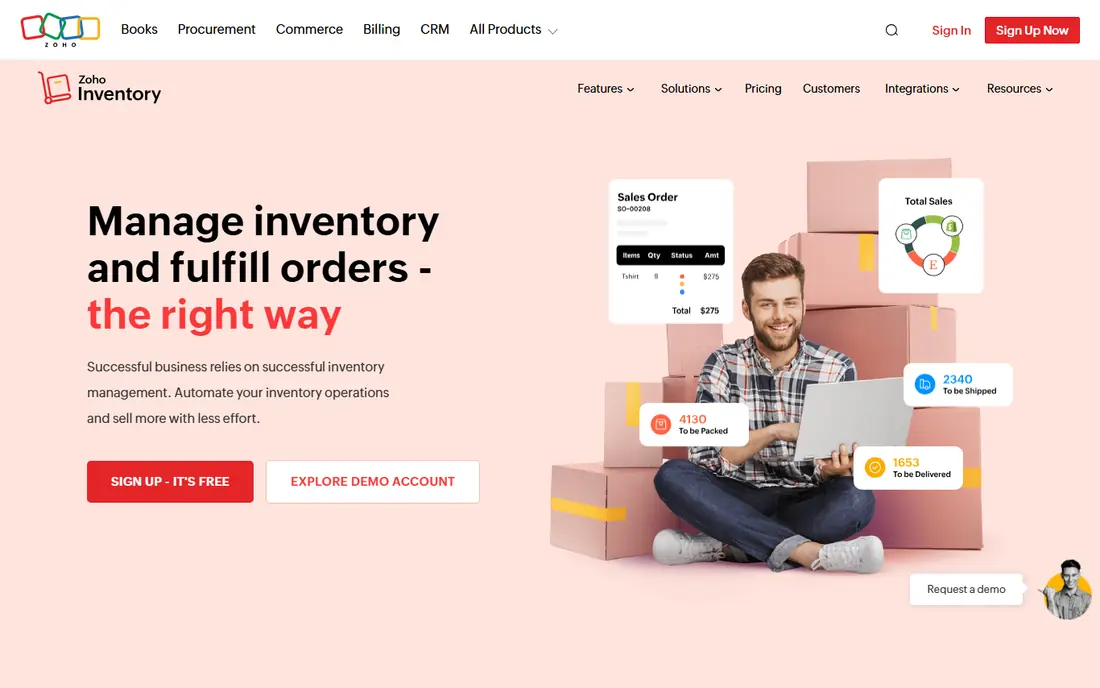
Zoho Inventory gives small sellers a clean path from spreadsheets to real stock control without a large monthly bill. The free plan covers a modest order volume, and paid tiers add more orders, warehouses, and integrations as a store grows. Connections to Shopify, Amazon, Etsy, and accounting tools in the Zoho suite keep orders, stock, and invoices in step.
The trade-off is depth. Light manufacturing, advanced warehousing, and multi-currency features sit on higher tiers or outside the product, so larger or more complex operations may outgrow it. For a new or small ecommerce business that wants reliable stock sync at a low price, Zoho Inventory is the sensible first step.
- Genuinely useful free plan
- Strong Zoho ecosystem links
- Multichannel order handling
- Advanced features need higher tiers
- Manufacturing support is limited
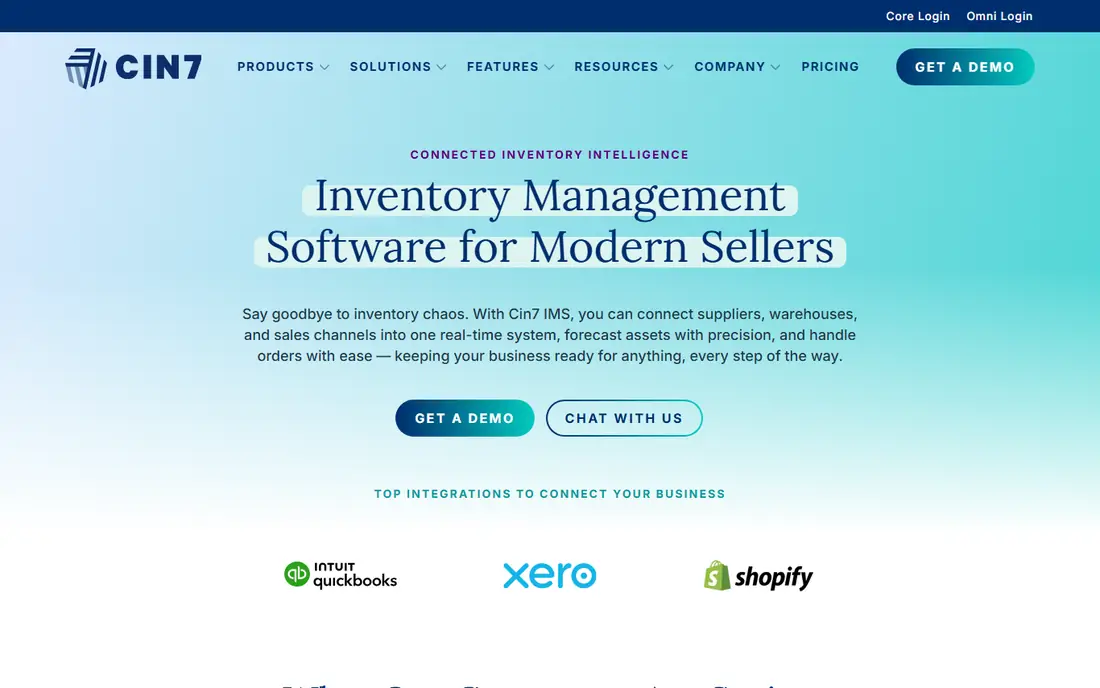
Cin7 Core is built for product businesses selling across many channels at once. It combines inventory, orders, purchasing, warehousing, and accounting integrations, and it adds AI-driven demand forecasting to help with reorder timing. Its integration list covers major storefronts, marketplaces, and accounting platforms, which reduces manual data entry as order volume grows.
That depth comes with cost and setup work. The starting price is far above budget tools, and implementation, data cleanup, and staff training take time. Smaller sellers may find it more than they need. For a growing multichannel business that has outgrown basic tools, Cin7 Core is a strong, complete platform.
- Broad channel and accounting integrations
- Workflow automation
- Demand forecasting tools
- High starting price
- Implementation takes real effort
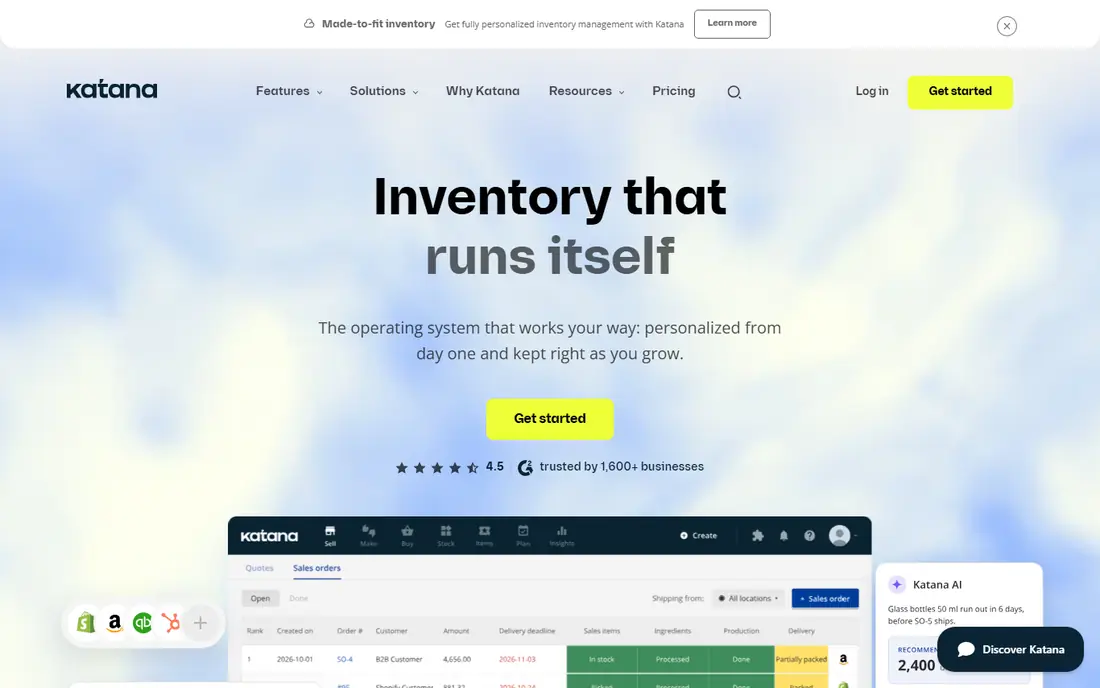
Katana is designed for businesses that make or assemble products, not just resell them. It links raw materials, bills of materials, production orders, and finished stock, so a maker can see what can be built from current materials and what needs ordering. Its visual interface makes production status easy to follow for a small team.
Pure resellers will pay for manufacturing features they do not use, and the starting price reflects that focus. Integrations with Shopify and accounting tools help keep sales and stock in step. For small manufacturers selling online, Katana fills a gap that generic inventory tools leave open.
- Production planning with inventory
- Visual shop-floor view
- Shopify and accounting links
- Priced above simple stock tools
- Less suited to pure resellers
inFlow Inventory is known for an interface that regular staff can learn quickly, which matters when warehouse and sales teams both use the system daily. It covers stock tracking, sales and purchase orders, reordering, and barcoding, with batch and serial tracking on suitable plans. A B2B showroom feature helps wholesale sellers share catalogs and pricing with trade buyers.
Manufacturing features, API access, and some integrations are paid add-ons, so buyers should price the full setup rather than the headline plan. Pricing also varies with billing period, so check the current page before budgeting. For product businesses with wholesale customers, inFlow balances usability and depth well.
- Easy to learn interface
- Barcode, batch, and serial tracking
- B2B showroom feature
- Manufacturing and API access cost extra
- Pricing varies by plan and billing period
Fishbowl suits manufacturers and distributors with real warehouse needs. It handles bills of materials, work orders, multi-location stock, and barcode scanning, and its long-standing QuickBooks integration keeps inventory and accounting aligned. Teams that track assets, lots, or serialized items will find depth here that lighter tools lack.
Setup takes more effort than a simple cloud tool, and businesses outside the QuickBooks ecosystem gain less from its main integration. The starting price reflects its warehouse and manufacturing focus. For QuickBooks-based manufacturers that need warehouse control, Fishbowl is a proven choice.
- Strong manufacturing and warehouse depth
- QuickBooks integration
- Barcode and asset tracking
- Setup can be complex
- Best value for QuickBooks users
Ordoro combines order management, inventory sync, and shipping for sellers across Shopify, Amazon, eBay, Etsy, and WooCommerce. Its shipping tools, including discounted carrier rates and label printing, help teams that ship many orders a day, while inventory features keep stock counts aligned across channels. Supplier and dropship handling suits sellers who do not hold all stock themselves.
The inventory plan sits at the same price level as Cin7 Core, so it is not a budget pick. Manufacturing depth is also limited compared with Katana or Fishbowl. For shipping-heavy ecommerce brands that want orders, stock, and labels in one place, Ordoro is worth a trial.
- Multichannel order and inventory sync
- Shipping label tools
- Supplier and dropship support
- High inventory-plan price
- Manufacturing support is limited
ShipStation is best known for shipping, and it earns its place here because many small sellers manage inventory through orders and shipments first. It imports orders from many channels, compares carrier rates, prints labels in bulk, and automates common steps such as tagging and routing. Branded tracking pages cut support messages about delivery status.
Inventory management features are stronger on higher-tier plans, so sellers who need deep purchasing, manufacturing, or warehouse control should look at Cin7 or Fishbowl instead. For stores whose main bottleneck is getting orders out the door accurately, ShipStation is a low-cost, practical starting point.
- Broad channel and carrier support
- Bulk label printing
- Automation rules
- Full inventory tools sit on higher tiers
- Mainly a shipping platform, not a full ERP
Sortly takes a visual approach to inventory. Items are tracked with photos, folders, and barcodes, which helps teams that need to know what is where in a stockroom, studio, or small warehouse. The mobile app makes stock counts and updates easy away from a desk, and the free plan suits very small collections.
It is not a full ecommerce order system, so sellers with high multichannel order volume will still need a tool such as Zoho, Cin7, or ShipStation for orders and channel sync. For simple stock visibility, asset tracking, and small catalogs, Sortly is the easiest tool on this list to adopt.
- Visual, photo-based tracking
- Barcode scanning
- Easy for non-technical teams
- Not a full order management system
- Advanced inventory features are limited
How we picked these
We compared official pricing pages, product documentation, and public reviews, and we favored tools that are available in October 2026 and that sync stock across ecommerce channels or support the order and fulfillment work around it. We mixed budget, mid-market, and manufacturing-focused options, and we used See website where pricing varies by billing period or plan structure. We did not claim hands-on testing.
What to check before you buy
Start by listing your channels, SKU count, warehouse count, and order volume, since those four numbers drive the right tier. A tool that fits a single Shopify store may strain under five marketplaces, and a tool built for manufacturers may be overkill for a reseller. Trial with your real catalog, not a demo dataset, before committing.
Test the sync that matters most
Connect two channels, list the same product on both, sell it on one, and watch stock update on the other. Test returns, partial shipments, and low-stock alerts in the same trial, since those edge cases cause most overselling problems. Check how the tool handles bundles, variants, and backorders if you sell them.
Price the whole setup
Add integration fees, extra users, barcode hardware, and any manufacturing or API add-ons to the headline price. Annual billing often lowers the monthly rate, but it locks you in, so confirm the trial length and cancellation terms first. For usage-based tools, model costs at your peak month, not your quietest one.
Plan the move from spreadsheets
Clean your SKUs, variants, and supplier data before importing, and keep a backup of the old sheet until the new counts match reality. Train the people who pick, pack, and count stock, not just the owner, since adoption by warehouse staff decides whether the system stays accurate. Run both systems in parallel for a short period if order volume allows.
Frequently asked questions
What is the best inventory management software for ecommerce?
For most growing sellers, Cin7 Core is the most complete multichannel platform, while Zoho Inventory is the best budget start. Makers should look at Katana, and shipping-heavy sellers should look at ShipStation or Ordoro. The best pick depends on channels, SKU count, and whether you manufacture.
What is the best ecommerce platform for inventory management?
Shopify, WooCommerce, and BigCommerce all include basic stock tracking, but they work best with a dedicated inventory tool once you sell on multiple channels. A dedicated tool keeps one stock pool across storefronts and marketplaces, which a single storefront alone cannot do well.
What are the top inventory management software options for ecommerce sellers?
The strongest options include Zoho Inventory for budget sellers, Cin7 Core for multichannel depth, Katana for manufacturers, inFlow for wholesale, Fishbowl for warehouse-heavy teams, Ordoro for shipping-heavy sellers, ShipStation for fulfillment, and Sortly for simple visual tracking.
Can inventory software stop overselling on marketplaces?
Yes, that is its core job. A synced stock pool means a sale on one channel reduces available stock everywhere, so the same item cannot be sold twice. Test this sync during a trial, and check how the tool handles returns and cancellations, since those also affect available stock.
Do I need inventory software if I use a third-party logistics provider?
Yes, but with different needs. You still need accurate stock visibility, purchase ordering, and channel sync, even if a partner holds and ships the goods. Tools such as Cin7 and Ordoro route orders to fulfillment partners and keep counts aligned, while you need less warehouse functionality than a self-fulfilling brand.
Sources
See where you really rank - block by block
ProMapRanker scans Google Maps across a grid of your service area. Simple monthly plans from $19, white-label on every plan.
Start freeKeep reading
 zoho inventory alternatives
6 Alternatives to Zoho Inventory, Compared on Price and Fit
Zoho Inventory alternatives: 6 tools compared on price, free plans and fit. Katana leads the list for manufacturers. Fit and flaws are laid out for each entry.
Read → zoho crm alternatives
Best Zoho CRM Alternatives (2026)
Need Zoho CRM alternatives? We compare 7 tools on cost, free access and who each suits. Every pick gets a straight assessment. Built for quick decisions.
Read → zelle alternatives
Best Zelle Alternatives in 2026
Compare the best Zelle alternatives for sending money to friends, paying sellers and moving funds abroad, with honest notes on fees, speed and safety in 2026.
Read →