 ProMapRanker
Best Digital Platform to Improve Customer Journey in 2026


Enterprise feedback and journey measurement · Pricing starts at: See website
Key takeaways
- Qualtrics and Medallia suit large companies that need feedback, sentiment, and journey data governed in one system, with quote-based pricing.
- HubSpot and Salesforce suit teams that already live in a CRM, since journey data sits beside sales and support records.
- Segment suits teams that need clean event data flowing to many tools, while Pendo and Gainsight PX suit product-led journey work inside an app.
- FullStory adds session replay that shows where a journey breaks, which surveys alone cannot show.
- Tracking data needs consent and care, so check privacy settings, retention, and regional rules before turning on full journey capture.
Quick comparison
| Pick | Great for | Pricing starts at | Free tier | |
|---|---|---|---|---|
| Qualtrics | Enterprise feedback and journey measurement | See website | No | Visit |
 Medallia | Real-time experience action across channels | See website | No | Visit |
 HubSpot | CRM-based journey tracking for growing teams | Free | Yes | Visit |
 Salesforce | Enterprise CRM journey across sales and service | See website | No | Visit |
 Segment | Clean customer data for many tools | See website | Yes | Visit |
 Pendo | In-app journey analytics and guidance | Free | Yes | Visit |
 Gainsight PX | Product journey and adoption for SaaS teams | See website | No | Visit |
 FullStory | Session replay and journey friction analysis | See website | Yes | Visit |
The best digital platforms to improve customer journey
Improving a journey means finding where customers get stuck, confused, or lost, then fixing that step and measuring the change. We compared official feature pages, pricing pages, app store listings, and public reviews, and we favored tools that connect feedback, behavior, and business outcomes rather than reporting one channel alone.
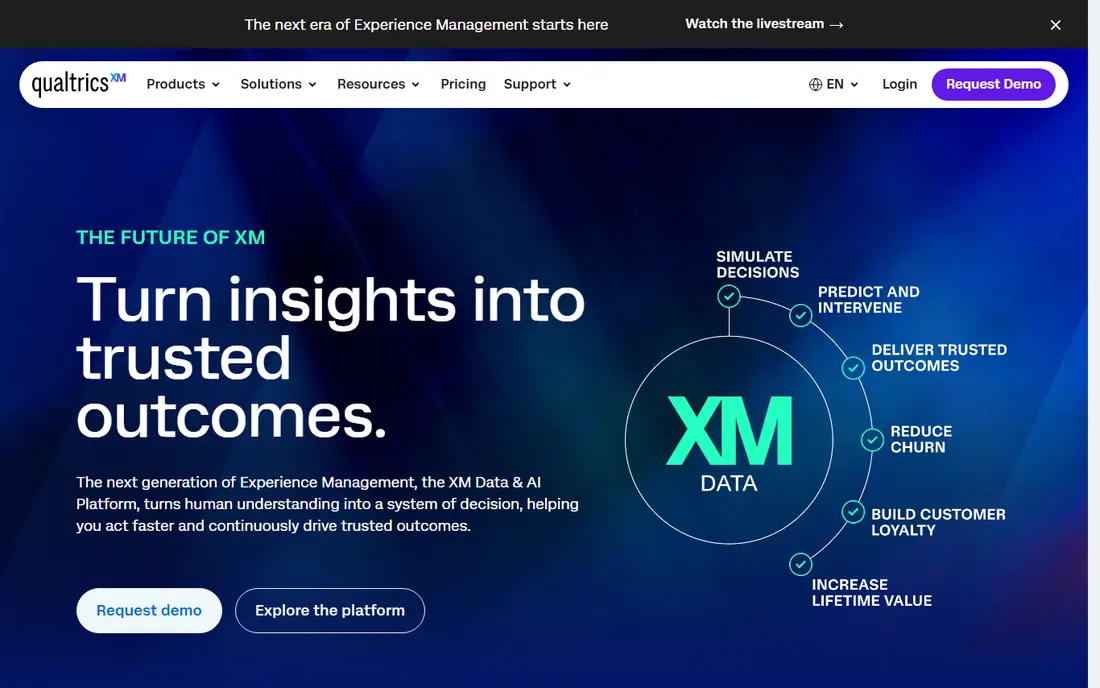
Qualtrics XM is the enterprise standard for measuring journeys through feedback. Its Customer Journey Optimizer links survey responses, operational data, and sentiment analysis to specific journey stages, so a team can see which step drives dissatisfaction rather than just an overall score. Surveys deploy across web, email, SMS, and in-app channels, and text analytics surfaces themes from open comments.
The trade is scale and cost. Qualtrics does not publish standard pricing, and full programs need planning, integration, and an owner. Small teams will find it heavy. For a large company that needs governed feedback across many journeys, Qualtrics gives the most complete measurement system here.
- Links surveys, feedback, and operational data to journey stages
- Text and speech analytics for open feedback
- Strong governance for large organizations
- Pricing is quote-based and enterprise-level
- Implementation takes months for full programs
- Needs an owner to run it well
Medallia competes with Qualtrics at the enterprise end, with a stronger push toward action during the journey rather than reporting after it. Feedback from surveys, call transcripts, chat, and social runs through text analytics and joins operational events, and Experience Orchestration can trigger a next step while the customer is still in the journey. Telecom, finance, and hospitality teams with large contact centers use it heavily.
Like Qualtrics, Medallia prices by quote and needs a dedicated team to run well. A small business will not get value from that depth. For a large, service-heavy company that wants to intervene mid-journey, Medallia is the most action-oriented enterprise choice here.
- Captures feedback from surveys, calls, chat, and social
- Real-time signals can trigger action mid-journey
- Strong for contact-center-heavy businesses
- Pricing is quote-based
- Overkill without a dedicated experience team
- Setup and data work are substantial
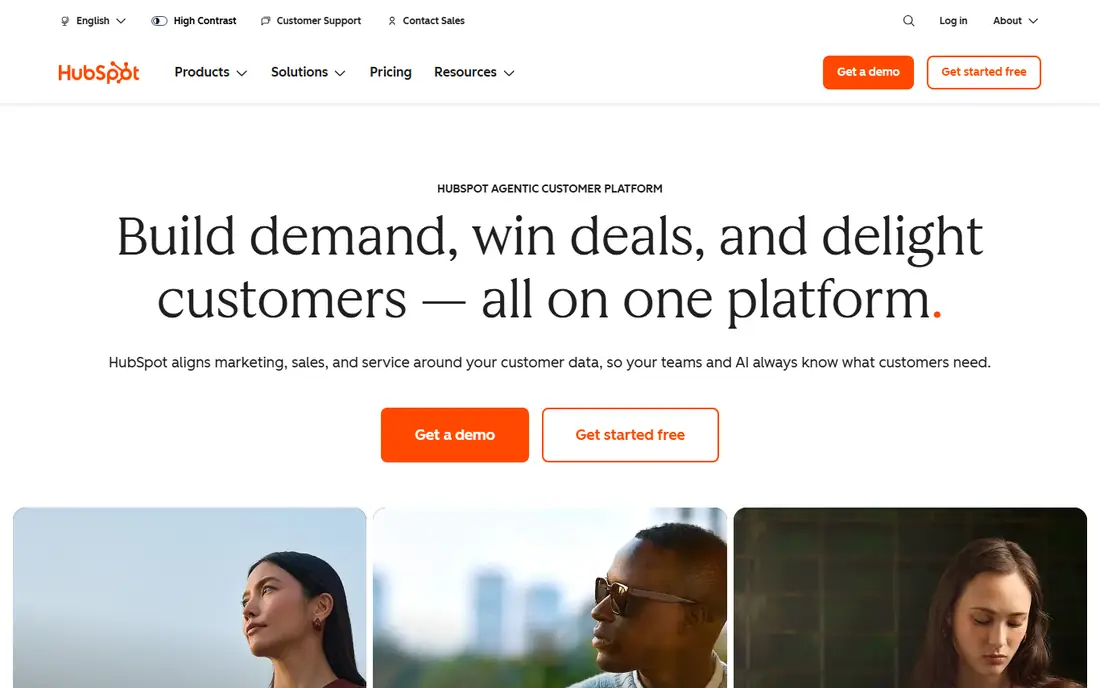
HubSpot suits teams that already run marketing, sales, and service in one CRM, because the journey view is simply the contact timeline. Every email, ad click, page view, form, call, and ticket sits on the same record, and paid Marketing Hub tiers add multi-touch attribution, funnel visualization, and behavioral events. Service Hub adds ticketing and customer success workspaces on the same data.
The free CRM covers basic tracking, while Service Hub Starter lists from $20 per seat per month in recent summaries, and Marketing Hub Professional is a much larger step up. Teams outside HubSpot will get less value, since the strength is the shared record. For a growing team already on HubSpot, it is the most practical journey tool here.
- Free CRM with contact timelines and basic tracking
- Marketing, sales, and service share one record
- Journey and funnel reports on paid hubs
- Deeper journey analytics need paid Marketing Hub tiers
- Costs rise with seats and hubs
- Best value stays inside the HubSpot ecosystem
Salesforce covers the customer journey through its CRM, marketing, and service clouds, with Journey Builder designing multi-step, automated paths across email, mobile, ads, and service. A customer record can carry sales history, support cases, marketing engagement, and service interactions, which gives journey teams one place to see the whole relationship. The integration ecosystem is the largest in this list.
Salesforce pricing varies by cloud and edition, and full journey programs usually need implementation help and skilled administration. Service Cloud entry lists from $25 per user in recent summaries, but a full journey stack costs far more. For an enterprise already standardized on Salesforce, it is the natural journey platform. For a small team, HubSpot is the lighter CRM path.
- Deepest CRM journey coverage across sales, service, and marketing
- Journey Builder for automated, multi-step paths
- Huge integration ecosystem
- Pricing is complex and quote-led for full suites
- Implementation needs skilled admins
- Small teams can find it heavy
Segment, part of Twilio, is a customer data platform rather than a journey analytics tool on its own. It collects events once, from web, mobile, and server sources, and routes clean, consistent data to analytics, marketing, warehousing, and other tools. That consistency matters, because journey reports are only as good as the event definitions behind them, and Segment stops each tool from tracking the same action differently.
Segment offers a free tier for small use, with paid plans quoted by volume, and it needs engineering time to define events well. Teams still need an analytics or journey tool on top of Segment to visualize and act on the data. For a company with many tools and messy tracking, Segment is the foundation that makes journey work reliable.
- One event stream feeds many analytics and marketing tools
- Reduces duplicate tracking code
- Strong identity and consent controls
- Segment itself does not analyze journeys alone
- Pricing scales with tracked users and events
- Needs engineering setup to do well
Pendo helps product teams see and shape the journey inside a web or mobile app. It tracks feature use, builds funnels and paths, and lets teams launch in-app guides, walkthroughs, and surveys without a release cycle. That combination of analytics and guidance is valuable for onboarding, adoption, and retention journeys in software.
The free plan covers up to 500 monthly active users with analytics, guides, and surveys, which suits a small product well. Paid plans are quoted, and third-party summaries describe five-figure annual costs for mid-size products, so budget carefully as usage grows. For a SaaS team improving an in-app journey, Pendo is the most direct tool here.
- Product analytics without heavy tagging
- In-app guides, surveys, and roadmaps
- Free plan for up to 500 monthly active users
- Paid pricing is quote-based and can rise steeply
- Free plan limits guides and segments above its cap
- Best for software products, not offline journeys
Gainsight PX, part of the Gainsight customer success suite, focuses on the product journey for software companies. It tracks product use, measures adoption, launches in-app guides and surveys, and connects product signals to customer health and journey orchestration in Gainsight CS. That link between product behavior and success playbooks is the point, since a drop in product use often predicts churn before a renewal conversation.
Gainsight pricing is quoted, and successful deployments often need a dedicated admin, especially for the wider CS suite. Small teams will find Pendo or FullStory lighter. For a SaaS company with a customer success team that already uses Gainsight, PX is the natural product journey layer.
- Product analytics plus in-app engagement in one suite
- Journey orchestration and health scoring for SaaS
- Strong Salesforce integration
- Pricing is quote-based
- Full Gainsight suite needs a dedicated admin
- Overkill for small products
FullStory adds what surveys and funnels miss, which is the actual session. Teams watch replays of real journeys, see rage clicks, dead clicks, and error loops, and find the exact step where a checkout or signup breaks. Funnels and frustration signals point to the worst steps first, so a team fixes the highest-friction part of the journey rather than guessing.
FullStory offers a free tier for small use, with paid pricing quoted by volume. Replay also raises privacy duties, since sessions can capture personal data if not masked, so configure masking, consent, and retention before full rollout. For a team that knows where users drop off but not why, FullStory gives the clearest answer here.
- Session replay shows exactly where users struggle
- Funnels and frustration signals highlight broken steps
- Works alongside analytics tools
- Pricing is quoted for paid plans
- Replay data needs privacy controls
- Analysis takes time to turn into fixes
How we picked these
We compared official feature pages, pricing pages, app store listings, and public reviews, and we required each tool to connect at least two journey signals, such as feedback plus behavior, or product use plus CRM data. Single-channel survey tools and single-channel analytics tools alone did not make the list. Pricing is marked as See website where vendors quote rather than publish, since enterprise journey pricing varies by volume and modules.
Privacy and consent for journey tracking
Journey tracking is powerful, and that is why it needs restraint. Collect only the events you will act on, mask personal data in replay and analytics, set retention limits, and honor consent choices across tools, not just in one banner. Segment and similar platforms help centralize consent, but the policy decision belongs to your team, not to the vendor default.
Check regional rules for your customers, including US state privacy laws and, for European visitors, GDPR requirements, and confirm how each vendor stores data and handles deletion requests. A journey program that loses customer trust will cost more than any insight it gains. Start with anonymous, aggregated journey analysis, then add identified tracking only where a clear customer benefit justifies it.
Frequently asked questions
What is a customer journey platform?
It is software that connects touchpoints across marketing, sales, product, and support into one view of how customers move from first contact to purchase and beyond. Good platforms combine feedback, behavior data, and business outcomes, so teams can find friction, fix it, and measure the change. A survey tool alone or a web analytics tool alone is only part of that picture.
Which platform is best for a small business?
HubSpot is the best starting point for most small businesses, because its free CRM already tracks contact journeys, and paid hubs add depth as the team grows. Pendo Free and FullStory free tiers also help small software products. Enterprise tools like Qualtrics and Medallia are overkill until journey work has a dedicated owner.
Do I need consent to track customer journeys?
Yes, in many cases, and the rules depend on the data type and the customer location. Analytics, replay, and marketing tracking often need consent or an opt-out, and personal data needs a lawful basis, retention limits, and deletion handling. Configure consent in your tracking tools, mask sensitive data in replay, and confirm the rules that apply to your customers.
How is Segment different from HubSpot or Salesforce?
Segment is a data platform that collects and routes customer events to other tools, while HubSpot and Salesforce are CRMs that store customer records and run marketing, sales, and service work. Many teams use Segment to feed clean data into a CRM or analytics tool. Segment alone does not replace a CRM or a journey analytics dashboard.
Can journey platforms improve retention?
They can help, by showing where customers struggle, disengage, or need help, and by triggering timely guidance or support. Gainsight PX and Pendo, for example, link product use to adoption and health signals. No platform retains customers on its own, since the fix still needs product, pricing, or service changes behind the insight.
How long does it take to see journey improvements?
Small fixes from session replay or funnel analysis can show results in weeks, while enterprise feedback programs often take months to design, integrate, and act on. Start with one journey, such as signup or checkout, fix its worst step, and measure that step before expanding. A narrow, measured win beats a broad dashboard nobody acts on.
Sources
See where you really rank - block by block
ProMapRanker scans Google Maps across a grid of your service area. Simple monthly plans from $19, white-label on every plan.
Start freeKeep reading
 worlds best local seo company
8 Worlds Best Local SEO Companies for Map Pack Growth in 2026
Compare the worlds best local seo company options for Google Business Profile work, citations, reviews, and multi-location rankings and reporting in 2026.
Read → world's best web hosting company
World's Best Web Hosting Company in 2026
Searching for the world's best web hosting company? We compared 10 hosts on price, renewal rates, speed, and support to help you choose well today in 2026.
Read → who's got the best nanny tax services
Who's Got the Best Nanny Tax Services in 2026
We answer who's got the best nanny tax services, comparing full filing, back taxes, software, and pricing so families can handle nanny taxes correctly.
Read →