 ProMapRanker
Which Digital Advertising Platform Fits You? 7 Tools Compared


Brands selling on Amazon or competing for product searches · Pricing starts at: See website (auction-based; no published minimum for self-serve)
Direct answer
Our first pick is Amazon Ads, best for brands selling on Amazon or competing for product searches. If your case is different, Criteo suits retailers and ecommerce brands wanting performance retargeting at scale and Meta Ads suits businesses that require to build demand across Facebook and Instagram. Details, prices and limits for the rest of the 7 tools are below.
Key takeaways
- This list starts with Amazon Ads, which is built for brands selling on Amazon or competing for product searches.
- Amazon Ads, The Trade Desk and the 5 others all need a premium plan or a trial, since no free plan is listed.
- For Amazon Ads, Criteo and The Trade Desk, you have to request a quote because no starting price is shown.
- For advertisers and agencies running serious programmatic display, video and audio, The Trade Desk is worth a look.
- Before buying LinkedIn Ads, weigh this: the most costly clicks in digital advertising.
Quick comparison
| Pick | Great for | Pricing starts at | Free tier | |
|---|---|---|---|---|
| Amazon Ads | Brands selling on Amazon or competing for product searches | See website (auction-based; no published minimum for self-serve) | No | Visit |
 Criteo | Retailers and ecommerce brands wanting performance retargeting at scale | See website (managed and self-serve tiers) | No | Visit |
 Meta Ads | Companies that require to produce demand across Facebook and Instagram | No minimum spend (auction-based; you set daily or lifetime budgets) | No | Visit |
 LinkedIn Ads | B2B advertisers with high deal values and precise job-title targeting | $10/day minimum campaign budget | No | Visit |
 Google Ads | Companies that want to capture people actively searching to buy | No minimum spend (pay per click; you set the budget) | No | Visit |
 TikTok Ads | Brands targeting under-40 buyers with video-first creative | $50/day campaign minimum (self-serve) | No | Visit |
 The Trade Desk | Advertisers and agencies running serious programmatic display, video and audio | See website (enterprise contracts; high minimums) | No | Visit |
Digital Advertising Platform compared in detail
ProMapRanker put together this guide to digital advertising platform for readers who want a clear shortlist without reading every vendor page. It compares 7 tools on starting price, free plans, who each one suits and where each one falls short.
Amazon Ads
Great for: Brands selling on Amazon or competing for product searches
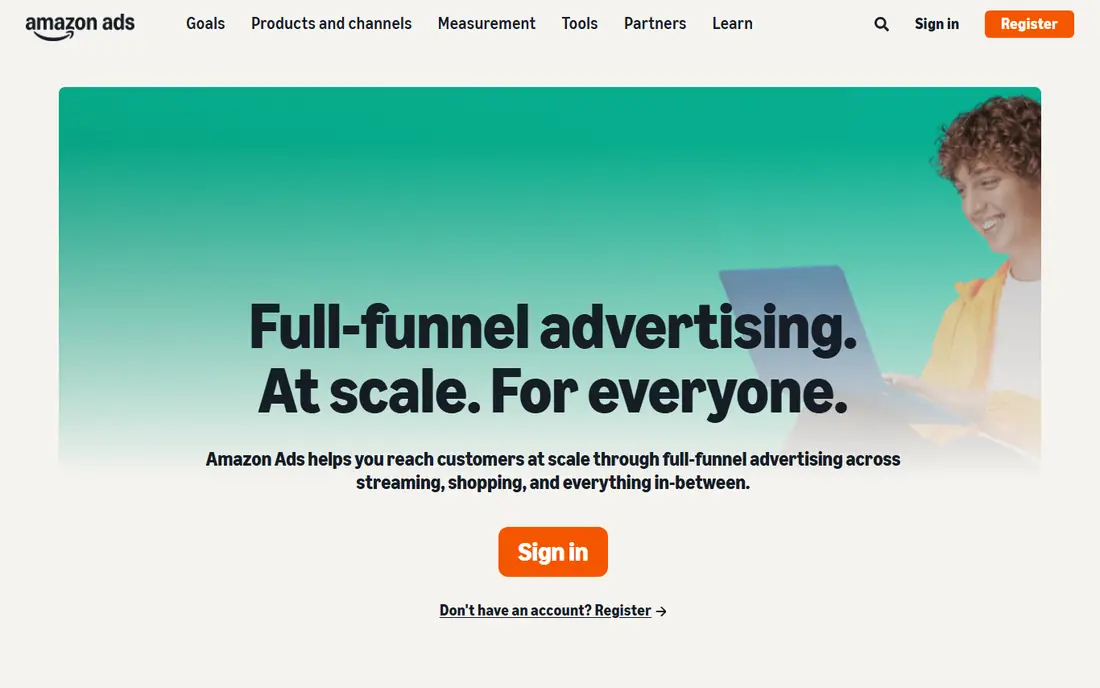
Amazon Ads was built for brands selling on Amazon or competing for product searches. Amazon Ads is the closest thing to a checkout-line billboard in digital advertising. On top of that, for brands selling on Amazon, advertising is effectively mandatory: organic rank follows sales velocity, and ads buy the velocity.
Also, for Amazon sellers, start with promoted Products on your best-converting ASINs and expand only with the margin math in hand. Worth adding: you pay Amazon referral fees, commonly fulfillment fees, and then ad costs on top, so margin math has to be done honestly. Beyond that, the main limit is the tollbooth economics. Shoppers searching on Amazon intend to buy, and promoted Products put your listing at the top of those results. Check the vendor site for Amazon Ads pricing; none is listed in this comparison. Amazon Ads does not include a free plan.
Points against: Largely relevant if you sell on Amazon.
- Promoted Products are self-serve and simple to start
- Records shoppers at the point of purchase with the highest buyer intent in ecommerce
- Pay-to-play inside a marketplace that also charges referral and fulfillment fees
Criteo
Great for: Retailers and ecommerce brands wanting performance retargeting at scale

Criteo serves retailers and ecommerce brands wanting performance retargeting at scale. Criteo built its name on retargeting: turning a retailer's browsers into buyers with dynamic product ads across the web and apps.
In daily use, pricing and minimums vary across managed and self-serve levels, and outside ecommerce the product has little to offer. Criteo shows no starting price here, so confirm the cost on the vendor site. Criteo has no permanent free option.
Honest limits: Pricing and minimums vary by level.
- Capable for mid-market and enterprise retailers
- App and web retargeting in one place
- Retargeting-centric, so it harvests existing demand instead of creating it
Meta Ads
Great for: Companies that require to produce demand across Facebook and Instagram

For companies that require to produce demand across Facebook and Instagram, Meta Ads is a natural candidate. Meta Ads is the demand-creation counterpart to Google. Budget for creative production, not just media spend.
Performance has also grown more volatile with privacy changes, which makes wide targeting and decent creative more important than micro-targeting. In daily use, the trade is intent. You are interrupting a feed, so the creative does the heavy lifting and fatigue sets in quick: winning ads decay within weeks and need constant refresh. More specifically, for ecommerce, local services and direct-to-consumer brands, Meta is normally the first social product to test. Price to start with Meta Ads: No minimum spend. No free plan comes with Meta Ads.
Limits to weigh: No search intent, so you are interrupting, not capturing.
- Huge US audience across Facebook and Instagram
- The best interest and behavior targeting at SMB budgets
- Performance swings with algorithm and privacy changes
LinkedIn Ads
Great for: B2B advertisers with high deal values and precise job-title targeting
LinkedIn Ads is a good fit for B2B advertisers with high deal values and precise job-title targeting. LinkedIn Ads is the only system where you can target "VP of Operations at manufacturing firms with 200-plus employees" and mean it. On top of that, for B2B with high customer lifetime value (SaaS, agencies, commercial services), that precision justifies click costs that would be absurd anywhere else.
Downsides: $10/day minimum with real costs far above it in practice.
B2B advertisers with long sales cycles must also connect the ads to CRM revenue data, or optimization optimizes for cheap leads rather than deals. As for the details, clicks routinely cost multiple times their Google or Meta equivalents, small audiences exhaust rapidly, and the $10/day minimum understates real test budgets. On top of that, if one enterprise deal pays for per year of ads, LinkedIn is rational. In practice, lead gen forms inside the system convert well since profiles pre-fill. The starting price for LinkedIn Ads: $10/day minimum campaign budget. LinkedIn Ads has no free plan.
- Solid for lead gen with high lifetime values
- Reaches decision-makers during work mindset
- The most pricey clicks in digital advertising
Google Ads
Great for: Companies that want to capture people actively searching to buy
Google Ads is aimed squarely at businesses that want to capture people actively searching to buy. Google Ads is where demand already exists.
Watch-outs: The interface rewards expertise and punishes guesswork.
Beginners routinely spend their first month funding Google's learning curve. On top of that, someone searching "emergency plumber near me" or "best CRM for startups" has intent you cannot manufacture on a social feed, and Google lets you bid on exactly that moment. What you pay to start with Google Ads: No minimum spend. Google Ads does not include a free plan.
- Unmatched intent: you bid on searches from people ready to act
- Maps and the Display Network
- Click costs in competitive categories (legal, insurance, SaaS) punish beginners
TikTok Ads
Great for: Brands targeting under-40 buyers with video-first creative
Pick TikTok Ads if this describes you: brands targeting under-40 buyers with video-first creative. TikTok Ads rewards advertisers who understand the feed.
The targeting and optimization have matured well past the early hype. The starting price for TikTok Ads: $50/day campaign minimum. TikTok Ads has no free tier.
Limits to weigh: Creative must feel native or it dies.
- Apps and direct-to-consumer
- Capable performance for ecommerce
- Attribution and measurement are weaker than Google or Meta
The Trade Desk
Great for: Advertisers and agencies running serious programmatic display, video and audio
Pick The Trade Desk if this describes you: advertisers and agencies running serious programmatic display, video and audio. If your monthly budget has four digits, look at the self-serve systems above.
Downsides: Self-serve is not really self-serve at small budgets.
If it has six, The Trade Desk belongs in the conversation. No starting price is listed for The Trade Desk here; confirm pricing on the vendor site. The Trade Desk has no free plan.
- Measurement and connected-TV capabilities
- Solid data
- Needs real programmatic expertise or an agency
How we chose
Each tool was reviewed on what its vendor publishes: price, plan limits, core features and stated drawbacks. We did not run hands-on tests. Seat minimums, billing terms and add-ons can move the real cost, so the starting prices here are a guide and not a quote. The order reflects how well each tool fits the most common buying scenario for digital advertising platform, then price clarity, then free plan access. It is a starting point, not a verdict.
Before you commit
- Get a written quote from Amazon Ads, Criteo and The Trade Desk; the list shows no starting price for them.
- Read the limits listed for Amazon Ads first: pay-to-play inside a marketplace that also charges referral and fulfillment fees.
- Ask Meta Ads whether prices are locked for the first term and what happens at renewal.
- Look at the help docs and support options for Amazon Ads before you commit.
- Confirm that Google Ads connects to the apps your team already uses, on the plan you would actually buy.
Frequently asked questions
Is Amazon Ads the right pick for everyone comparing digital advertising platform?
No single tool suits every team. Amazon Ads comes first because it fits brands selling on Amazon or competing for product searches, while Criteo suits retailers and ecommerce brands wanting performance retargeting at scale and Meta Ads suits businesses that need to create demand across Facebook and Instagram. Match the tool to your own size, budget and workflow before deciding.
How long before we see results from a new campaign?
Social campaigns need a learning period (typically 50 conversion events per ad set on Meta) before judging performance. Plan for per month of premium learning on any new product.
Do these tools publish their prices?
Not all of them. Amazon Ads, Criteo and The Trade Desk publish no starting price, so expect a quote request for those. The rest, Meta Ads included, show a starting price, though seats and billing terms still change the final cost.
Do we need an agency to run these platforms?
Not at small budgets. Consider an agency or freelancer when spend passes roughly $10,000 per month, when you need The Trade Desk or Criteo, or when creative production becomes the bottleneck.
Can I try these tools before paying?
Not by default. None of the tools, from Amazon Ads to The Trade Desk, lists a free plan or a free trial here, so ask each vendor for a demo before committing.
How are the tools for digital advertising platform ordered?
Amazon Ads sits first and The Trade Desk last because the order follows typical fit for digital advertising platform, then price clarity and free access. It is a judgement call, so read each profile for fit and limits.
Sources
See where you really rank - block by block
ProMapRanker scans Google Maps across a grid of your service area. Simple monthly plans from $19, white-label on every plan.
Start freeKeep reading
 zscaler alternatives
Best Zscaler Alternatives in 2026
Looking for zscaler alternatives? We compare 9 SASE and zero trust platforms on architecture, data protection, pricing, and fit for your network and team.
Read → zapier alternatives free
Best Zapier Alternatives Free in 2026
Nine automation tools for zapier alternatives free in 2026, all with genuinely free tiers, plus free plan limits, starting prices and upgrade paths explained.
Read → which platform is best for online reputation
Which Platform Is Best for Online Reputation in 2026
Wondering which platform is best for online reputation? We compare 8 review, listing, and response tools for small and multi-location businesses and agencies.
Read →