 ProMapRanker
Best Dictionary App in 2026: 9 Apps Compared

Key takeaways
- Merriam-Webster is the best default for US English, with offline definitions, real-voice audio, and a built-in thesaurus.
- Dictionary.com and The Free Dictionary are the best free all-round options, with word games, articles, and extra reference tools.
- Cambridge and Oxford Learner's dictionaries are the best picks for English learners, with level labels and learner-friendly examples.
- Collins, WordReference, and Wordnik suit writers and translators who need usage examples, translations, or word relationships.
Quick comparison
| Pick | Great for | Pricing starts at | Free tier | |
|---|---|---|---|---|
 Merriam-Webster | US English lookups | Free | Yes | Visit |
 Dictionary.com | Free all-round reference | Free | Yes | Visit |
 Cambridge Dictionary | English learners | Free | Yes | Visit |
 Collins Dictionary | Contemporary usage | Free | Yes | Visit |
 Oxford Learner's Dictionaries | Learner-friendly definitions | See website | Yes | Visit |
 The Free Dictionary | Multi-source reference | Free | Yes | Visit |
 WordReference | Translations and forums | Free | Yes | Visit |
 Wordnik | Word relationships and examples | Free | Yes | Visit |
 Longman Dictionary | Academic and exam preparation | See website | Yes | Visit |
The best dictionary app
A good dictionary app answers a question in seconds, then helps you remember the word later. The apps below differ in their source, their learner tools, and their offline access, so the best pick depends on whether you look up words for reading, writing, study, or translation. We compared free plans, thesaurus features, and audio to help you choose one to keep on your home screen.
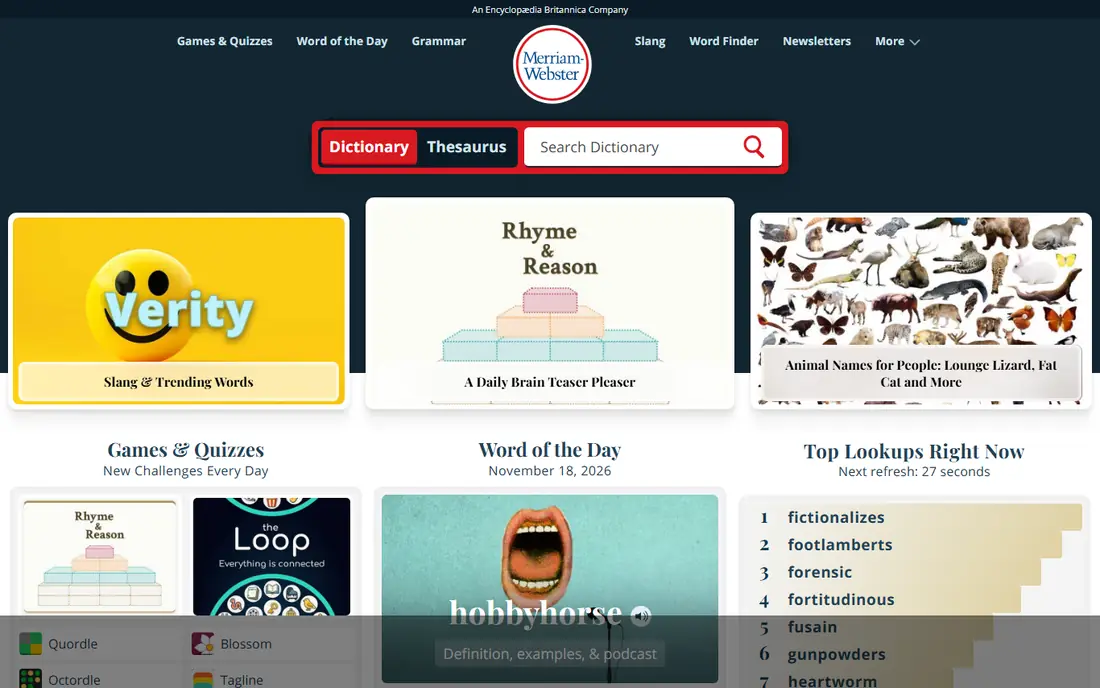
Merriam-Webster is our pick for most US readers and writers. The app is free and ad-supported, with complete offline access to definitions and synonyms, voice search, and audio pronunciations recorded by real speakers rather than synthetic voices. A built-in thesaurus with many word choices, example sentences, and daily word games make it useful for study as well as quick lookups.
The free version includes ads, and an ad-free experience plus access to kids, medical, and legal dictionaries requires a subscription or in-app purchase. For everyday use, the free tier is more than enough. If you look up words daily and dislike ads, the paid upgrade is worth considering, but it is not needed to get accurate definitions.
- Offline definitions and synonyms
- Real-voice pronunciations
- Word games and Word of the Day
- Free version includes ads
- Ad-free access and extra dictionaries need a subscription
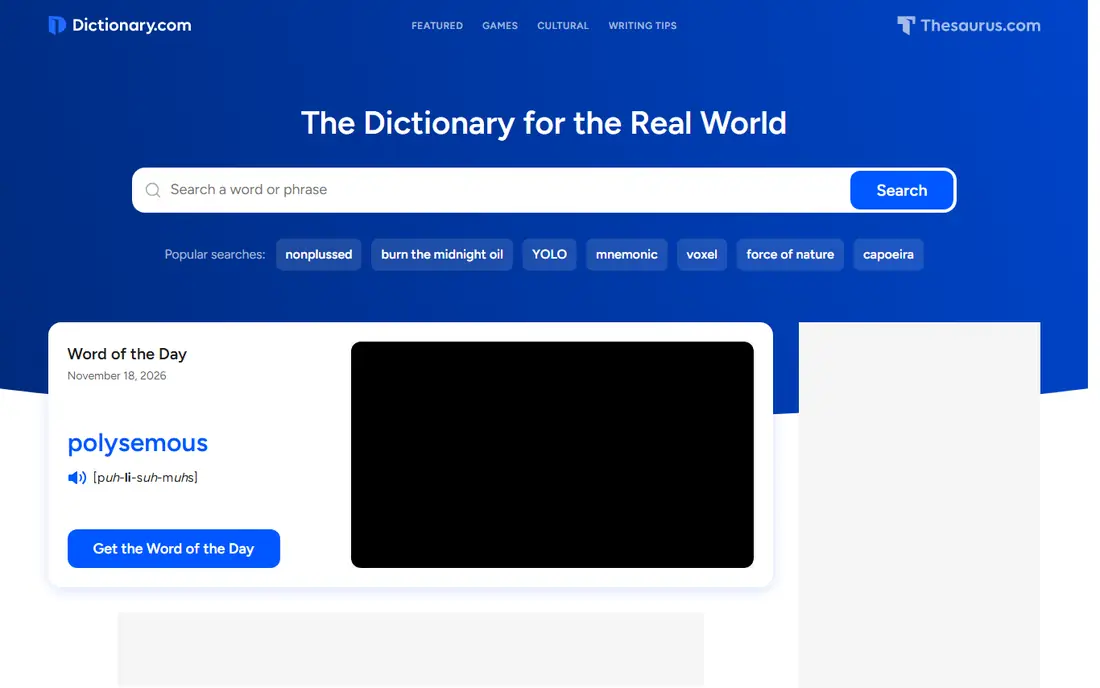
Dictionary.com is a strong free alternative to Merriam-Webster, with a large dictionary, thesaurus, and a steady stream of word content. The app includes Word of the Day, word games, and articles about usage and origins, which make it easy to learn a new word each day without opening a separate study app. Search is fast, and definitions include examples that show how a word works in a sentence.
Ads support the free version, and some premium features sit behind a paid plan. That is a fair trade for a free reference that covers most everyday needs. Pick Dictionary.com if you want a lively, content-rich dictionary, and pick Merriam-Webster if you prefer a more traditional publisher voice.
- Large free dictionary and thesaurus
- Word games and articles
- Word of the Day
- Ads in the free version
- Some features need a paid upgrade
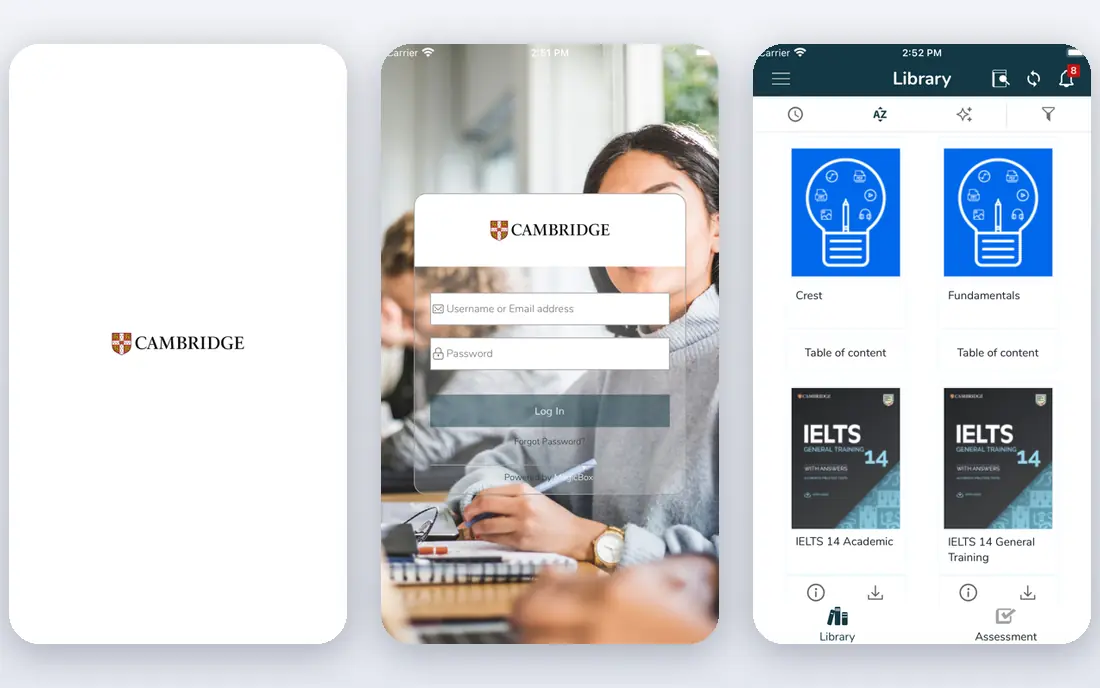
Cambridge Dictionary is the best pick for English learners in this list. Definitions use clear language, many entries carry level labels that show how common a word is, and examples are written for learners rather than native speakers. British and American audio helps learners hear both pronunciations, which matters for exams and conversation.
Native speakers who need rare or technical words may find Cambridge less deep than Merriam-Webster or Collins. For study, test preparation, and everyday learner lookups, though, its clarity is a real advantage. It is free to use, with a website and app that share the same learner-focused content.
- Learner-friendly definitions with level labels
- British and American pronunciations
- Clear examples
- Less depth for advanced native-speaker usage
- Some content is web-first
Collins Dictionary draws on a large corpus of real English usage, which helps writers see how a word is actually used today rather than only how it is defined. The free version covers definitions, thesaurus entries, idioms, and phrases, with examples that reflect contemporary writing and speech. That makes it a good second dictionary for writers who already have a basic lookup app.
The free version includes ads, and full offline access may require a paid upgrade depending on the app version. The interface also packs in a lot of content, which can feel busy on a small screen. For usage questions and phrase lookups, Collins is one of the most helpful free options available.
- Corpus-based usage examples
- Thesaurus included
- Idioms and phrases covered well
- Full offline access may need a paid upgrade
- Interface can feel busy
Oxford Learner's Dictionaries
Great for: Learner-friendly definitions
Oxford Learner's Dictionaries, based on the Oxford Advanced Learner's Dictionary, is built for students learning English. Definitions use controlled, learner-friendly language, and entries include collocations, grammar notes, and examples that show common word partnerships. That extra guidance helps learners use a new word correctly, not just understand it.
Full content may require a paid app or in-app purchase, and pricing varies by store, so we list it as See website. The free content still covers many everyday lookups. For exam preparation and serious study, Oxford Learner's is one of the most trusted learner dictionaries in print and digital form.
- Clear learner definitions
- Collocations and usage notes
- Phonetics and study tools
- Full content may need a paid app
- Pricing varies by store
The Free Dictionary gathers several reference sources into one app, including general, medical, and legal dictionaries plus encyclopedia entries. That breadth suits users who look up terms across subjects and do not want a separate app for each one. Word of the Day, word games, and daily articles add a study habit on top of lookups.
The interface feels older than Merriam-Webster or Dictionary.com, and ads support the free version. If you value a clean, modern design above all, pick a newer app. If you value having many reference types in one place for free, The Free Dictionary is hard to beat.
- Multiple dictionary sources in one place
- Medical and legal references
- Word games and articles
- Ads in the free version
- Interface feels dated compared with newer apps
WordReference is the best pick in this list for translation and bilingual lookups. It covers many language pairs, includes verb conjugations, and hosts forums where users discuss tricky translations with examples. That forum depth helps when a direct translation does not capture the meaning, which happens often with idioms and slang.
For English-only lookups, WordReference is thinner than Merriam-Webster or Collins, so it works best as a companion app rather than a sole dictionary. Language learners and translators should keep it alongside a monolingual dictionary. It is free to use, with a simple interface that loads quickly.
- Strong bilingual dictionaries
- Usage forums with real examples
- Verb conjugations
- Monolingual English depth is thinner than dedicated English dictionaries
Wordnik takes a different approach, gathering definitions, real-world examples, and word relationships from many sources into one page. You can see how a word appears in books, news, and other texts, save words to lists, and explore related words. That makes it useful for writers who want inspiration and context, not just a single definition.
Wordnik has a smaller editorial team than Merriam-Webster or Oxford, so its entries feel more like a curated collection than a single authoritative voice. The web experience is stronger than the app experience in some cases. For exploration and example hunting, Wordnik is a refreshing free addition to a writer's toolkit.
- Real-world example sentences
- Word lists and relationships
- Fast lookups
- Smaller editorial presence than major publishers
- App experience varies
The Longman Dictionary of Contemporary English is a favorite among teachers and exam candidates because its definitions use a controlled vocabulary of about 2,000 common words. That constraint makes even difficult words easier to understand, and extensive examples show how words combine in writing. Collocation notes help students write more naturally in English.
Full app content may require payment, and pricing varies by region, so we list it as See website. The free online content still covers many lookups. For academic writing and test preparation, Longman pairs well with Cambridge or Oxford Learner's as a study set.
- Definitions written with a 2,000-word defining vocabulary
- Extensive examples
- Collocations for writing
- Full app content may need payment
- Pricing varies by region
How we picked these
We compared official app pages, publisher sites, and app store listings for dictionary apps live in October 2026. We favored apps with accurate definitions, a thesaurus or usage help, and a usable free tier, and we noted where offline access or ad-free use needs payment. We did not claim hands-on testing, and we left out apps that only aggregate web search results without a real dictionary source.
How to choose a dictionary app
Match the dictionary to your main task. US readers and writers should start with Merriam-Webster, learners should start with Cambridge or Oxford Learner's, and translators should add WordReference. If you look up words offline, check offline access first, since some apps need a connection for audio, images, or full entries.
Also consider how you learn. Word of the Day and word games help if you want daily practice, while word lists and favorites help if you collect words for writing or study. Keep one main dictionary on your home screen and a second specialist app for translation or learner support. Two good dictionaries beat five mediocre ones you never open.
Frequently asked questions
What is the best dictionary app?
Merriam-Webster is the best dictionary app for most US users, thanks to offline definitions, real-voice audio, and a strong thesaurus. Dictionary.com is a close free alternative, while Cambridge is the best pick for English learners who need clear, level-labeled definitions.
What is the best free dictionary app?
Merriam-Webster, Dictionary.com, Cambridge Dictionary, Collins, and The Free Dictionary all offer strong free tiers with ads. Merriam-Webster stands out for offline access, while The Free Dictionary stands out for covering medical and legal terms in the same app.
What are the best dictionary apps for learners?
Cambridge Dictionary, Oxford Learner's Dictionaries, and Longman Dictionary are the best learner dictionaries in this list. They use clear language, level labels, and examples written for students, which helps learners understand and use new words correctly.
Does Merriam-Webster work offline?
Yes, Merriam-Webster offers complete offline access to definitions and synonyms, while audio pronunciations, illustrations, and voice search need a connection. That offline core makes it a good pick for travel, classrooms, and areas with weak signal.
Which dictionary app is best for writers?
Collins is best for contemporary usage examples, Wordnik is best for real-world examples and word relationships, and Merriam-Webster is best for a reliable thesaurus. Writers often benefit from keeping two of these apps, one for definitions and one for usage.
Sources
See where you really rank - block by block
ProMapRanker scans Google Maps across a grid of your service area. Simple monthly plans from $19, white-label on every plan.
Start freeKeep reading
 zscaler alternatives
Best Zscaler Alternatives in 2026
Looking for zscaler alternatives? We compare 9 SASE and zero trust platforms on architecture, data protection, pricing, and fit for your network and team.
Read → zapier alternatives free
Best Zapier Alternatives Free in 2026
Nine automation tools for zapier alternatives free in 2026, all with genuinely free tiers, plus free plan limits, starting prices and upgrade paths explained.
Read → which platform is best for online reputation
Which Platform Is Best for Online Reputation in 2026
Wondering which platform is best for online reputation? We compare 8 review, listing, and response tools for small and multi-location businesses and agencies.
Read →