 ProMapRanker
Best Dental Insurance Verification Software in 2026


Billing teams wanting eligibility, claims, and attachments together · Pricing starts at: See website
Key takeaways
- The best dental insurance verification software pulls benefits into your workflow before the appointment, not after a claim is denied.
- Depth matters: some tools confirm active coverage only, while others return plan details, deductibles, and frequency limits.
- Software alone does not make a practice compliant, since staff must still check payer rules, consent, and privacy safeguards.
- Pricing for most verification tools is quote-based, so ask whether eligibility is bundled with claims or billed separately.
- The right tool depends on your practice system, payer mix, and whether you want a standalone checker or a full revenue cycle platform.
Quick comparison
| Pick | Great for | Pricing starts at | Free tier | |
|---|---|---|---|---|
| Vyne Trellis | Billing teams wanting eligibility, claims, and attachments together | See website | No | Visit |
 DentalXChange Eligibility AI | Clearinghouse customers and Denticon practices | See website | No | Visit |
 Zentist | Groups and DSOs wanting full revenue cycle automation | See website | No | Visit |
 Dental Intelligence | Practices wanting analytics alongside verification workflows | See website | Free trial | Visit |
 Weave | Patient communication plus eligibility checks | See website | No | Visit |
 Zuub | Fast, schedule-driven verification for busy practices | See website | Free trial | Visit |
 CareStack | Cloud practices needing verification and billing together | See website | No | Visit |
 Adit | Patient experience platforms with verification workflows | See website | No | Visit |
 Solutionreach | Patient engagement with eligibility-related workflows | See website | No | Visit |
 Planet DDS Denticon | Cloud practice management with built-in eligibility checks | See website | No | Visit |
The best dental insurance verification software
Dental insurance verification means checking a patient's coverage, benefits, deductibles, and limits before treatment, so the practice can give a clearer estimate and file a cleaner claim. We compared official product pages and vendor descriptions, and we focused on how results are returned, how deep the benefits data goes, and how well each tool fits into a practice system. Software alone does not make a practice compliant. Staff must still follow payer rules, privacy law, and their own verification steps, and a tool result is not a guarantee of payment.
Vyne Trellis
Great for: Billing teams wanting eligibility, claims, and attachments together
Vyne Trellis is Vyne Dental's web-based billing platform, and its appeal is that eligibility sits next to claims, attachments, and remittance advice. Staff can run batch checks ahead of the schedule or real-time checks for same-day patients, and see active coverage, plan benefits, deductibles, and service limits without opening a separate payer portal for every patient. That single workspace can save hours for a busy front desk.
The limits are worth stating clearly. Electronic eligibility is only as complete as the payer's response, so code-level gaps may still need a portal check or a phone call. Pricing is also bundled into a monthly service fee that is not published, so a practice should ask for a full quote, including eligibility, claims, and statements, before comparing Trellis with a standalone checker.
- Real-time and batch eligibility in one platform
- Connections to many payers
- Claims and attachments alongside checks
- Pricing is not published
- Depth depends on what each payer returns electronically
DentalXChange Eligibility AI
Great for: Clearinghouse customers and Denticon practices
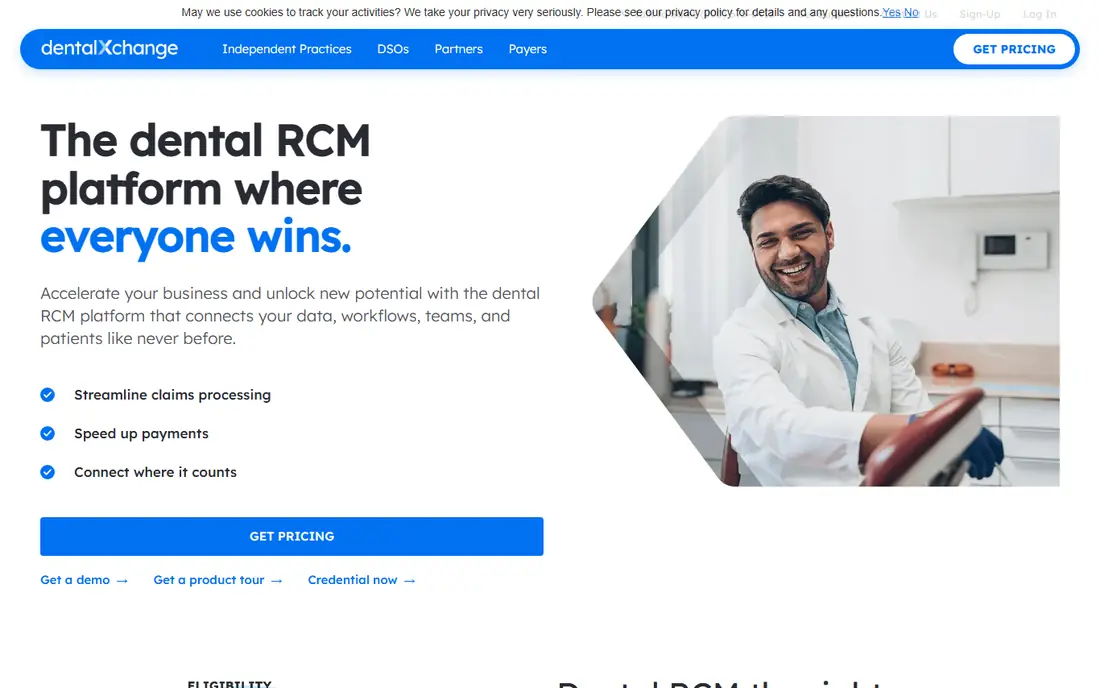
DentalXChange Eligibility AI pulls benefits data from payer websites and organizes it in a consistent way across payers, which helps staff compare plans without learning each payer portal. Checks can run automatically days before an appointment, or in real time for same-day patients, and results are synced with the schedule. For practices already using DentalXChange for claims, that shared workflow is a practical advantage.
Outside Denticon, where native AutoEligibility integration is described, a practice should ask exactly what writes back into its own practice management system and what stays in an external dashboard. Pricing is also not published, so a quote should cover eligibility volume, claims, and any add-on services. For clearinghouse customers, though, Eligibility AI is a natural first option.
- Pulls benefits from payer websites into one dashboard
- Scheduled checks ahead of appointments
- Denticon integration
- Pricing is not documented
- Write-back to other practice systems needs confirmation
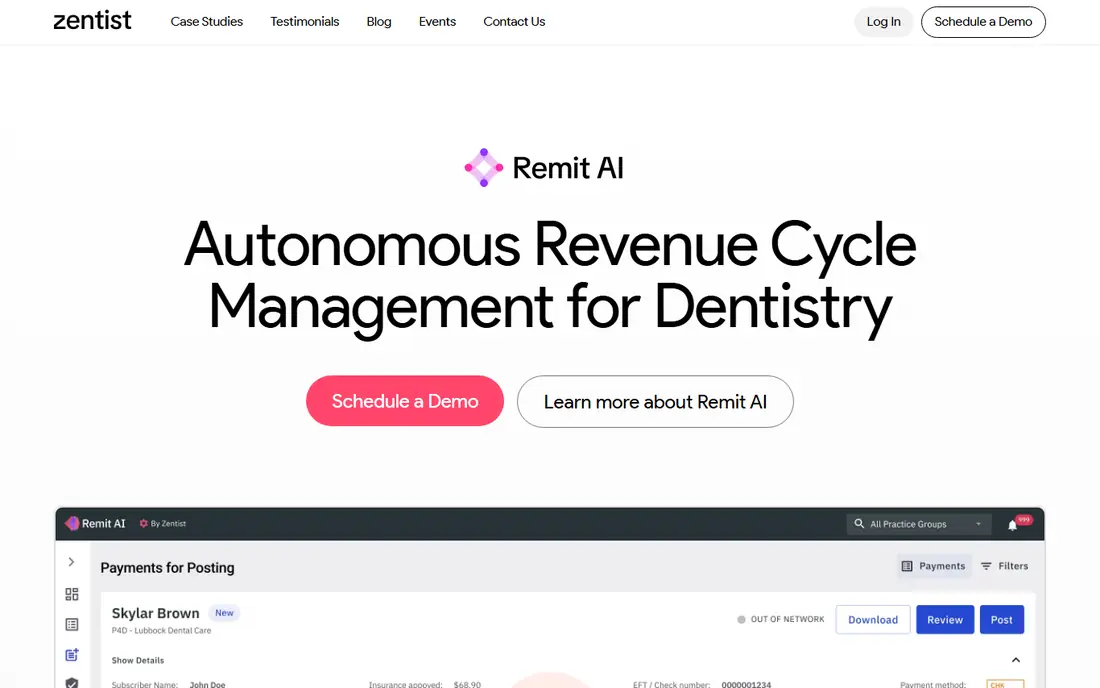
Zentist, through its Remit AI platform, covers more than eligibility alone. It handles eligibility verification, payment posting, denial detection, bank reconciliation, and pre-authorization work across many payers, without requiring a practice to replace its current system. For a group or DSO, that full-cycle view can reduce manual posting and help prioritize accounts receivable by dollar value.
That breadth is also the main drawback for a single-location practice. Zentist is built for groups where manual billing has become a growth limit, and its pricing reflects an enterprise platform rather than a simple checker. A smaller practice should compare Zentist's total scope with a standalone tool and ask whether it needs posting and reconciliation, or only faster eligibility checks.
- Eligibility plus payment posting, denial handling, and reconciliation
- Works with major practice systems
- Payer breadth
- Enterprise scope and pricing
- Smaller single practices may need less than the full platform
Dental Intelligence
Great for: Practices wanting analytics alongside verification workflows
Dental Intelligence is best known for practice analytics, but its platform also supports scheduling, patient engagement, and workflows that touch insurance verification. For a practice that already uses Dental Intelligence to track production, collections, and unscheduled treatment, adding verification into the same view can help staff see which patients need a benefits check before a planned procedure. That context is useful when front desk time is limited.
Dental Intelligence is not a pure eligibility clearinghouse, so a practice should confirm how benefits data is pulled, how deep it goes, and whether results write back into its practice system. Pricing is also quote-based. It fits best as a broader practice platform with verification features, rather than as a standalone checker for a team that only needs eligibility.
- Practice analytics and patient insights
- Scheduling and engagement features
- Helps spot unscheduled treatment
- Verification depth depends on integrations
- Pricing is quote-based
Weave is primarily a patient communication platform, covering phones, two-way texting, scheduling, reminders, and payments, with insurance eligibility offered as an integrated service. That pairing helps a practice verify coverage in minutes by pulling data from payer websites and EDI sources, while also texting patients about forms, reminders, and balances. For a practice that wants communication and verification in one vendor, Weave is a practical choice.
The catch is that eligibility is part of a wider bundle, and some features require enrollment in Weave phones or other services. A practice that only wants verification may find a clearinghouse tool cheaper and deeper. If communication, scheduling, and payments are already on your shopping list, though, Weave's eligibility add-on is worth including in the comparison.
- Phones, texting, scheduling, and payments in one system
- Insurance eligibility add-on
- Patient-friendly workflows
- Eligibility is an add-on, not the core product
- Full value needs Weave phones and related services
Zuub focuses on making verification fast and routine. Its click-to-verify approach lets staff check benefits from the schedule, and verified details can populate digital forms automatically, which reduces retyping and errors. For a practice where the front desk checks dozens of patients each day, that speed adds up, and scalable pricing is aimed at practices that grow from one location to several.
As with any eligibility tool, results depend on payer data, so staff should still confirm tricky cases, such as missing tooth clauses, coordination of benefits, or frequency limits, through a portal or call when the electronic response is thin. Zuub is a good fit for practices that want a focused verification tool rather than a full billing platform, and a trial with your own payer mix is the best test.
- Click-to-verify workflow
- Automatic population of forms
- Scalable pricing for growing practices
- Depth varies by payer
- Smaller vendor footprint than large clearinghouses
CareStack is a cloud-based dental practice management platform that includes insurance verification as part of its revenue cycle workflows. For a practice already on CareStack, or planning a move to a cloud system, verification sits naturally alongside scheduling, charting, and billing, without a separate login for every check. Multi-location groups also benefit from a shared cloud record.
For a practice happy with its current system, CareStack is a bigger change than a standalone checker, since it involves moving practice management, not just adding a tool. Pricing is quote-based, so a comparison should include the full platform cost, not just verification. As a cloud platform choice, though, CareStack is a credible option for groups that want verification built in.
- Cloud practice management
- Insurance verification as part of revenue workflows
- Multi-location support
- Full platform change for practices on another system
- Pricing is quote-based
Adit combines patient communication, scheduling, reminders, payments, and practice analytics, with verification workflows that help front desk teams check benefits as part of intake. That breadth suits a practice that wants one vendor for the patient journey, from first call to payment, rather than separate tools for each step. Its analytics can also highlight where verification delays are slowing treatment acceptance.
Adit is not a clearinghouse first, so a practice should ask how eligibility data is sourced, how deep the benefits response goes, and how results are stored in the patient record. If verification is your only need, a focused tool may be deeper and cheaper. If patient experience and verification are both on your list, Adit deserves a trial with your own payers.
- Patient communication, scheduling, and payments
- Verification workflows alongside front desk tools
- Analytics
- Verification is part of a broader suite
- Depth and payer coverage need checking for your mix
Solutionreach
Great for: Patient engagement with eligibility-related workflows
Solutionreach is a patient relationship platform covering scheduling, reminders, two-way texting, online forms, payments, and reputation tools. Its workflows touch insurance verification through intake and eligibility-related features, helping staff collect insurance details before the visit and reduce time spent on manual checks. For a practice that already values patient engagement, that overlap can streamline intake.
Solutionreach should not be bought on verification alone. A practice should confirm which eligibility checks are included, how benefits are returned, and whether results integrate with its practice system. As part of a broader engagement purchase, however, Solutionreach is a familiar and widely used option in dental practices.
- Scheduling, reminders, texting, and payments
- Long history in dental patient engagement
- Practice integrations
- Verification features are part of a wider suite
- Eligibility depth needs confirmation
Planet DDS Denticon
Great for: Cloud practice management with built-in eligibility checks
Planet DDS Denticon is a cloud practice management system, and its AutoEligibility feature, built with DentalXChange, brings eligibility checks into the schedule and patient record. For a practice or DSO already on Denticon, that native integration avoids a separate dashboard and keeps verified benefits close to treatment planning. Cloud access also helps multi-location groups share records and workflows.
As with CareStack, Denticon is a full system choice, not a plug-in checker for another platform. A practice should price the whole system and confirm how AutoEligibility handles its payer mix, including which benefits fields are returned. For groups standardizing on Denticon, though, built-in eligibility is a clear advantage.
- Cloud-based Denticon system
- AutoEligibility with DentalXChange
- Multi-location and DSO support
- Full system commitment
- Pricing is quote-based
How we picked these
We compared official product pages and vendor descriptions for dental verification tools that are actively offered in 2026, covering standalone checkers, clearinghouse tools, and practice platforms with verification features, and we left out tools with no public verification offering. We favored tools with clear eligibility workflows, payer breadth, and practice system integration, and we noted where pricing is quote-based. We did not run hands-on tests for this roundup, and we did not invent accuracy rates, payer counts, or payment guarantees that vendor pages did not support in a verifiable way.
What to check before you buy
Start with your payer mix and your practice system. List your top ten payers by volume, and ask each vendor to show a real benefits response for those payers, including deductibles, maximums, frequency limits, and any missing fields. Also confirm whether results write back into your practice system, or whether staff must copy them by hand, since that step affects both speed and error rates.
Next, test the workflow with real appointments. Run checks a few days ahead, on the day of the visit, and for a walk-in, and see how exceptions are flagged when a payer response is incomplete. Ask about privacy and security controls, including access limits, audit logs, and data handling, and train staff that a verification result is an estimate, not a promise of payment. Finally, get a written quote that separates eligibility, claims, statements, and any per-check fees, so you can compare totals honestly.
Frequently asked questions
What is dental insurance verification software?
It is software that checks a patient's dental coverage before treatment, returning details such as active coverage, plan benefits, deductibles, annual maximums, and frequency limits where the payer provides them. The goal is to give a clearer patient estimate, reduce denied claims, and save staff time spent on payer portals and phone calls. Results still need staff review, since payer responses can be incomplete.
What is the best insurance verification software for dental practices?
The best choice depends on your system and scope. Vyne Trellis and DentalXChange suit billing teams that want eligibility with claims, Zentist suits groups wanting full revenue cycle automation, and Zuub suits practices that want a fast, focused checker. If you are choosing a new practice system, CareStack or Denticon with built-in checks may make more sense than a standalone tool.
Does verification software guarantee payment?
No. A verification result shows what a payer reported at check time, but payment can still change if coverage ends, a claim is coded differently, a frequency limit applies, or a payer rule is missed. Staff should present estimates as estimates, document what was checked, and confirm tricky cases directly with the payer when needed. Software reduces risk, but it does not remove it.
How far ahead should we verify insurance?
Many practices verify a few days before the appointment, with a same-day check for walk-ins and schedule changes. Automated tools can run batch checks ahead of the schedule, which helps staff follow up on inactive coverage or missing details before the patient arrives. The exact timing should match your schedule volume and your payer mix, not a single rule for every practice.
Is this software HIPAA compliant?
Vendors in this space generally describe HIPAA-related safeguards, such as encryption, access controls, and business associate agreements, but compliance depends on how your practice configures and uses the tool. Ask each vendor for its security documentation and agreement terms, limit access to staff who need it, and train your team on privacy practices. Software alone does not make a practice compliant.
Sources
See where you really rank - block by block
ProMapRanker scans Google Maps across a grid of your service area. Simple monthly plans from $19, white-label on every plan.
Start freeKeep reading
 zoro.to alternatives
Best Zoro.to Alternatives in 2026
We compare the best zoro.to alternatives in 2026, listing only legal licensed anime streaming services, from Crunchyroll to free options for fans today.
Read → zip alternatives
Best Zip Alternatives in 2026
We compare the best zip alternatives for buy now, pay later in 2026, covering pay-in-4 plans, fees, spending limits, and credit reporting options today.
Read → yesware alternatives
Best Yesware Alternatives in 2026
Compare the best yesware alternatives for sales email tracking, templates, and sequences, with current pricing and honest tradeoffs for small sales teams.
Read →