 ProMapRanker
Best Demo Software for SaaS Products in 2026


Marketing and sales demo hubs · Pricing starts at: $40 per user per month
Key takeaways
- Storylane is the most versatile starting point, with screenshot, HTML and video demos plus demo hubs for marketing and sales.
- Navattic suits marketing teams that want high-fidelity HTML demos for website visitors, while Supademo and Arcade suit smaller teams that want lower entry prices.
- Guideflow suits product and onboarding teams that want guided tours at a lower cost, while Walnut suits sales-led teams that want personalisation plus sandboxes.
- Reprise, Demostack and Consensus suit larger teams that need cloned environments, live sandboxes or video-led buying-group demos.
- Prices and availability vary, and no demo tool guarantees conversions, so test capture, editing and analytics with your own product before you commit.
Quick comparison
| Pick | Great for | Pricing starts at | Free tier | |
|---|---|---|---|---|
| Storylane | Marketing and sales demo hubs | $40 per user per month | Yes | Visit |
 Navattic | HTML product demos for marketing | See website | Yes | Visit |
 Supademo | Budget tours and enablement | $38 per creator per month | Yes | Visit |
 Arcade | Polished screenshot demos and video | $42.50 per user per month | Yes | Visit |
 Guideflow | Low-cost guided tours | $35 per month | Yes | Visit |
 Walnut | Enterprise sales personalisation | $575 per month | No | Visit |
 Reprise | Cloned product environments | See website | No | Visit |
 Demostack | Near-live sales sandboxes | See website | No | Visit |
 Consensus | Video-led buying group demos | See website | No | Visit |
The best demo software for saas products
Demo software lets a SaaS buyer try the product without a live call or a full trial account. Some tools capture screenshots into guided tours, some capture HTML for a more realistic click-through, and some clone the live product into a sandbox. The right format depends on your sales motion and your product complexity.
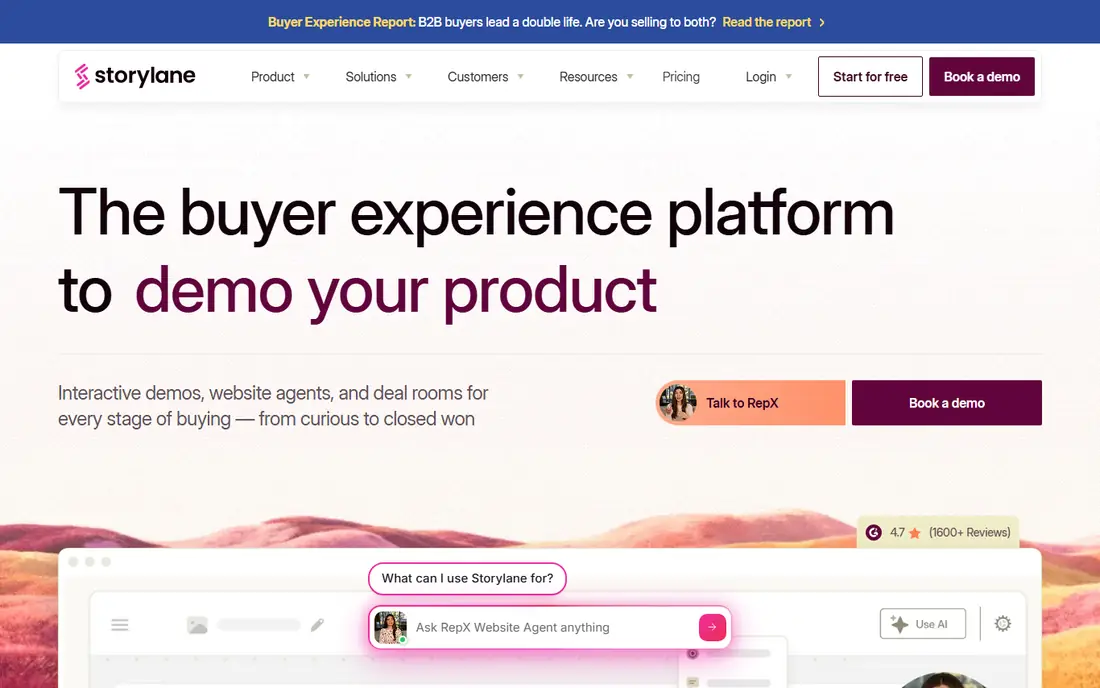
Storylane is the broadest demo tool in this list, because it covers screenshot tours for websites, HTML demos for deeper interaction, video demos and demo hubs that group tours for buyers, prospects or new customers. That range helps when one team owns the website, another owns sales follow-up, and both need demos that look consistent. Analytics show which steps buyers complete and where they drop off, which helps product marketers improve a tour instead of guessing.
The entry price of $40 per user per month when billed annually covers screenshot demos, while HTML editing starts on Growth at a higher monthly price, and sandbox demos sit higher still. Teams that need HTML as the core format should budget for Growth, not Starter. Storylane fits cross-functional SaaS teams that want one demo library across marketing, sales and onboarding, with a free plan to test tour building first.
- Screenshot, HTML and video demos in one editor
- Demo hubs for grouping tours
- Strong analytics
- HTML editing sits on higher tiers
- Per-seat pricing grows with larger teams
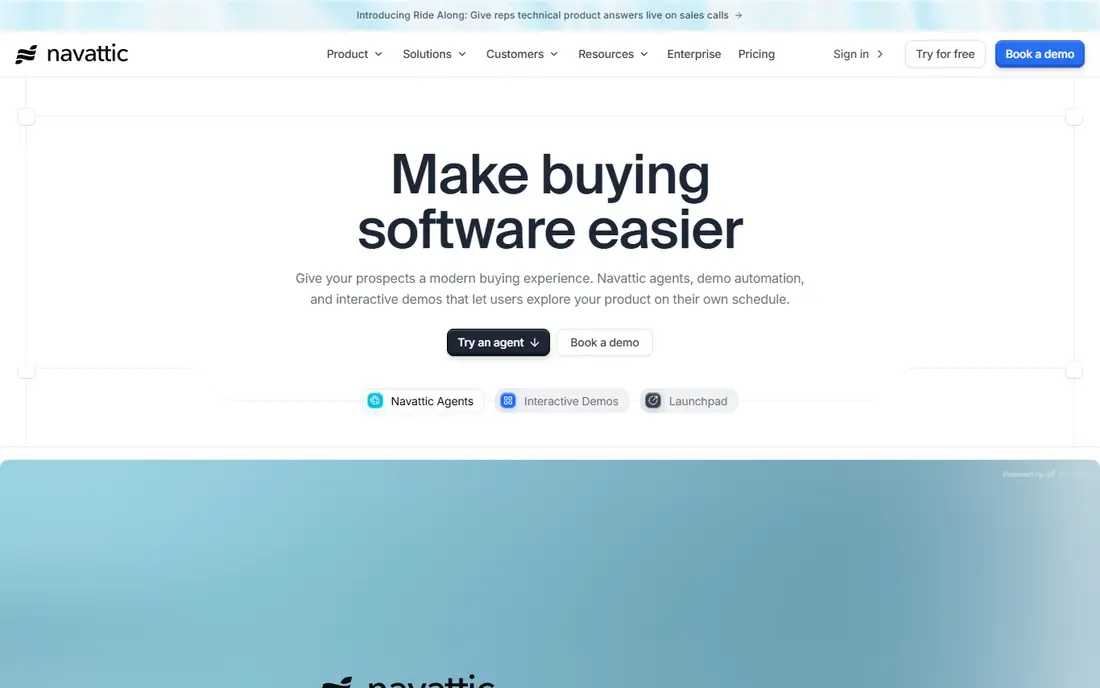
Navattic focuses on HTML demos that look and feel like the live product, which suits marketing teams running website tours and campaigns. Buyers can click through a realistic product flow without a trial account, and marketers can track engagement, test variations and hand qualified interest to sales through Launchpad. That fidelity is Navattic's main advantage over screenshot-only tours for complex products.
Paid pricing is not published clearly on the vendor site, and comparison sources give varying team prices, so get a written quote for your seat and demo count. Sandbox demos, single sign-on and translation also sit on higher tiers. Navattic fits marketing-led SaaS teams that want polished HTML demos as the main inbound asset and are willing to pay for a dedicated platform.
- High-fidelity HTML capture
- Strong for website and campaign demos
- Sales Launchpad for follow-up
- Paid pricing is not published clearly
- Sandbox and single sign-on sit on higher tiers
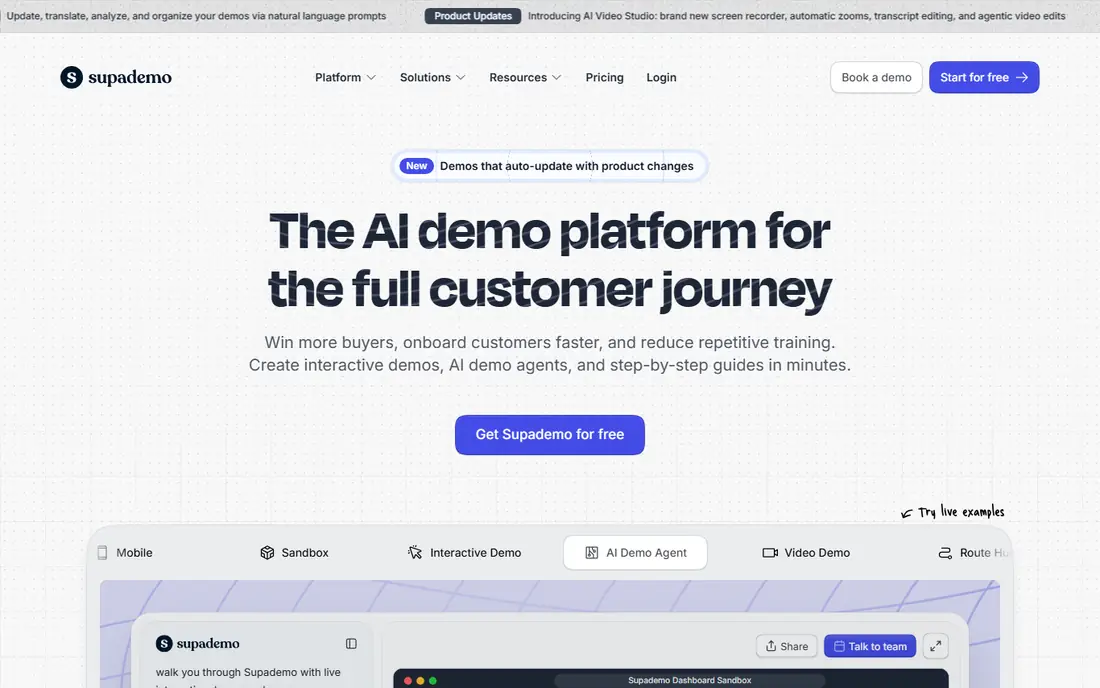
Supademo is the budget-friendly route into interactive demos, with fast browser capture, auto-generated step guides and a generous free tier. Small teams can build tours for a website, help centre or onboarding flow without a large platform fee, and AI translation helps teams serving several markets. For startups and small SaaS teams, that low entry price matters more than enterprise sandbox depth.
HTML demos start on a higher Business plan, and sandbox demos sit on Growth, so teams that need realistic HTML interaction should check those tiers before choosing Supademo on price alone. Supademo fits solo creators, startups and enablement teams that want quick, clear tours at a low cost, with a free plan to test capture and sharing first.
- Low entry price
- Fast browser capture
- Good for help centres and onboarding
- HTML demos start on higher plans
- Sandbox demos gated to Growth
Arcade suits design-led marketing and product-led growth teams that want demos to look polished, not only functional. Screenshot demos can be edited into clean, branching flows, exported as video or GIF for social and email, and embedded on a website. That polish helps when a demo is the first impression a buyer gets, especially for products with a strong visual interface.
Enterprise features such as native Salesforce integration, single sign-on and role-based access sit on higher tiers, so larger teams should confirm those costs. Arcade is less of a live sandbox platform than Reprise or Demostack, so complex products that need real data interaction may need another tool. Arcade fits teams that want beautiful, shareable tours and video exports at a moderate price.
- Polished, design-led demos
- MP4 and GIF exports
- Branching flows for different buyer paths
- Native Salesforce, single sign-on and access controls sit on Enterprise
- Less sandbox depth than Reprise
Guideflow is a low-cost guided tour tool for product and onboarding teams that want to show a product step by step. It supports screenshot tours, mobile demos and HTML demos, with sandbox features on an Advanced plan. That range at a low entry price makes it attractive for teams that need tours for onboarding, help content and website conversion without a large platform budget.
HTML capture starts at a higher monthly price, so teams that need HTML as the main format should budget above the entry tier. Guideflow fits product teams that want simple, clear tours, especially for onboarding and support, and that do not need the full enterprise governance of Walnut or Reprise. Trial it with a real onboarding flow to judge editing speed.
- Low entry price
- Screenshot, mobile and HTML demos
- Good for product and onboarding teams
- HTML capture starts at a higher monthly price
- Smaller analytics depth than Storylane
Walnut is built for sales-led SaaS teams that want to personalise demos for each prospect and account. Sales teams can create tailored demo playlists, add AI features, and use sandbox demos on higher plans to let buyers explore a realistic product environment. That personalisation helps in competitive deals where a generic tour does not address a specific buyer workflow.
The entry price of $575 per month when billed annually is a serious commitment, and sandbox demos start higher still, so Walnut is not a budget tool. There is no free plan, though demos are available from the vendor. Walnut fits sales-led teams with a clear enterprise motion, where personalised demos and sandboxes are part of the sales process and the deal size justifies the platform cost.
- Personalised demos for sales
- Sandbox demos on higher plans
- AI features and playlists
- No free plan
- Sandbox and governance costs rise quickly
Reprise is the enterprise choice when a capture tour is not enough and sales engineers need a cloned product environment. It replicates the live application, injects realistic data and lets buyers explore a near-real product without touching production data. That depth suits complex B2B products with workflows, permissions and integrations that a screenshot tour cannot show honestly.
Setup is heavier than a capture tool, and pricing is an annual platform fee plus per-user licenses, quoted by the vendor. Smaller teams will find Reprise more than they need, and implementation needs sales engineering time. Reprise fits enterprises with complex products, dedicated presales teams and security reviews, where a cloned environment is a competitive advantage in late-stage deals.
- Clones live product environments
- Data injection for realistic demos
- Enterprise security and governance
- Pricing is quote-based
- Heavier setup than capture tools
Demostack builds sandbox demos by cloning a production environment, so sales teams can show a product that behaves like the real thing, with realistic data and workflows. It is built for sales engineering teams that run live demos, proof-of-concept work and late-stage evaluations, where a guided tour would feel too limited. Governance and demo operations tools help larger teams manage many environments.
Pricing is quote-based and enterprise-level, with annual totals commonly in the tens of thousands of dollars in comparison sources, so it is not a small-team tool. Security review is also common, since cloning production needs careful data handling. Demostack fits enterprise SaaS teams with complex products and a dedicated demo operations function.
- Near-live sandbox demos
- Cloned production environments
- Built for sales engineering teams
- Pricing is quote-based and enterprise-level
- Security review is common
Consensus takes a video-led approach to demo automation, helping sales teams share demo content with a full buying group, not only one champion. Video demos, interactive tours and live demo support sit together, with Demolytics analytics showing who watched, what they engaged with and where interest stalled. That buying-group view helps sellers follow up with the right stakeholders.
Pricing is quote-based, with per-user licenses plus optional usage, so teams need a vendor quote for their buyer-group size. Consensus is less of a quick screenshot capture tool than Storylane or Supademo, so teams that mainly need fast website tours may prefer those. Consensus fits enterprise sales teams running video-led demo programs for multi-stakeholder deals.
- Video demos for buying groups
- Interactive tours and live demo support
- Demolytics analytics
- Pricing is quote-based
- Less of a screenshot capture tool than Storylane
How we picked these
We compared vendor pricing and feature pages with recent interactive demo comparisons, favouring tools that are still sold in 2026 and that handle real SaaS demo work such as capture, editing, personalisation, sandboxes or analytics. We used published starting prices where vendors list them, and See website where pricing is quoted or unclear. Prices and availability vary, and no demo tool guarantees conversions.
What to check before you buy
Start with your sales motion. Website conversion needs fast, high-fidelity tours that marketing can update. Sales follow-up needs personalised demos and analytics. Late-stage enterprise deals need sandboxes or cloned environments. A tool built for a different motion will frustrate even a good team, so map the buyer journey first.
Test capture and editing with your own product, including login screens, empty states and complex workflows. Check how demos stay current when the product changes, how analytics flow to your CRM, and what single sign-on, domain and security controls cost. Get the full price for the tier that includes the format you actually need, since entry tiers often exclude HTML editing or sandboxes. A demo that looks good once but goes stale quickly will hurt trust.
Frequently asked questions
What is the best demo software for a SaaS startup?
Storylane and Supademo are strong starting points for startups because they offer free plans, fast capture and clear tours at lower prices. Arcade suits design-led startups that want polished tours and video exports. Start with the format your buyers need, then check whether HTML editing or sandboxes sit on a higher tier.
What is the difference between a screenshot demo and an HTML demo?
A screenshot demo guides buyers through captured images with hotspots and steps, which is fast to build and easy to update. An HTML demo captures the live product interface, so buyers can click through a more realistic flow, but it takes longer to build and maintain. Complex products often benefit from HTML, while simple flows work well as screenshot tours.
Do I need a sandbox demo?
You need a sandbox when buyers must explore real workflows, data and permissions that a guided tour cannot show honestly. Most SaaS teams do not need a sandbox for website conversion or early sales calls. Enterprise teams with complex products and late-stage evaluations benefit most from Reprise, Demostack or Walnut sandbox plans.
How much does demo software cost?
Entry prices range from free plans to $35 to $42.50 per user or creator per month for Guideflow, Supademo, Storylane and Arcade, up to $575 per month for Walnut and quote-based pricing for Reprise, Demostack and Consensus. The real cost is the tier that includes your needed format, such as HTML editing or sandboxes, plus seats.
Can demo software replace live demos and trials?
No, demo software complements live demos and trials by letting buyers explore value before a call or between calls. Live demos still matter for questions, custom workflows and late-stage proof. The best setup uses interactive demos for discovery, live demos for depth and trials for hands-on validation.
Sources
See where you really rank - block by block
ProMapRanker scans Google Maps across a grid of your service area. Simple monthly plans from $19, white-label on every plan.
Start freeKeep reading
 what’s the best risk software for enterprises
What Is the Best Risk Software for Enterprises in 2026
We compared what’s the best risk software for enterprises on risk registers, controls, third-party risk, and reporting, with pricing notes for large teams.
Read → what's the best pam software for enterprises
What is the Best PAM Software for Enterprises in 2026
Find what's the best pam software for enterprises, with vaulting, session recording, just in time access and pricing compared for large enterprise IT teams.
Read → what’s the best grc software
What Is the Best GRC Software in 2026
We compared what’s the best grc software on risk, compliance, audit and vendor risk, so teams can pick a platform that fits their frameworks and budget.
Read →