 ProMapRanker
Best Demand Generation Software in 2026


Small to mid-size all-in-one marketing · Pricing starts at: See website
Key takeaways
- No single platform covers data, intent, ads, outreach, and attribution well, so most teams combine two or three tools around one system of record.
- HubSpot is the most practical hub for small and mid-size teams, while 6sense and Demandbase are built for larger account-based programs.
- Clay and Apollo help smaller teams build and reach lists faster, but they do not replace a marketing automation platform or a CRM.
- Compare total cost, not just the entry price, because data credits, ad spend, seats, and attribution add-ons change the real budget quickly.
Quick comparison
| Pick | Great for | Pricing starts at | Free tier | |
|---|---|---|---|---|
| HubSpot Marketing Hub | Small to mid-size all-in-one marketing | See website | Yes | Visit |
 6sense | Predictive account identification | See website | Yes | Visit |
 Demandbase | Account-based marketing and ads | See website | No | Visit |
 ZoomInfo | B2B data and intent signals | See website | No | Visit |
 Clay | Data enrichment and outbound workflows | $185 per month | Yes | Visit |
 Apollo.io | Prospecting and sales engagement | $49 per user per month | Yes | Visit |
 Adobe Marketo Engage | Enterprise marketing automation | See website | No | Visit |
 RollWorks | Mid-market account-based ads | See website | No | Visit |
 Metadata.io | B2B paid media automation | $3,950 per month | No | Visit |
 Bombora | Third-party intent data | See website | No | Visit |
The best demand generation software
Demand generation is the full program that creates interest, builds trust in target accounts, and turns that interest into pipeline. The tools below do different jobs in that program, so we note each tool's main job as well as its limits.
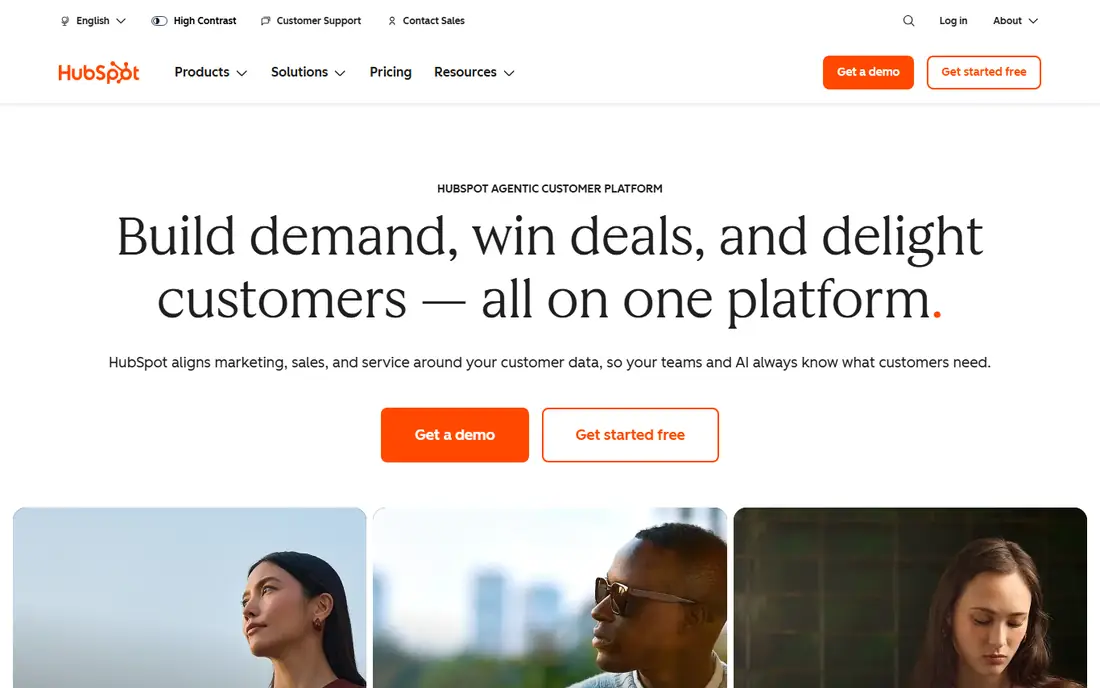
HubSpot is the safest hub for a team that needs to run campaigns, capture leads, and report on results without stitching together five tools. The free CRM and marketing tools cover the basics, and paid tiers add automation, A/B testing, and deeper reporting as a program grows. Because sales and marketing can share the same records, handoff arguments about lead quality become easier to settle with data.
The main risk is contact-based pricing. A growing database, plus extra hubs, can push the bill higher than the headline plan suggests. Teams with a strong account-based focus should also plan for how HubSpot will work alongside an intent or advertising platform, rather than expecting it to do that job alone.
- CRM, email, landing pages, and reporting in one place
- Free tools to start
- Large integration library
- Costs rise with contacts and hubs
- Advanced attribution sits on higher tiers
- Large account-based programs may need a specialist add-on
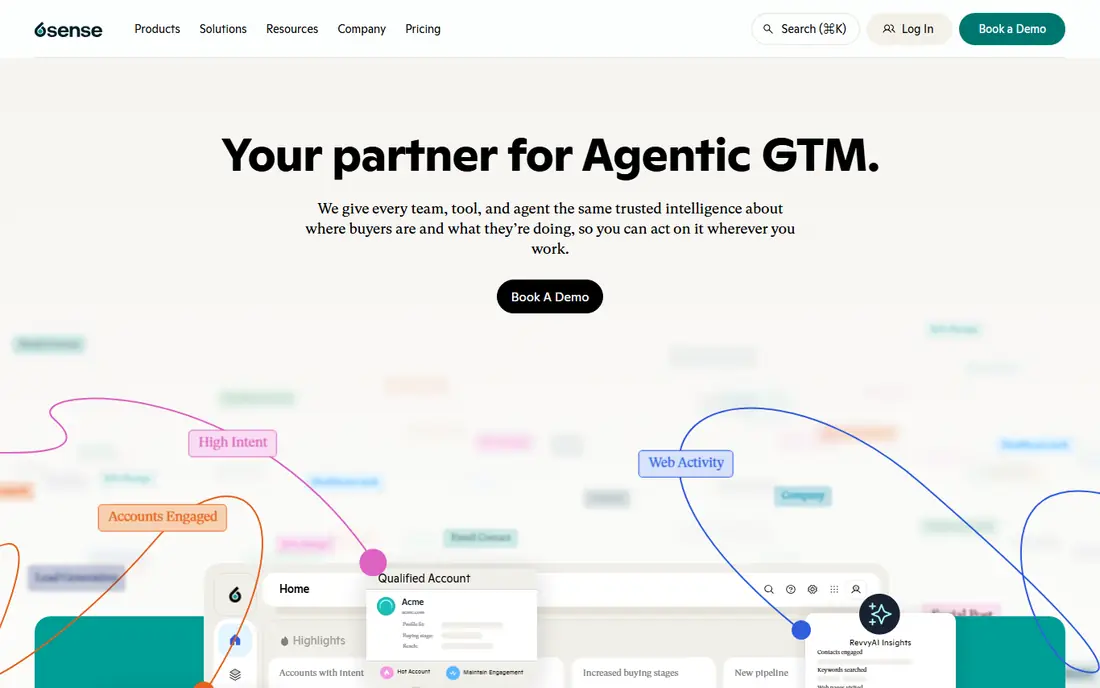
6sense helps teams find accounts that are showing buying signals before those accounts fill out a form. It combines intent data, predictive scoring, and orchestration, so marketing can run ads to a priority account list while sales gets alerts when activity rises. For enterprise teams with long sales cycles and many stakeholders, that account view is often more useful than a simple lead list.
It is not a quick self-serve purchase. Pricing is quote based, implementation takes planning, and results depend on CRM hygiene and a clear definition of a qualified account. If your team does not yet have a defined ideal customer profile, fix that first.
- Strong predictive intent and account scoring
- Orchestration across ads and sales alerts
- CRM integration for account workflows
- Enterprise pricing and setup
- Needs clean CRM data to work well
- Smaller teams may not use its full depth
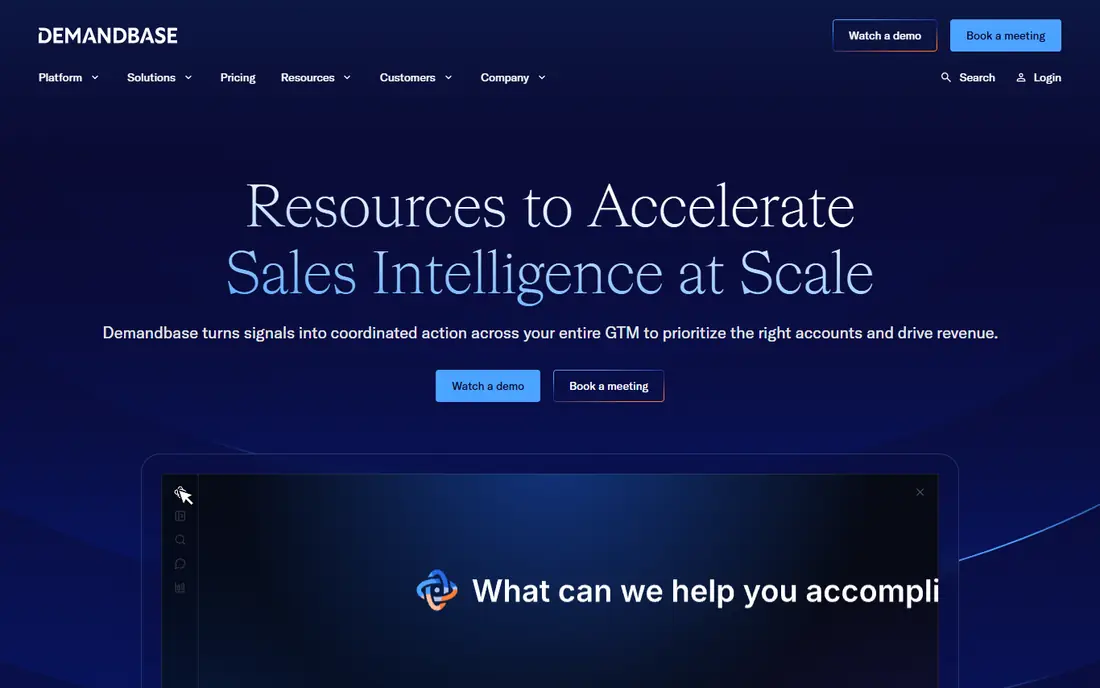
Demandbase combines account data, intent signals, and a B2B advertising platform, which makes it a strong choice for teams running coordinated account campaigns. Marketing can target a named account list, sales can see account activity, and leaders can review pipeline by account rather than by individual lead. That shared account view is the point of account-based marketing, and Demandbase is built around it.
The trade-off is commitment. It needs a team to manage audiences, creative, and sales follow-up, and it works best when the account list is tight. A broad, unfocused list will waste ad spend and hide the accounts that actually matter.
- Account intelligence plus B2B advertising
- Orchestration across marketing and sales
- Account-level reporting
- Enterprise pricing
- Requires dedicated ownership
- Ad spend sits on top of platform cost
ZoomInfo is often the data layer behind a demand generation program, supplying contacts, company details, and buying signals that other tools then act on. Its scale is useful for teams building target account lists in the United States, and its intent data can help prioritize outreach. When combined with a CRM and an engagement tool, it shortens the time spent finding the right people.
Buyers should still test data quality in their own market. Coverage and accuracy differ by industry, company size, and region, so run a sample against your ideal customer profile before signing a large contract. Also confirm how credits work, because unused or misused credits change the effective cost.
- Very large B2B contact and company database
- Intent and technographic signals
- Workflow tools for go-to-market teams
- Pricing is quote based
- Credit and usage rules need careful review
- Data quality varies by segment and region
Clay is for teams that want to build custom prospecting and enrichment flows instead of accepting a fixed list. You can pull data from many providers, clean it, score it, and push the result to a CRM or outreach tool. That flexibility is why go-to-market engineers and lean demand generation teams like it, especially when off-the-shelf lists do not match a niche audience.
Flexibility has a cost in time and credits. A messy workflow can burn credits quickly, and the tool rewards teams that plan their data model before they build. Clay works best as the data and workflow layer in a stack, not as the only demand generation tool a company owns.
- Flexible enrichment from many sources
- Workflow building without heavy coding
- Good fit for modern go-to-market teams
- Learning curve for complex workflows
- Credit costs add up at scale
- Not a CRM or a full marketing automation platform
Apollo.io combines a B2B database with email sequences and basic CRM features, which makes it a practical starting point for small teams that need both finding and reaching. The free plan lets a team test search quality, and paid plans add more credits and sequences. For a startup building its first pipeline motion, that combination keeps costs and tool count low.
It is not a full marketing automation platform, and it is not the best choice for complex multi-channel account campaigns. Teams should also watch email deliverability and list quality, because volume without targeting will hurt domain reputation and waste effort.
- Prospecting database plus sequences in one tool
- Published pricing and a free plan
- Useful for small sales and marketing teams
- Data accuracy varies by niche
- Engagement features are lighter than specialist tools
- Heavy outreach needs careful deliverability management
Marketo Engage remains a core choice for large B2B teams that run complex nurture programs, scoring models, and multi-step campaigns. It handles long buying journeys, multiple segments, and detailed automation logic that simpler tools cannot match. For enterprises already in the Adobe ecosystem, the integration case is also strong.
That power comes with operational weight. Marketo needs trained staff or a capable agency, and a poorly built instance creates more problems than it solves. Small teams should only choose it when campaign complexity already justifies the investment.
- Deep automation, scoring, and nurture programs
- Strong for complex B2B journeys
- Large enterprise ecosystem
- Pricing is quote based
- Needs skilled operators
- Implementation and maintenance take real time
RollWorks is a mid-market friendly way to run account-based advertising without buying a full enterprise suite. Teams can build target account lists, run display and social ads to those accounts, and measure engagement at the account level. Its HubSpot integration is a practical advantage for teams that already run marketing in HubSpot.
It does not match the depth of 6sense or Demandbase on predictive intent or orchestration. Treat RollWorks as a focused advertising and account engagement tool, and pair it with a data source and a CRM workflow for follow-up.
- Account-based advertising with practical setup
- Works well for HubSpot users
- Clear account-level reporting
- Pricing is quote based
- Intent data comes through partnerships
- Less broad than enterprise ABM suites
Metadata.io automates much of the manual work in B2B paid media, from audience building to campaign testing across channels. For teams that run paid programs at scale, that automation can free up time and surface winning combinations faster than manual campaign management. Its focus on pipeline outcomes, rather than clicks alone, also helps justify paid spend to leadership.
The entry price means it only makes sense when paid budget is already substantial. A team spending a few thousand dollars a month on ads will not get enough test volume to benefit, and will still need data, CRM, and sales follow-up around it.
- Automates paid campaign testing at scale
- Ties paid spend to pipeline outcomes
- Useful for teams running many experiments
- High entry price plus ad spend
- Needs enough budget to test meaningfully
- Not an intent or CRM replacement
Bombora provides intent data based on content consumption across a large network, which helps teams see which accounts are researching topics related to their product. That signal is useful for prioritizing outreach, building account lists, and timing campaigns. Because it integrates with many platforms, teams can often add Bombora data to a stack they already use.
Intent alone does not create pipeline. An account researching a topic may be a student, a competitor, or an early-stage browser, so sales follow-up still needs qualification and a clear next step. Use Bombora to rank accounts, then let a human or a well-designed nurture program do the converting.
- Widely used third-party intent baseline
- Integrates with major ABM and CRM platforms
- Helps prioritize accounts already researching
- Pricing is quote based
- Intent is a signal, not proof of a buying decision
- Needs a follow-up plan to create value
How we picked these
We compared official feature and pricing pages, public comparisons, and the job each tool does in a demand generation program. We favored tools that are still actively sold, that clearly state their main job, and that fit either a hub, data, intent, advertising, or attribution role. Where pricing is quote based, we wrote See website rather than presenting a third-party estimate as a vendor price. We did not claim hands-on testing, and we recommend a trial or a data sample before a long contract.
How to build a demand generation stack
Start with the job that is failing. If you cannot find the right accounts, fix data and intent first. If you can find accounts but cannot reach them well, fix advertising or outreach. If you generate interest but lose it between marketing and sales, fix the CRM, scoring, and follow-up process. Buying a large platform to fix a data problem rarely works, and buying more data to fix a follow-up problem wastes money.
Next, define a qualified account and a qualified lead in writing, and agree on who owns each stage. Demand generation fails when marketing counts form fills, sales counts meetings, and leadership counts pipeline, with no shared definition. Pick one primary pipeline metric, a secondary metric for early signals, and a review rhythm. Revisit the definitions each quarter, because a definition that never changes usually stops matching the market.
Finally, budget for the whole stack. Add platform fees, data credits, ad spend, implementation, and the time your team will spend operating the tools. A cheaper platform with high credit costs can cost more than a pricier platform with clearer limits. Ask each vendor for a 12 month total based on your contact volume, account count, and expected ad spend, then compare those totals side by side.
Frequently asked questions
What is the best demand generation software?
The best choice depends on your main job. HubSpot is the most practical hub for small and mid-size teams, 6sense and Demandbase lead enterprise account-based programs, and Clay and Apollo help smaller teams build and reach lists. Most successful teams combine a hub with one data or intent tool, rather than relying on one platform alone.
What is the best demand generation platform for a small business?
HubSpot, Apollo.io, and Clay are the most practical starts for a small business, because they offer a free plan or published pricing and can be used without a large implementation project. Start with a clear ideal customer profile and one campaign, then add intent or advertising tools only when the first motion is working.
Is demand generation software different from lead generation software?
Yes, although the terms overlap. Lead generation focuses on capturing contact details from people who already show interest, while demand generation covers the full program, from building awareness in accounts that are not yet buying to converting and measuring pipeline. Most stacks need both, but the metrics and tools differ.
How much does demand generation software cost?
Costs range from free plans and low monthly fees to enterprise contracts that run into five or six figures per year, plus ad spend and data credits. The right budget depends on team size, account count, contact volume, and paid media spend, so ask for a 12 month total before you compare headline prices.
Do I need an account-based platform to do demand generation?
Not always. Account-based platforms help when sales cycles are long, buying groups are large, and a small number of accounts drive most revenue. If your buyers are many small companies with short cycles, a strong marketing automation hub and good data may serve you better at a lower cost.
Sources
See where you really rank - block by block
ProMapRanker scans Google Maps across a grid of your service area. Simple monthly plans from $19, white-label on every plan.
Start freeKeep reading
 zscaler alternatives
Best Zscaler Alternatives in 2026
Looking for zscaler alternatives? We compare 9 SASE and zero trust platforms on architecture, data protection, pricing, and fit for your network and team.
Read → zapier alternatives free
Best Zapier Alternatives Free in 2026
Nine automation tools for zapier alternatives free in 2026, all with genuinely free tiers, plus free plan limits, starting prices and upgrade paths explained.
Read → which platform is best for online reputation
Which Platform Is Best for Online Reputation in 2026
Wondering which platform is best for online reputation? We compare 8 review, listing, and response tools for small and multi-location businesses and agencies.
Read →