 ProMapRanker
Best Delivery Driver Apps to Make Money in 2026

Key takeaways
- DoorDash and Uber Eats are the easiest starts for food delivery, with instant on and off work and wide city coverage.
- Amazon Flex suits drivers who prefer scheduled blocks and package work, while Instacart and Shipt suit people who like grocery shopping and tips.
- Spark Driver, Grubhub, Roadie and GoPuff fill useful niches, from Walmart orders to larger items and short convenience trips.
- Earnings vary by city, time of day, tips, vehicle costs and wait time, and no app in this list promises a fixed hourly income.
- Track fuel, mileage, taxes and dead time from the start, since gross pay on screen is not the same as money kept after costs.
Quick comparison
| Pick | Great for | Pricing starts at | Free tier | |
|---|---|---|---|---|
 DoorDash | Easiest food delivery start | Free | Yes | Visit |
 Uber Eats | Flexible food delivery | Free | Yes | Visit |
 Amazon Flex | Scheduled package blocks | Free | Yes | Visit |
 Instacart | Grocery shopping and delivery | Free | Yes | Visit |
 Shipt | Grocery and retail shopping | Free | Yes | Visit |
 Spark Driver | Walmart and retail orders | Free | Yes | Visit |
 Grubhub | Scheduled restaurant blocks | Free | Yes | Visit |
 Roadie | Larger and longer deliveries | Free | Yes | Visit |
The best delivery driver apps to make money
These apps are for drivers, couriers and shoppers who want paid delivery work, not for customers ordering food. We compared the type of work, how you choose hours, how pay is structured, and what costs or limits to expect. Earnings vary, and no figure in this article is a promise, since demand, tips and vehicle costs change by market.
Pay structures differ. Some apps show a guaranteed minimum per offer, some pay per block, and some combine base pay, promotions and tips. Tips can be a large share of food and grocery pay, which is why two drivers in the same city can earn different amounts on similar hours. Vehicle costs, phone data, insurance and tax also reduce take-home pay, so we focus on structure and flexibility rather than a single hourly claim.
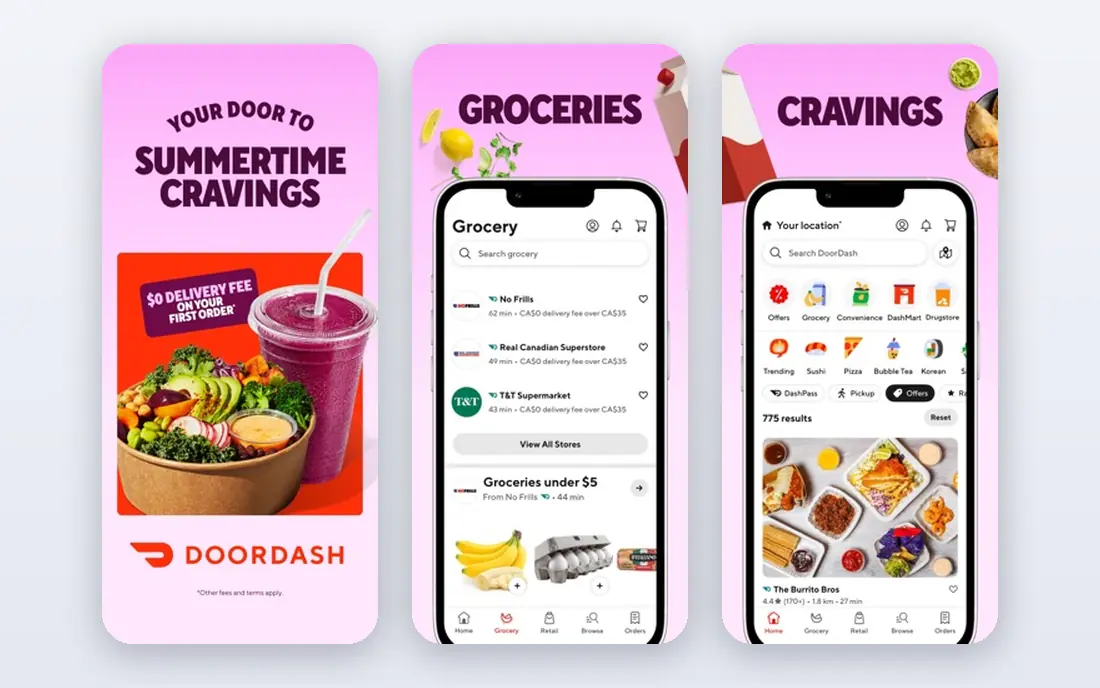
DoorDash, through its Dasher app, is the most accessible starting point for food delivery. You can go online when you want in many markets, accept or decline offers, and see a guaranteed minimum before you accept. Food, grocery and retail orders all appear in the same app, which gives more choice than a restaurant-only platform.
The downside is uneven offers. Short, low-pay trips appear alongside better ones, and time spent waiting for the next order is part of the job. Drivers keep tips in full, but tips vary by customer, order size and area. DoorDash suits drivers who want flexibility and volume, and who are willing to decline weak offers and track their own costs.
- Wide coverage
- Instant scheduling in many areas
- Keeps 100 percent of tips
- Offer quality varies
- Wait time between orders can be unpaid
- Vehicle costs add up

Uber Eats lets drivers deliver food by car, bike or scooter where allowed, which makes it useful in dense cities where a car is slow or costly. The app shows trip details before acceptance, and peak promotions can lift pay at busy times. Drivers who already use Uber for rideshare can also switch between services where the app allows it.
Earnings are still market-dependent. A quiet weekday lunch pays differently from a busy Friday dinner, and longer trips can eat into time and fuel. Bike delivery avoids fuel costs but limits range and order size. Uber Eats is a strong flexible option, especially in cities, but it works best when paired with careful tracking of trips, tips and costs.
- Flexible online hours
- Bike and car options in many cities
- Promotions at peak times
- Pay varies by market and demand
- Support can feel distant
- Tips vary
Amazon Flex pays drivers to deliver packages in scheduled blocks, usually from an Amazon station. That structure suits people who prefer a planned shift over waiting for single food orders. Block pay is shown before you accept, and package routes tend to involve less customer interaction than restaurant work.
The limits are access and vehicle needs. Blocks are released on a schedule and can be competitive, and you need a mid-size car or larger in most markets. Most package deliveries do not include tips, so the block rate is the main pay. Flex works well as a planned earner, especially when combined with a food app for gaps between blocks.
- Scheduled blocks
- Package work without food handling
- Predictable block pay
- Blocks can be hard to get
- Larger vehicle needed
- No tips on most package work
Instacart shoppers pick grocery items in store and deliver them, sometimes in batches of more than one order. Tips are a major part of pay, and careful shoppers who communicate about replacements tend to do better. The work suits people who like shopping, do not mind store time, and want flexible hours without restaurant rushes.
Shopping time is the trade-off. A large order with many items or substitutions takes longer than a simple drop-off, and heavy bags add physical work. Batch quality also varies, so experienced shoppers learn which batches are worth taking. Instacart can pay well in higher-income areas, but it rewards patience and good communication more than speed alone.
- Grocery tips can be strong
- Batch orders
- Choose hours
- Shopping takes time
- Heavy orders and substitutions add work
- Pay varies by batch
Shipt shoppers deliver groceries and retail goods, often from Target and other partner stores, in scheduled windows. The work is similar to Instacart, with shopping, communication and delivery in one role. Preferred shopper status and reliable service can lead to steadier work in some markets.
The main limits are market coverage and schedule competition. Shipt is not available everywhere, and popular windows can fill quickly. Pay combines order pay and tips, so small orders without tips pay less than larger ones. For drivers who like retail shopping and a more scheduled routine, Shipt is a solid alternative to Instacart.
- Target and retail orders
- Scheduled delivery windows
- Shopper community tools
- Availability varies by area
- Pay depends on order size and tips
- Schedule can be competitive
Spark Driver is Walmart delivery platform for independent drivers, covering grocery, general merchandise and other retail orders. Drivers can accept shopping and delivery trips or delivery-only trips, depending on the offer. In areas with busy Walmart stores, order volume can be steady, especially at peak shopping times.
Spark has a waitlist in some markets, and acceptance, cancellation and delivery standards are monitored closely. Pay varies by trip distance, order size and tips, and some trips involve large or heavy orders. For drivers near a busy Walmart store, Spark is a useful main or second app, but it rewards reliability and careful trip selection.
- Walmart grocery and general orders
- Shopping and delivery options
- Large order volume in served areas
- Waitlist in some areas
- Pay varies by trip and tips
- App rules are strict
Grubhub focuses on restaurant delivery, with drivers able to take scheduled blocks or go online in some markets. Offer details show pay, distance and restaurant, which helps drivers decide quickly. For drivers who prefer restaurant work and a more scheduled pattern, Grubhub can be less chaotic than an always-on food app.
The main weakness is coverage. Grubhub is strong in some cities and thin in others, and block times can be competitive. Tips also vary, and restaurant wait times can reduce hourly earnings. Grubhub works best as a second app in a city where it is well established, rather than as the only app in a thin market.
- Restaurant-focused orders
- Scheduled blocks
- Clear offer details
- Coverage is narrower than DoorDash
- Block availability varies
- Tips vary
Roadie connects drivers with deliveries of larger items, from retail goods to bulky items that do not fit a standard food order. Longer trips can pay more per gig, and drivers choose gigs that fit their vehicle and route. That makes Roadie a useful extra app for drivers with a larger car, van or truck.
Volume is the limit. Roadie gigs are fewer and less frequent than food orders, so it rarely works as a sole income source. Timing and pickup locations can also be less predictable. Use Roadie to fill gaps, take a larger gig on a route you already plan to drive, or earn from a vehicle that food apps underuse.
- Larger item deliveries
- Longer trips can pay more
- Flexible gig choice
- Fewer gigs than food apps
- Larger vehicle often needed
- Timing is less predictable
How we picked these
We compared official driver pages, pay explanations and driver help pages for platforms that were live and accepting drivers in the United States in October 2026. We looked for real driver work, not customer apps, and we focused on work type, scheduling, pay structure and vehicle needs. We did not promise earnings, since city, demand, tips and costs decide actual pay. We treated third-party earnings reports as rough guides only, and we kept the focus on structure that drivers can verify in each app.
How to choose and protect your earnings
Start with your vehicle, city and hours. A bike driver in a dense city has different best apps from a driver with a large car in a suburb. Test one main app for two weeks, track every trip, tip, mile and cost, and only then add a second app for gaps. That record tells you more than any general pay claim.
Set aside money for fuel, maintenance, insurance and tax from the start, and keep mileage records. Decline trips that pay poorly after costs, even if the screen total looks tempting. Check each app rules on acceptance, cancellations and customer contact, since repeated cancellations can limit future offers. Finally, plan for quiet times. Delivery demand rises and falls with meals, weather and local events, so a buffer and a second app help smooth slow days.
Frequently asked questions
Which delivery driver app pays the most?
There is no single answer, since pay depends on city, time, tips, vehicle costs and order mix. Amazon Flex offers scheduled block pay, while food and grocery apps depend more on tips and promotions. Track your own net pay after costs to find your best mix.
Can I use more than one delivery app at once?
Yes, many drivers run two apps and switch between them, but do not accept overlapping orders that you cannot complete on time. Check each app rules, and avoid double-booking a scheduled block with another active delivery.
Do I need a car to deliver?
No, not always. Uber Eats and DoorDash allow bikes or scooters in some cities, while Amazon Flex, Roadie and many grocery trips need a car. Check the vehicle rules for your city before you apply.
Are tips included in the pay shown?
It varies. Some apps show a guaranteed minimum that includes expected tips or base pay, while others show base pay plus tips separately. Read the offer screen carefully, and track actual tips against the estimate.
Do delivery drivers pay tax on earnings?
Yes, in general, driver earnings are taxable income, and drivers are usually independent contractors. Keep mileage and expense records, and speak to a tax professional about quarterly payments and deductions for your situation.
Sources
See where you really rank - block by block
ProMapRanker scans Google Maps across a grid of your service area. Simple monthly plans from $19, white-label on every plan.
Start freeKeep reading
 zscaler alternatives
Best Zscaler Alternatives in 2026
Looking for zscaler alternatives? We compare 9 SASE and zero trust platforms on architecture, data protection, pricing, and fit for your network and team.
Read → zapier alternatives free
Best Zapier Alternatives Free in 2026
Nine automation tools for zapier alternatives free in 2026, all with genuinely free tiers, plus free plan limits, starting prices and upgrade paths explained.
Read → which platform is best for online reputation
Which Platform Is Best for Online Reputation in 2026
Wondering which platform is best for online reputation? We compare 8 review, listing, and response tools for small and multi-location businesses and agencies.
Read →