 ProMapRanker
Best Debt Relief Companies in 2026


Large, straightforward settlement programs · Pricing starts at: 15 to 25 percent of enrolled debt
Key takeaways
- Debt settlement and nonprofit debt management plans are different services, with different fees, credit effects, and timelines, so do not compare them on price alone.
- National Debt Relief and Freedom Debt Relief are the largest settlement providers, with fees of 15 to 25 percent of enrolled debt in recent comparisons.
- Nonprofit agencies such as Money Management International and GreenPath offer debt management plans with much lower monthly fees and a smaller credit impact.
- Accredited Debt Relief and CuraDebt suit smaller debts or tax debt in some cases, with minimums as low as 5,000 dollars in recent reports.
- Settlement can hurt credit, lead to collection calls, and carry tax effects on forgiven debt, so get a free nonprofit counseling session before signing a settlement plan.
Quick comparison
| Pick | Great for | Pricing starts at | Free tier | |
|---|---|---|---|---|
| National Debt Relief | Large, straightforward settlement programs | 15 to 25 percent of enrolled debt | No | Visit |
 Freedom Debt Relief | Large debts and users who want a long operating history | 15 to 25 percent of enrolled debt | No | Visit |
 Accredited Debt Relief | Larger debts with a lower minimum than some rivals | 15 to 25 percent of enrolled debt | No | Visit |
 CuraDebt | Smaller debts and tax debt help | About 20 percent of enrolled debt | No | Visit |
 Pacific Debt Relief | Personalised settlement support for larger debts | 15 to 25 percent of enrolled debt | No | Visit |
 ClearOne Advantage | Users focused on overall savings after fees | 18 to 25 percent of enrolled debt | No | Visit |
 Money Management International | Nonprofit counseling and debt management plans | 0 to 50 dollars per month | Yes | Visit |
 GreenPath Financial Wellness | Nonprofit counseling, financial wellness, and management plans | 25 to 50 dollars per month | Yes | Visit |
The best debt relief companies
Debt relief is not one product. Settlement companies negotiate to pay less than the full balance, while nonprofit agencies negotiate lower interest rates and a single monthly payment under a debt management plan. Both can help, but they suit different situations, and the right choice depends on debt size, hardship, and credit goals. This article is not financial advice, and debt relief carries fees and risks that should be checked before signing.
National Debt Relief
Great for: Large, straightforward settlement programs
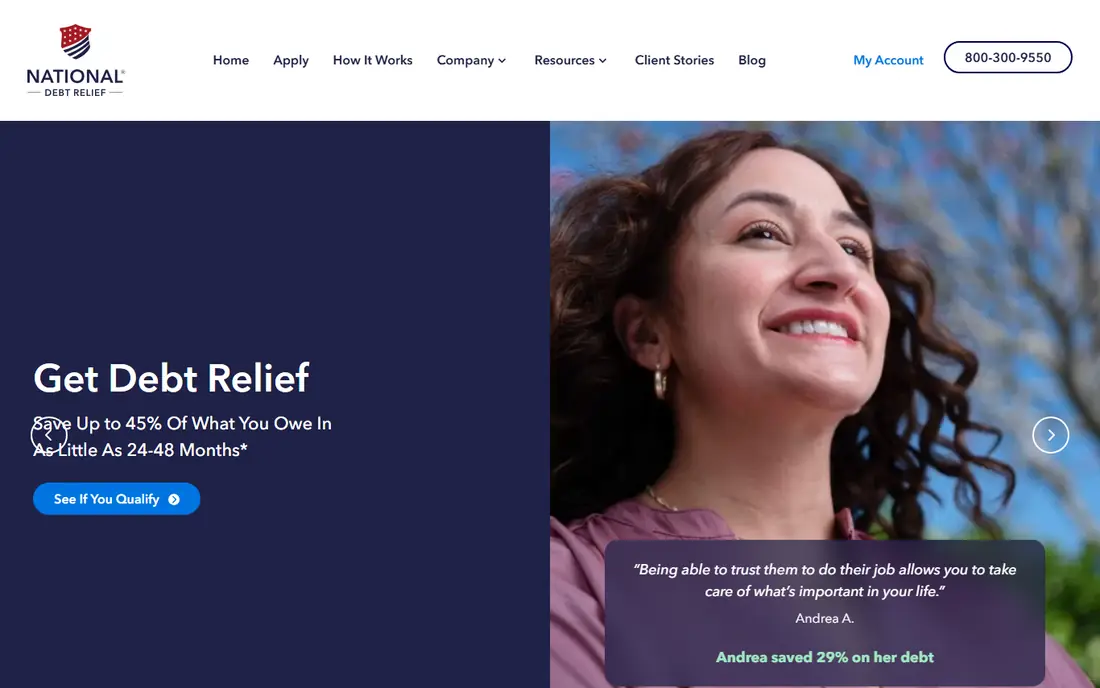
National Debt Relief is one of the largest settlement providers in the United States, and its scale helps when negotiating with major card issuers. Clients deposit a monthly amount into a dedicated account, and the company negotiates settlements as funds build up, with fees charged only as settlements are reached in line with federal rules. Programs typically run 24 to 48 months in recent comparisons. The risks are the same as for any settlement program. Missing payments during the program can hurt credit, lead to collection calls, and in some cases lead to legal action from a creditor. National Debt Relief is also not available in every state, with Connecticut, Oregon, Vermont, West Virginia, and Wisconsin listed as excluded in some reports. A free consultation should cover those risks in plain terms before enrollment.
- Large negotiating team, no upfront fees in line with federal rules, free initial consultation, wide creditor coverage
- Minimum debt of 7,500 dollars, settlement can hurt credit, not available in every state
Freedom Debt Relief
Great for: Large debts and users who want a long operating history
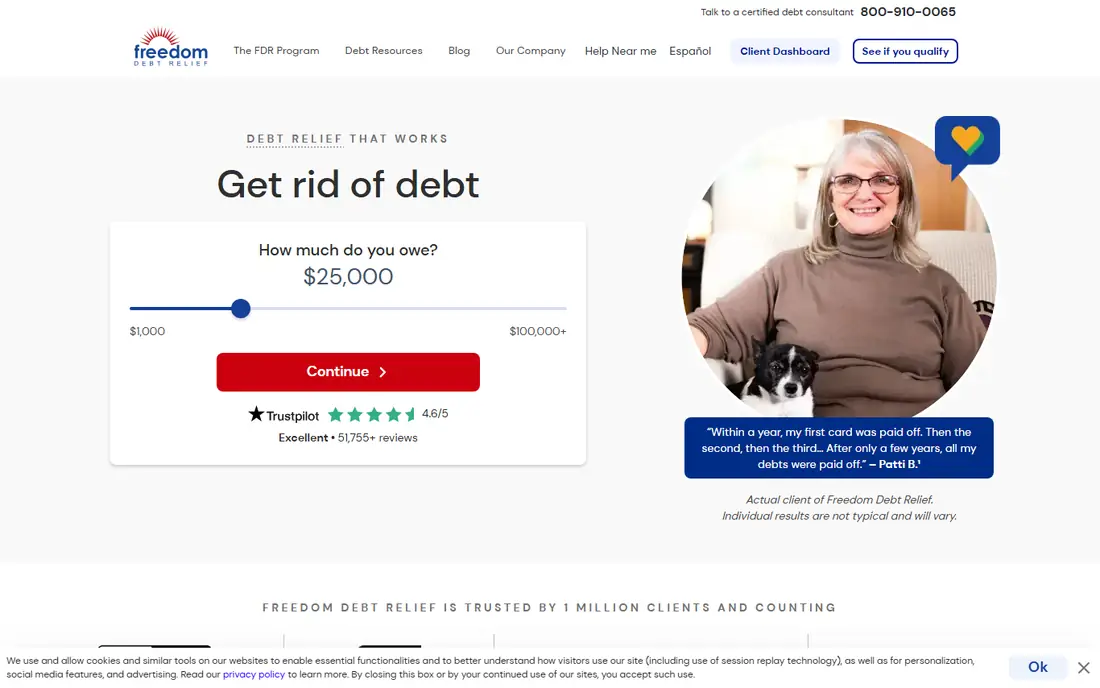
Freedom Debt Relief, now part of Achieve, has run settlement programs since 2002, which gives it a long record with creditors. Its program structure is similar to National Debt Relief: a monthly deposit, negotiations as funds build, and fees of 15 to 25 percent of enrolled debt. A program cost guarantee, noted in some comparisons, can help a client understand total cost, though terms should be read carefully. State availability is narrower than some rivals, with more than ten states listed as excluded in some reports, including Colorado, Hawaii, Oregon, Vermont, and Washington. Credit impact is also significant during settlement, because accounts go past due while funds build. For a user with a large, unsecured debt load who has already explored nonprofit options, Freedom is a credible settlement choice.
- Operating since 2002, deep creditor coverage, program cost guarantee in some reports, client dashboard
- Minimum debt of 7,500 dollars, limited state availability, settlement credit impact
Accredited Debt Relief
Great for: Larger debts with a lower minimum than some rivals
Accredited Debt Relief suits users with larger debts who still want a lower entry point than the 7,500 or 10,000 dollar minimums used by some rivals. It accepts most unsecured debts, including credit cards, medical bills, personal loans, and some collection accounts, and its fees are listed at 15 to 25 percent of enrolled debt. Availability in all 50 states in some reports is a plus for users in states where other settlement firms do not operate. One point needs care. Some of its marketing has used the word consolidation for a settlement product, which can confuse buyers, because consolidation usually means paying off debt in full with a new loan. Read the program terms to confirm whether the plan settles for less than the full balance or pays it in full, and check the fee and timeline in writing.
- Minimum debt of 5,000 dollars in recent reports, available in all 50 states in some reports, wide unsecured debt coverage
- Settlement credit impact, marketing sometimes calls settlement consolidation, fees vary by case
CuraDebt is useful for two groups that larger settlement firms serve less well: users with smaller debts around 5,000 dollars, and users with IRS or state tax debt alongside card debt. Its fees are listed at about 20 percent of enrolled debt in recent comparisons, with a range of 15 to 23 percent in other reports, and programs typically run 24 to 48 months. Tax debt work is complex, and outcomes depend on the type of tax debt, the amount owed, and the tax authority involved. A user with tax debt should ask specifically what CuraDebt can and cannot do for that debt, and should also check nonprofit and tax professional options before signing. For card and personal loan debt alone, larger firms may offer wider creditor coverage.
- Minimum debt of 5,000 dollars, tax debt experience, free consultation, 24 to 48 month programs
- Smaller scale than the largest firms, fees vary, settlement credit impact still applies
Pacific Debt Relief
Great for: Personalised settlement support for larger debts
Pacific Debt Relief focuses on personalised support for users with larger unsecured debts, with a minimum of 10,000 dollars in recent comparisons. Its fee range of 15 to 25 percent of enrolled debt matches the industry standard, and programs typically run 24 to 48 months. A dedicated support model can help users who want a single contact and clear updates during a long program. The higher minimum means it is not a fit for smaller debts, and settlement risks still apply, including credit damage and possible collection activity while funds build. A user with 10,000 dollars or more who values personal support should compare Pacific with National Debt Relief and Freedom on fee, timeline, and state availability before choosing.
- Personalised support, free consultation, unsecured debt focus, 24 to 48 month programs
- Minimum debt of 10,000 dollars, settlement credit impact, fees vary by case
ClearOne Advantage
Great for: Users focused on overall savings after fees
ClearOne Advantage is often noted for overall savings reporting, with possible savings of 25 to 30 percent after fees in some comparisons, though actual savings depend on creditors, debt type, and how much is settled. Its fees are listed at 18 to 25 percent of enrolled debt, which is a higher floor than the 15 percent floor used by some rivals, and its minimum is 10,000 dollars. Savings claims should be read with care. A saving after fees still means accounts went past due, credit was hurt, and forgiven debt may have tax effects. A user should ask for a written estimate that shows total fees, total deposits, and the timeline, and should compare that estimate with a nonprofit debt management plan before signing.
- Savings focused reporting, free consultation, unsecured debt coverage, 24 to 48 month programs in some reports
- Minimum debt of 10,000 dollars, higher fee floor than some rivals, settlement credit impact
Money Management International
Great for: Nonprofit counseling and debt management plans
Money Management International, known as MMI, is the largest nonprofit credit counseling agency in many comparisons, and it offers a different path from settlement. A free counseling session, often about 45 minutes, produces a budget and a debt management plan quote. Under a plan, MMI negotiates lower interest rates and a single monthly payment, and the user pays debts in full over time, usually with fees of 0 to 50 dollars per month capped by state rules. The credit impact is usually smaller than settlement, because accounts stay current under a plan, though enrolled cards must usually close. A debt management plan does not settle for less than the full balance, so it suits users who can afford a full repayment with lower interest, rather than users who need a large balance reduction. For most users, a free MMI session is the best first step before any settlement decision.
- Nonprofit, free first counseling session, low state capped fees, HUD approved housing counseling, pre bankruptcy counseling
- Debt management plans only cover unsecured debt, enrolled cards must usually close, no settlement for less than full balance
GreenPath Financial Wellness
Great for: Nonprofit counseling, financial wellness, and management plans
GreenPath Financial Wellness is another nonprofit counseling agency with a strong reputation for education and support. Its first counseling session is free, and its debt management plan fees are listed at 25 to 50 dollars per month in recent comparisons, with hardship waivers in some cases. GreenPath also offers housing, student loan, and general financial wellness counseling, which helps users whose debt is linked to housing or student loans. Like MMI, GreenPath does not offer settlement for less than the full balance, so a user who cannot afford full repayment even with lower interest may still need to consider settlement or bankruptcy advice from a qualified professional. For a user who wants a low cost, low risk first step, GreenPath is a strong nonprofit choice alongside MMI.
- Nonprofit, free counseling, debt management plans, financial education, housing and student loan counseling in some programs
- Monthly fees apply on a plan, enrolled cards may close, no settlement option
How we picked these
We compared official company pages, fee disclosures, minimum debt rules, state availability, and public reviews for debt relief companies that are live in October 2026. We kept only companies with a published fee model or a clear nonprofit fee structure, a free consultation or counseling session, and a program that covers unsecured debt. We checked fees as a percentage of enrolled debt, because that is how settlement fees are usually charged, and we noted where a fee is a monthly plan fee instead. We also mixed settlement firms with nonprofit agencies on purpose. A list of only settlement firms would hide the lower cost, lower risk option that many users should try first. This article is not financial advice, and any user in hardship should get independent advice before signing a program that affects credit, taxes, or legal rights.
Settlement versus a debt management plan
How settlement works
A user stops paying creditors directly, deposits a monthly amount into a dedicated account, and the company negotiates lump sum settlements as funds build. Fees are charged as settlements are reached, and the program can take 24 to 48 months.
How a debt management plan works
A nonprofit agency negotiates lower interest rates, and the user makes one monthly payment to the agency, which pays creditors. Debts are paid in full, usually over three to five years, with a low monthly fee.
Credit and tax effects to check
Settlement can hurt credit for years, because accounts go past due, and forgiven debt over 600 dollars may be reported as income for tax purposes in some cases. A debt management plan usually has a smaller credit effect, but closing cards can still affect credit utilisation.
What to ask before signing
Ask for total fees, total deposits, timeline, state availability, and what happens if a creditor refuses to settle or sues. Get the answer in writing, and compare it with a nonprofit plan quote before signing.
Red flags to avoid
Avoid any company that asks for fees before settling a debt, promises a specific credit score result, or tells a user to stop paying without explaining the risks. Federal rules limit upfront settlement fees, and a reputable firm should explain risks clearly.
Frequently asked questions
What is the best debt relief company overall?
National Debt Relief is a strong overall settlement pick for large debts, while Money Management International is a strong first step for most users because its counseling is free and its plan fees are low. The best choice depends on whether settlement or a management plan fits the situation.
What is the best company for debt relief with a smaller debt?
Accredited Debt Relief and CuraDebt list minimums of 5,000 dollars, which is lower than the 7,500 or 10,000 dollar minimums used by some rivals. A nonprofit agency may still be a better first step, because it has no minimum debt in many cases.
What is the best debt settlement company for large debts?
Freedom Debt Relief and National Debt Relief are both strong for large debts, with deep creditor coverage and long histories. Compare fees, timelines, and state availability, and get a written estimate from both before choosing.
What is the best debt relief service for credit card debt?
For credit card debt, a nonprofit debt management plan often works well, because it lowers interest and keeps accounts current. Settlement may suit card debt when hardship is severe and full repayment is not possible, but it carries a larger credit cost.
How much do debt relief companies charge?
Settlement firms in this list charge 15 to 25 percent of enrolled debt in most cases, with some firms listing 18 to 25 percent or 14 to 29 percent. Nonprofit plans charge 0 to 50 dollars per month, capped by state rules, which is far lower over a full program.
Is debt relief worth it?
It can be worth it when debt is unmanageable, hardship is real, and other options have been checked, including budgeting, nonprofit counseling, and direct creditor hardship programs. It is not worth it as a first step for a manageable debt, because fees and credit damage can outweigh the saving.
Sources
- https://www.nationaldebtrelief.com
- https://www.freedomdebtrelief.com
- https://www.accrediteddebtrelief.com
- https://www.curadebt.com
- https://www.pacificdebtrelief.com
- https://www.clearoneadvantage.com
- https://www.moneymanagement.org
- https://www.greenpath.com
- https://www.nerdwallet.com/personal-loans/learn/best-debt-settlement-companies
- https://www.financialist.com/guides/best-debt-relief-companies
See where you really rank - block by block
ProMapRanker scans Google Maps across a grid of your service area. Simple monthly plans from $19, white-label on every plan.
Start freeKeep reading
 youtube alternatives
Best YouTube Alternatives in 2026
Looking for youtube alternatives in 2026? We compare Vimeo, Dailymotion, Twitch, Rumble, and more on price, audience, monetization, control and privacy.
Read → what's the best ai tool for photo editing
What Is the Best AI Tool for Photo Editing in 2026
What is the best AI tool for photo editing? We compare ten tools for 2026, from Photoshop and Lightroom to Luminar, Topaz, Canva and mobile editors today.
Read → twitter alternatives
Best Twitter Alternatives in 2026
Compare the best twitter alternatives for 2026, from Bluesky, Threads, and Mastodon to Reddit, Tumblr, and Micro.blog, with free plans and audience notes.
Read →