 ProMapRanker
Best Day Trading Platforms in 2026


Professional multi-asset trading · Pricing starts at: $0 stock trades
Key takeaways
- Most major US brokers now offer $0 stock and ETF trades, so tools, speed, data, and options costs matter more than headline commissions.
- Interactive Brokers suits serious multi-asset traders, while Schwab and Fidelity suit traders who also want investing, research, and banking in one place.
- Webull and Robinhood suit mobile-first traders, while TradeStation, tastytrade, and NinjaTrader suit traders with a clear specialty in automation, options, or futures.
- Day trading carries high risk and most retail day traders lose money, so use paper trading first and never trade with money you cannot afford to lose.
Quick comparison
| Pick | Great for | Pricing starts at | Free tier | |
|---|---|---|---|---|
| Interactive Brokers | Professional multi-asset trading | $0 stock trades | Free trial | Visit |
 Charles Schwab | thinkorswim and full service | $0 stock trades | No | Visit |
 Fidelity | Active Trader Pro and research | $0 stock trades | No | Visit |
 Webull | Mobile-first active trading | $0 stock trades | Free trial | Visit |
 E*TRADE | Power E*TRADE tools | $0 stock trades | No | Visit |
 TradeStation | Automation and charting | $0 stock trades | Free trial | Visit |
 tastytrade | Options traders | $0 stock trades | Free trial | Visit |
 Robinhood | Simple mobile trading | $0 stock trades | No | Visit |
 NinjaTrader | Futures trading | Free | Yes | Visit |
The best day trading platforms
We compared official feature pages, pricing, app store listings, privacy policies, and public reviews. The platforms below cover stocks, options, and futures, with different strengths in speed, charting, automation, and mobile use. This guide is general information, not financial advice, and trading carries risk.
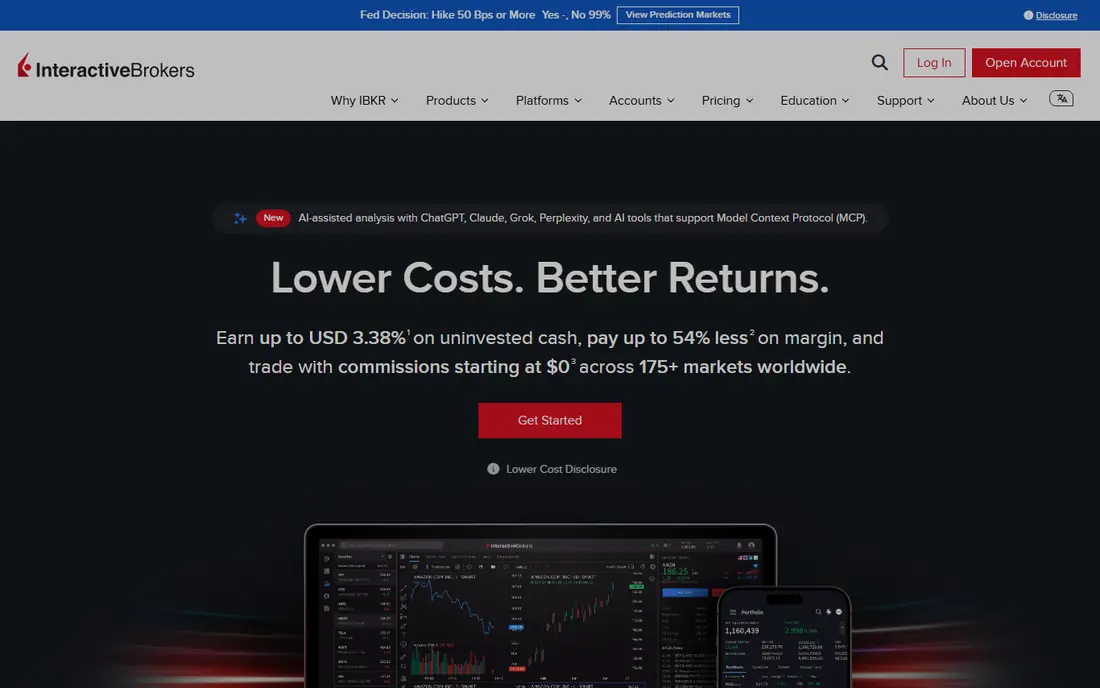
Interactive Brokers, often called IBKR, is the default choice for traders who need more than US stocks. It covers stocks, options, futures, forex, and many global markets, with Trader Workstation as its advanced desktop platform. Tiered commissions can suit high-volume traders, and smart routing aims to improve execution quality. Margin rates are also often lower than at full-service brokers, which matters for traders who use margin.
The complexity is real. Trader Workstation has many menus, settings, and order types, and new traders may need time to set up layouts, data, and risk controls. IBKR Lite offers commission-free US stock and ETF trading for simpler use, while IBKR Pro suits active traders who want tiered pricing and advanced tools. If you trade across markets and want depth, IBKR is hard to beat. If you trade a few US stocks on a phone, a simpler broker may suit you better.
- Very wide market and asset coverage
- Tiered pricing for high-volume traders
- Advanced desktop platform and API access
- Steep learning curve
- Platform can feel complex for new traders
Charles Schwab combines a full-service broker with thinkorswim, one of the best-known active trading platforms in the US. Thinkorswim offers advanced charts, studies, scanners, paper trading, and strategy tools, which suit day traders who rely on technical analysis. Schwab also offers research, retirement accounts, banking, and human support, so traders who also invest long term can keep accounts in one place.
The breadth can be a drawback for pure day traders who want a lean, fast platform and nothing else. Thinkorswim has a learning curve, and options still cost $0.65 per contract on top of $0 stock trades. For traders who want strong tools plus a full-service broker behind them, Schwab is a balanced pick. For traders who only need speed and low options costs, compare tastytrade and Webull as well.
- Thinkorswim offers deep charting and analysis
- $0 stock and ETF trades
- Branches and phone support
- Platform depth can overwhelm beginners
- Options cost $0.65 per contract
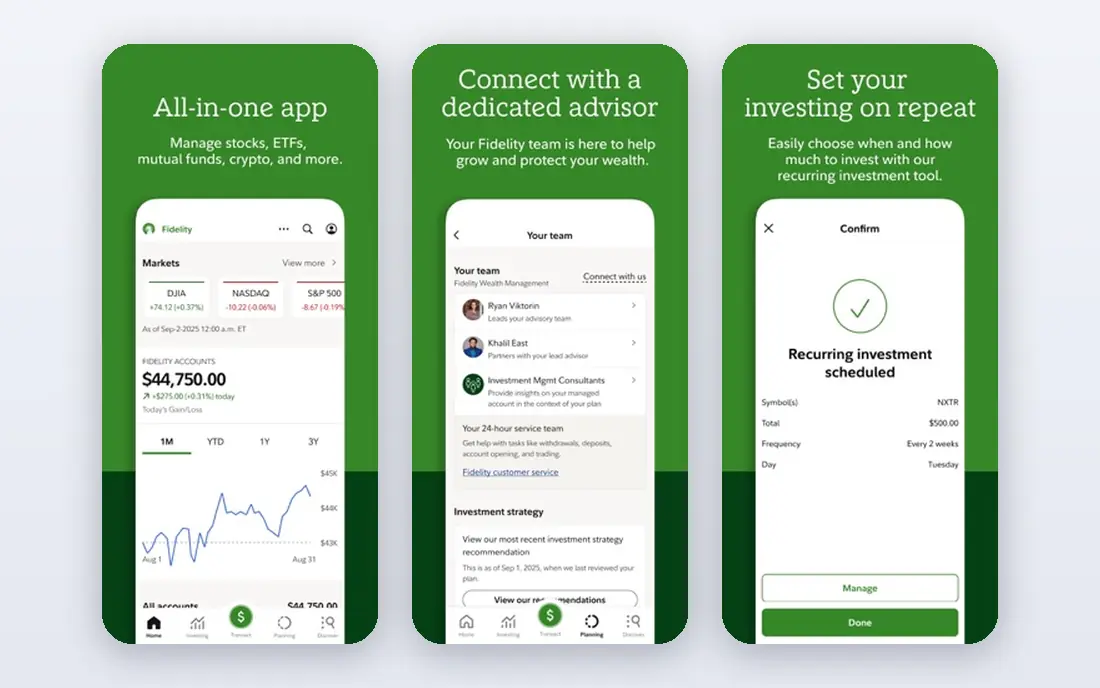
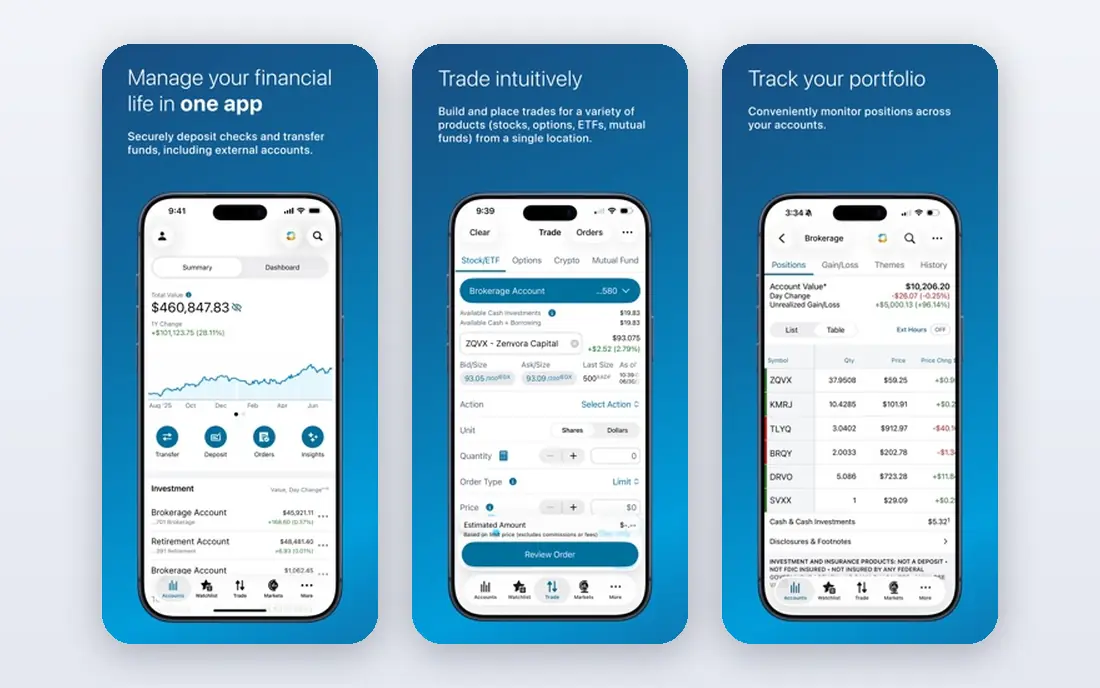
Fidelity suits traders who want low costs, strong research, and a broker that also handles long-term investing well. Active Trader Pro offers real-time data, advanced charts, multi-trade tickets, and watchlists for desktop traders. Fidelity research, screeners, and educational material help traders who want to check fundamentals and news alongside technical signals. Customer support and a wide account range add to the case for keeping trading and investing together.
Active Trader Pro is less polished for some Mac users than for Windows users, and options pricing matches Schwab and E*TRADE at $0.65 per contract. Fidelity also lacks the futures specialization of NinjaTrader or the options pricing cap of tastytrade. For cost-conscious traders who want a solid all-round broker with good tools, Fidelity is a strong, low-drama choice.
- $0 stock and ETF trades
- Active Trader Pro for desktop trading
- Deep research and retirement tools
- Active Trader Pro is Windows-focused in its full form
- Options cost $0.65 per contract
Webull is built for active traders who trade mainly on a phone or tablet. The mobile app offers advanced charts, technical indicators, Level 2 data options, screeners, and paper trading, which is more than many simple mobile brokers provide. Stock, ETF, and options trades are commission-free, and extended-hours trading lets day traders react to news outside regular hours. A desktop app is also available for traders who want a larger screen.
Webull does not offer the same branch network, banking depth, or retirement guidance as Schwab or Fidelity. That matters less for pure day traders, but it matters for traders who want one broker for all money needs. Webull also offers a paid Premium tier for extra features, so check what is included free before paying. For mobile-first active trading at low cost, Webull is a leading pick.
- $0 stock, ETF, and options trades
- Advanced mobile charts and paper trading
- Extended-hours trading
- Fewer full-service features than Schwab or Fidelity
- Customer support can feel thinner than at large brokers
ETRADE, part of Morgan Stanley, offers two main routes: a standard web and mobile experience, and Power ETRADE for active traders. Power E*TRADE gives advanced charting, technical studies, options chains, and risk tools in a layout that suits frequent traders. Stock and ETF trades are commission-free, and the broker also supports retirement, banking, and research for users who want more than trading alone.
New users may be unsure which platform to use, because the standard and Power versions overlap. Options pricing also matches the $0.65 per contract standard at large brokers, rather than the capped model at tastytrade. For traders who want a clean active platform with a large firm behind it, E*TRADE is a solid middle ground between simple mobile apps and professional platforms.
- Power E*TRADE offers strong charts and options tools
- $0 stock and ETF trades
- Linked banking through Morgan Stanley
- Options cost $0.65 per contract
- Platform choice can confuse new users
TradeStation suits traders who want to test ideas, not just place trades. Its charting, backtesting, and strategy tools let traders build, test, and automate rules using EasyLanguage, its scripting language. That appeals to systematic traders who want to check a strategy on past data before risking capital. Stock and ETF trades are commission-free on its standard plans, with options at $0.60 per contract.
The learning curve is the main cost. Building and testing strategies takes time, and the platform can feel heavy for traders who only need fast manual orders. Data fees and plan details can also vary, so check the current pricing page before opening an account. If automation and charting are central to your trading, TradeStation is a specialist worth serious consideration.
- Strong charting and strategy testing
- EasyLanguage for custom indicators and automation
- $0 stock and ETF trades on some plans
- Options cost $0.60 per contract
- Platform depth needs time to learn
tastytrade is built around options traders. Its pricing model charges $1 per contract to open, capped at $10 per leg, and $0 to close, which helps traders who trade many contracts at once. The platform shows probability, risk, and strategy visuals clearly, and its education content explains options mechanics in plain terms. Stock and ETF trades are commission-free, so options traders can also handle share positions without a second broker.
Traders who mainly trade stocks, or who want banking, branches, and retirement advice, will find Schwab or Fidelity broader. Tastytrade also focuses on active trading, so long-term investors may prefer a different home for retirement accounts. For options day traders who care about per-leg costs and clear risk tools, tastytrade is one of the best specialist platforms available.
- Options pricing capped at $10 per leg to open, $0 to close
- Strong options analytics and education
- Fast options-focused platform
- Less full-service depth than Schwab or Fidelity
- Stock traders may prefer a broader broker
Robinhood is the simplest platform on this list, and that simplicity is both its strength and its limit. The app makes it easy to place stock, ETF, options, and crypto trades, check a basic chart, and follow a watchlist. Commission-free trading keeps costs low for small, frequent trades, and the clean design suits new traders who feel overwhelmed by professional platforms. Robinhood Gold, at $5 per month, adds margin, larger instant deposits, and extra research for users who want more.
Advanced day traders will miss the depth of thinkorswim, Active Trader Pro, or TradeStation. Charting, scanners, and strategy tools are thinner, and support options are more limited than at full-service brokers. Robinhood fits traders who want fast, simple mobile trading and are willing to accept fewer tools. Traders who need depth should pair it with a research source or choose a more advanced broker.
- Very simple mobile app
- $0 stock, ETF, and options trades
- Low barrier for new traders
- Fewer advanced charting and research tools than rivals
- Gold subscription needed for some extra features
NinjaTrader is the futures specialist on this list. Its platform is free to use for advanced charting, strategy backtesting, and simulated trading, with no time limit and no funding required for those features. Live futures trading uses a Free plan with higher per-side commissions, or Monthly and Lifetime plans with lower rates. That structure lets new futures traders learn the platform before paying for lower commissions.
Futures trading is not for everyone. Contracts use margin, prices move fast, and losses can exceed the initial deposit in some cases, so risk controls matter more than platform choice. NinjaTrader does not offer live stock trading in the same way as the other brokers here, so stock day traders should look elsewhere. For futures day traders who want strong charting and a free way to practice, NinjaTrader is a clear specialist pick.
- Free charting, backtesting, and paper trading
- Low futures commissions on paid plans
- Strong futures-focused tools
- Futures only for live trading through this platform
- Exchange and clearing fees apply on top of commissions
How we picked these
We compared official feature pages, pricing, app store listings, privacy policies, and public reviews. We favored platforms with current US availability, clear commission pages, paper trading or strong charting, and a track record with active traders. We did not claim hands-on testing. Commissions, data fees, and margin rates can change, so check the broker fee schedule before opening an account. Day trading carries risk, and this guide is not financial advice.
How to choose the right day trading platform
Start with what you trade, not with the broker that advertises the lowest headline price. Stocks, options, and futures need different tools, and a platform that excels at one may be weak at another. Also consider how you trade: on a phone, on a desktop, manually, or with automated rules.
Match the platform to your market
Stock traders can choose from almost any broker here, with Schwab, Fidelity, and Webull as strong starting points. Options traders should compare tastytrade, Schwab, and E*TRADE on per-contract costs and risk tools. Futures traders should start with NinjaTrader, and automation-focused traders should test TradeStation. Multi-asset traders should compare Interactive Brokers first.
Test with paper trading
Use paper trading to learn order types, test a strategy, and check platform speed before risking real money. Paper results do not guarantee real results, because fills, fees, and emotions differ in live trading, but paper trading still reveals whether a platform suits your workflow. Set a clear risk rule before live trading, such as a maximum loss per day, and stick to it.
Count the full cost
Look beyond $0 stock trades to options fees, data fees, margin rates, and platform fees. A $0.65 options contract fee adds up fast for frequent traders, which is why tastytrade caps costs per leg. Futures traders should add exchange, clearing, and NFA fees to NinjaTrader commissions. Also check account minimums, pattern day trading rules where they apply, and whether market data is free or paid.
Frequently asked questions
What is the best day trading platform for beginners?
Webull and Robinhood are easier starting points for beginners because their apps are simpler and stock trades are commission-free. The best platform for day trading for a beginner still depends on paper trading first, because a simple app does not reduce trading risk. Schwab is a good next step once you want deeper charting through thinkorswim.
What is the best day trading app for options?
tastytrade is a strong pick for options day traders because it charges $1 per contract to open, capped at $10 per leg, and $0 to close. Webull and Robinhood offer $0 options trades, which can suit smaller traders, while Schwab and E*TRADE offer $0.65 per contract with deeper research. The best app for day trading options depends on your contract volume and need for risk tools.
Is day trading profitable?
Day trading is high risk, and most retail day traders lose money over time. Profits depend on strategy, risk control, costs, and discipline, not just platform choice. Treat any claim of easy profits with caution, use paper trading first, and never trade with money needed for bills, rent, or debt payments.
What is the best trading platform for day traders who trade futures?
NinjaTrader is the strongest futures-focused choice on this list, with free charting and paper trading plus paid plans for lower commissions. Interactive Brokers also offers futures alongside stocks and options for multi-asset traders. Futures use margin and can move quickly, so risk controls and position sizing matter more than the platform alone.
Do I need $25,000 to day trade?
US pattern day trading rules have changed over time, and requirements can vary by broker, account type, and asset class, so check the current rule with your broker before trading. Some brokers and futures accounts have different minimums, and cash accounts have different settlement rules. Do not assume an old minimum still applies, and confirm the rule in writing from the broker.
What is the best platform for day trading on a phone?
Webull is the strongest mobile-first pick for active traders because it combines $0 trades with advanced mobile charts and paper trading. Robinhood is simpler and easier for new traders, while Schwab, Fidelity, and E*TRADE offer mobile apps with more research behind them. The best day trading app for you depends on whether you value simplicity or charting depth on a small screen.
Sources
See where you really rank - block by block
ProMapRanker scans Google Maps across a grid of your service area. Simple monthly plans from $19, white-label on every plan.
Start freeKeep reading
 youtube alternatives
Best YouTube Alternatives in 2026
Looking for youtube alternatives in 2026? We compare Vimeo, Dailymotion, Twitch, Rumble, and more on price, audience, monetization, control and privacy.
Read → what's the best ai tool for photo editing
What Is the Best AI Tool for Photo Editing in 2026
What is the best AI tool for photo editing? We compare ten tools for 2026, from Photoshop and Lightroom to Luminar, Topaz, Canva and mobile editors today.
Read → twitter alternatives
Best Twitter Alternatives in 2026
Compare the best twitter alternatives for 2026, from Bluesky, Threads, and Mastodon to Reddit, Tumblr, and Micro.blog, with free plans and audience notes.
Read →