 ProMapRanker
Best Day Trading Platform No Minimum in 2026

Key takeaways
- All eight platforms here can be opened with no minimum deposit for a standard brokerage account, based on published account terms.
- No minimum to open an account does not mean no risk, and it does not remove US pattern day trading rules for frequent margin day trades.
- Webull, moomoo, and Interactive Brokers offer deeper trading tools, while Robinhood, Fidelity, and Schwab offer simpler starts.
- This article is general information only, not financial advice, and day trading can lead to losses, including losses larger than a small starting balance if margin is used.
Quick comparison
| Pick | Great for | Pricing starts at | Free tier | |
|---|---|---|---|---|
 Robinhood | Simple mobile trading | Free | Yes | Visit |
 Webull | Active mobile charting | Free | Yes | Visit |
 Fidelity | Research and all-round investing | Free | Yes | Visit |
 Charles Schwab | All-round trading with thinkorswim | Free | Yes | Visit |
 E*TRADE | Two platforms for different skill levels | Free | Yes | Visit |
 Interactive Brokers | Advanced and global traders | Free | Yes | Visit |
 moomoo | Data-rich active trading | Free | Yes | Visit |
 Public | Simple trading with bonds and stocks | Free | Yes | Visit |
The best day trading platforms with no minimum
This is general information only, not financial advice. Trading carries risk, and day trading in particular can lead to rapid losses. The platforms below are brokers and trading platforms, not systems that guarantee returns, and no minimum deposit means you can open a standard account without a set starting amount, not that trading is free of all fees or risk. US availability is plain here: these are US brokers and platforms, and account eligibility, margin rules, and tax treatment depend on your situation.

Robinhood is the simplest start in this list. The app is clean, opening a standard brokerage account requires no minimum deposit, and fractional shares let you buy part of a share with a small amount. For a new trader who wants to learn order types and market basics without a complex desktop platform, that simplicity is a real advantage.
The catch is depth and exit cost. Robinhood offers fewer advanced charting and screening tools than Webull or thinkorswim, and its transfer-out fee is higher than some rivals, so check that fee before you build a large position there. Robinhood also offers margin and options, which carry extra risk, so learn those products separately before you use them. For simple stock and ETF day trades with a small account, Robinhood is a clear, low-friction choice.
- No minimum to open a brokerage account
- Simple mobile app
- Fractional shares from small amounts
- Fewer advanced desktop tools than specialist platforms
- Transfer-out fees can be high if you leave later
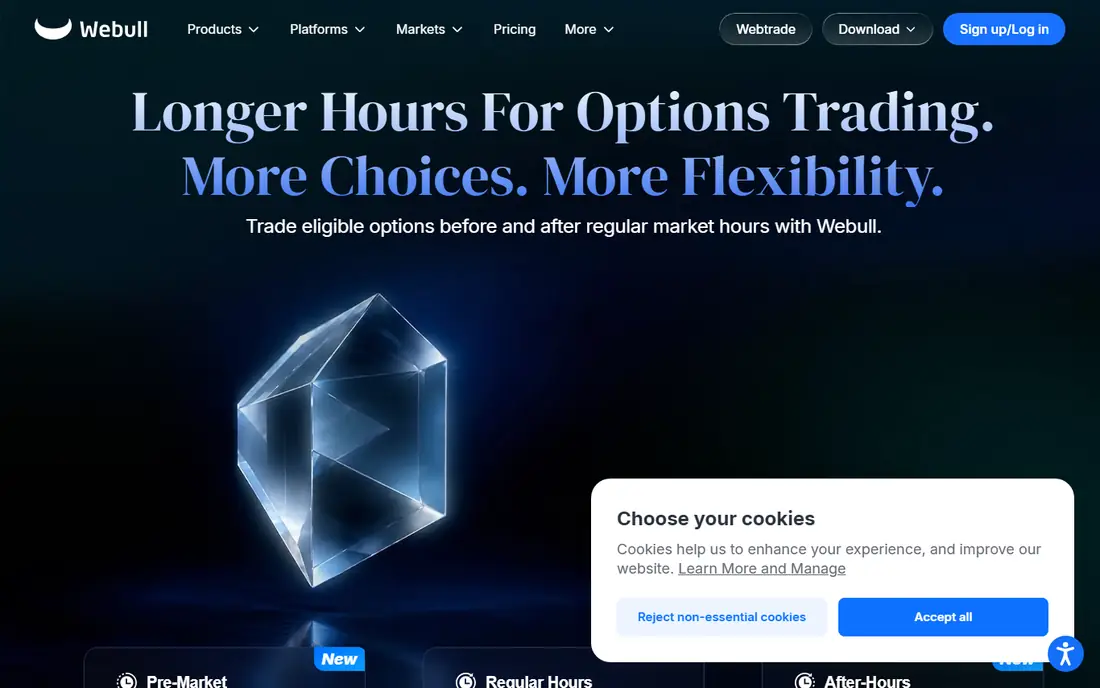
Webull is our pick for active traders who want more tools without a minimum deposit. The mobile and desktop apps offer detailed charts, technical indicators, screeners, and paper trading, which lets you practise order placement and strategy without risking real money first. Fractional shares and extended-hours sessions also give a small-account trader more flexibility than a basic app.
Webull charges no commission for stock and ETF trades in its standard offering, and options trades carry no per-contract commission in its published terms, though other fees can still apply. The main cautions are margin and transfer costs. A margin account has separate requirements from a cash account, and moving assets out later carries a fee. For a trader who wants to study charts and practise first, Webull offers more room to grow than a simple app.
- No minimum for a brokerage account
- Advanced mobile charts and paper trading
- Extended-hours trading windows
- Margin accounts have separate requirements
- Transfer-out fees apply if you move assets elsewhere
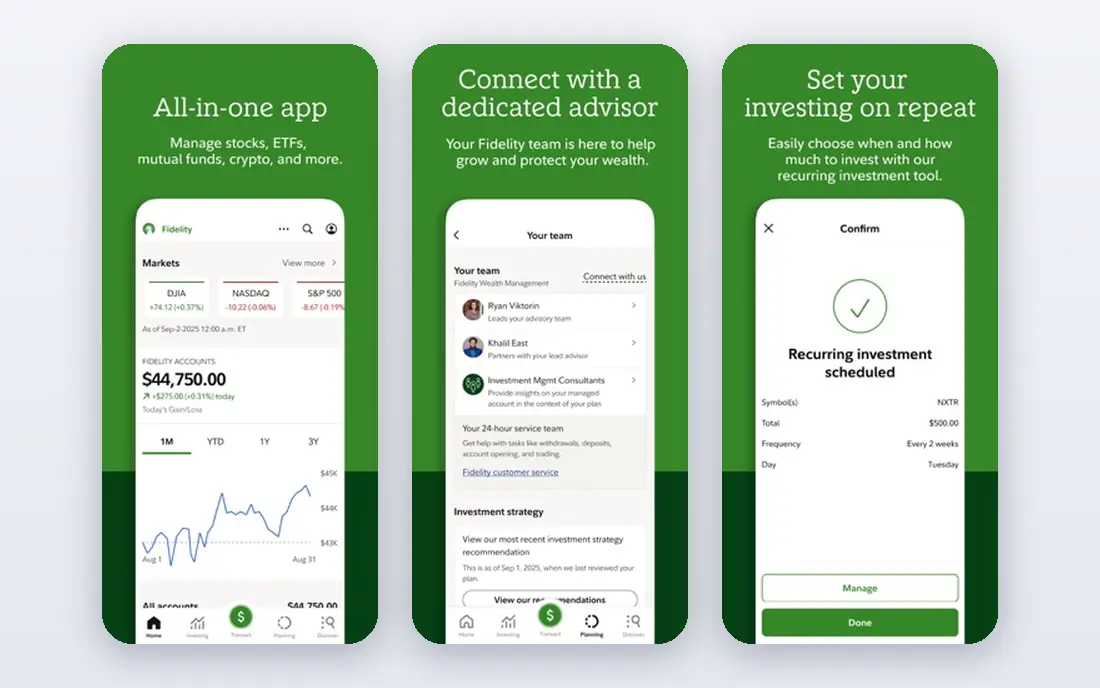
Fidelity is the all-round pick. A standard brokerage account has no minimum to open, stock and ETF trades online carry no commission in its published terms, and fractional shares let you start with a small amount. Research, screeners, and education are strong, which helps a new day trader learn risk controls, order types, and position sizing before risking larger amounts.
Active Trader Pro adds a desktop trading platform with charts and order tools, though it is not as mobile-first as Webull or moomoo. Fidelity also stands out on exit cost, with no transfer-out fee in its published terms, which makes it easier to move if your needs change. For a trader who wants a solid broker that also works well for longer-term investing, Fidelity is a safe, well-rounded choice.
- No minimum to open a brokerage account
- Strong research and education
- No fee to transfer assets out in published terms
- Active Trader Pro is less mobile-first than Webull
- Day trading tools feel more suited to investors than pure scalpers
Charles Schwab combines a large, established broker with thinkorswim, a platform built for active traders. A standard brokerage account has no minimum to open, stock and ETF trades online carry no commission in its published terms, and thinkorswim offers advanced charts, studies, and order tools that suit day traders who want depth. Research and customer support are also strong, which helps when a trade or account question needs a fast answer.
The main costs to note are options and transfers. Options trades carry a per-contract fee in published terms, and a full account transfer out carries a fee, so factor those into your total cost if you trade options often or may move later. For a trader who wants an established broker plus a serious trading platform, Schwab is a strong combination.
- No minimum to open a brokerage account
- Thinkorswim platform for active traders
- Strong research and support
- Options trades carry a per-contract fee in published terms
- Transfer-out fee applies for a full transfer
ETRADE gives you two paths in one broker. The standard web and mobile platforms suit casual traders, while Power ETRADE offers charts, screeners, and order tools for active traders who need more control. A standard brokerage account has no minimum to open, and stock and ETF trades online carry no commission in its published terms, which keeps the barrier low for a small account.
Options traders should check the per-contract fee, which is lower for active traders in published terms, and note the transfer-out fee if you later move assets. The learning curve for Power ETRADE is also steeper than a simple app, so start with the standard platform if you are new. For a trader who wants to grow from casual to active without changing brokers, ETRADE is a practical middle path.
- No minimum to open a brokerage account
- Power E*TRADE for active traders
- Strong research and mobile app
- Options trades carry a per-contract fee, with a lower rate for active traders in published terms
- Transfer-out fee applies
Interactive Brokers, often called IBKR, is the advanced pick. IBKR Lite offers no-commission stock and ETF trades for US clients in its published terms, with no account minimum, while IBKR Pro offers a different fee structure for traders who need direct market access and advanced routing. The platform covers a wide range of markets and order types, which suits traders who move beyond US stocks and ETFs.
Complexity is the catch. Trader Workstation and the wider IBKR toolset offer a lot of control, but a beginner can feel lost in settings, order types, and market data options. Fees also vary by plan, market, and data subscriptions, so read the current fee schedule for the exact products you plan to trade. For an experienced day trader who wants breadth and control, IBKR is hard to match.
- No minimum for IBKR Lite accounts in published terms
- Broad market access
- Advanced order types and tools
- Platform complexity can overwhelm beginners
- Fee structure varies by plan and market, so read it carefully
moomoo is a data-rich alternative to Webull for active traders. It offers detailed charts, screeners, market data views, and paper trading, with a standard brokerage account that has no minimum to open in published terms. Stock and ETF trades online carry no commission in its published terms, which keeps costs low for a small account that trades often.
The interface packs in a lot of information, which is a strength for a trader who likes data, and a drawback for someone who wants a minimal app. Check transfer fees, margin terms, and any market data fees before you build a large position, since those costs vary. For a trader who wants a busy, information-dense workspace without a minimum deposit, moomoo is a strong option.
- No minimum to open a brokerage account in published terms
- Data-rich charts and screeners
- Paper trading available
- Platform depth can feel busy for beginners
- Transfer and other fees need checking before you commit
Public suits a trader who wants a simple app that also covers bonds and other assets alongside stocks and ETFs. A standard account has no minimum to open in published terms, and the interface explains companies and assets in plain language, which helps a new trader understand what they are buying. That breadth is useful if you plan to hold some assets longer term while also trading others.
Public is not the deepest day trading platform here. Charting and order tools are simpler than Webull, moomoo, or thinkorswim, and fractional share minimums can be higher than some rivals, so check the current minimum for the exact asset you want. For a simple start with no minimum deposit, and for a trader who values a clean app over a dense trading desk, Public is a fair choice.
- No minimum to open a brokerage account in published terms
- Stocks, ETFs, bonds, and other assets in one app
- Simple interface
- Fewer advanced day trading tools than Webull or thinkorswim
- Fractional share minimums can be higher than some rivals
How we picked these
We compared official broker pages, fee schedules, and public account terms, and we kept only US brokers and platforms that offer a standard brokerage account with no minimum deposit. We excluded brokers with a published minimum for a standard account, and we noted where margin, options, or transfer fees still apply. We weighed trading tools, research, mobile and desktop quality, and total cost, not just the headline commission.
What to check before your first day trade
Start with account type, since cash and margin accounts behave differently. In a cash account, you trade with settled funds, while in a margin account, you borrow from the broker, which can increase both gains and losses. US pattern day trading rules also limit frequent day trades in margin accounts that fall below a set equity level, often cited as 25,000 dollars, so confirm the current rule with your broker before you plan frequent trades.
Next, practise with paper trading and small size. Paper trading on Webull, moomoo, and other platforms lets you learn order types, stop orders, and position sizing without risking real money. When you move to real money, use a small position, set a loss limit for the day, and avoid adding to a losing trade to recover losses. Day trading rewards discipline more than speed, and most small accounts are hurt by overtrading, not by missing one move.
Finally, check the full fee picture. Commission-free stock trades do not mean every cost is zero. Options fees, margin interest, transfer fees, market data fees, and spreads can all affect your result. Read the fee schedule for the exact products you trade, and keep a simple log of trades, fees, and reasons for each entry and exit, so you can review what actually worked.
Frequently asked questions
Does no minimum mean I can day trade with any amount?
You can open a standard account with no minimum deposit, but trading still needs settled funds or margin approval, and US pattern day trading rules can limit frequent margin day trades below a set equity level. Check your broker's current rules for cash and margin accounts before you plan frequent trades.
Is day trading with a small account a good idea?
It can be a way to learn with limited money at risk, but small accounts face the same market risk as large ones, and fees, spreads, and overtrading can eat into returns quickly. Start with paper trading, use small positions, and set a daily loss limit you can afford.
What is the pattern day trader rule?
US rules treat a margin account that makes frequent day trades as a pattern day trader account, and such accounts face a minimum equity requirement and trading limits. The exact threshold and counting method are set by regulators and brokers, so confirm the current rule with your broker rather than relying on a summary.
Are commission-free trades really free?
Stock and ETF trades may carry no commission, but options fees, margin interest, transfer fees, market data fees, and spreads can still apply. Read the fee schedule for the products you trade, and compare the total cost, not just the commission line.
Do I need a margin account to day trade?
No. A cash account lets you trade with settled funds, though settlement timing limits how quickly you can reuse proceeds. A margin account allows more flexibility and borrowing, but it adds interest costs and the pattern day trading rules, so many beginners start with cash.
Sources
See where you really rank - block by block
ProMapRanker scans Google Maps across a grid of your service area. Simple monthly plans from $19, white-label on every plan.
Start freeKeep reading
 worlds best local seo company
8 Worlds Best Local SEO Companies for Map Pack Growth in 2026
Compare the worlds best local seo company options for Google Business Profile work, citations, reviews, and multi-location rankings and reporting in 2026.
Read → world's best web hosting company
World's Best Web Hosting Company in 2026
Searching for the world's best web hosting company? We compared 10 hosts on price, renewal rates, speed, and support to help you choose well today in 2026.
Read → who's got the best nanny tax services
Who's Got the Best Nanny Tax Services in 2026
We answer who's got the best nanny tax services, comparing full filing, back taxes, software, and pricing so families can handle nanny taxes correctly.
Read →