 ProMapRanker
Best Database Software for Startups in 2026


Teams that want documents, graphs, and vectors in one engine · Pricing starts at: Free tier (first instance free); from $15.33 a month after
Direct answer
SurrealDB is the first pick on this list for teams that want documents, graphs, and vectors in one engine. If your case is different, CockroachDB suits startups planning for global scale from the start and Neon suits teams that want serverless Postgres with instant branching. Details, prices and limits for the rest of the 6 tools are below.
Key takeaways
- This list starts with SurrealDB, which is built for teams that want documents, graphs, and vectors in one engine.
- What to know about CockroachDB first: pricey for early stage.
- For TypeScript startups that require realtime sync without backend work, Convex is worth a look.
- PlanetScale has the lowest monthly starting price in this list: $5 per month.
- A free plan is available from 4 of the 6 tools: SurrealDB, Neon, Supabase, Convex.
Quick comparison
| Pick | Great for | Pricing starts at | Free tier | |
|---|---|---|---|---|
| SurrealDB | Teams that want documents, graphs, and vectors in one engine | Free tier (first instance free); from $15.33 a month after | Yes | Visit |
 CockroachDB | Startups planning for global scale from the start | About $203 a month (Standard, 2 vCPU and 100 GB) | No | Visit |
 Neon | Teams that want serverless Postgres with instant branching | Usage-based (Launch plan, typical spend $15 a month) | Yes | Visit |
 PlanetScale | MySQL workloads that will outgrow a single server | From $5 per month (Postgres single node, usage-based) | No | Visit |
 Supabase | Startups that want Postgres with auth, storage, and APIs included | $25 per month (Pro plan) | Yes | Visit |
 Convex | TypeScript startups that require realtime sync without backend work | $25 per developer a month (Professional plan) | Yes | Visit |
Database Software for Startups, one by one
ProMapRanker compared 6 database software for startups. The goal is a practical shortlist: published prices, free plan facts, best-fit use cases and honest limits for every entry.
SurrealDB
Great for: Teams that want documents, graphs, and vectors in one engine
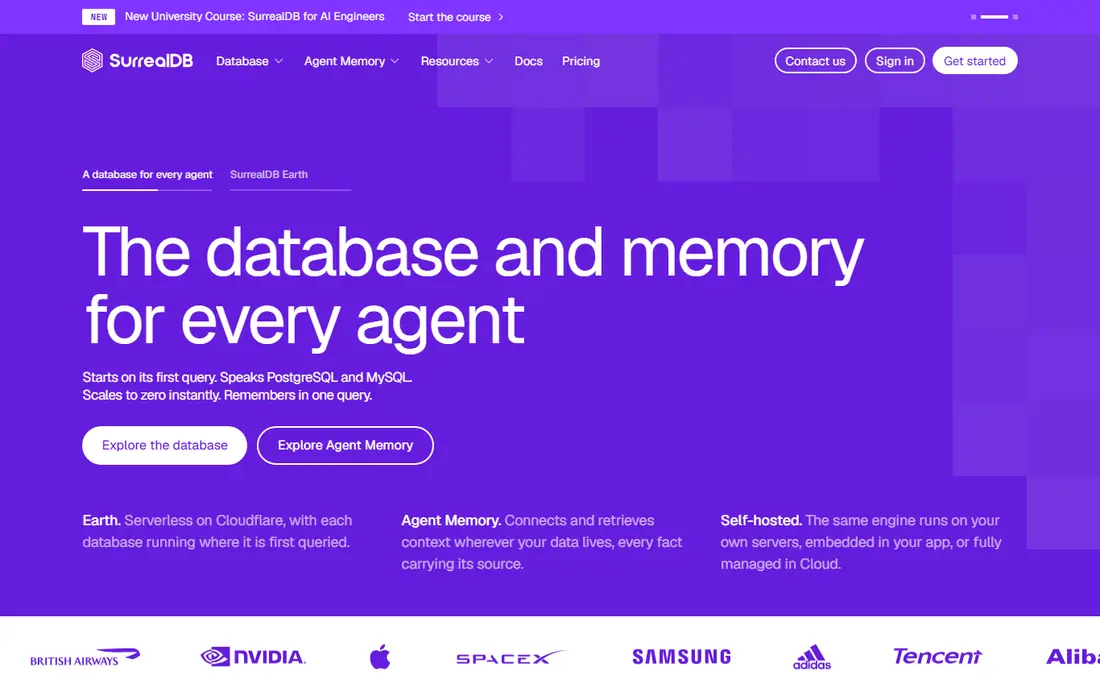
SurrealDB is built with teams that want documents, graphs, and vectors in one engine in mind. SurrealDB tries to be multiple databases at once, and that is the appeal. As for the details, the company reports millions of developers building on the engine, with production users including large enterprises.
For everyday use, the honest caveats are youth: the ecosystem is smaller than Postgres or MongoDB, hiring experienced SurrealDB developers is harder. A handful of roadmap features are still marked coming soon. SurrealDB Cloud's Start plan provides you the first instance free with 1 GB of storage free forever. Extra instances start at $15.33 a month for a small node. More specifically, for AI-heavy products that genuinely need several data models, it is an exciting pick. Price to start with SurrealDB: Free tier. Free access exists with SurrealDB.
Trade-offs to know: Younger ecosystem and smaller hiring pool.
- Ample free start
- Multi-model queries in one language
- Some advanced features still marked coming soon
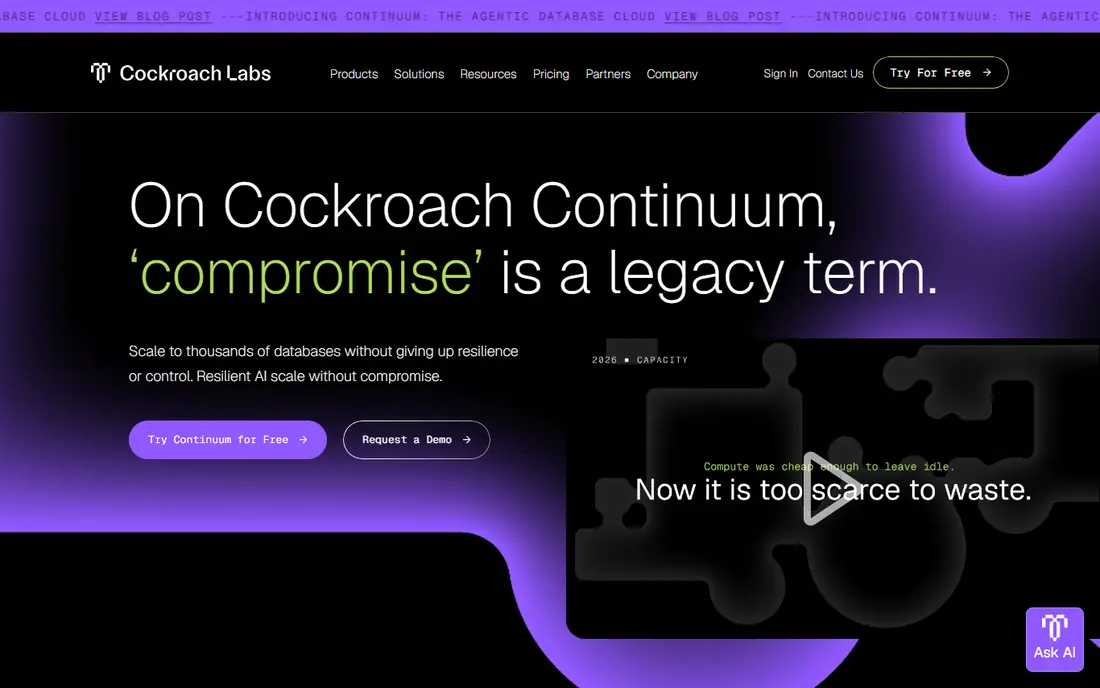
CockroachDB is a good fit for startups planning for global scale from the start. It speaks the Postgres wire protocol, so most Postgres tools and drivers work with it.
Worth adding: the current Cockroach Continuum pricing starts around $203 a month for a Standard deployment with 2 vCPUs and 100 GB, billed by vCPU-hour. CockroachDB cost at the entry level: About $203 per month. CockroachDB has no free tier.
Trade-offs to know: Operational concepts take learning.
- Postgres compatibility
- Multi-region deployments
- Costly for early stage
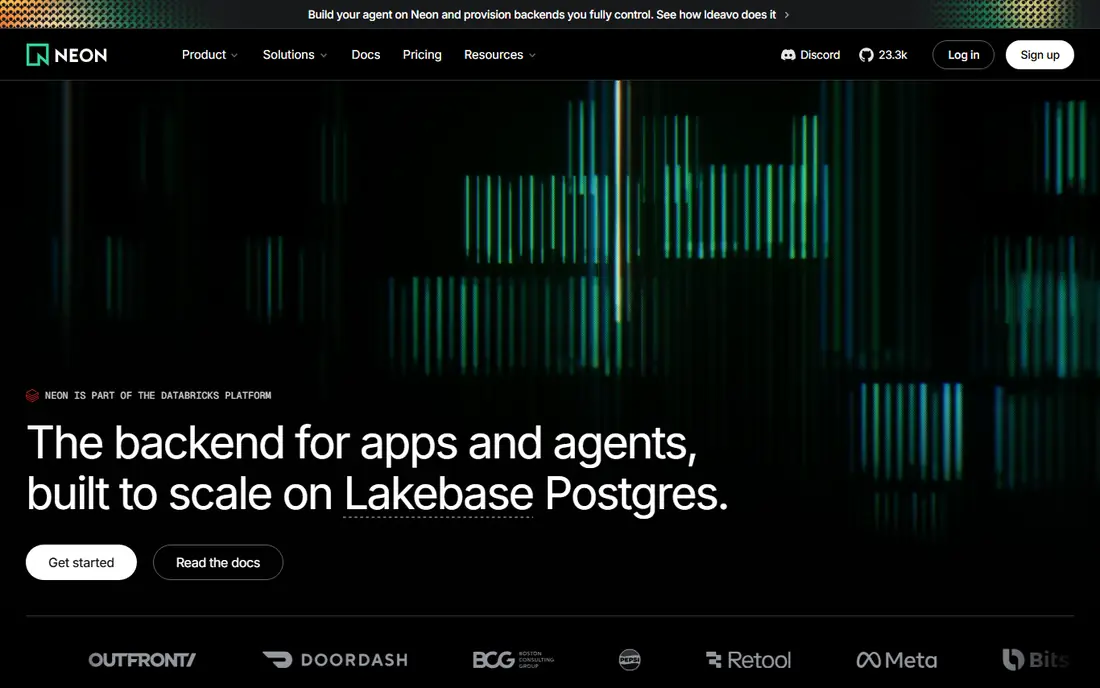
Where Neon fits: teams that want serverless Postgres with instant branching. Every branch is a copy-on-write clone you can spin up in seconds, which means each pull request can get its own isolated database for testing.
Where it falls short: Usage-based bills need watching.
Pricing is usage-based instead of flat: the Launch plan bills per compute-hour and per gigabyte-month, with an usual spend around $15 a month. Scale-to-zero means idle databases stop costing you, which suits the spiky traffic of an early product. On cost, Neon starts like this: Usage-based. Neon has a free plan.
- Database branching for every pull request
- Scale-to-zero keeps idle costs near nothing
- Newest features assume comfort with the system
PlanetScale is a good fit for MySQL workloads that will outgrow a single server. PlanetScale is the pick when your MySQL workload has outgrown a single server but you are not ready to hire a database team. Its Vitess-based system shards MySQL horizontally, and its newer Postgres offering brings the same branching and schema-change workflows to Postgres users.
The honest guidance is timing: adopt PlanetScale when your traffic or your schema-change anxiety justifies it, not on day one. From a buyer's view, pricing is resource-based: Postgres single-node databases start at $5 a month, with Metal choices for high-performance needs. Also, deploy requests let developers review schema changes the way they review code, with safe reverts when something goes wrong. PlanetScale cost at the entry level: From $5 per month. PlanetScale has no free tier.
What to check first: No free level.
- Zero-downtime schema changes
- Very good performance tooling
- Overkill until you actually need sharding
Supabase
Great for: Startups that want Postgres with auth, storage, and APIs included
Supabase is a good fit for startups that want Postgres with auth, storage, and APIs included. Supabase is the closest thing to a backend-in-a-box for Postgres fans. More specifically, you get a real Postgres database plus authentication, file storage, edge functions, and realtime subscriptions, all wired together with auto-generated APIs.
Points against: Advanced tuning still needs Postgres knowledge.
More specifically, the honest catch is that pricing is per project, so a company running plenty of small services pays for each one. And while Supabase removes most setup work, slow queries are still slow queries: someone on the team should know their way around Postgres indexes by the time traffic grows. What you pay to start with Supabase: $25 per month. You can start on Supabase without paying.
- Full Postgres with instant REST APIs
- Auth, storage
- Costs scale per project
Convex
Great for: TypeScript startups that require realtime sync without backend work
Think of Convex for TypeScript startups that require realtime sync without backend work. There is no ORM layer, no API boilerplate, and no separate sync service to operate.
Downsides: Younger system with a smaller ecosystem.
On top of that, Convex is aimed at a specific kind of startup: the one shipping a TypeScript app as quick as possible. Price to start with Convex: $25 per developer per month. Convex offers a free plan.
- Realtime sync built in
- Zero backend glue code
- TypeScript-only
How we built this list
ProMapRanker looked at what each vendor publishes: pricing, plan limits, feature coverage for database software for startups and stated drawbacks. No hands-on testing is claimed. Plan names, prices and limits change often. Treat the figures here as a starting point and verify them with the vendor. The sequence is a judgement call: typical use case first, then pricing transparency, then free access. Use the profiles to check fit.
Things to verify first
- Confirm the entry price on the vendor page: PlanetScale starts at $5 per month, but seat counts and billing terms change the total.
- Read the fine print on the free plans from SurrealDB, Neon, Supabase and Convex; seat, project and feature caps differ.
- Before choosing SurrealDB, weigh its main limit: younger ecosystem and smaller hiring pool.
- Check whether the features you need in CockroachDB sit on the entry plan or only on higher tiers.
- See whether Neon offers onboarding or training, and whether it is included in the price.
Frequently asked questions
How are the tools for database software for startups ordered?
The order follows typical fit for database software for startups, with SurrealDB first and Convex last, then price clarity and free access. It is editorial judgement, not a score, so another team could rank the tools differently.
Which options for database software for startups have a free plan?
SurrealDB, Neon, Supabase and Convex offer a free plan in this list. Free plans usually cap users, projects or features, so check the limits on the vendor page.
Do I need a database administrator?
Not at this stage. That skill matters more than the vendor choice for the first year.
Is SurrealDB the right pick for everyone comparing database software for startups?
No single tool suits every team. SurrealDB comes first because it fits teams that want documents, graphs, and vectors in one engine, while CockroachDB suits startups planning for global scale from the start and Neon suits teams that want serverless Postgres with instant branching. Match the tool to your own size, budget and workflow before deciding.
Can I start on a free level and upgrade later?
Yes, and you should. Start free, add a billing alert, and upgrade when usage or the need for backups and support justifies it.
Do these tools publish their prices?
Yes. Every tool from SurrealDB to Convex shows a starting price, though seats, add-ons and billing terms still change the final cost.
Sources
See where you really rank - block by block
ProMapRanker scans Google Maps across a grid of your service area. Simple monthly plans from $19, white-label on every plan.
Start freeKeep reading
 zoho inventory alternatives
6 Alternatives to Zoho Inventory, Compared on Price and Fit
Zoho Inventory alternatives: 6 tools compared on price, free plans and fit. Katana leads the list for manufacturers. Fit and flaws are laid out for each entry.
Read → zoho crm alternatives
Best Zoho CRM Alternatives (2026)
Need Zoho CRM alternatives? We compare 7 tools on cost, free access and who each suits. Every pick gets a straight assessment. Built for quick decisions.
Read → zelle alternatives
Best Zelle Alternatives in 2026
Compare the best Zelle alternatives for sending money to friends, paying sellers and moving funds abroad, with honest notes on fees, speed and safety in 2026.
Read →