 ProMapRanker
7 Top Data Security Software Options Compared (2026)


Data discovery, privacy and AI governance · Pricing starts at: Contact sales
Key takeaways
- This list starts with BigID, which is built for data discovery, privacy and AI governance.
- None of the 7 tools, from BigID to OneTrust, has a free plan, so budget for a subscription or use a trial.
- The main caution on CrowdStrike Falcon: fuller levels cost much more.
- OneTrust fits privacy, data and AI governance programs.
- The cheapest monthly starting price in the list is $7.99/device/month, offered by CrowdStrike Falcon.
Direct answer
BigID is the first pick on this list for data discovery, privacy and AI governance. CrowdStrike Falcon is better for endpoint protection for SMBs and enterprises, and Spirion is better for sensitive data discovery and classification. Details, prices and limits for the rest of the 7 tools are below.
Quick comparison
| Pick | Great for | Pricing starts at | Free tier | |
|---|---|---|---|---|
| BigID | Data discovery, privacy and AI governance | Contact sales | No | Visit |
 CrowdStrike Falcon | Endpoint protection for SMBs and enterprises | From $7.99/device/month | Free trial | Visit |
 Spirion | Sensitive data discovery and classification | Contact sales | No | Visit |
 Varonis | Finding and locking down sensitive data everywhere | Contact sales | No | Visit |
 Mimecast | Email security plus human risk management | Contact sales | No | Visit |
 Zscaler | Zero trust access for remote and hybrid teams | Contact sales | No | Visit |
 OneTrust | Privacy, data and AI governance programs | Contact sales | No | Visit |
7 options for data security software in detail
Choosing data security software usually comes down to price, fit and limits. This ProMapRanker guide sets 7 tools side by side on those three points, with the facts kept short and checkable.
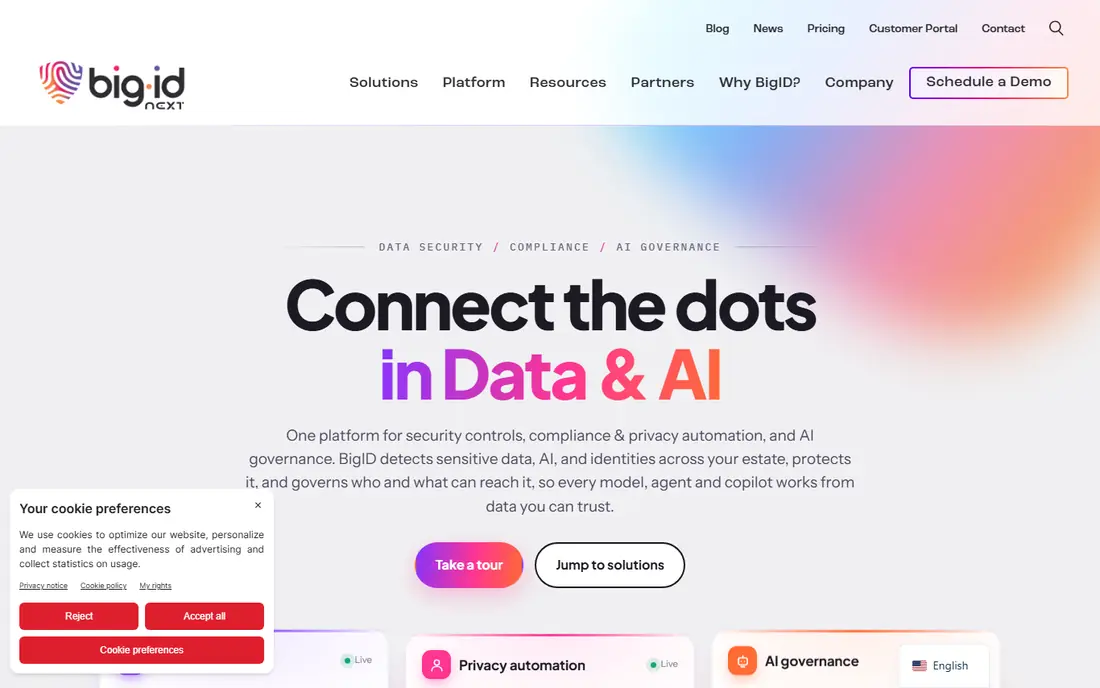
Choose BigID for data discovery, privacy and AI governance. Its data security system discovers and classifies sensitive data across cloud, SaaS, on-prem and even mainframe systems using patented AI classifiers, then links that data to the identities, human and machine, that can reach it.
This is enterprise software through and through, with quote-based pricing and a buying process that involves security, privacy and data teams. BigID shows no starting price here, so confirm the cost on the vendor site. BigID has no free plan.
Points against: Enterprise pricing. Upsides: AI-driven discovery across all data sources.
- Unified security
- Privacy and AI governance
- Implementation needs data-team involvement
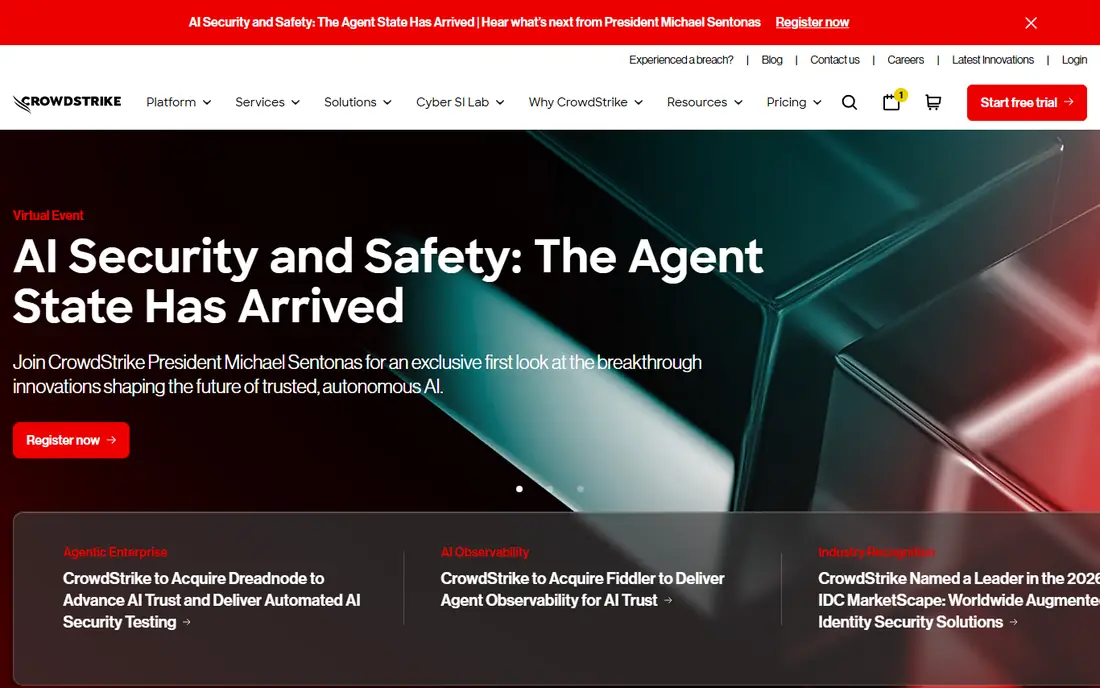
CrowdStrike Falcon is designed for endpoint protection for SMBs and enterprises. That bundles next-gen antivirus, device control, mobile protection and firewall management in a single cloud-native agent. More specifically, the product now extends into data security for SaaS, identity protection and next-gen SIEM as add-on modules.
Beyond that, Falcon Pro runs $14.99 per device monthly and Enterprise $19.99, with a free trial available for evaluation. The main limit is that the entry level is antivirus-plus, not the full breach-stopping system CrowdStrike advertises. Higher levels add endpoint detection and response, managed threat hunting, threat intelligence and identity protection. Teams that require EDR and threat hunting will pay for higher levels or quote-based enterprise bundles. CrowdStrike Falcon starts at: From $7.99/device/month. Free options: Free trial.
Downsides: Identity and data modules are extras.
- Free trial with no credit card
- Single light agent
- Fuller levels cost much more
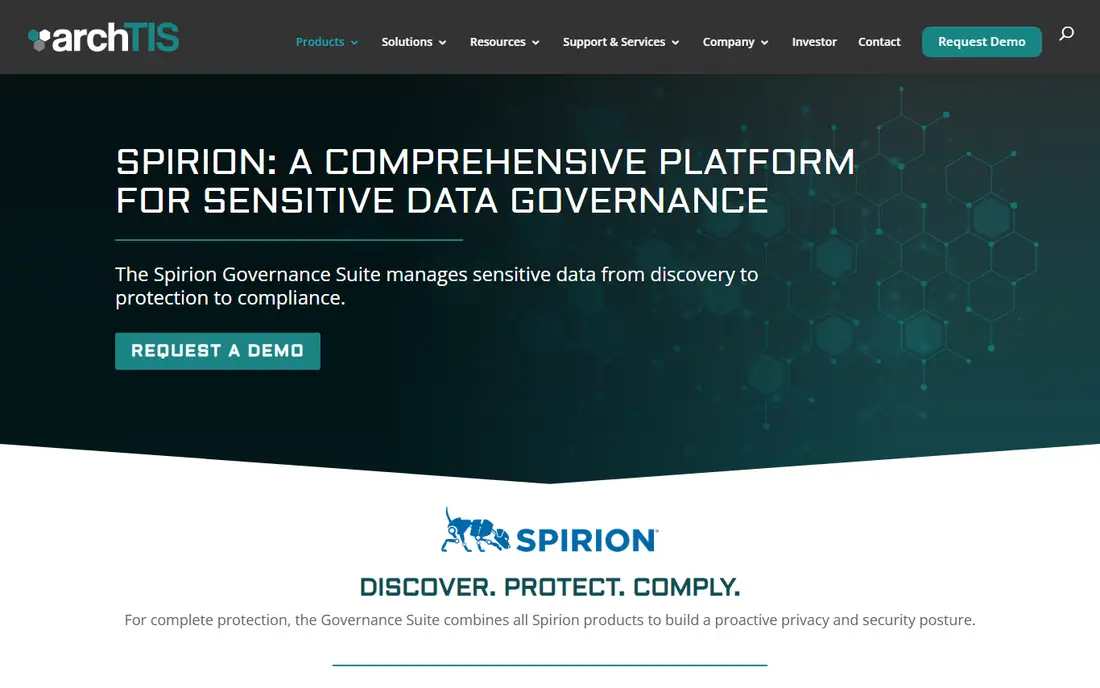
Spirion is a good fit for sensitive data discovery and classification. Spirion does one thing and has done it since 2006: find sensitive data wherever it hides and do something about it.
Downsides: Quote-based pricing.
Worth adding: Remediation is built in, not bolted on: quarantine, redact, encrypt, shred or restrict access automatically based on policy. Spirion shows no starting price here, so confirm the cost on the vendor site. Spirion has no free tier.
- Highly accurate data discovery
- Persistent classification
- Narrower scope than full products
Varonis targets finding and locking down sensitive data everywhere. A small business owner largely wants the laptops protected. Also, Varonis was made for the first kind of buyer and it has become the reference system for data-first security.
Drawbacks to consider: Best fit for organizations with complicated data estates.
Worth adding: a 20-person company will find it more than it needs. From a buyer's view, behavioral analytics detect insider threats and ransomware patterns in live. The system now extends to AI security, tracking which agents and copilots can reach sensitive data. For everyday use, the Data Security Platform continuously discovers and classifies critical data across SaaS, cloud and on-prem environments, then fixes exposures automatically: over-permissioned shares, stale access, unprotected sensitive files. For regulated mid-sized and large organizations, the automation of discovery, classification and remediation is the core value. This comparison lists no price for Varonis; ask the vendor. Varonis has no permanent free option.
- AI security controls
- Automatic data discovery and classification
- Enterprise pricing
Mimecast targets email security plus human risk management. Email threat protection includes URL rewriting, attachment sandboxing, impersonation detection and internal email scanning, with API deployment into Microsoft 365 that avoids mail-flow changes. Buyers who only need phishing protection may find a narrower tool less expensive.
From a buyer's view, what sets it apart is the surrounding system. Pricing is quote-based and the product is modular, so costs add up as you layer training, archiving and DLP on top of core email security. The X1 system brings together email and collaboration security with hundreds of integrations. This comparison lists no price for Mimecast; ask the vendor. No free plan comes with Mimecast.
Where it falls short: Full system needs several modules.
- Email archiving and continuity
- Integrated awareness training
- Quote-based pricing
Think of Zscaler for zero trust access for remote and hybrid teams. Zscaler approaches data security from the network: if users, devices and applications only ever link through a zero trust exchange that enforces policy inline, data cannot leak and attackers cannot move laterally. For organizations with distributed teams, cloud workloads and serious data-loss concerns, the architecture is the modern answer to the perimeter problem.
Honest limits: Enterprise pricing.
Also, small companies will not replace their network for it. In practice, the same product now extends to AI agents and models, enforcing policy on the connections that move data into and out of AI systems. For everyday use, more than half of the Fortune 500 depend on it. This is infrastructure-level software with a sales-led process and implementation measured in quarters, not days. Check the vendor site for Zscaler pricing; none is listed in this comparison. There is no free plan with Zscaler.
- No VPN needed
- Massive global scale
- Replacing network infrastructure is a big project
OneTrust is designed for privacy, data and AI governance programs. Privacy modules deal with consent management, data mapping, assessments and data subject requests, whereas AI governance modules oversee models, training data and AI risk. For organizations building a formal governance program, it is the safe choice.
The breadth is also the warning. Beyond that, assessments, vendor risk reviews, cookie compliance and regulatory monitoring run as continuous workflows instead of annual projects, which is why more than half of the Fortune 500 use it. The product's strength is program automation. For everyday use, OneTrust is a product of modules, each with its own ramp-up time and cost, and the entire thing is priced for enterprises. No starting price is listed for OneTrust here; confirm pricing on the vendor site. OneTrust has no free plan.
Honest limits: Wide product can be complicated.
- Solid assessment automation
- Trusted by half the Fortune 500
- Pricing is enterprise-scale
How we compared the tools
Each tool was reviewed on what its vendor publishes: price, plan limits, core features and stated drawbacks. We did not run hands-on tests. Treat prices as a snapshot: vendors change plans often, so check the vendor site for the figure that applies today. Order on the page follows fit for the typical buyer first, then price transparency and free access. Your own requirements should decide the final pick.
Questions to settle before buying
- Get a written quote from BigID, Spirion, Varonis and others; the list shows no starting price for them.
- Take the trial from CrowdStrike Falcon and push a live task through it before you pay.
- Before choosing BigID, weigh its main limit: enterprise pricing.
- Read the plan comparison for OneTrust carefully; key features often start on a higher tier.
- Get the contract term, renewal terms and any onboarding fees from Zscaler in writing.
Frequently asked questions
Do small firms need data security software?
Yes, but not the enterprise suites. Data discovery tools become relevant once you manage regulated data or grow past a handful of dozen employees.
What is the cheapest option for data security software in this list?
On published monthly entry prices, CrowdStrike Falcon is the lowest here at $7.99/device/month. Entry price is only part of the cost, because seats, add-ons and billing terms can change the total.
What is data security software?
Data security software guards sensitive information from unauthorized access, theft and loss. The category spans data discovery and classification, endpoint protection, email security, data loss prevention, encryption and governance tools.
Do these tools publish their prices?
Not all of them. BigID, Spirion, Varonis and others publish no starting price, so expect a quote request for those. The rest, CrowdStrike Falcon included, show a starting price, though seats and billing terms still change the final cost.
Can I try these options before paying?
Often, yes. CrowdStrike Falcon offers a free trial. Use your own data and a real task during the test, and check what the free tier or trial limits before you rely on it.
How do I choose between Varonis and BigID?
Both discover and classify sensitive data across hybrid estates. Varonis leans toward security outcomes: threat detection, insider risk and automatic remediation of exposures. BigID leans toward data intelligence and governance: privacy automation, data rights workflows and AI governance alongside security. Evaluate both against your primary pressure, security incidents or regulatory compliance.
Sources
See where you really rank - block by block
ProMapRanker scans Google Maps across a grid of your service area. Simple monthly plans from $19, white-label on every plan.
Start freeKeep reading
 zoho inventory alternatives
6 Alternatives to Zoho Inventory, Compared on Price and Fit
Zoho Inventory alternatives: 6 tools compared on price, free plans and fit. Katana leads the list for manufacturers. Fit and flaws are laid out for each entry.
Read → zoho crm alternatives
Best Zoho CRM Alternatives (2026)
Need Zoho CRM alternatives? We compare 7 tools on cost, free access and who each suits. Every pick gets a straight assessment. Built for quick decisions.
Read → zelle alternatives
Best Zelle Alternatives in 2026
Compare the best Zelle alternatives for sending money to friends, paying sellers and moving funds abroad, with honest notes on fees, speed and safety in 2026.
Read →