 ProMapRanker
Best Data Science Companies in 2026


Decision intelligence for large brands · Pricing starts at: See website
Key takeaways
- Fractal Analytics, Tiger Analytics, Mu Sigma and Tredence are the specialist picks for large decision-science programs.
- Accenture, Deloitte and IBM Consulting suit enterprise buyers who need consulting, governance and global delivery together.
- Quantiphi is the pick to check first for Google Cloud-based analytics and AI programs.
- LatentView and EXL are strongest for marketing, customer and operational analytics at scale.
- All firms here price by project or engagement, so ask for a scoped proposal, not a list price, before you compare.
Quick comparison
| Pick | Great for | Pricing starts at | Free tier | |
|---|---|---|---|---|
| Fractal Analytics | Decision intelligence for large brands | See website | No | Visit |
 Tiger Analytics | Enterprise analytics at scale | See website | No | Visit |
 Mu Sigma | Long-term decision science | See website | No | Visit |
 Tredence | Retail and supply chain analytics | See website | No | Visit |
 Quantiphi | Google Cloud analytics and AI | See website | No | Visit |
 LatentView Analytics | Marketing and customer analytics | See website | No | Visit |
 EXL | Operational analytics | See website | No | Visit |
 Accenture | Large transformation programs | See website | No | Visit |
 Deloitte | Regulated analytics and governance | See website | No | Visit |
The best data science companies
This article covers firms that provide data science services: building models, cleaning and engineering data, and turning analysis into decisions. It also helps data scientists comparing employers, because the firms that deliver this work are also major employers in the field. All nine firms are active in October 2026.
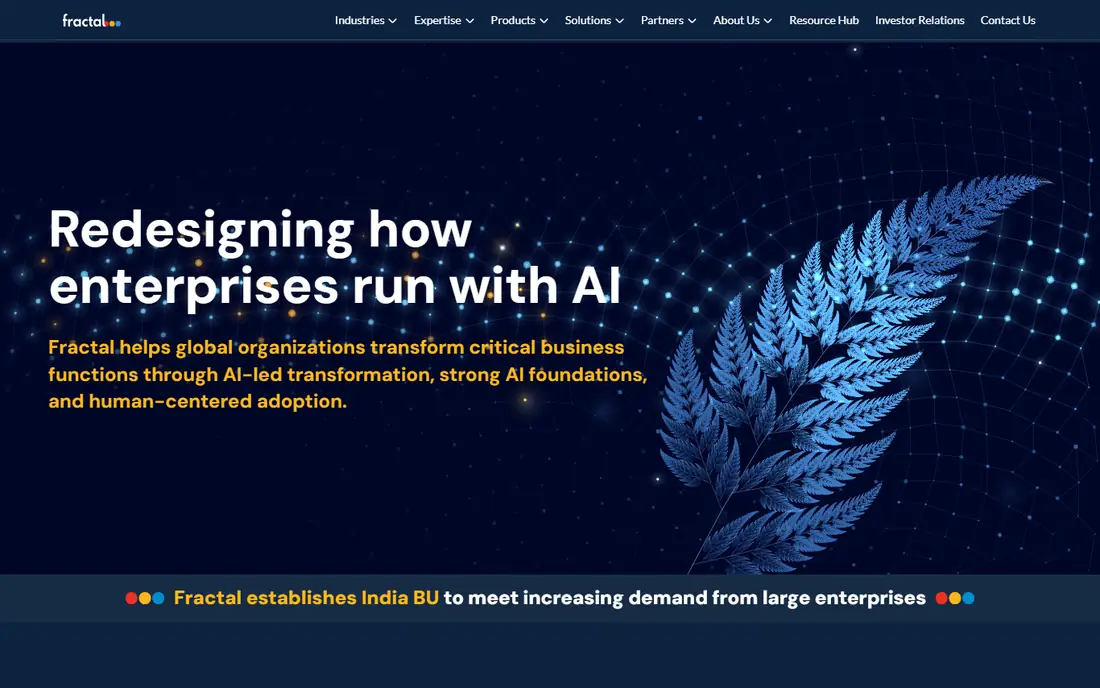
Fractal Analytics is a specialist analytics firm that works with large brands on decision making, not just dashboards. Its teams combine data science, engineering and design to build models for pricing, forecasting, personalisation and customer decisions, and to put those models into daily workflows. That applied focus is why consumer goods, retail and financial services buyers keep shortlisting it.
The limit is scale. Fractal is built for enterprise programs, so a small business with one dataset and a short deadline will find the engagement model heavy. Larger buyers who want decision science tied to business outcomes, with a partner that stays through deployment, will get the most from it.
- Strong in consumer goods, retail and financial services
- Applied AI plus decision science
- Global delivery
- Enterprise focus means higher engagement sizes
- Not a fit for a single small project
- Timelines run in weeks, not days
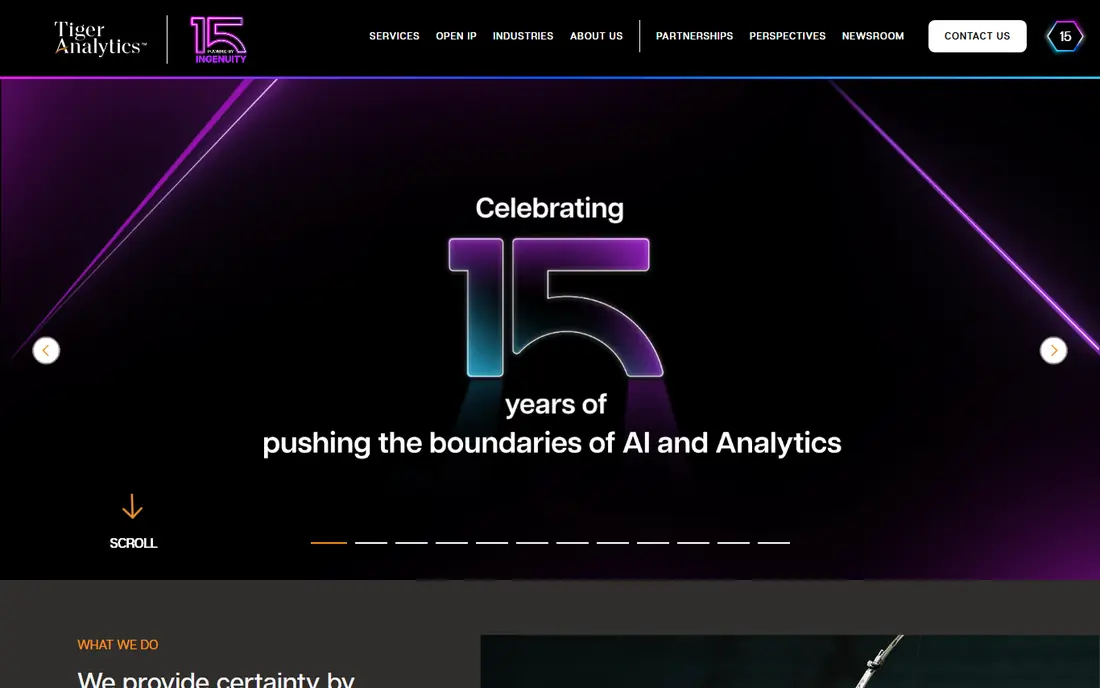
Tiger Analytics, based in Santa Clara, builds data science and AI teams for large enterprises across functions and business units. Its work covers forecasting, customer insight, pricing and optimisation, delivered with cloud data platforms such as Databricks, Snowflake and the major cloud providers. Buyers that need a team at scale, rather than a single model, often pick Tiger for that reason.
As with other specialists here, the engagement is a program, not a quick purchase. You will need a clear internal owner, clean access to data, and a timeline measured in weeks. When those are in place, Tiger is a strong choice for multi-team analytics work.
- Large enterprise analytics teams
- Strength in forecasting and optimisation
- Cloud platform expertise
- Enterprise pricing and timelines
- Less suited to very small scopes
- Needs a clear internal owner
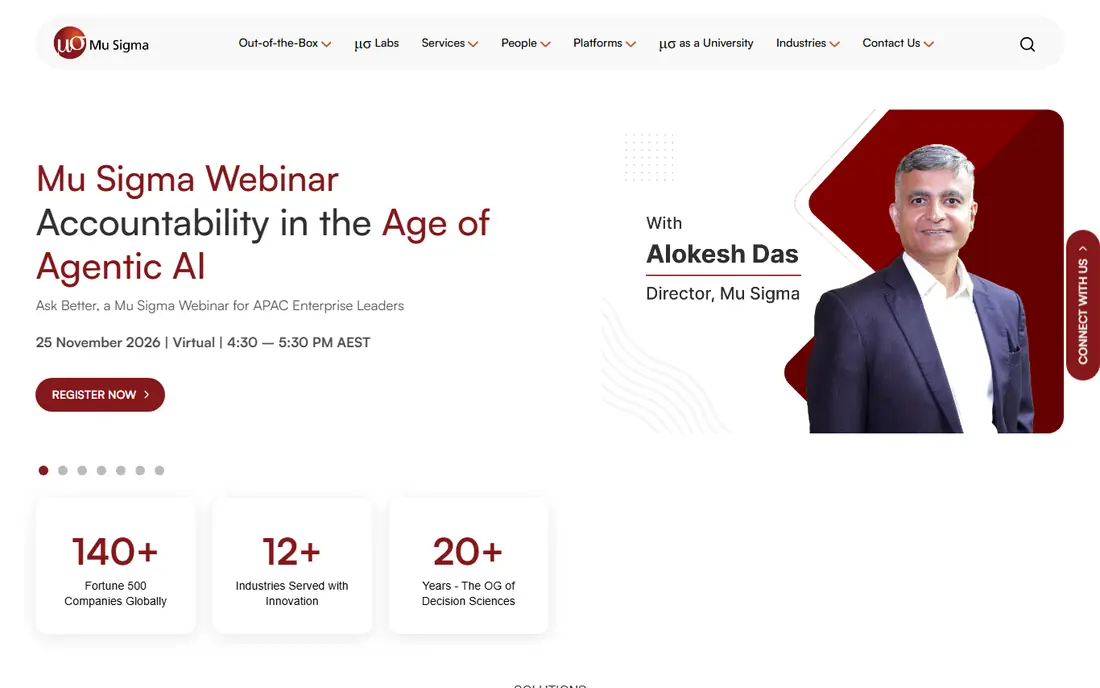
Mu Sigma is one of the best-known pure-play decision science firms, working with large enterprises on marketing, supply chain, customer and financial analytics. Its approach pairs data engineering with decision frameworks and experimentation, so models are built to change how decisions are made, not just to produce a report.
That depth suits long-term programs. A buyer who wants a fast, one-off analysis may find Mu Sigma slower to start than a smaller boutique, because its model is built around embedded teams and ongoing decision systems. For a large company building a lasting analytics capability, that same model is the attraction.
- Pure-play decision science focus
- Long enterprise relationships
- Experimentation and decision systems
- Model suits long programs over short projects
- Enterprise scale
- Onboarding takes time
Tredence focuses on data science and AI for retail, consumer goods and supply chain problems, with a cloud-first delivery style. Its teams work on demand forecasting, assortment, pricing and supply planning, and on the data platforms those models need. That sector focus means its examples and accelerators are relevant to retail buyers from the first meeting.
It does not try to match Accenture or Deloitte on breadth across every industry and service line. If your problem sits in retail or supply chain, Tredence is a focused pick. If you need audit, tax and consulting alongside analytics, a larger firm will cover more ground.
- Cloud-first analytics
- Strong in retail, consumer goods and supply chain
- Practical delivery focus
- Less broad than global consultancies
- Enterprise engagements
- Needs solid data foundations
Quantiphi is an AI-first digital engineering firm with deep work on Google Cloud, covering data engineering, analytics and applied AI programs. Buyers moving data to BigQuery, building machine learning pipelines, or adding generative AI to existing workflows often shortlist Quantiphi for that cloud depth. Its teams handle both the platform build and the models on top of it.
The fit narrows if your company is standardised on another cloud provider, where a cloud-neutral firm may be simpler. For Google Cloud shops, though, Quantiphi combines platform and model work in one engagement, which avoids handing off between a cloud partner and a separate analytics vendor.
- AI-first engineering
- Deep Google Cloud expertise
- Strong in data modernisation and applied AI
- Best value on Google Cloud
- Less suited to buyers standardised on another cloud
- Enterprise scope
LatentView Analytics works with large brands on marketing, customer, supply chain and risk analytics, with a strong base in digital data. Its teams help companies understand digital customers, predict trends, improve retention and optimise marketing spend, using predictive modelling and data engineering together. Technology, consumer goods, financial services and retail are core sectors.
As a specialist, LatentView is not a general consultancy, and its engagements suit larger buyers with ongoing analytics needs. Smaller companies may find a boutique or a platform tool more practical, but enterprise marketing and customer teams will find its sector depth directly relevant.
- Strong in marketing, customer and supply chain analytics
- Digital data expertise
- Fortune 500 client base
- Enterprise focus
- Project sizes suit larger buyers
- Less broad than global consultancies
EXL is known for operational analytics: embedding models into everyday business processes so that decisions, risk checks and customer handling improve in daily work, not just in a quarterly report. Insurance, banking and healthcare buyers use EXL for claims, risk, customer and operational analytics, with data and AI services behind them.
It is less suited to a buyer who wants a standalone research paper or a single experimental model. EXL earns its place when analytics must run inside operations at scale, with governance and measurement attached. That operational focus is also why it appears in analyst rankings of data and AI service specialists.
- Operational analytics embedded in daily work
- Strength in insurance and financial services
- Data and AI services depth
- Less of a pure research shop
- Enterprise engagements
- Timelines suit programs over quick analyses
Accenture is the large-program pick. It combines data science with cloud migration, systems integration and managed services, so a buyer can move data platforms, build models and run them under one program. Its scale helps multi-country rollouts and long transformations where a specialist alone would need partners for parts of the work.
That scale comes with overhead and premium pricing. A focused analytics project may move faster and cost less with a specialist such as Fractal or Tiger. Choose Accenture when the analytics work is part of a wider transformation, or when global delivery and governance matter as much as the models themselves.
- Global scale and cloud partnerships
- Analytics plus transformation and managed services
- Broad industry coverage
- Premium pricing
- Large-program overhead
- Smaller projects can get lost in a big engagement
Deloitte suits buyers in regulated industries where analytics must sit alongside risk, audit and compliance. Its data and AI teams work on finance, risk, fraud and governed AI programs, with the controls and documentation that regulators and boards expect. That governance strength is the reason financial services and healthcare buyers shortlist Deloitte alongside specialists.
The consulting-led model means a slower, more structured start than a boutique that begins with code on day one. If your priority is speed on a single model, a specialist may be faster. If your priority is a governed, auditable analytics program, Deloitte is a strong fit.
- Strong in regulated industries
- Analytics tied to risk, audit and governance
- Global consulting depth
- Premium pricing
- Consulting-led model
- Slower start than specialist boutiques
How we picked these
We compared analyst rankings, firm service pages and industry coverage for data science and analytics service firms active in October 2026. We kept only firms with a clear data science service offer and a US presence, and we mixed specialists with global consultancies so buyers can compare scale against focus. We used See website for pricing throughout, because these firms price by scoped engagement rather than by a public list price, and inventing hourly rates would mislead buyers.
How to choose a data science company
Start with the decision, not the model. Write down the business decision the model must improve, who owns that decision, and how you will measure success in three months. A firm that cannot tie its proposal to that decision is selling analysis, not outcomes.
Check data readiness before you sign. Ask what data the firm needs, how it will handle quality gaps, and who owns data engineering versus modelling. Many programs stall because the model is ready but the data pipeline is not, so a firm that plans both together is worth more than a firm that only builds models.
Ask for a scoped proposal with milestones. It should name the team, the timeline, the deliverables at each stage, and how knowledge transfers to your staff. A good firm will also be honest about where a simpler dashboard or a rules-based approach beats a complex model, and that honesty is a useful buying signal.
Frequently asked questions
What is the best data science company?
Fractal Analytics and Tiger Analytics are strong specialist picks for large programs, while Accenture and Deloitte suit enterprise transformations and regulated work. The best firm depends on your industry, cloud platform and whether you need a specialist team or a global consultancy.
Which data science companies hire data scientists?
All firms in this list hire data scientists, with Fractal, Tiger, Mu Sigma, Tredence, Quantiphi and LatentView among the largest specialist employers. Global firms such as Accenture and Deloitte also hire large data and AI teams, often tied to consulting roles as well as pure modelling work.
How much does a data science company cost?
Firms price by scoped engagement, not by a public list price, so costs vary with team size, timeline and data complexity. Expect enterprise programs to run into five or six figures and beyond, and ask for a phased proposal so you can test value before committing to a full program.
Should I hire a data science company or build an in-house team?
Hire a firm when you need speed, specialist skills or a defined program, and build in-house when analytics is a long-term core capability. Many companies do both: a firm builds the first models and platform, while internal staff learn to run and extend them.
What is the difference between a data science company and a platform?
A company provides people and delivery: consultants, engineers and data scientists who build and run models for you. A platform provides software for your own team to build models on. This list covers service firms, so compare it with platform tools if you plan to build in-house.
Which data science company is best for retail?
Tredence and Fractal Analytics are strong for retail and consumer goods, with forecasting, pricing and personalisation work at the core. LatentView is also relevant for retail marketing and customer analytics, especially where digital data drives decisions.
Sources
See where you really rank - block by block
ProMapRanker scans Google Maps across a grid of your service area. Simple monthly plans from $19, white-label on every plan.
Start freeKeep reading
 zoho inventory alternatives
6 Alternatives to Zoho Inventory, Compared on Price and Fit
Zoho Inventory alternatives: 6 tools compared on price, free plans and fit. Katana leads the list for manufacturers. Fit and flaws are laid out for each entry.
Read → zoho crm alternatives
Best Zoho CRM Alternatives (2026)
Need Zoho CRM alternatives? We compare 7 tools on cost, free access and who each suits. Every pick gets a straight assessment. Built for quick decisions.
Read → zelle alternatives
Best Zelle Alternatives in 2026
Compare the best Zelle alternatives for sending money to friends, paying sellers and moving funds abroad, with honest notes on fees, speed and safety in 2026.
Read →