 ProMapRanker
Data Privacy Software Compared


Engineering teams that want privacy as infrastructure · Pricing starts at: See website
Direct answer
If you need engineering teams that want privacy as infrastructure, Transcend is the first tool to look at here. Alternatives: Securiti for enterprises merging privacy with data security, and TrustArc for teams that value deep regulatory research. The remaining 4 options are covered below with prices and limits.
Key takeaways
- Top of the list is Transcend, which targets engineering teams that want privacy as infrastructure.
- Ketch, Osano, MineOS: these are the 3 tools out of 7 that offer a free plan.
- Pricing for Transcend is quote-based, which adds a sales step before you can compare cost.
- Ketch comes with a trade-off: per-integration charges beyond the base on some tiers.
- MineOS is the one to check for starting DSAR handling at zero cost.
Quick comparison
| Pick | Great for | Pricing starts at | Free tier | |
|---|---|---|---|---|
| Transcend | Engineering teams that want privacy as infrastructure | See website | No | Visit |
 Securiti | Enterprises merging privacy with data security | Custom quote | No | Visit |
 TrustArc | Teams that value deep regulatory research | Custom quote (~$10,000/year) | No | Visit |
 Ketch | Price-transparent privacy with a real free level | $0 (free plan) | Yes | Visit |
 OneTrust | Enterprises running a full privacy program | Custom quote ($10,000/year minimum) | No | Visit |
 Osano | US businesses wanting consent plus a compliance backstop | $0 (free plan) | Yes | Visit |
 MineOS | Starting DSAR handling at zero cost | $0 (free plan) | Yes | Visit |
Tool-by-tool breakdown
Short on time? The summary and table above give the quick view of 7 tools for data privacy software, and the profiles that follow give the detail behind each entry.
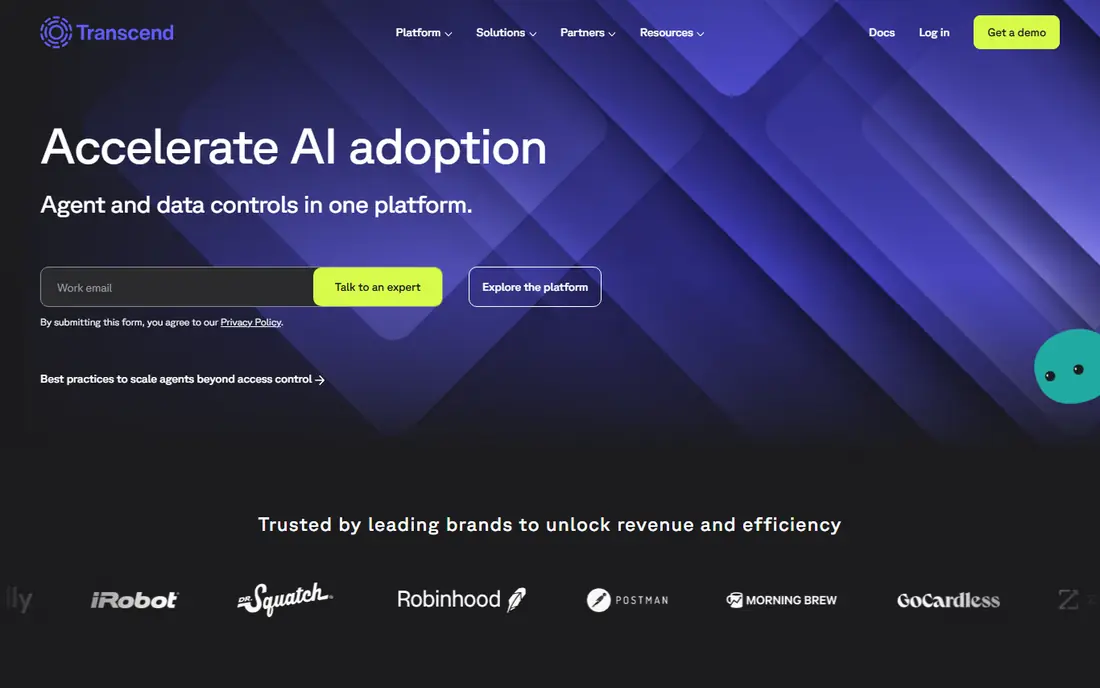
Transcend works best for engineering teams that want privacy as infrastructure. Its product links to your data systems and vendors through APIs and automatically fulfills access and deletion requests across them, while giving your users a hosted privacy center (usually at privacy.yourcompany.com) where they handle their own preferences. In daily use, the larger consideration is fit: Transcend shines when the privacy owner is technical and the company has real data infrastructure.
Where it is weaker: No published pricing.
For everyday use, the company does not publish pricing, so expect a sales process. More specifically, for product-led SaaS firms, though, the infrastructure framing is exactly right. On top of that, the design assumes your engineers will be involved, and it rewards that involvement with automation depth. Transcend does not show a starting price in this comparison, so check the vendor site for current pricing. Transcend has no permanent free option.
- Developer-first design with capable APIs
- Automatic request fulfillment across systems
- Less suited to non-technical privacy teams
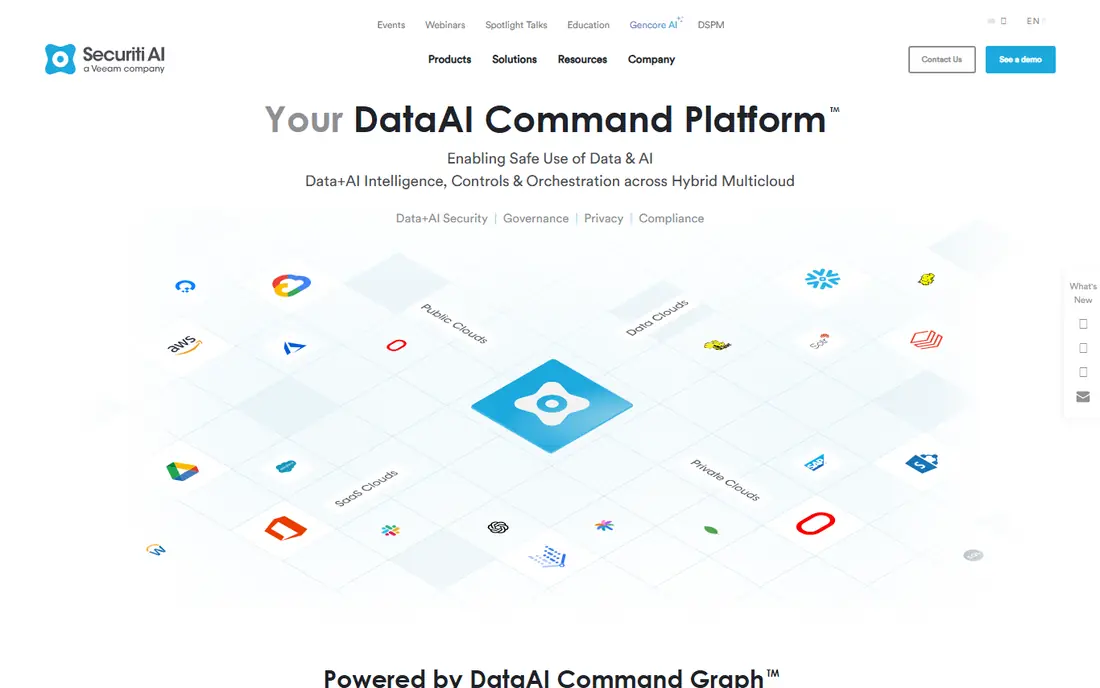
Securiti is built with enterprises merging privacy with data security in mind. For large firms with data spread across AWS, Azure, GCP and on-prem systems, unified discovery and classification is genuinely valuable. This is unambiguously enterprise software.
Watch-outs: Deployment often takes around 3 months.
In daily use, there is no free plan and no trial. If your privacy and security teams already share a roadmap and a budget, Securiti deserves a look. Beyond that, everyone else should keep scrolling. Securiti pricing: Custom quote. Securiti does not include a free plan.
- Recognized AI governance capabilities
- Solid DSAR automation
- Enterprise-only pricing with no self-serve choice
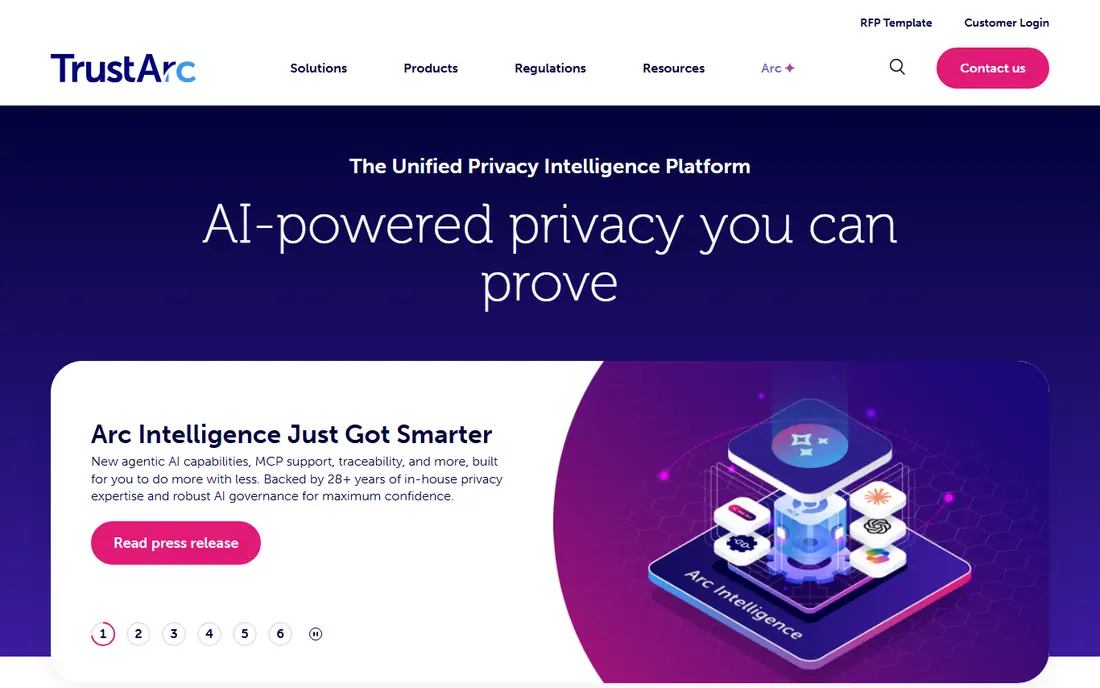
Think of TrustArc for teams that value deep regulatory research. TrustArc has been in privacy since 1997, originally as TRUSTe, and that history displays in its regulatory intelligence. Also, pricing sits in the same enterprise bracket as OneTrust, with reported contracts starting near $10,000 per year and averaging in the low twenty-thousands.
Honest limits: Smaller integration ecosystem than OneTrust.
More specifically, there is no public pricing and no self-serve level, so budget conversations start with a sales call. Teams choosing between the two giants typically pick TrustArc for its privacy-specific depth and certification, and OneTrust for broader GRC coverage and API adaptability. As for the details, in December 2025 the company relaunched its product as Arc, adding an AI assistant that answers regulatory questions against a large database of privacy laws. The starting price for TrustArc: Custom quote. TrustArc has no free tier.
- Decades of privacy expertise with TRUSTe certification
- Capable consent management
- No public pricing
Ketch is a good fit for price-transparent privacy with a real free level. Ketch stands out in this category for a straightforward reason: it publishes its prices. Starter at $150 per month includes 30,000 users.
That transparency extends to packaging: consent, data subject rights and data mapping are available a la carte. So you do not have to buy the entire product to automate deletions. From a buyer's view, the free level handles 5,000 monthly unique users with the full consent management product, privacy law templates, tracker scanning and two integrations. On cost, Ketch starts like this: $0. Ketch includes a free tier.
Honest limits: Enterprise features need the custom Pro level.
- Published pricing from $150 per month
- Free level with full consent management
- Per-integration charges beyond the base on some levels
OneTrust was built for enterprises running a full privacy program. Deployments routinely take weeks to months. For businesses that only need consent management, this is far more platform than the problem needs, and that is exactly the gap the smaller tools below exist to fill.
In daily use, the honest catch is cost and complexity. Beyond that, OneTrust is the product most enterprise legal teams already know. Its module list is unmatched: privacy automation, consent and preferences, tech risk, external management and AI governance under one roof. In practice, the API access also matters for bigger teams that want privacy workflows wired into their own tooling. As for the details, OneTrust publishes no prices and now enforces a $10,000 annual minimum as of 2026, with buyer-reported median contracts around $11,800 per year and implementation fees adding thousands more. Entry price for OneTrust: Custom quote. OneTrust has no free plan.
- AI governance modules for regulated AI use
- Broadest module coverage in the industry
- Complicated implementation that frequently needs consultants
Osano makes the most sense for US companies wanting consent plus a compliance backstop. Osano started as a consent management tool and grew into a broader privacy system, which makes it a natural stepping stone for firms outgrowing a bare cookie banner. In practice, higher levels add subject rights workflows and compliance checks.
In daily use, read the terms carefully before treating that as insurance, since exclusions apply. Also note that the Plus level's per-visitor pricing runs higher than some competitors. The Plus plan at $199 per month brings three domains, 30,000 visitors, legal templates and an UK and GDPR representative. Beyond that, the free plan includes one domain and up to 5,000 monthly visitors with the core banner. What you pay to start with Osano: $0. Free access exists with Osano.
Where it falls short: Full privacy suite needs a sales conversation.
- No Fines pledge on higher levels
- Published pricing up to $199 a month
- Plus level pricing is high per visitor compared with peers
Choose MineOS for starting DSAR handling at zero cost. MineOS (from the company Mine) takes the opposite path from most privacy vendors: it provides away the core request-handling workspace forever and charges for the advanced modules. Small firms getting their first deletion requests will find it refreshingly practical.
The free level supplies a full portal for receiving and processing data subject requests. You can add data mapping or consent management modules as your program grows. Since premium pricing is quote-based, budget planning needs a conversation once you outgrow the free level. The integration list spans the usual SaaS suspects from Salesforce to Zendesk to Snowflake. On cost, MineOS starts like this: $0. Free access exists with MineOS.
Where it is weaker: Advanced automation needs the premium modules.
- Solid integration list
- Forever-free request handling workspace
- Premium pricing is quote-based
How we built this list
We compared the tools on published pricing, free plan or trial availability, feature coverage for data privacy software, and the limits each vendor documents. Plan names, prices and limits change often. Treat the figures here as a starting point and verify them with the vendor. The sequence is a judgement call: typical use case first, then pricing transparency, then free access. Use the profiles to check fit.
Questions to settle before buying
- Get a written quote from Transcend; the list shows no starting price for them.
- Look at free plan limits closely: Ketch, Osano and MineOS have one, and the caps decide whether it is usable for real work.
- Before choosing Transcend, weigh its main limit: no published pricing.
- Let daily users try Ketch on real work; their feedback beats any feature checklist.
- Look at the help docs and support options for OneTrust before you commit.
Frequently asked questions
Can I try these options before paying?
Often, yes. Ketch, Osano and MineOS have a free plan. Use your own data and a real task during the test, and check what the free tier or trial limits before you rely on it.
Do these tools publish their prices?
Not all of them. Transcend publishes no starting price, so expect a quote request for it. The rest, Securiti included, show a starting price, though seats and billing terms still change the final cost.
Can privacy software prevent fines?
No software guarantees compliance or stops fines on its own. Osano's No Fines pledge spans certain fines under specific terms, but read the exclusions before relying on it.
Which options for data privacy software have a free plan?
Ketch, Osano and MineOS offer a free plan in this list. Free plans usually cap users, projects or features, so check the limits on the vendor page.
Is Transcend the right pick for everyone comparing data privacy software?
No single tool suits every team. Transcend comes first because it fits engineering teams that want privacy as infrastructure, while Securiti suits enterprises merging privacy with data security and TrustArc suits teams that value deep regulatory research. Match the tool to your own size, budget and workflow before deciding.
What is a DSAR?
A data subject access request. Firms must respond within legal deadlines, usually 30 to 45 days, which is why automation matters at volume.
Sources
See where you really rank - block by block
ProMapRanker scans Google Maps across a grid of your service area. Simple monthly plans from $19, white-label on every plan.
Start freeKeep reading
 zscaler alternatives
Best Zscaler Alternatives in 2026
Looking for zscaler alternatives? We compare 9 SASE and zero trust platforms on architecture, data protection, pricing, and fit for your network and team.
Read → zapier alternatives free
Best Zapier Alternatives Free in 2026
Nine automation tools for zapier alternatives free in 2026, all with genuinely free tiers, plus free plan limits, starting prices and upgrade paths explained.
Read → which platform is best for online reputation
Which Platform Is Best for Online Reputation in 2026
Wondering which platform is best for online reputation? We compare 8 review, listing, and response tools for small and multi-location businesses and agencies.
Read →