 ProMapRanker
Best Data Pipeline Software for Integrating Data in 2026

Key takeaways
- Fivetran and Hevo suit teams that want managed pipelines with little maintenance.
- Airbyte suits teams that want open-source control and a large connector catalog.
- Matillion, AWS Glue, and Azure Data Factory suit teams already committed to one cloud data platform.
- Stitch is a simpler managed option, but check its place inside Qlik Talend Cloud before a long commitment.
- Watch the billing unit closely, since rows, events, credits, and compute time scale in different ways.
Quick comparison
| Pick | Great for | Pricing starts at | Free tier | |
|---|---|---|---|---|
 Fivetran | Managed ELT into warehouses | Free | Yes | Visit |
 Airbyte | Open-source data movement | Free | Yes | Visit |
 Hevo Data | No-code ELT for smaller teams | Free | Yes | Visit |
 Stitch | Simple managed replication | $100 per month | No | Visit |
 Matillion | Pushdown ELT in cloud warehouses | See website | Free trial | Visit |
 AWS Glue | AWS-native ETL jobs | See website | No | Visit |
 Azure Data Factory | Microsoft-centric integration | See website | No | Visit |
 Qlik Talend Cloud | Enterprise integration and quality | See website | Free trial | Visit |
The best data pipeline software for integrating data
We compared these tools on connector coverage, managed versus self-hosted effort, transformation support, pricing clarity, and fit for common warehouse setups.
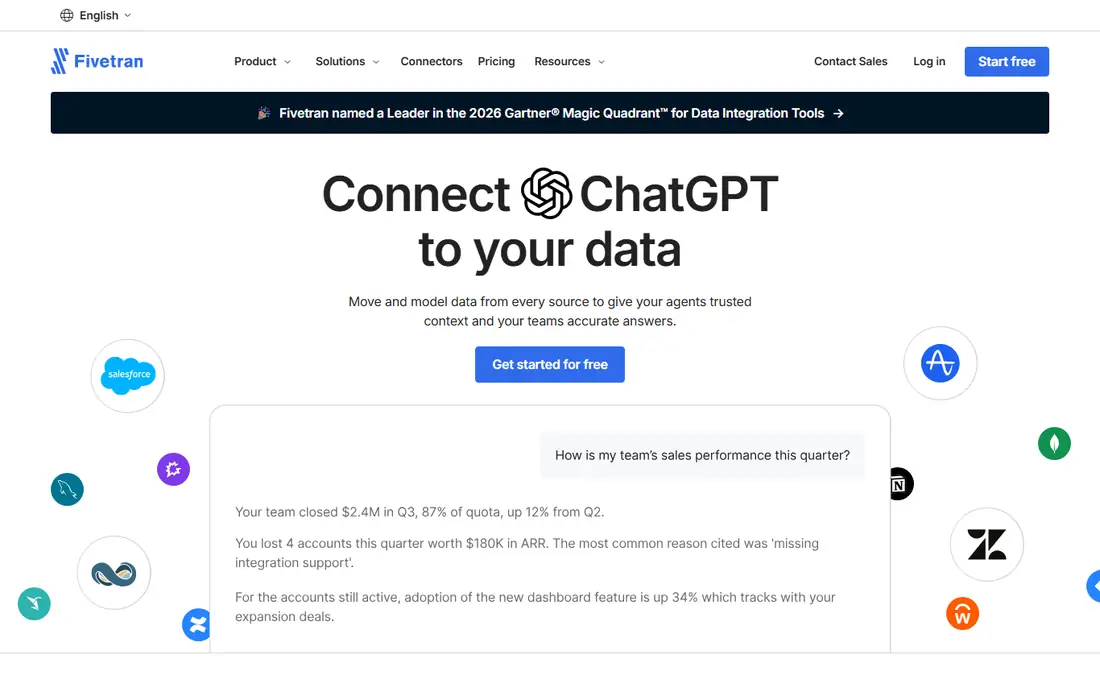
Fivetran is a managed ELT service that moves data from apps, databases, and files into cloud warehouses with little day-to-day upkeep. It handles schema changes, retries, and incremental syncs for many common sources, which is why small data teams often pick it first. Change data capture keeps warehouse tables close to source systems without a custom script for each table.
The main cost question is Monthly Active Rows, the billing unit Fivetran uses. High-churn tables, deletes, and many small connections can raise the bill even when the business value is modest. Start with a free tier and a short list of core sources, then add sources once you know the row pattern for each one.
- Fully managed connectors
- Change data capture
- Broad warehouse support
- Usage pricing can grow fast
- Less custom control than open-source tools
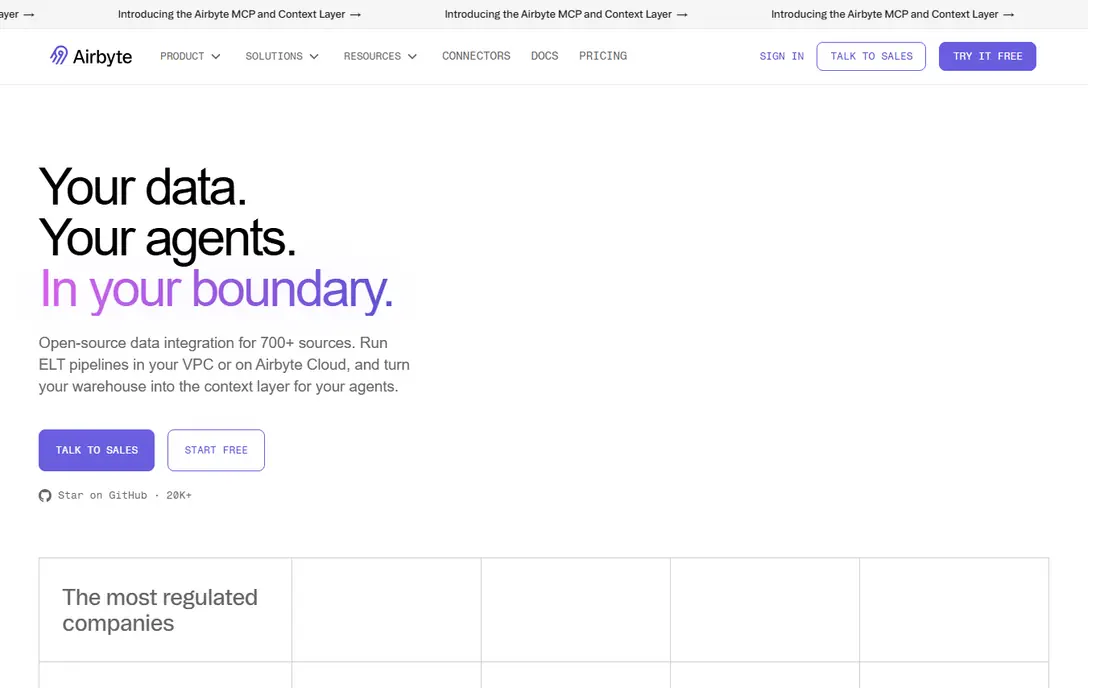
Airbyte gives teams a choice that most managed tools do not: run the open-source core yourself, or pay for Airbyte Cloud. The connector catalog is large, and the connector builder helps teams add a missing source without waiting for a vendor roadmap. That flexibility suits teams with unusual sources or strict data residency needs.
The trade-off is effort or price. Self-hosting is free in license terms, but you pay for infrastructure and upkeep. Cloud Standard starts at a low monthly base with credit billing, while higher capacity tiers are annual and sales-led. Map your monthly volume before you pick a tier, and test failed-sync behavior, since failed syncs can still consume credits.
- Open-source core
- Large connector catalog
- Self-hosted or cloud deployment
- Cloud pricing jumps between tiers
- Self-hosting needs engineering time
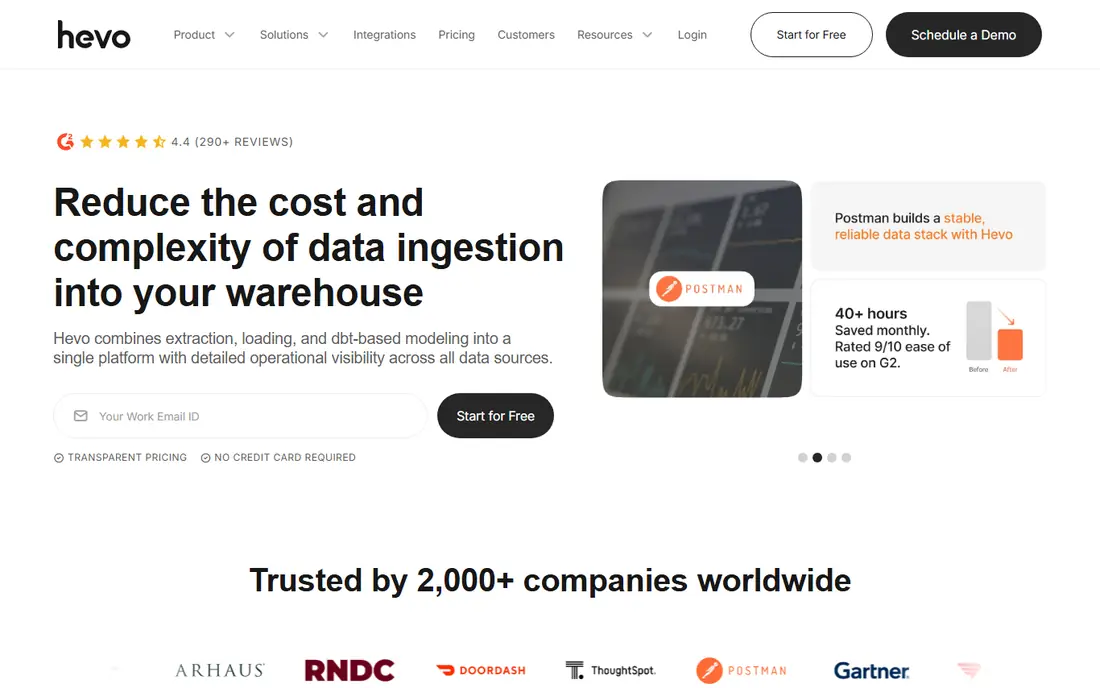
Hevo Data is a no-code ELT tool aimed at teams that want pipelines running without writing integration code. Its free plan covers 1 million events per month, which is enough to test real sources and a warehouse destination. Paid plans add higher event limits, more sources, and support options that smaller teams often need as usage grows.
Event billing needs care. Every record write can count, so tables that update often will use events faster than tables that append new rows only. Check the event count for your busiest sources during a trial, and use filters or batch settings where the tool allows them, so you do not pay to move rows you never query.
- Free plan with 1 million events per month
- No-code setup
- Transformation tools
- Event-based billing can rise with frequent updates
- Streaming on higher tiers
Stitch is a managed replication tool that focuses on getting data into a warehouse with minimal setup. Its row-tier pricing is easy to understand at small scale, starting at $100 per month for 5 million rows in published comparisons. For teams with a stable set of sources and simple transformation needs, that simplicity is a real advantage.
The wider context matters here. Stitch is part of Qlik, and its product direction sits close to Qlik Talend Cloud. Before a long commitment, ask Qlik how Stitch plans, support, and migration paths will look for your account, and confirm that your key sources will stay supported on the plan you buy.
- Simple setup
- Row-tier pricing
- Solid core source coverage
- Being absorbed into Qlik Talend Cloud
- Fewer advanced features than larger platforms
Matillion runs transformations inside your cloud data platform, using its compute rather than moving data through a separate engine. That pushdown model suits teams on Snowflake, Databricks, BigQuery, or similar platforms, where they want jobs to stay close to the data. Visual job design helps analysts build pipelines without writing a full orchestration layer.
Pricing is credit-based and varies by use, so a short trial with a real workload is the best way to judge cost. Teams that split data across several clouds may find less value here than in a cloud-neutral tool. If your warehouse choice is settled, Matillion is a strong, focused pick.
- Pushdown processing inside the warehouse
- Visual jobs
- Strong cloud warehouse links
- Pricing is usage-based and not simple
- Best inside one cloud platform
AWS Glue is the natural pick for teams already storing data in Amazon S3, Redshift, or other AWS services. It runs serverless Spark jobs, crawls data catalogs, and connects to many AWS and external sources. Streaming jobs and job bookmarks help with ongoing loads, not just one-off extracts.
Costs follow Data Processing Unit hours, job runtime, and frequency, so idle or over-provisioned jobs can waste money. That pay-as-you-go model is flexible, but it needs cost checks and job tuning. If your team is not already on AWS, the learning curve and platform lock-in may outweigh the benefits.
- Serverless Spark jobs
- Deep AWS integration
- Streaming job support
- Pay-as-you-go costs vary
- AWS skills needed to run it well
Azure Data Factory fits estates built around Azure SQL, Synapse, Microsoft Fabric, and on-premises systems linked through integration runtimes. Visual pipelines, data flows, and scheduling cover batch, ELT, and change data capture patterns without leaving the Microsoft stack. Hybrid support helps teams that still hold data on premises.
The main limits are platform focus and pricing complexity. Costs depend on pipeline runs, data movement, and integration runtime use, so a forecast needs a real workload sample. Teams that are not standardized on Microsoft tools should compare a cloud-neutral option before committing to an Azure-led design.
- Deep Microsoft integration
- Hybrid and serverless options
- Visual pipelines
- Azure-centric
- Complex pricing at scale
Qlik Talend Cloud brings data movement together with data quality, governance, and transformation in one enterprise platform. That mix suits large teams that need trusted data, not just moved data, with rules for cleansing, matching, and monitoring. Change data capture and streaming options cover both batch reporting and fresher operational data.
It is a quote-only, enterprise product, so expect a sales process and an implementation plan rather than a quick self-serve start. Smaller teams may find Fivetran, Hevo, or Airbyte faster and cheaper. For governance-heavy estates, the extra control can justify the cost and setup time.
- Data movement plus quality and governance
- Broad enterprise connectors
- CDC and streaming
- Quote-only pricing
- Longer rollout for large estates
How we picked these
We compared official product pages, pricing pages, and published comparisons for connector coverage, deployment model, transformation support, and billing units. We favored tools that clearly integrate data into warehouses or lakes, rather than general workflow automation tools. Where pricing was quote-only or usage-based without a simple entry price, we wrote See website and described the billing unit in the write-up.
How to choose a data pipeline tool
Start with your destination and your sources. A warehouse-first team needs different tooling than a team feeding a lake, a search index, or an operational app. List the sources you must support in the first six months, including databases, SaaS apps, and files, and check each one against the connector catalog. A missing core connector is a bigger problem than a missing minor feature.
Weigh managed effort against control
Managed tools save engineering time, but they limit custom logic and can cost more at scale. Open-source tools give control and data residency, but they need upkeep, monitoring, and upgrades. Be honest about the engineering time you can spare each month. If no one owns pipeline upkeep, a managed tool is usually cheaper in practice, even when the license looks higher.
Forecast cost with real volumes
Do not compare list prices alone. Run a trial with real tables and measure the billing unit that matters: Monthly Active Rows for Fivetran, events for Hevo, rows for Stitch, credits for Airbyte Cloud, or compute time for Glue and Data Factory. Include backfills and full refreshes, since a first load can dwarf a normal month. Set alerts for volume spikes, and review the bill by connection each month.
Plan transformations early
Decide where transformations live. Some teams transform after loading, using SQL or dbt in the warehouse. Others need transformations inside the pipeline tool. Matillion and Talend offer stronger in-pipeline transformation, while Fivetran and Stitch lean on post-load tools. Pick the pattern your analysts already know, so pipelines stay readable after the first builder moves on.
Frequently asked questions
What is the best data pipeline tool for integrating data into a warehouse?
Fivetran is a strong default for managed ELT, while Airbyte suits teams that want open-source control. Hevo works well for smaller teams that need no-code setup. The best pick depends on your sources, warehouse, and how much engineering time you can commit.
Is Airbyte really free?
Airbyte Core, the open-source edition, is free to self-host, though you pay for infrastructure and upkeep. Airbyte Cloud is a paid service with credit or capacity billing. The free label applies to the software license for self-hosting, not to the total cost of running it.
How does Fivetran pricing work?
Fivetran bills mainly on Monthly Active Rows, which counts rows that change in a connection each month. A free tier covers a limited number of rows, with paid plans above that. High-churn tables can raise costs, so measure row changes during a trial.
What is the difference between ETL and ELT?
ETL transforms data before loading it into the destination, while ELT loads raw data first and transforms it inside the warehouse. ELT suits cloud warehouses with strong compute, since analysts can transform with SQL after loading. ETL suits cases where data must be cleaned or reduced before it lands.
Do I still need dbt with a pipeline tool?
Often, yes. Pipeline tools move data, while dbt models, tests, and documents transformations inside the warehouse. Fivetran now includes dbt tooling through its merger with dbt Labs, but many teams still run dbt separately alongside Airbyte, Hevo, or Stitch.
How do I avoid surprise pipeline bills?
Measure a real workload in a trial, set volume alerts, and review cost by connection each month. Limit backfills, filter unused columns and tables, and avoid syncing high-churn tables at very short intervals unless the business truly needs that freshness.
Sources
See where you really rank - block by block
ProMapRanker scans Google Maps across a grid of your service area. Simple monthly plans from $19, white-label on every plan.
Start freeKeep reading
 outreach alternatives
Outreach Alternatives in 2026
Compare outreach alternatives for 2026, from Salesloft and Apollo to HubSpot and Lemlist, with pricing, channels, features, limits, and honest trade-offs.
Read → best web conference tools
Best Web Conference Tools in 2026
Compare the best web conference tools for meetings, webinars and team calls, with current pricing, free plans and honest limits for each option here today.
Read → best voice cloning tools
Best Voice Cloning Tools in 2026
Compare the best voice cloning tools in 2026, from ElevenLabs and Descript to Resemble and Cartesia, with consent rules, pricing, licenses, and limits.
Read →