 ProMapRanker
Best Data Pipeline Software in 2026

Key takeaways
- Fivetran is the safest managed choice for production pipelines where reliability and a wide connector catalogue matter most.
- Airbyte suits teams that want a self-hosted option or a low-cost managed start, with a large connector catalogue and open flexibility.
- Hevo Data, Stitch and Skyvia suit small to mid-size teams that want no-code setup for common SaaS-to-warehouse loads.
- Estuary Flow suits real-time work where low latency matters, while Matillion suits warehouse-native transformation.
- Pipeline cost depends on data volume and change rate, so test with real data volumes before committing to a usage-based plan.
Quick comparison
| Pick | Great for | Pricing starts at | Free tier | |
|---|---|---|---|---|
 Fivetran | Managed production ELT | Free | Yes | Visit |
 Airbyte | Self-hosted or low-cost managed ELT | Free | Yes | Visit |
 Hevo Data | No-code ELT for small teams | Free | Yes | Visit |
 Stitch | Simple SaaS-to-warehouse loads | $100 per month | Free trial | Visit |
 Skyvia | No-code ETL and reverse ETL | Free | Yes | Visit |
 Estuary Flow | Real-time streaming pipelines | Free | Yes | Visit |
 Matillion | Warehouse-native ELT | See website | Free trial | Visit |
 Rivery | ELT plus orchestration | See website | Free trial | Visit |
 AWS Glue | Serverless ETL inside AWS | See website | Free trial | Visit |
The best data pipeline software
We compared data pipeline tools on connectors, pricing model, change data capture, transformation support, orchestration and ease of use. A data pipeline moves data from sources such as apps and databases into a warehouse, lake or back into a business app, so we note whether each tool focuses on ingestion, transformation, streaming or all three.
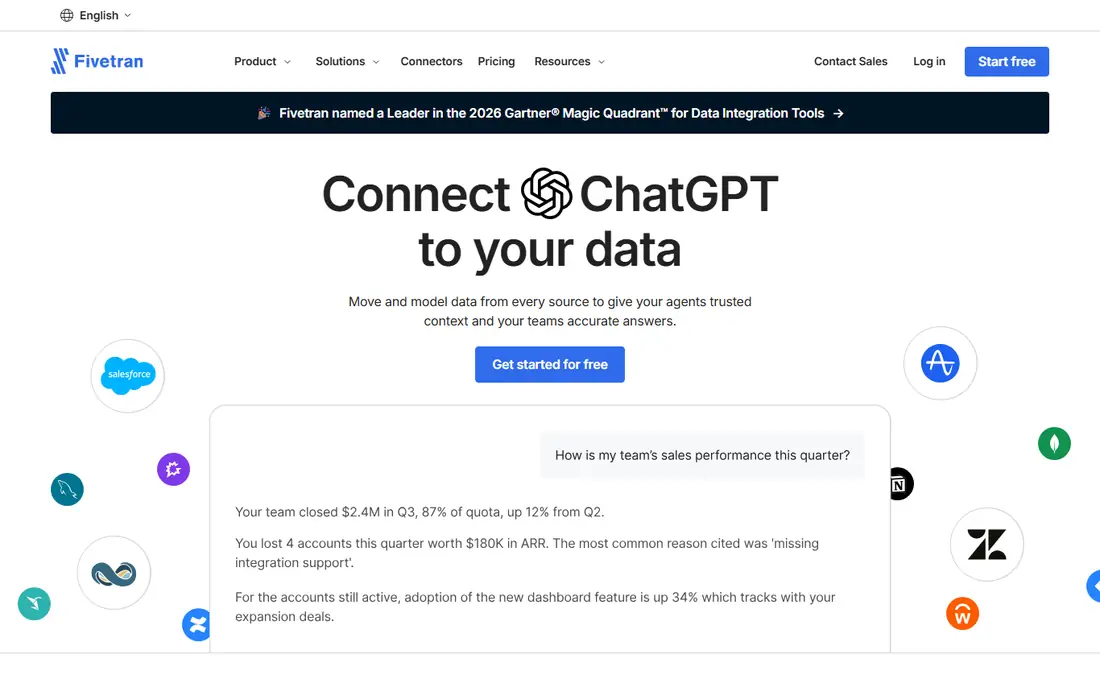
Fivetran is the managed pipeline many data teams choose when reliability matters more than the lowest possible bill. It connects hundreds of sources, runs a first historical sync, then switches to incremental syncs that pick up changed rows. That managed model means a team spends less time fixing broken connectors and more time using warehouse data for reporting and analysis.
Cost is the main caution. Fivetran charges by monthly active rows, which are rows added or changed in a month, so a source with frequent changes costs more than a quiet source. A free tier covers a limited volume for testing, while paid pricing depends on volume and connection. For production pipelines that must run without constant care, Fivetran is our pick for most mid-size and larger teams.
- Wide connector catalogue
- Managed, low-maintenance pipelines
- Incremental sync and change capture
- Usage-based cost grows with data change
- Paid rates depend on volume and connection type
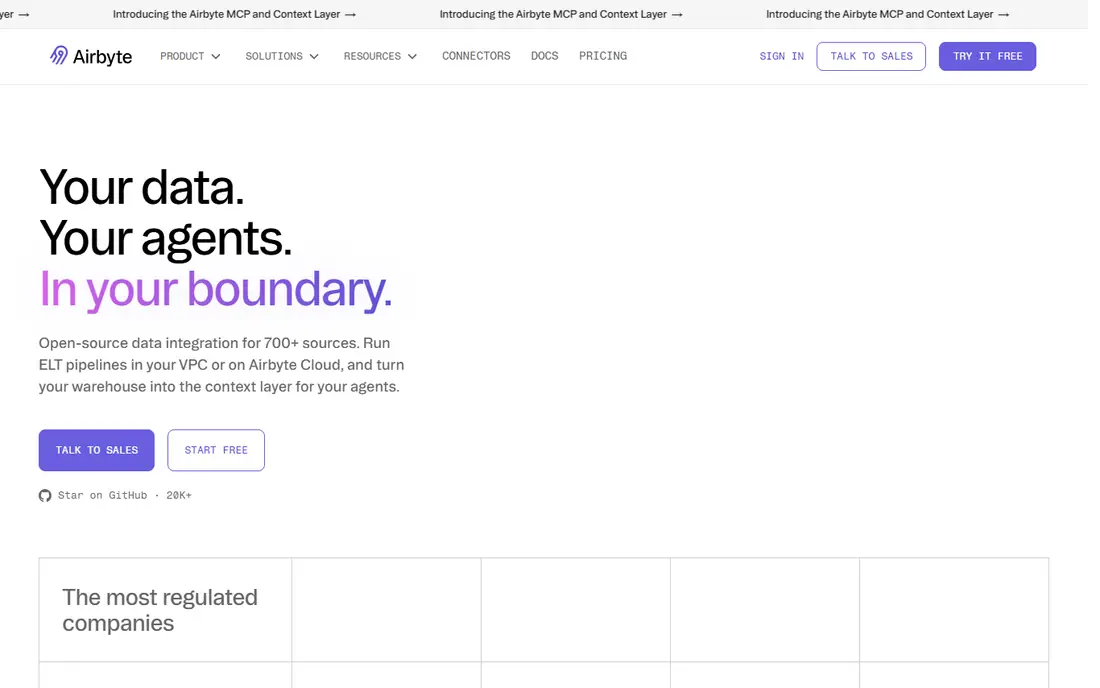
Airbyte gives teams two paths: run the platform themselves, or use Airbyte Cloud as a managed service. The self-hosted path appeals to teams that want control over infrastructure and data location, while Cloud suits teams that want a managed start without running servers. Its connector catalogue is large, and custom connectors help teams connect internal or niche sources.
Self-hosting is not free in practice, since it needs engineering time, monitoring and upgrades. Cloud pricing is volume-based, so teams should test with real data before budgeting. For a cost-conscious team with engineering capacity, or a team that wants a managed start at a low entry price, Airbyte is a strong, flexible choice.
- Self-hosted option plus managed Cloud
- Large connector catalogue
- Custom connector support
- Self-hosting needs engineering time
- Cloud pricing depends on volume and credits
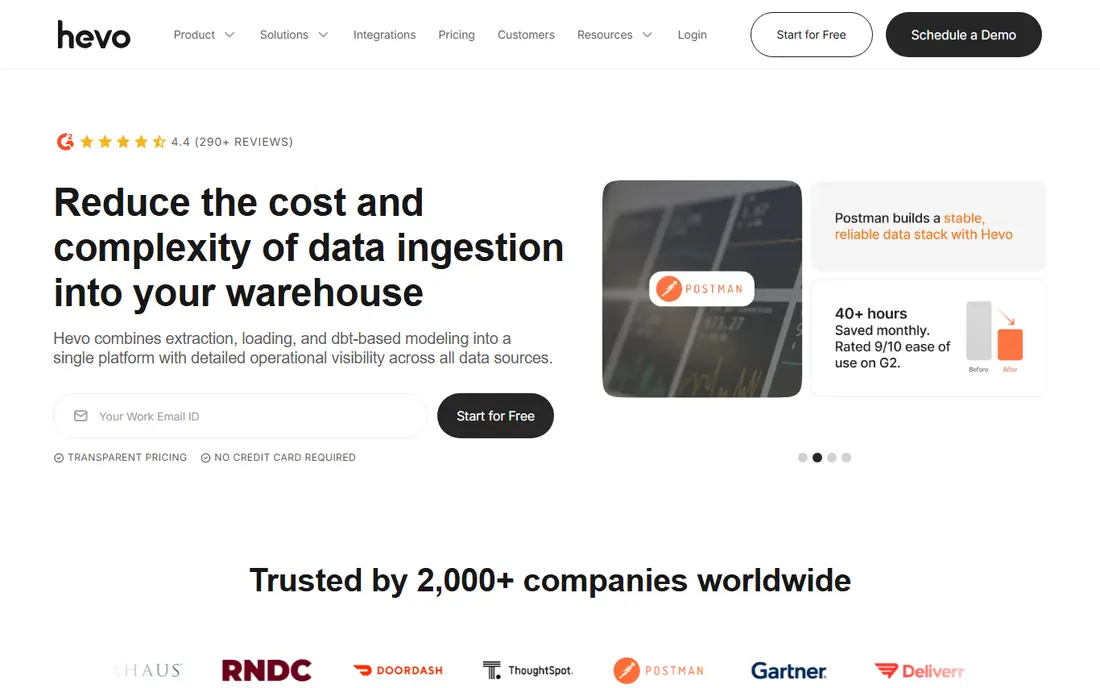
Hevo Data suits small to mid-size teams that want to move data from SaaS apps and databases into a warehouse without writing pipeline code. Setup is largely point-and-click, change data capture keeps warehouse data fresh on many sources, and the free tier lets a team test a small pipeline before paying. That simplicity helps analytics teams that do not have a dedicated data engineering group.
Pricing is event-based, counting inserts, updates and deletes, so a high-change source can push a team to a higher tier. Transformation options, including Python and warehouse-based modelling on paid plans, are useful but not as deep as a dedicated transformation platform. For a no-code ELT start, Hevo Data is a practical choice.
- No-code setup for common sources
- Real-time change capture on many connectors
- Clear event-based tiers
- Event-based pricing grows with volume
- Transformation depth is lighter than warehouse-native tools
Stitch, from Talend, focuses on simple extract-and-load work: move data from a SaaS app or database into a warehouse on a schedule, without complex transformation logic. That narrow focus makes setup fast for standard sources, and row-based tiers are easy to understand for a team with a stable data volume. It suits small teams that need reliable loads for reporting, not a full data platform.
The limits show when a team needs complex transformations, orchestration or reverse ETL back into business apps. Stitch also has fewer connectors than Fivetran or Airbyte for niche sources. For a team with straightforward SaaS-to-warehouse needs, Stitch is a simple, dependable option.
- Simple setup for standard SaaS loads
- Clear row-based tiers
- Reliable for common sources
- Limited transformation and orchestration
- Fewer advanced features than Fivetran or Airbyte
Skyvia is a no-code platform for integration, migration, backup and reverse ETL, which moves warehouse data back into business apps. That range suits operations and revenue teams that need to sync CRM, accounting and marketing data without writing code. Paid plans offer unlimited users, which helps a team where many people need access to integrations.
Skyvia is not the best choice for very large, low-latency streaming pipelines, where Estuary Flow or a dedicated streaming tool fits better. Advanced data engineering features are also lighter than Matillion or a code-based stack. For no-code integration and reverse ETL at a clear price, Skyvia is a strong option.
- No-code ETL, ELT and reverse ETL
- Backup and sync for ops teams
- Unlimited users on paid plans
- Less suited to very large streaming workloads
- Advanced data engineering features are lighter
Estuary Flow is built for real-time data movement, using streaming change capture to keep destinations fresh with low latency. That design suits teams that need up-to-date data for operations, live dashboards or AI features, rather than a nightly batch load. Pricing is transparent, based on data volume plus a per-connector fee, and a free tier covers small volumes for testing.
Streaming pipelines need careful design, including handling of schema changes and backfills, so teams used to batch loads should plan a learning period. The connector catalogue is also smaller than Fivetran or Airbyte. For real-time work where freshness matters, Estuary Flow is a strong, focused choice.
- Low-latency streaming change capture
- Transparent per-GB pricing
- Free tier for testing
- Streaming model needs a different design mindset
- Connector count is smaller than Fivetran
Matillion runs ELT and transformation inside the cloud warehouse, using visual pipelines plus SQL and Python. That warehouse-native approach keeps transformation close to the data, which helps performance and governance for teams already committed to Snowflake, Databricks or a similar platform. It also covers orchestration, so a team can schedule and monitor pipelines in one place.
Pricing is credit-based and quote-based, so a team cannot budget from a simple public price alone. Matillion also assumes a cloud warehouse, so a team without one needs that platform first. For a warehouse-centred team that wants visual ELT plus transformation, Matillion is a strong enterprise option.
- Visual ELT that runs inside the warehouse
- Strong transformation and orchestration
- Cloud warehouse focus
- Credit-based pricing is quote-based
- Needs a cloud warehouse such as Snowflake or Databricks
Rivery combines ingestion, transformation, orchestration and reverse ETL in one platform, which suits teams that want fewer tools for the full pipeline. Logic steps in SQL and Python let data engineers add custom rules, while orchestration schedules and monitors jobs across sources. That breadth helps a team that moves data both into a warehouse and back into business apps.
Credit-based pricing means the total bill depends on how many credits jobs consume, so teams should model costs on a trial with real workloads. Connector coverage is broad but not as wide as Fivetran for every niche source. For a team that wants ingestion plus orchestration in one place, Rivery is worth testing.
- ELT, orchestration and reverse ETL in one platform
- Credit-based pricing
- SQL and Python logic steps
- Pricing depends on credit use, so costs need modelling
- Smaller catalogue than Fivetran for some sources
AWS Glue is a serverless ETL service for teams already running on AWS. It can run visual ETL jobs or Spark and Python code, discover data with crawlers, and move data between AWS storage, databases and warehouses. Because it is serverless, a team does not manage ETL servers, and it links closely to other AWS services for storage, security and monitoring.
The AWS-only focus is the main limit. A team on another cloud or on-premises stack gets less benefit, and Glue has a learning curve for teams new to Spark or AWS data services. Cost depends on compute use, so test jobs with real data volumes. For an AWS-centred team, Glue is a natural, scalable pipeline choice.
- Serverless Spark ETL inside AWS
- Visual and code-based jobs
- Deep AWS service links
- AWS-only focus
- Learning curve for teams outside AWS
- Cost depends on compute use
How we picked these
We compared official feature pages, pricing pages and public data engineering guides for pipeline tools, and we checked that each product is still offered in October 2026. We favoured tools that move data reliably into warehouses, lakes or business apps, with clear pricing models and current connector support. Where pricing was quote-based, credit-based or could not be verified on the vendor site, we wrote See website rather than guessing.
We also kept the list broad: managed ELT, self-hosted ELT, no-code integration, streaming, warehouse-native transformation and cloud-native ETL all serve different pipeline needs, so a single winner would mislead readers.
How to choose a data pipeline tool
Start with your destination and latency need. A nightly reporting load suits Fivetran, Airbyte, Hevo or Stitch, while a live operations feed suits Estuary Flow. A warehouse-native team should shortlist Matillion, while an AWS team should test Glue. Naming destination and latency first narrows the list fast.
Model cost on real volumes
Usage-based pricing means a demo with a tiny dataset will not predict the bill. Run a trial on a full source, measure rows changed, events or credits used, and project that to a full month. Also check connector coverage for every source you need, including databases, files and internal apps, before committing.
Plan for schema changes and monitoring
Sources change fields, rename columns and add tables, and a pipeline that breaks silently is worse than one that fails loudly. Check schema change handling, alerting, logs and replay options, and assign an owner for pipeline health. A tool with good monitoring saves more time than a slightly cheaper tool with weak alerts.
Frequently asked questions
What is the best data pipeline software for a small team?
Airbyte Cloud, Hevo Data and Skyvia are strong small-team starts, with free tiers and no-code setup for common sources. Fivetran suits a small team that wants a managed, low-maintenance pipeline and can accept usage-based pricing.
Is Fivetran better than Airbyte?
Fivetran offers a more managed, low-maintenance experience with a wide connector catalogue, while Airbyte offers a self-hosted option and a lower-cost managed start. Choose Fivetran for reliability with less engineering effort, and Airbyte for control or cost savings with engineering capacity.
What is the difference between ETL and ELT?
ETL transforms data before loading it into a warehouse, while ELT loads raw data first and transforms it inside the warehouse. Most tools in this list follow ELT, with transformation handled in the warehouse or in a separate tool.
How much does data pipeline software cost?
Costs depend on volume and pricing model: free tiers exist for Fivetran, Airbyte, Hevo, Skyvia and Estuary, Stitch starts at $100 per month, and Matillion, Rivery and AWS Glue use credit, quote or compute-based pricing. Always model cost on real data volumes.
Do I need a separate transformation tool?
Many teams pair a loader such as Fivetran or Airbyte with a transformation tool for warehouse modelling, while Matillion and Rivery include more transformation in the pipeline itself. Choose based on how complex your warehouse models are.
Sources
See where you really rank - block by block
ProMapRanker scans Google Maps across a grid of your service area. Simple monthly plans from $19, white-label on every plan.
Start freeKeep reading
 zscaler alternatives
Best Zscaler Alternatives in 2026
Looking for zscaler alternatives? We compare 9 SASE and zero trust platforms on architecture, data protection, pricing, and fit for your network and team.
Read → zapier alternatives free
Best Zapier Alternatives Free in 2026
Nine automation tools for zapier alternatives free in 2026, all with genuinely free tiers, plus free plan limits, starting prices and upgrade paths explained.
Read → which platform is best for online reputation
Which Platform Is Best for Online Reputation in 2026
Wondering which platform is best for online reputation? We compare 8 review, listing, and response tools for small and multi-location businesses and agencies.
Read →