 ProMapRanker
Data Lakehouse Platforms Buyer's Guide

Key takeaways
- Top of the list is AWS Lake Formation, which targets governed lakes on AWS.
- Dremio comes with a trade-off: cloud pricing is usage based and needs monitoring.
- Free plans exist at 2 of 5 tools (Starburst, Dremio).
- AWS Lake Formation, Snowflake and the 3 others all sell by quote; expect sales conversations before you see a price.
- For managed SQL analytics at scale, Snowflake is worth a look.
Direct answer
AWS Lake Formation leads the list, best for governed lakes on AWS. Starburst is the stronger choice for Federated queries across plenty of sources, while Dremio suits SQL on Iceberg without moving data. Details, prices and limits for the rest of the 5 tools are below.
Quick comparison
| Pick | Great for | Pricing starts at | Free tier | |
|---|---|---|---|---|
 AWS Lake Formation | Governed lakes on AWS | See website | No | Visit |
 Starburst | Federated queries across plenty of sources | See website | Yes | Visit |
 Dremio | SQL on Iceberg without moving data | See website | Yes | Visit |
 Databricks | Spark, SQL, and AI on one product | See website | Free trial | Visit |
 Snowflake | Managed SQL analytics at scale | See website | Free trial | Visit |
The best data lakehouse platforms
ProMapRanker compared 5 data lakehouse platforms. The goal is a practical shortlist: published prices, free plan facts, best-fit use cases and honest limits for every entry.
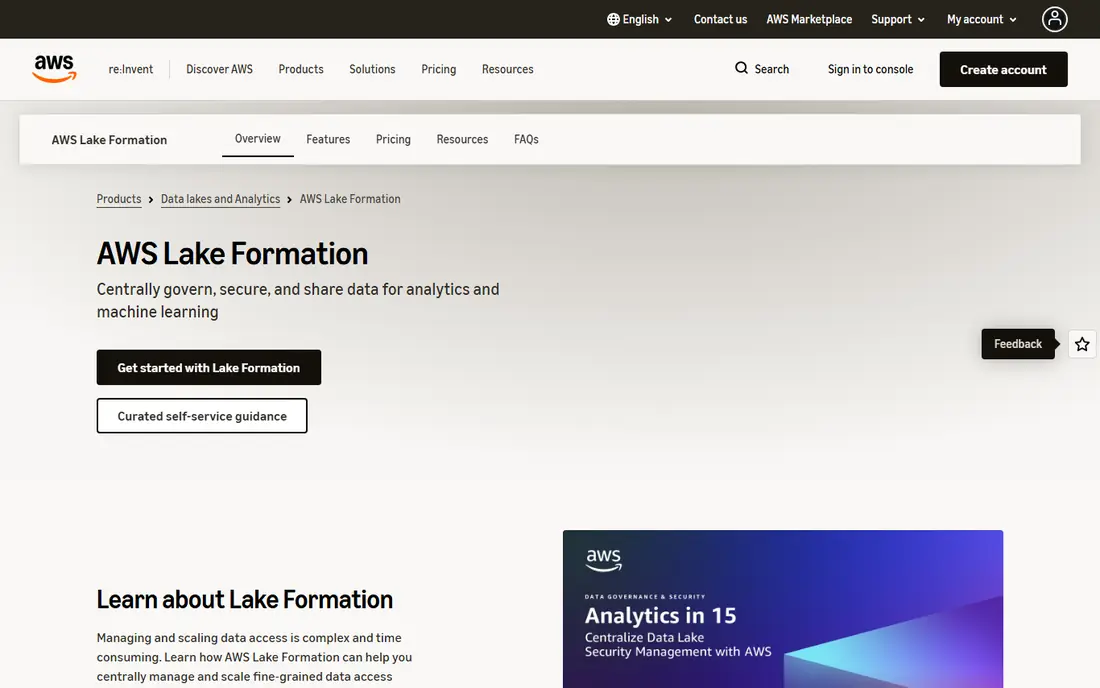
In short, AWS Lake Formation is for governed lakes on AWS. It centralises permissions for databases and tables in the Glue Data Catalog, supports fine grained row and column controls, and helps teams share data inside and outside an organisation with audit trails. Worth adding: judge Lake Formation on governance outcomes, for example who can see what and how rapidly access can be granted safely, instead of on query speed alone.
Where it is weaker: not a full analytics system.
Teams still need Athena, EMR, Redshift, or a third party engine for analysis, and they need Glue or another catalog to organise data. More specifically, for regulated teams, that governance layer is frequently the missing piece between raw storage and trusted reporting. AWS Lake Formation does not show a starting price in this comparison, so check the vendor site for current pricing. AWS Lake Formation has no free tier.
- Central permissions for AWS data lakes
- Auditing and sharing built in
- It is a governance layer
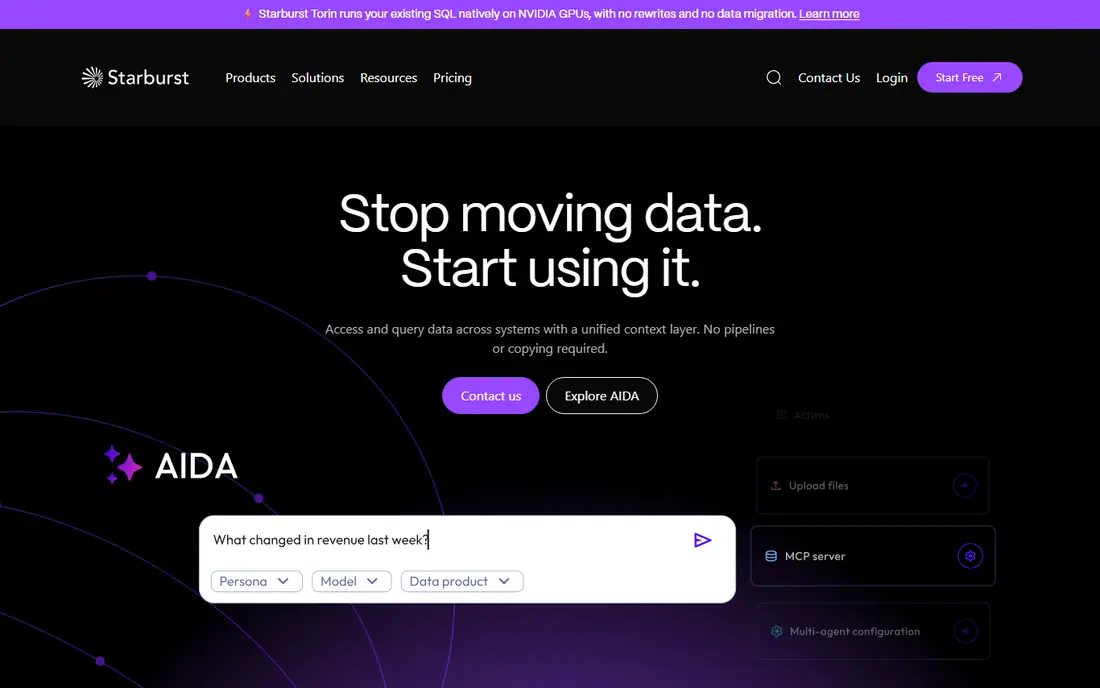
Starburst is designed for Federated queries across numerous sources. That is valuable for organisations with legacy systems, acquired businesses, or strict rules about where data can live.
Where it falls short: Federated performance relies on source systems.
Beyond that, the honest limit is source dependence. Starburst shows no starting price here, so confirm the cost on the vendor site. Starburst has a free plan.
- Managed Trino with Iceberg support
- Queries plenty of sources in one SQL statement
- Managed pricing is credit based
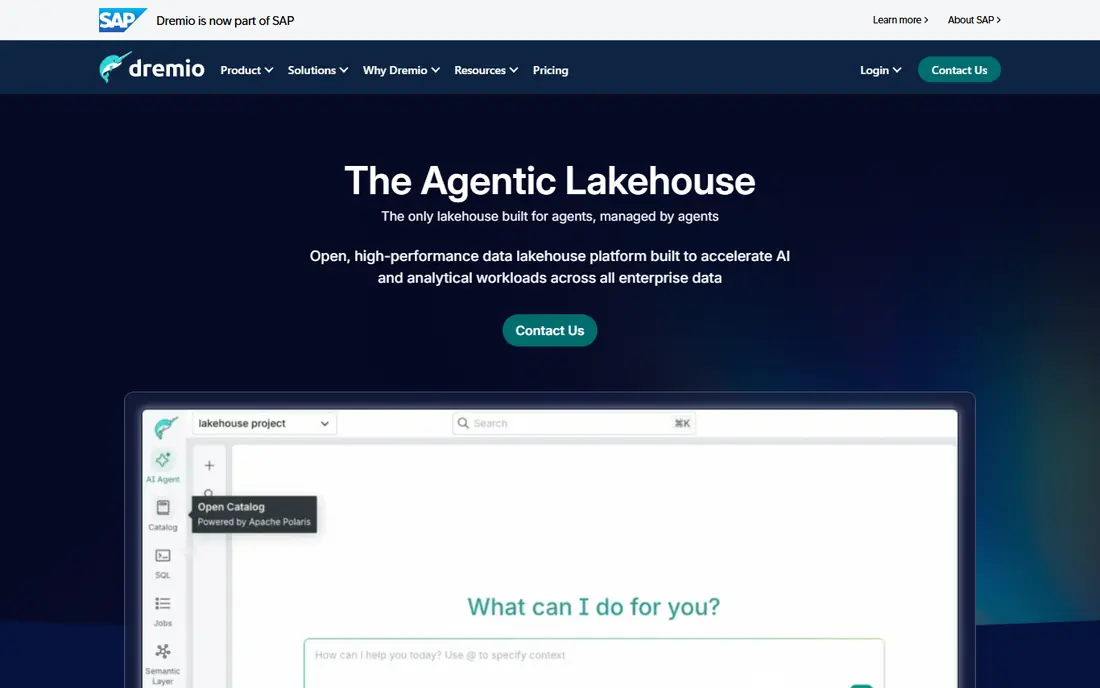
Think of Dremio for SQL on Iceberg without moving data. Its engine accelerates BI queries, federates across sources, and cuts the have to copy data into a proprietary warehouse. From a buyer's view, the main limit is change.
SAP acquired Dremio in 2026, and whereas SAP has said it will continue investing in Dremio and Iceberg work, buyers on multi year contracts should ask about roadmap, pricing protection, and exit choices. In practice, the open Iceberg format itself is a handy safeguard, since tables remain readable by other engines. Pricing for Dremio is not stated here, so ask the vendor for current figures. Dremio has a free plan.
Drawbacks to consider: Cloud pricing is usage based and needs monitoring.
- Automatic acceleration for BI
- Open format focus
- SAP ownership may affect long term roadmap questions
Databricks works best for Spark, SQL, and AI on one system. Databricks bills in units that vary by workload and level, and your cloud provider bills the underlying compute and storage separately. Beyond that, start with serverless SQL for analytics, set auto stop policies, and track cost per workload from the first month.
Best features of Databricks: Unity Catalog governance.
In practice, the lakehouse approach keeps data in open formats in your cloud account, then brings governed SQL, notebooks, jobs, and AI tools on top. That combination cuts the have to copy data between a lake, a warehouse, and a machine learning system, which is where numerous architectures become fragile. Teams that leave clusters running, skip auto termination, or run unoptimised jobs will see bills rise rapidly. No starting price is listed for Databricks here; confirm pricing on the vendor site. Trial and free access: Free trial. Limits to weigh: Complexity grows for small teams.
- Capable Spark, SQL, streaming
- Machine learning in one place
- Usage pricing has two parts, product plus cloud
Think of Snowflake for managed SQL analytics at scale. Worth adding: virtual warehouses scale for concurrent BI users, auto suspend when idle, and separate compute from storage. So a reporting team and a data science team can work without blocking each other.
Beyond that, the trade off is workload fit. Also, Snowflake has added notebooks, Iceberg support, and machine learning features, but teams whose core work is heavy Spark pipelines or custom model training may still prefer Databricks. This comparison lists no price for Snowflake; ask the vendor. Free access: Free trial.
Honest limits: Less native Spark and ML depth than Databricks.
- Completely managed SQL with little tuning
- Strong governance and sharing
- Compute and storage pricing needs active management
How the list was put together
The comparison looks at four things: starting price, free access, how well the feature set matches data lakehouse platforms, and the main limit of each tool. Plan names, prices and limits change often. Treat the figures here as a starting point and verify them with the vendor. The order reflects how well each tool fits the most common buying scenario for data lakehouse platforms, then price clarity, then free plan access. It is a starting point, not a verdict.
What to check before you buy
- Request quotes from AWS Lake Formation, Snowflake and the others; the list shows no fixed prices.
- Read the fine print on the free plans from Starburst and Dremio; seat, project and feature caps differ.
- Use real work to test the free trial from Databricks and Snowflake, rather than a demo project.
- Before choosing AWS Lake Formation, weigh its main limit: it is a governance layer, not a full analytics system.
- Check the integration list for Dremio against the tools you run today, and note which ones need a higher plan.
- Verify that exporting from Starburst is possible on your plan and covers all your records.
Frequently asked questions
Is AWS Lake Formation the right pick for everyone comparing data lakehouse platforms?
No single tool suits every team. AWS Lake Formation comes first because it fits governed lakes on AWS, while Starburst suits Federated queries across many sources and Dremio suits SQL on Iceberg without moving data. Match the tool to your own size, budget and workflow before deciding.
Which lakehouse is best for a small team?
AWS Lake Formation comes first here and is built for governed lakes on AWS. Buyers with other needs may prefer Starburst (for Federated queries across many sources) or Dremio (for SQL on Iceberg without moving data). Compare costs and limits first.
What is a data lakehouse?
A lakehouse stores data in low cost object storage in open formats, then brings warehouse features for example SQL, governance, transactions, and performance optimisation.
Can I try these options before paying?
Often, yes. Starburst and Dremio have a free plan and Databricks and Snowflake offer a free trial. Use your own data and a real task during the test, and check what the free tier or trial limits before you rely on it.
How are the tools for data lakehouse platforms ordered?
AWS Lake Formation sits first and Snowflake last because the order follows typical fit for data lakehouse platforms, then price clarity and free access. It is a judgement call, so read each profile for fit and limits.
Do these tools publish their prices?
No. None of the tools, from AWS Lake Formation to Snowflake, shows a fixed starting price here, so budget time for quotes.
Sources
See where you really rank - block by block
ProMapRanker scans Google Maps across a grid of your service area. Simple monthly plans from $19, white-label on every plan.
Start freeKeep reading
 zoho inventory alternatives
6 Alternatives to Zoho Inventory, Compared on Price and Fit
Zoho Inventory alternatives: 6 tools compared on price, free plans and fit. Katana leads the list for manufacturers. Fit and flaws are laid out for each entry.
Read → zoho crm alternatives
Best Zoho CRM Alternatives (2026)
Need Zoho CRM alternatives? We compare 7 tools on cost, free access and who each suits. Every pick gets a straight assessment. Built for quick decisions.
Read → zelle alternatives
Best Zelle Alternatives in 2026
Compare the best Zelle alternatives for sending money to friends, paying sellers and moving funds abroad, with honest notes on fees, speed and safety in 2026.
Read →