 ProMapRanker
Best Data Integration Platform for Small Business in 2026

Key takeaways
- Skyvia and Coupler.io give the lowest entry cost for a small business that needs simple, scheduled data movement.
- Airbyte Cloud and Stitch suit small teams that want a warehouse first pipeline without enterprise pricing.
- Hevo Data and Fivetran suit growing teams that need fresher data and more connectors, at a higher monthly cost.
- Estuary Flow and Weld suit teams with streaming or predictable pricing needs, though both need more technical input than a simple tool.
- The best small business choice is usually the cheapest tool that already supports your largest sources, not the tool with the longest feature list.
Quick comparison
| Pick | Great for | Pricing starts at | Free tier | |
|---|---|---|---|---|
 Skyvia | Lowest cost warehouse sync | See website | Yes | Visit |
 Coupler.io | Spreadsheet and BI automation | $24 per month | Yes | Visit |
 Airbyte | Flexible ELT on a budget | $20 per month | Yes | Visit |
 Stitch | Simple warehouse replication | $100 per month | Free trial | Visit |
 Hevo Data | No-code pipelines for growth | See website | Yes | Visit |
 Fivetran | Managed ELT with low upkeep | See website | Yes | Visit |
 Estuary Flow | Real-time pipelines | See website | Yes | Visit |
 Weld | Predictable flat pricing | $99 per month | Free trial | Visit |
 Zapier | App to app data movement | See website | Yes | Visit |
The best data integration platform for small business
We compared tools on entry price, free tier, setup effort, connector fit for common small business systems, and whether a non specialist can run the pipeline. A small business rarely has a data engineer, so ease of setup and clear pricing matter as much as raw power.
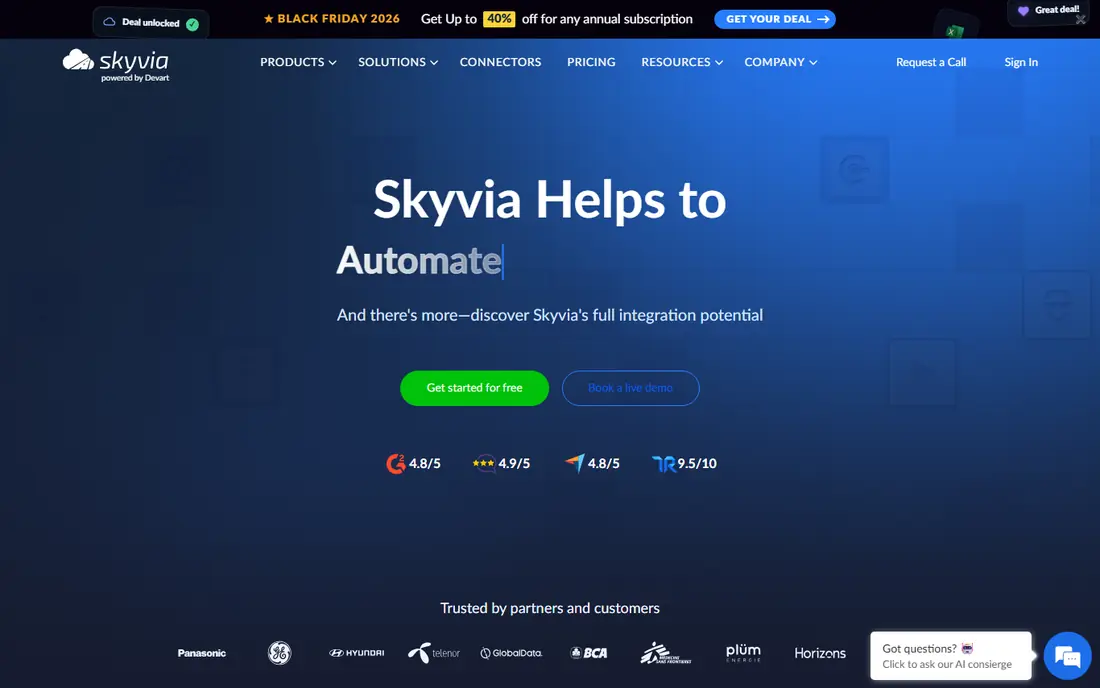
Skyvia is our pick for a very small business that needs to move data into a warehouse or between cloud apps without a large bill. A free tier covers small replication volumes, and paid plans start at a level that a small company can justify. Visual tools for replication and data flows keep setup accessible.
The limit is volume. As record counts grow, the tier price rises, and a business with large tables should model that growth early. Support is also less around the clock than larger vendors offer, so a team that needs urgent help at night should weigh that point.
- Free tier for small volumes
- Visual pipeline and replication tools
- Broad source catalog
- Paid tiers scale by records
- Support hours are limited to business hours in its home region
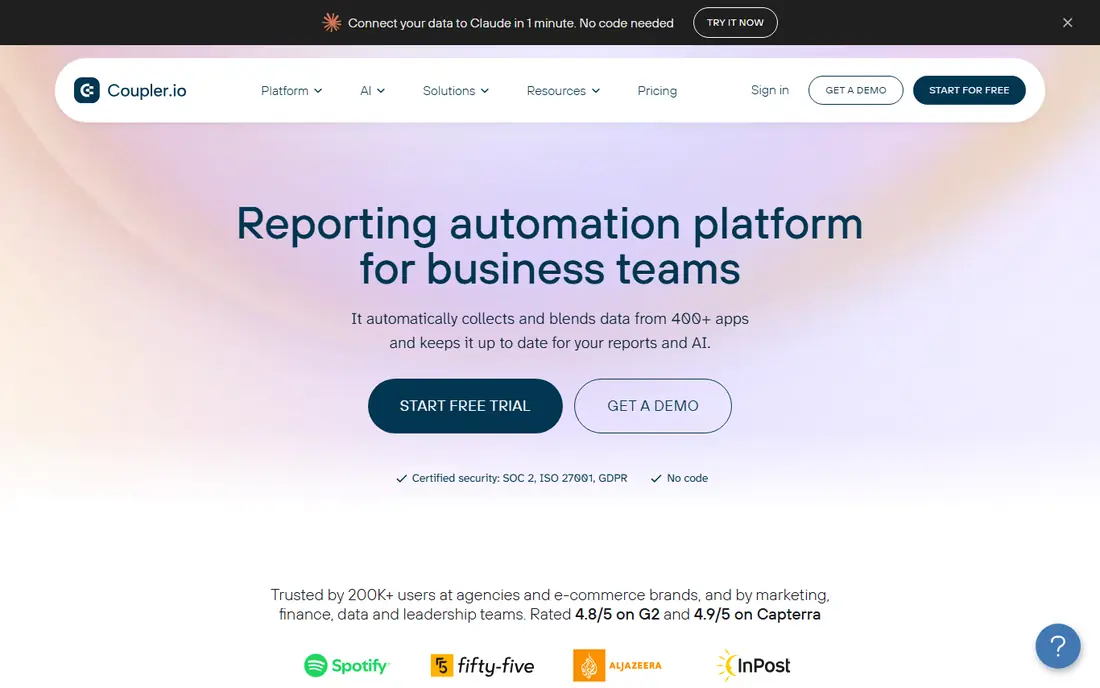
Coupler.io suits a small business that lives in spreadsheets and dashboards rather than a warehouse. It pulls data from apps and databases into Google Sheets, Excel, Looker Studio, and other destinations on a schedule, with no-code transformation along the way. That workflow fits weekly reports, sales dashboards, and marketing summaries.
The trade-off is scope. Coupler.io is not designed to replace a full ELT pipeline into Snowflake or BigQuery at high volume. For a business that needs reports, not a data warehouse, it is often the cheapest and fastest option. For a business building a warehouse, pair it with a dedicated ELT tool later.
- Low entry price
- Strong fit for Sheets, Excel, and BI tools
- No-code transformations
- Not a full warehouse ELT replacement
- Heavier warehouse loads need another tool
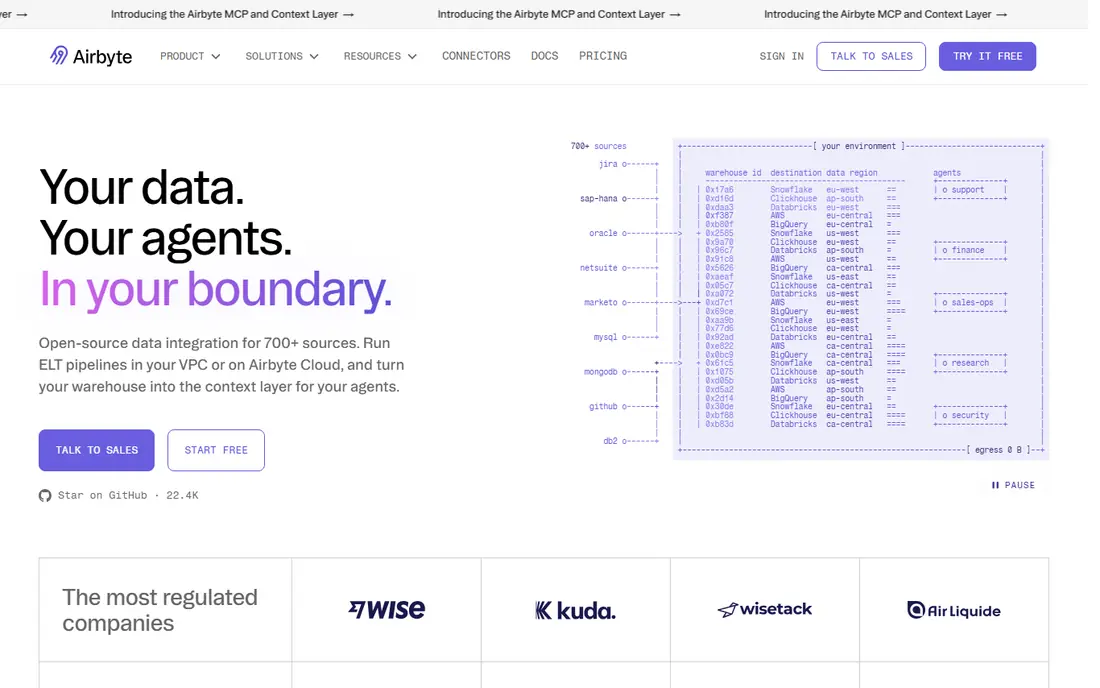
Airbyte gives a small business a low cost route into proper ELT. Cloud plans start at a low monthly figure, the connector catalog covers common SaaS and database sources, and the open source option means a technical founder can self host at no license cost. That flexibility is rare at this price.
The catch is that self hosting is not free in effort, and Cloud credits vary with sync frequency. A small team should start with scheduled syncs rather than near real-time ones, and check the first invoice before increasing frequency. For a team with some technical skill, Airbyte offers more headroom than simpler tools.
- Low Cloud entry price
- Large connector catalog
- Open source self hosted option
- Credit pricing needs monitoring
- Self hosting needs technical skill
Stitch is a good middle step for a small business that has outgrown spreadsheets and wants a warehouse. Setup is short, replication is reliable, and the tier model is easy to explain. It suits a company with a handful of core sources, such as a CRM, a billing system, and a web analytics tool.
The limits are price and scope. At a higher entry price than the cheapest tools, it needs a clear reporting need to justify it, and it does not transform data in the pipeline. A team should plan to do modeling in the warehouse, and should confirm that its key sources are supported before paying.
- Quick setup
- Clear row based tiers
- Reliable scheduled replication
- No built in transformation
- Higher entry price than Skyvia or Coupler.io
Hevo Data suits a growing small business that needs fresher data than a daily spreadsheet refresh. Pipelines can be built without code, schema changes are handled, and supported sources can sync close to real time. That helps a company that checks sales, inventory, or marketing performance during the day.
The cost needs a forecast. Events, including updates and deletes, count toward the plan, so a busy store or app can reach a higher tier faster than expected. Start on the free tier, measure event volume from your largest source, and only then commit to a paid plan.
- No-code setup
- Near real-time sync for supported sources
- Automatic schema mapping
- Event based pricing can rise with volume
- Higher cost than the cheapest small business tools
Fivetran is the premium option in this list, and it suits a small business that values time over the lowest price. Managed connectors reduce the maintenance burden to near zero for standard sources, which matters when no one on staff owns data pipelines full time. A free tier covers small volumes for a trial.
The risk is cost at scale. Monthly active row pricing can grow quickly on tables that change often, so a small business should model its largest tables before committing. If the budget is tight and the sources are standard, Airbyte or Skyvia may deliver most of the value for less.
- Managed connectors with low maintenance
- Automatic schema handling
- Broad catalog
- Usage based pricing can be high for a small budget
- Some connectors carry premium charges
Estuary Flow is for a small business with a real-time need, such as live inventory, order status, or operational alerts. Change data capture keeps a destination close to current without waiting for a batch window. A free developer tier lets a technical team test that use case before paying.
The trade-off is skill. Estuary asks more of its users than Skyvia or Coupler.io, since transformations use code. A non technical team may find it heavy, while a developer led small business may value the latency and control it offers.
- Streaming and change data capture
- Free developer tier
- Low latency for operational data
- More technical than simple ELT tools
- Transformation is code based
Weld suits a small business that hates surprise usage bills. A flat monthly tier includes a set volume, connectors, transformations, and reverse ETL, so the invoice is easier to forecast than a row or event based model. That predictability helps a finance team plan the year.
The limit is catalog size and low volume waste. A business with only one or two sources may pay for capacity it does not use, and a niche source may be missing. Check the connector list first, and compare the flat price with a usage based estimate from Airbyte or Skyvia.
- Flat tier with included volume
- Connectors, transformations, and reverse ETL in one plan
- Predictable billing
- Smaller connector catalog than Fivetran
- Flat tiers can waste money at very low volumes
Zapier belongs here because many small businesses first move data app to app, not into a warehouse. It connects thousands of apps, moves records on triggers, and needs no code. A small team can sync a form to a CRM, a CRM to a spreadsheet, or an order to an accounting app in an afternoon.
The limit is that Zapier is automation, not ELT. It does not replace a warehouse pipeline for analytics at scale, and task based pricing can rise when a flow runs often. Use Zapier for operational syncs between apps, and use an ELT tool from this list when the goal is analytics in a warehouse.
- Huge app catalog
- No-code automation
- Useful for moving records between business apps
- Not a warehouse ELT tool
- Task based pricing can rise with volume
How we picked these
We compared official pricing and feature pages, free tier terms, and connector coverage for common small business systems such as CRMs, billing tools, spreadsheets, and ecommerce platforms. We favored tools a small team can set up without a data engineer, and we left out enterprise only platforms with no self serve entry point. Where a starting price could not be verified on the vendor page at the time of writing, we wrote See website.
What to check before you choose
Start with your destination. If reports live in Sheets or a BI tool, Coupler.io or Zapier may be enough. If reports need a warehouse, shortlist Skyvia, Airbyte, and Stitch, then check connector fit for your largest sources. Do not buy a platform for a source you might use one day.
Next, run a trial on real data. Measure rows or events for a full week, check how schema changes are handled, and confirm the first invoice matches your forecast. Finally, assign one owner for the pipeline, even in a tiny team. A pipeline with no owner fails quietly, and a monthly check of sync health takes only a few minutes.
Frequently asked questions
What is the cheapest data integration platform for a small business?
Skyvia and Coupler.io usually have the lowest entry cost, with free tiers for small volumes and paid plans that a small company can justify. Airbyte Cloud is also low cost at entry, though credit use needs monitoring. The cheapest choice depends on your volume and destination, so compare a month of your own data, not only the headline price.
Do I need a data warehouse to use these tools?
No. Coupler.io and Zapier work well for spreadsheets, BI tools, and app to app syncs without a warehouse. Skyvia, Airbyte, Stitch, Hevo, and Fivetran are built for warehouse pipelines, so choose them when reporting needs a central warehouse or when data volume outgrows spreadsheets.
How long does setup take?
Simple tools such as Coupler.io and Skyvia can be set up in an afternoon for standard sources. Airbyte and Stitch take a little longer when a warehouse destination must be configured. Enterprise platforms, which we left out of this list, can take weeks, which is why they suit larger companies better.
What happens if a source changes its fields?
Good ELT tools handle schema changes automatically or flag them for review, rather than failing silently. Check this behavior in a trial by adding a field to a test source and watching how the pipeline reacts. A tool that drops new fields without warning can break reports.
Can a non-technical person run these pipelines?
Yes, for the simpler tools in this list. Skyvia, Coupler.io, Hevo Data, and Zapier are built for no-code setup and monitoring. Airbyte and Estuary Flow need more technical input, so a non-technical team should lean toward the no-code options and keep the pipeline count small.
Sources
See where you really rank - block by block
ProMapRanker scans Google Maps across a grid of your service area. Simple monthly plans from $19, white-label on every plan.
Start freeKeep reading
 zoro.to alternatives
Best Zoro.to Alternatives in 2026
We compare the best zoro.to alternatives in 2026, listing only legal licensed anime streaming services, from Crunchyroll to free options for fans today.
Read → zip alternatives
Best Zip Alternatives in 2026
We compare the best zip alternatives for buy now, pay later in 2026, covering pay-in-4 plans, fees, spending limits, and credit reporting options today.
Read → yesware alternatives
Best Yesware Alternatives in 2026
Compare the best yesware alternatives for sales email tracking, templates, and sequences, with current pricing and honest tradeoffs for small sales teams.
Read →