 ProMapRanker
6 Top Cybersecurity Platforms Compared (2026)

Key takeaways
- Number one here is Wiz, a fit for cloud security posture.
- Before buying Palo Alto Cortex, weigh this: best inside Palo Alto stack.
- Pricing across the list, from Wiz to SentinelOne, is by quote only.
- SentinelOne fits autonomous endpoint protection.
Direct answer
This list puts Wiz first for cloud security posture. Trend Micro fits wide business protection; Palo Alto Cortex fits Palo Alto ecosystem security. The other 3 tools in the list cover narrower or pricier cases.
Quick comparison
| Pick | Great for | Pricing starts at | Free tier | |
|---|---|---|---|---|
 Wiz | Cloud security posture | See website | Free trial | Visit |
 Trend Micro | Wide business protection | See website | Free trial | Visit |
 Palo Alto Cortex | Palo Alto ecosystem security | See website | No | Visit |
 Microsoft Defender | Microsoft 365 security | See website | Free trial | Visit |
 CrowdStrike Falcon | Endpoint security leader | See website | Free trial | Visit |
 SentinelOne | Autonomous endpoint protection | See website | Free trial | Visit |
Tool-by-tool breakdown
Choosing cybersecurity platforms usually comes down to price, fit and limits. This ProMapRanker guide sets 6 tools side by side on those three points, with the facts kept short and checkable.
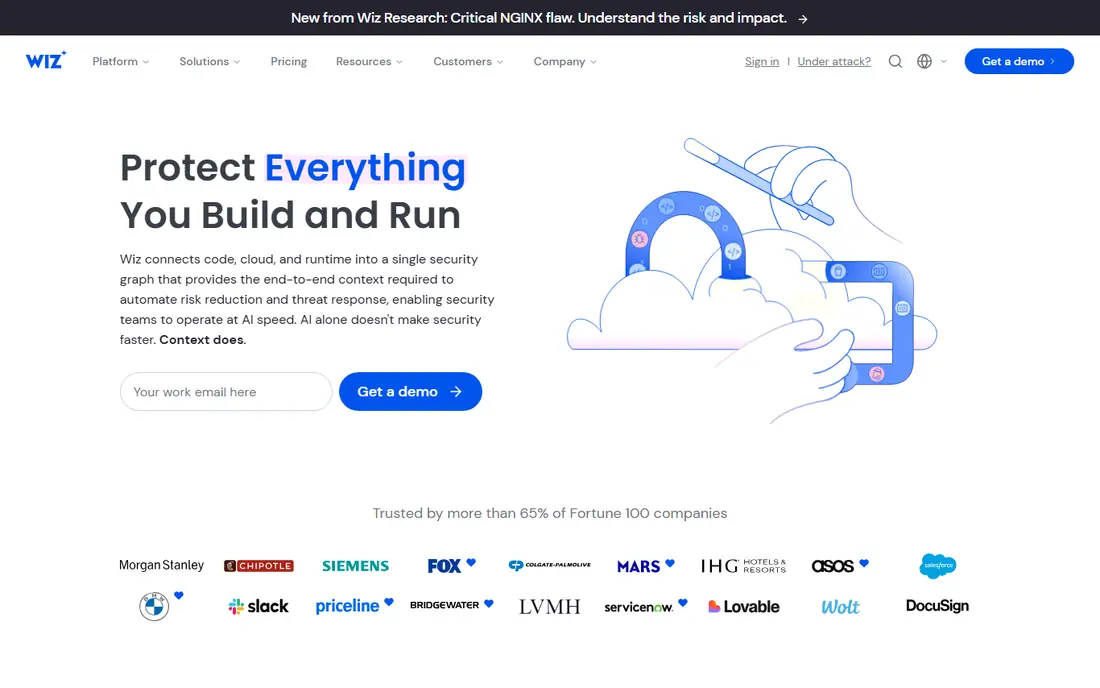
Choose Wiz for cloud security posture. Wiz transformed cloud security by showing everything without agents: link your cloud accounts, and within minutes see misconfigurations, vulnerabilities, exposed data, and attack paths across AWS, Azure, and GCP. Pricing reflects the premium positioning.
What to check first: Premium pricing.
But for cloud security posture, Wiz's clarity made it the standard quick. More specifically, the risk prioritization is the breakthrough. Rather than thousands of undifferentiated findings, Wiz presents which issues are actually exploitable, correlated across the attack path. Pricing for Wiz is not stated here, so ask the vendor for current figures. As for free access: Free trial.
- Quick deployment
- Prioritizes real risks
- Cloud-only

Trend Micro was built for wide business protection. The comprehensiveness fits IT teams wanting fewer vendors without sacrificing coverage.
Honest limits: Interface complexity.
It lacks the trend-setting reputation of CrowdStrike or Wiz, and the interface can feel complicated. Check the vendor site for Trend Micro pricing; none is listed in this comparison. On free options: Free trial.
- Decent value
- Capable in Asia-Pacific
- Less modern image

Palo Alto Cortex is designed for Palo Alto ecosystem security. Cortex is Palo Alto Networks' security operations system: XDR that correlates endpoint, network, and cloud data, plus SOAR for automatic response. Organizations standardized on Palo Alto firewalls get detection and response deeply integrated with their network security.
On top of that, the XDR approach presents its value in complicated attacks: signals from endpoints, firewalls, and cloud combine into incidents with context, reducing the alert fatigue of point tools. On top of that, outside the Palo Alto ecosystem, some integration advantages fade, and pricing is enterprise-grade. No starting price is listed for Palo Alto Cortex here; confirm pricing on the vendor site. Palo Alto Cortex has no free tier.
What to check first: Best inside Palo Alto stack.
- Capable XDR
- Proven enterprise scale
- Enterprise pricing
Microsoft Defender was built for Microsoft 365 security. Microsoft Defender (the business suite, formerly Defender for Endpoint plus) provides Microsoft 365 organizations serious security without another vendor.
But the "decent enough plus integrated plus already premium for" equation wins plenty of evaluations. Check the vendor site for Microsoft Defender pricing; none is listed in this comparison. Trial and free access: Free trial.
Trade-offs to know: Best inside Microsoft stack.
- Improving rapidly
- Bundled with Microsoft 365
- Advanced features need higher levels
CrowdStrike Falcon makes the most sense for endpoint security leader. CrowdStrike's Falcon system is the endpoint security standard by which others are judged. Beyond that, premium pricing reflects the positioning, and the system's full value comes from stacking modules for identity, cloud, and managed hunting.
As for the details, the threat intelligence operation is the differentiator: visibility into real-world adversary activity feeds detections that signature-based tools miss. In practice, the light agent spots and stops breaches with behavioral AI. The cloud product correlates signals across every endpoint to catch coordinated attacks. No starting price is listed for CrowdStrike Falcon here; confirm pricing on the vendor site. Free access: Free trial.
Where it falls short: Premium pricing.
- Best-in-class detection
- Elite threat intelligence
- Full value needs several modules
SentinelOne is designed for autonomous endpoint protection. The Singularity system extends into cloud and identity, building toward full XDR.
Also, the ecosystem and threat intelligence operation are smaller than CrowdStrike's. That autonomous response differentiates it in a crowded endpoint market. This comparison lists no price for SentinelOne; ask the vendor. Free plan details: Free trial.
Points against: Smaller ecosystem.
- Decent value vs. CrowdStrike
- Autonomous rollback
- Less brand recognition
How we compared the tools
Selection started from tools commonly considered for cybersecurity platforms, then narrowed to 6 that have clear pricing information or a clear quote process. Where a price is missing, the vendor does not list one publicly or ties it to a quote. Always confirm before budgeting. Order on the page follows fit for the typical buyer first, then price transparency and free access. Your own requirements should decide the final pick.
Things to verify first
- Ask each vendor, from Wiz to SentinelOne, for a written quote; none of them publishes a starting price.
- Run a trial of Wiz, Trend Micro, Microsoft Defender and others with real work before paying for a year; your own workflow is the best test.
- Read the limits listed for Wiz first: cloud-only.
- Check the integration list for Palo Alto Cortex against the tools you run today, and note which ones need a higher plan.
- A short pilot of Trend Micro with your real workflow tells you more than a feature table.
Frequently asked questions
Is Wiz the right pick for everyone comparing cybersecurity platforms?
No single tool suits every team. Wiz comes first because it fits cloud security posture, while Trend Micro suits broad business protection and Palo Alto Cortex suits Palo Alto ecosystem security. Match the tool to your own size, budget and workflow before deciding.
How are the tools for cybersecurity platforms ordered?
The order follows typical fit for cybersecurity platforms, with Wiz first and SentinelOne last, then price clarity and free access. It is editorial judgement, not a score, so another team could rank the tools differently.
Can I try these options before paying?
Often, yes. Wiz, Trend Micro, Microsoft Defender and others offer a free trial. Use your own data and a real task during the test, and check what the free tier or trial limits before you rely on it.
Do we need cyber insurance?
Increasingly yes, and insurers now need the controls these products supply: EDR, MFA, backups, and incident response plans. The right security stack both cuts risk and satisfies underwriters.
How frequently should we review our security stack?
Continuously for threats, quarterly for strategy. In daily use, attacker methods shift constantly; your tooling should evolve with them. Annual architecture reviews catch the larger misalignments.
Should we outsource security operations?
If you lack 24/7 security staff, strongly consider MDR (managed detection and response). The systems here work best with expert eyes on alerts. CrowdStrike, SentinelOne, and others offer managed choices.
Sources
See where you really rank - block by block
ProMapRanker scans Google Maps across a grid of your service area. Simple monthly plans from $19, white-label on every plan.
Start freeKeep reading
 zscaler alternatives
Best Zscaler Alternatives in 2026
Looking for zscaler alternatives? We compare 9 SASE and zero trust platforms on architecture, data protection, pricing, and fit for your network and team.
Read → zapier alternatives free
Best Zapier Alternatives Free in 2026
Nine automation tools for zapier alternatives free in 2026, all with genuinely free tiers, plus free plan limits, starting prices and upgrade paths explained.
Read → which platform is best for online reputation
Which Platform Is Best for Online Reputation in 2026
Wondering which platform is best for online reputation? We compare 8 review, listing, and response tools for small and multi-location businesses and agencies.
Read →