 ProMapRanker
Best Cybersecurity Companies in 2026


Broad enterprise platform · Pricing starts at: See website
Key takeaways
- Palo Alto Networks and CrowdStrike lead for large businesses that want a broad platform rather than many point tools.
- Microsoft Security suits organizations already centered on Microsoft cloud and identity tools.
- Cloudflare and Zscaler suit teams that want cloud-delivered protection without buying hardware for every site.
- No single vendor covers every risk, so match the company to your main gap, whether endpoint, network, cloud, or identity.
Quick comparison
| Pick | Great for | Pricing starts at | Free tier | |
|---|---|---|---|---|
| Palo Alto Networks | Broad enterprise platform | See website | No | Visit |
 CrowdStrike | Endpoint-led detection and response | See website | No | Visit |
 Microsoft Security | Microsoft-centered organizations | See website | No | Visit |
 Fortinet | Distributed networks and branches | See website | No | Visit |
 Zscaler | Zero trust cloud access | See website | No | Visit |
 SentinelOne | Autonomous endpoint protection | See website | No | Visit |
 Cloudflare | Cloud-delivered app and network security | See website | Yes | Visit |
 Okta | Identity and access management | See website | No | Visit |
The best cybersecurity companies
Cybersecurity companies sell platforms and services that protect devices, networks, cloud workloads, and user identities. We compared public product documentation, analyst coverage, and vendor feature lists, and we focused on companies with broad, current offerings for business buyers in 2026. Pricing for enterprise security is almost always quoted, so we list it as See website rather than guessing a figure.
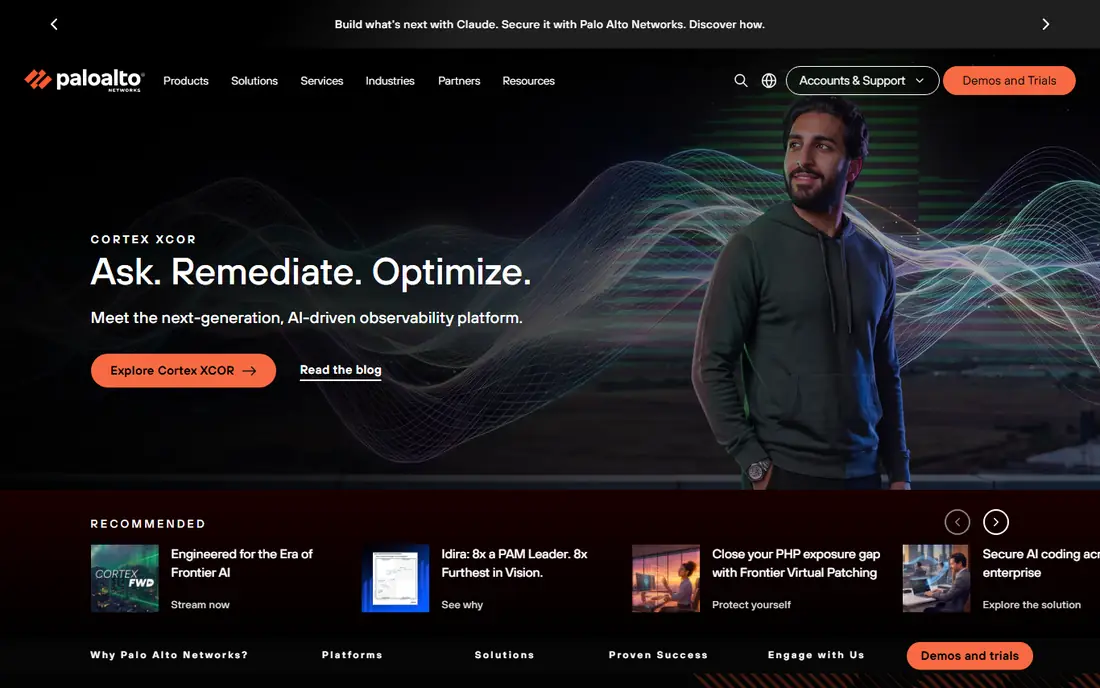
Palo Alto Networks moved from firewalls into a full security platform covering network security, cloud security, secure access, and security operations. Its Strata, Prisma Cloud, and Cortex product families let a large business consolidate tools that once came from several vendors. Unit 42 threat research feeds detection and incident response across the platform.
That breadth is also the main drawback. Deploying several product families takes planning, skilled staff, and a phased rollout, and pricing is quoted rather than published. Palo Alto Networks suits a mid-size or large business that wants one strategic vendor and has the team to run it. Smaller teams may find the platform more than they need.
- Network, cloud, and security operations in one platform
- Unit 42 threat intelligence
- Broad product range
- Platform breadth adds complexity
- Enterprise pricing needs a quoted proposal
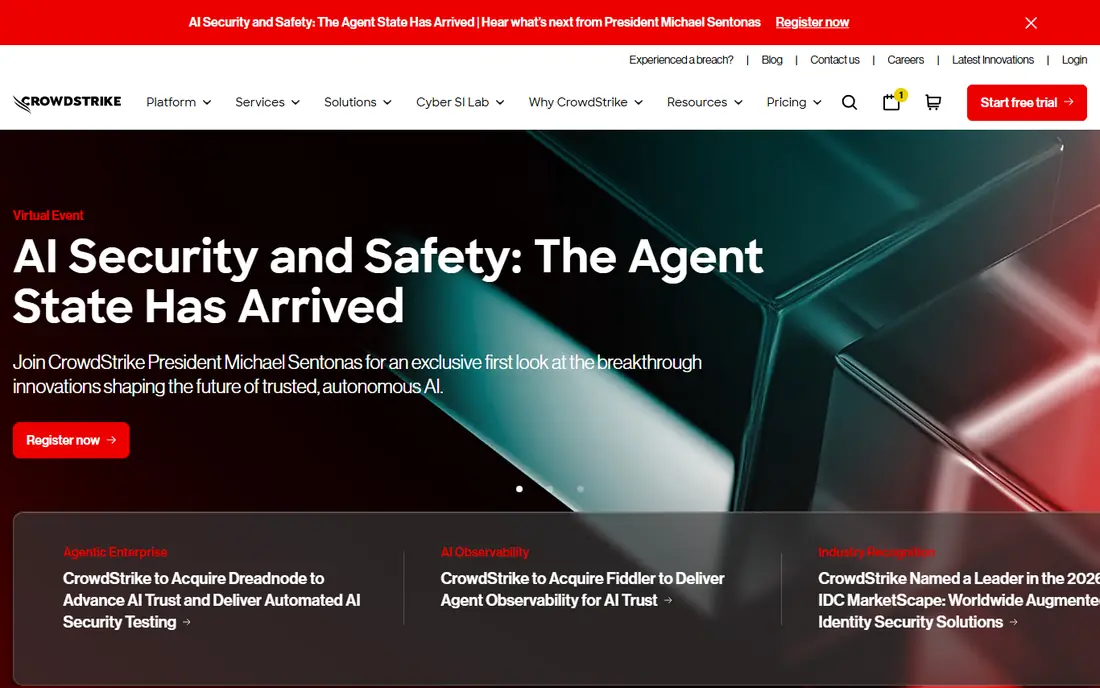
CrowdStrike built its name on the Falcon platform, a cloud-native system for endpoint protection, detection and response, identity protection, and cloud workload security. One lightweight agent supports many modules, which keeps device overhead low and gives security teams one console for investigation. Threat intelligence from CrowdStrike research is a core part of the offer.
Pricing is quoted by module and seat count, so a small business should expect a sales conversation and a bundle discussion. CrowdStrike suits organizations that want endpoint-led protection with fast detection and a strong incident response path. Teams that only need basic antivirus will find cheaper, simpler options.
- Cloud-native Falcon platform
- Single agent for many modules
- Strong threat intelligence
- Enterprise pricing is quoted
- Best value comes with several modules, not one
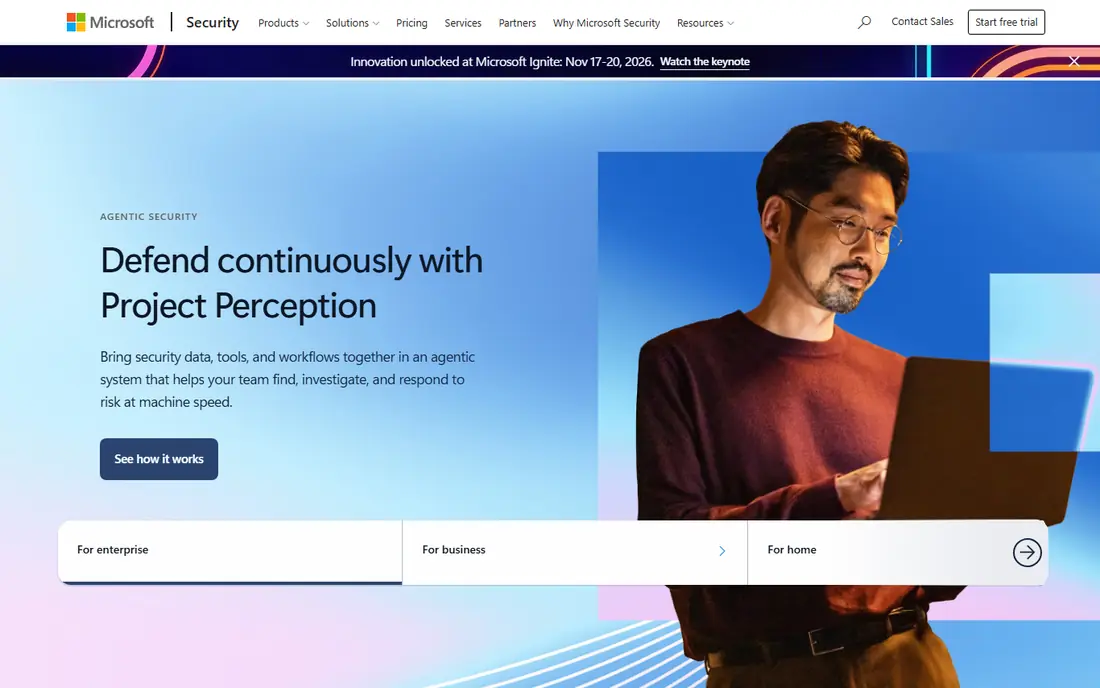
Microsoft Security covers endpoint and extended detection with Defender XDR, cloud security with Defender for Cloud, identity with Entra, and data security with Purview. For an organization already running Microsoft 365 and Azure, that integration is a real advantage, since alerts, identities, and policies share one ecosystem. Sentinel adds cloud-native SIEM for teams that need central log analysis.
The catch is licensing depth. The strongest features sit inside higher Microsoft plans, and total cost depends on your existing agreement. Organizations centered on Google Workspace or other platforms can still use Microsoft Security, but integration takes more work. If Microsoft is already your core platform, this is often the most practical choice.
- Defender XDR, Sentinel, Entra, and Purview in one ecosystem
- Deep Microsoft 365 integration
- Best value requires Microsoft licensing
- Non-Microsoft environments need extra integration work
Fortinet is best known for FortiGate firewalls, but its Security Fabric links firewalls, secure access, endpoint protection, SIEM, and operational technology security into one system. That matters for businesses with many branches, stores, or plants, where each site needs consistent protection and central management. SD-WAN built into the firewall helps sites use cheaper internet links without losing control.
The product catalog is large, and choosing the right firewall model and license bundle takes care. Fortinet suits distributed organizations that value hardware and network control. A single-office business with no branches may get equal protection from a simpler cloud service at lower effort.
- FortiGate firewalls and Security Fabric integration
- SD-WAN and branch security
- Broad hardware range
- Large product catalog can confuse buyers
- Enterprise pricing is quoted
Zscaler runs a cloud platform called the Zero Trust Exchange, which checks each user and device before granting access to an application, rather than trusting anyone inside a network perimeter. That model fits remote and hybrid work, since staff connect from home, offices, and travel without a traditional VPN. Secure internet access, private application access, and data protection sit on the same platform.
Adoption still needs work. Teams must define access policies, test applications, and train users who expect VPN habits. Pricing is quoted by user and service tier. Zscaler suits organizations replacing VPNs or securing a scattered workforce. A small office with one site and few remote users may not need this scale.
- Cloud-delivered zero trust access
- No VPN hardware to manage
- Strong for remote and hybrid work
- Pricing is quoted
- Moving off VPNs needs policy and user training work
SentinelOne offers the Singularity platform for endpoint, cloud, and identity protection, with automated response that can isolate a device or roll back changes without waiting for an analyst. That automation helps small security teams handle incidents outside office hours. The platform also includes cloud workload security and an AI-assisted SIEM option for central analysis.
Pricing is quoted, and the partner and integration ecosystem is smaller than those of Palo Alto Networks or Microsoft. SentinelOne suits a business that wants strong endpoint protection with automation and does not want a large platform rollout. Buyers should confirm integration with their existing ticketing and log tools during a demo.
- AI-led endpoint detection and automated response
- Cloud and identity protection
- SIEM option
- Quoted pricing
- Smaller partner ecosystem than the largest platform vendors
Cloudflare protects websites, applications, and networks from its global edge network, with DDoS protection, a web application firewall, bot management, and secure web gateway features. Cloudflare One adds zero trust access for users and devices. A free plan covers basic website protection, which makes Cloudflare unusually accessible for a small business or a personal site.
Paid plans open up the deeper zero trust, advanced firewall rules, and enterprise controls that a larger business needs. Configuration also matters, since wrong firewall or caching rules can break an application. Cloudflare is a strong pick for any business with a public website or a remote workforce that wants cloud-delivered protection without hardware.
- Free plan for basic protection
- DDoS protection, firewall, and zero trust in one network
- Global edge network
- Advanced zero trust and enterprise features are paid
- Configuration needs care for complex apps
Okta focuses on identity, which is often the weakest link in business security. Its platform manages workforce sign-on, multi-factor authentication, lifecycle access when staff join or leave, and customer identity for public apps. A broad catalog of pre-built integrations helps teams connect common business apps without custom code for each one.
Identity work still needs planning. Role definitions, authentication policies, and migration from older directories take time, and mistakes can lock users out. Okta suits any business that wants to control who can access what, especially one with many cloud apps and remote staff. It pairs well with an endpoint vendor rather than replacing one.
- Workforce and customer identity in one platform
- Broad app integration catalog
- Strong authentication options
- Identity projects need careful rollout
- Pricing depends on users and features
How we picked these
We compared public product documentation, platform breadth, and analyst coverage for companies with current, business-grade offerings in 2026. We favored companies that cover a clear security gap, publish detailed product information, and serve a defined buyer, from small businesses to large enterprises. We did not rank companies on stock performance or on marketing claims alone.
What to check before you buy
Start with your main gap, not with a vendor shortlist. A company that loses laptops to malware needs endpoint protection first. A company with many cloud apps and remote staff needs identity and zero trust access first. A company with a public website needs application and DDoS protection first. Buying a broad platform before naming the gap leads to shelfware.
Trials, proof, and total cost
Ask for a proof of concept on your own devices, network, and apps, not only a vendor demo. Check how alerts reach your team, how incidents are handled outside office hours, and what happens when a device is offline. Add implementation, training, and license renewal to the quoted price, since enterprise security costs include staff time as well as software.
Fit for your size
Large platforms suit large teams with security staff. Smaller businesses often do better with a managed service or a simpler cloud tool that a general IT provider can run. If no one on staff can review alerts daily, ask the vendor about managed detection and response options, since an alert no one reads protects no one.
Frequently asked questions
What is the best cybersecurity company overall?
For a large business that wants one broad platform, Palo Alto Networks and CrowdStrike are the strongest overall picks, with Microsoft Security close behind for Microsoft-centered organizations. The right answer depends on your main gap: endpoint, network, cloud, or identity security.
What is the best cybersecurity company for a small business?
Small businesses often do better with cloud-delivered tools like Cloudflare for website and network protection, plus a managed endpoint service, rather than a large enterprise platform. Look for a provider or managed partner that reviews alerts daily, since staff time is usually the real limit.
Do cybersecurity companies offer free plans?
Most enterprise vendors price by quote and do not offer a free plan. Cloudflare is an exception, with a free plan for basic website protection. Some vendors offer trials or demos, so ask directly and confirm what the trial covers before you rely on it.
Should I buy one platform or several specialist tools?
One platform simplifies management, billing, and alert handling, but no vendor is best at every control. Many businesses use one platform for endpoint and network protection and a specialist for identity or cloud security. Keep the total tool count low enough that your team can actually run everything you buy.
How do I know if a cybersecurity company is trustworthy?
Check public product documentation, independent test results, analyst coverage, and customer references in your industry. Ask how the vendor handles breaches, data storage, and incident support, and read the contract terms for response times. A vendor that avoids clear answers on those points is a warning sign.
Sources
See where you really rank - block by block
ProMapRanker scans Google Maps across a grid of your service area. Simple monthly plans from $19, white-label on every plan.
Start freeKeep reading
 zoho inventory alternatives
6 Alternatives to Zoho Inventory, Compared on Price and Fit
Zoho Inventory alternatives: 6 tools compared on price, free plans and fit. Katana leads the list for manufacturers. Fit and flaws are laid out for each entry.
Read → zoho crm alternatives
Best Zoho CRM Alternatives (2026)
Need Zoho CRM alternatives? We compare 7 tools on cost, free access and who each suits. Every pick gets a straight assessment. Built for quick decisions.
Read → zelle alternatives
Best Zelle Alternatives in 2026
Compare the best Zelle alternatives for sending money to friends, paying sellers and moving funds abroad, with honest notes on fees, speed and safety in 2026.
Read →