 ProMapRanker
Best Customs Software Logistics Tech in 2026


Forwarders and brokers already on CargoWise · Pricing starts at: See website
Key takeaways
- CargoWise Customs and Descartes suit forwarders and brokers filing across many countries, while Magaya and Customs4trade fit more focused broker workflows.
- The right choice depends first on filing country: US ABI, EU multi-country and UK filing needs point to different vendors.
- Enterprise trade suites such as Oracle and e2open add compliance depth but need longer implementation than broker-focused tools.
- No software replaces a licensed broker's judgment on classification and valuation: it structures the filing and keeps the audit trail.
Quick comparison
| Pick | Great for | Pricing starts at | Free tier | |
|---|---|---|---|---|
| CargoWise Customs | Forwarders and brokers already on CargoWise | See website | No | Visit |
 Descartes Customs Management | Multi-country filing with tariff and declaration data control | See website | No | Visit |
 AEB Customs Management | EU-focused brokers and exporters | See website | No | Visit |
 MIC Customs Solutions | Global trade teams needing multi-country customs coverage | See website | No | Visit |
 Thomson Reuters ONESOURCE Global Trade | Enterprises wanting governed classification and audit trails | See website | No | Visit |
 Oracle Global Trade Management | Oracle shops needing trade compliance inside a wider suite | See website | No | Visit |
 e2open Global Trade Management | Large shippers and logistics providers | See website | No | Visit |
 Magaya Customs | US forwarders and brokers needing ABI filing | See website | No | Visit |
 Customs4trade CAS | Brokers wanting workflow-first entry preparation | See website | No | Visit |
The best customs software logistics tech
We compared customs declaration, broker workflow and trade compliance tools that turn shipment, invoice and packing data into filed declarations with classification, duty calculation and an audit record.
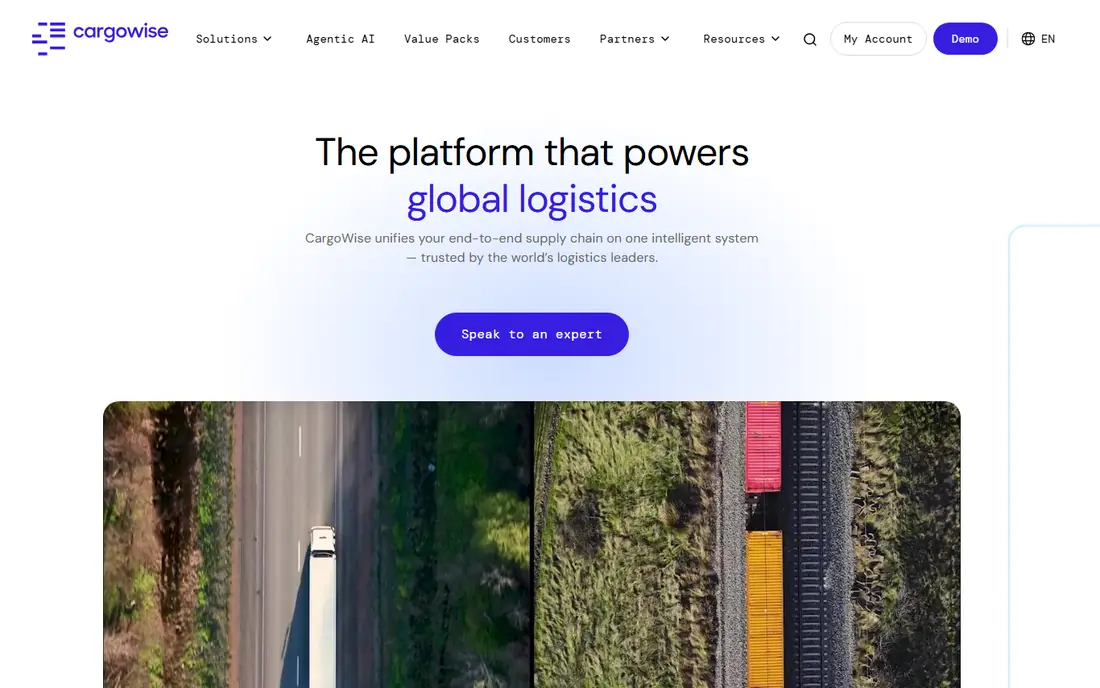
CargoWise Customs is the customs module inside WiseTech Global's logistics platform, and that link to the shipment is its main advantage. Declarations draw on the same shipment, invoice and document records the forwarder already holds, so entry data does not need rekeying from a separate system. For a forwarder filing frequently across lanes and offices, that consistency reduces errors and keeps release status tied to the shipment.
The drawback is scope and cost. CargoWise is a broad platform priced by quote, and a small broker that only files occasionally may not need the whole suite. It fits best when customs is one part of a wider freight forwarding operation already running on CargoWise, rather than as a standalone purchase for a handful of entries a month.
- Declaration workflow linked to the shipment record
- Strong multi-country coverage
- Fits forwarders filing at volume
- Pricing is quote only
- Full value comes with the wider CargoWise suite
- Smaller brokers may find it heavy
Descartes Customs Management
Great for: Multi-country filing with tariff and declaration data control
Descartes offers customs management for brokers, forwarders and importers filing in many countries, with declaration handling, tariff data and compliance checks in one system. Its network reach and experience with customs authorities in different markets make it a common choice for teams that cannot standardize on a single-country tool.
Multi-country depth also means multi-country setup. Tariff schedules, declaration formats and authority connections differ by market, so implementation should include time for each filing country the team actually serves. Descartes suits a broker or forwarder with a real multi-country book of business, not a team filing in one market only.
- Multi-country declaration support
- Tariff and compliance data management
- Strong network connectivity for brokers and forwarders
- Pricing is quote only
- Configuration across many countries takes planning
- Smaller teams may need vendor help to start
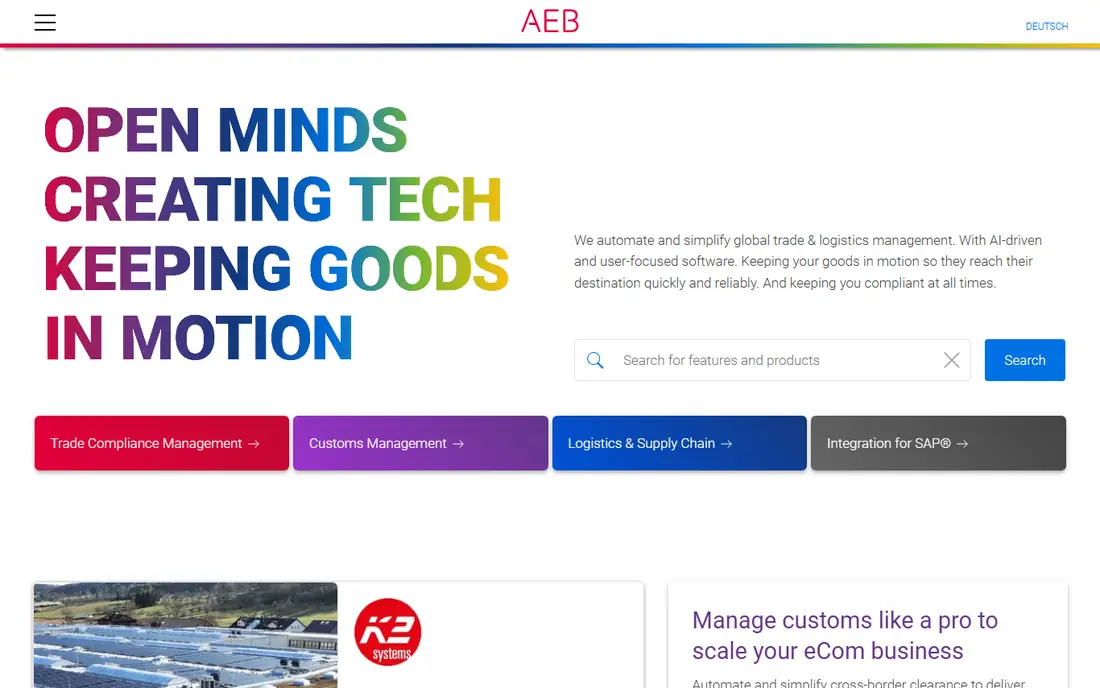
AEB is a European trade and customs specialist, with customs management covering import, export and transit declarations in EU markets and connections to national systems such as German ATLAS. Brokers and exporters working across EU member states benefit from consistent declaration workflows, classification support and document handling in one platform.
The fit narrows outside Europe. A US-only broker filing through ACE and ABI will find US-focused tools more direct, while a European broker or an exporter shipping into the EU will find AEB's coverage hard to match. Confirm each filing country and authority connection during a demo, since customs systems vary even within the EU.
- Strong EU customs coverage including ATLAS and related systems
- Declaration and export control workflows
- Audit-ready filing records
- Pricing is quote only
- US filing is not its home market
- Teams outside Europe gain less from its depth
MIC Customs Solutions
Great for: Global trade teams needing multi-country customs coverage
MIC provides customs software for companies that file in many countries from a central trade compliance function. Declarations, classification, duty calculation and audit trails run in one system, which helps a multinational importer or exporter keep filing consistent across subsidiaries and brokers. Central control also helps when headquarters needs one view of customs activity.
That central model suits larger trade teams better than a single-office broker. Implementation, master data and country rollout planning take effort, and a small broker filing in one or two markets may prefer a lighter tool. MIC fits best when the buyer is a global shipper or a broker group standardizing customs across countries.
- Central customs platform across many countries
- Classification and declaration control
- Suits centralized trade compliance teams
- Pricing is quote only
- Enterprise setup suits larger teams
- Smaller brokers may find it more platform than they need
Thomson Reuters ONESOURCE Global Trade
Great for: Enterprises wanting governed classification and audit trails
ONESOURCE Global Trade targets enterprises that treat customs as a compliance function, not just a filing task. Classification decisions, screening, declaration preparation and submission run through governed workflows with approvals and audit history, so a compliance team can show how each filing was reached. That traceability matters when customs authorities or auditors ask questions months later.
The platform is enterprise priced and enterprise sized. A small broker filing a few entries a week will find it heavy, while a global trade team with classification risk, preferential trade claims and audit exposure will value the control. Buyers should scope which countries and declaration types are included, since global coverage is rolled out by market.
- Governed classification and filing workflows
- Strong audit trail for compliance reviews
- Trusted trade content from Thomson Reuters
- Pricing is quote only
- Enterprise implementation takes time
- Smaller filing teams may not need its full compliance depth
Oracle Global Trade Management
Great for: Oracle shops needing trade compliance inside a wider suite
Oracle Global Trade Management sits inside Oracle's supply chain and logistics offering, covering trade compliance, classification, screening and customs-related workflows. For a company already running Oracle ERP and logistics, keeping trade compliance in the same family avoids a separate integration layer and keeps order, shipment and compliance data aligned.
Outside an Oracle estate, the case weakens. Implementation is an enterprise project, and a broker or forwarder that does not run Oracle may get faster value from CargoWise or Descartes. Oracle Global Trade Management fits best when the buyer is already committed to Oracle and wants customs and trade compliance governed alongside its wider supply chain.
- Trade compliance inside the Oracle supply chain family
- Classification tied to tariff decision states
- Controlled approvals and audit traceability
- Pricing is quote only
- Makes most sense inside an Oracle estate
- Standalone customs buyers may find simpler tools faster
e2open provides global trade management for large shippers, manufacturers and logistics providers, covering customs declarations, compliance, classification and related supply chain workflows across a wide network. Its scale suits companies moving goods across many lanes with many partners, where customs is one part of a larger trade and logistics operation.
As with other enterprise suites here, scale brings implementation effort. A team that only needs declaration filing may prefer a broker-focused tool, while a large shipper that also manages ocean, air and partner collaboration will value e2open's breadth. Confirm filing countries and partner connections for your actual lanes before signing.
- Broad global trade and logistics network coverage
- Declaration and compliance workflows at scale
- Suits large shipper operations
- Pricing is quote only
- Enterprise rollout needs planning
- Smaller teams may find the platform broad for a customs-only need
Magaya serves freight forwarders, brokers and logistics providers, with customs features that include US ABI filing alongside forwarding, warehousing and accounting tools. For a US-focused forwarder, keeping customs entries beside the shipment, warehouse and accounting records avoids rekeying and keeps entry status visible to the operations team.
The focus is US forwarding rather than global trade compliance at enterprise scale. A team filing mainly in Europe or needing deep multinational compliance governance may prefer AEB, MIC or ONESOURCE. Magaya fits best when the core business is US forwarding and customs is handled by the same team that moves the freight.
- US ABI filing for forwarders and brokers
- Customs work linked to freight forwarding records
- Practical fit for US-focused teams
- Pricing is quote only
- Multi-country EU depth is thinner than Descartes or AEB
- Very large global teams may need a wider suite
Customs4trade CAS
Great for: Brokers wanting workflow-first entry preparation
Customs4trade CAS positions itself around the broker workflow itself: document intake, entry preparation, classification inputs and submission events bound to a single entry record, so handoffs between staff stay traceable. That workflow focus appeals to broker teams that care less about a full logistics suite and more about running entries consistently and auditably.
The vendor is smaller than the largest names on this list, so buyers should check country coverage, authority connections and support for their specific markets. For a broker team that wants a focused entry workflow rather than a broad forwarding platform, Customs4trade CAS is worth a demo against Magaya and Descartes.
- Workflow-first entry preparation with traceable handoffs
- Document edits and submission events tied to one entry record
- Focused broker fit
- Pricing is quote only
- Smaller vendor profile than CargoWise or Descartes
- Country coverage must be checked per market
How we picked these
We compared vendor feature pages, customs buyer guides and trade compliance documentation for tools that prepare, validate and submit customs declarations in October 2026. We favored products with real declaration and broker workflow depth over generic logistics tools, and we marked pricing as See website where vendors price by quote. We did not invent filing volumes, duty figures or country coverage beyond what vendors describe for their own products.
What to check before you buy customs software
Start with filing countries and authorities. List every market you file in, the declaration types you submit, and the authority systems involved, such as US ACE and ABI, UK CDS or German ATLAS, and ask each vendor to confirm live connections for those exact routes. A vendor strong in one region can be thin in another.
Next, test the entry workflow on your own documents. Give vendors a sample commercial invoice, packing list and product description, and watch how classification, duty calculation, screening and error checks behave. Ask who owns tariff data updates, how declaration changes are versioned, and how the audit trail reads when an entry is amended. Finally, confirm the commercial scope: which countries, users and transaction volumes are included, and what counts as an extra charge.
Frequently asked questions
What does customs software do?
It prepares, validates and submits import, export and transit declarations to customs authorities. It pulls shipment and invoice data, applies tariff classification, calculates duties and taxes, screens parties where required, files the declaration electronically and keeps an auditable record of the filing.
Do I need a customs broker if I buy customs software?
Software structures and files declarations, but classification, valuation and compliance decisions still need qualified judgment. Many importers and exporters use software alongside a licensed broker, while brokers themselves use these tools to run entries for clients.
Which customs software is best for US filing?
US-focused forwarders and brokers often shortlist Magaya for ABI filing and Descartes or CargoWise for wider forwarding-linked filing. The best fit depends on whether customs sits inside a forwarding operation or stands alone as a broker service.
Which customs software is best for EU filing?
European brokers and exporters often look at AEB, MIC and Customs4trade for multi-country EU coverage, plus national specialists for specific authority systems. Confirm each filing country individually, since EU customs systems still differ by member state.
How much does customs software cost?
Almost every platform here prices by quote, based on filing countries, entry volumes, users and modules. Expect a scoped proposal after a vendor reviews your lanes and volumes, and ask what transaction or country charges sit outside the base subscription.
Can customs software calculate duties and taxes?
Yes, in the sense that it applies tariff classification and rate data to declaration lines to estimate duties and taxes. The result still depends on correct classification, valuation and origin data, so review the output before filing rather than treating it as final.
Sources
See where you really rank - block by block
ProMapRanker scans Google Maps across a grid of your service area. Simple monthly plans from $19, white-label on every plan.
Start freeKeep reading
 worlds best local seo company
8 Worlds Best Local SEO Companies for Map Pack Growth in 2026
Compare the worlds best local seo company options for Google Business Profile work, citations, reviews, and multi-location rankings and reporting in 2026.
Read → world's best web hosting company
World's Best Web Hosting Company in 2026
Searching for the world's best web hosting company? We compared 10 hosts on price, renewal rates, speed, and support to help you choose well today in 2026.
Read → who's got the best nanny tax services
Who's Got the Best Nanny Tax Services in 2026
We answer who's got the best nanny tax services, comparing full filing, back taxes, software, and pricing so families can handle nanny taxes correctly.
Read →