 ProMapRanker
Best Customer Service Ecommerce in 2026

Key takeaways
- The best ecommerce helpdesk shows order, shipping and refund data inside the ticket, so agents do not switch tools for every question.
- Gorgias is our pick for most Shopify stores, because it is built for ecommerce workflows and charges by ticket volume, not by seat.
- Zendesk suits larger teams that need complex workflows, reporting and voice, while Freshdesk suits smaller teams on a budget.
- AI pricing now matters as much as seat pricing, so model the cost per automated resolution before you sign an annual plan.
- Start with email, chat and a help centre, then add phone and social channels only when ticket volume and team size support them.
Quick comparison
| Pick | Great for | Pricing starts at | Free tier | |
|---|---|---|---|---|
 Gorgias | Shopify stores with a support team | See website | Free trial | Visit |
 Zendesk | Large teams needing complex workflows | See website | Free trial | Visit |
 Freshdesk | Small teams on a budget | See website | Free plan | Visit |
 Help Scout | Email-first teams wanting simplicity | See website | Free trial | Visit |
 Intercom | Chat-first teams with AI support | See website | Free trial | Visit |
 Tidio | Small stores needing chat and AI | Free | Yes | Visit |
 Richpanel | High-volume stores with AI automation | See website | Free trial | Visit |
 eDesk | Marketplace sellers | See website | Free trial | Visit |
 Gladly | Enterprise retail with voice and chat | See website | No | Visit |
The best customer service ecommerce
Ecommerce customer service is different from general support. Most tickets are about orders, shipping, returns, refunds and product questions, so a good tool must show store data in the ticket and let an agent act on it. The tools below cover Shopify-focused helpdesks, general helpdesks, chat tools and AI-first options.
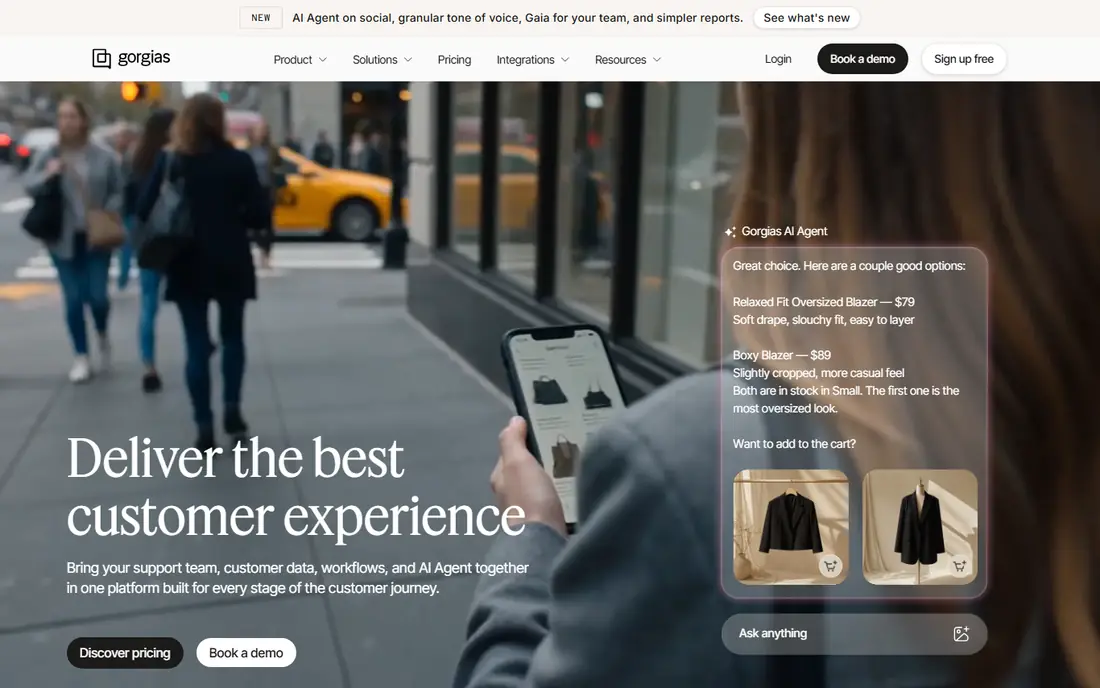
Gorgias is built for online stores, and that focus shows in the ticket view. An agent can see order history, shipping status and refund options without leaving the conversation, and can take common actions such as issuing a refund or editing an order from inside the ticket. That saves time on the repetitive questions that dominate ecommerce support.
Pricing is based on ticket volume, not on seats, which helps a store with many part-time agents or a seasonal team. AI agent costs are charged per automated interaction, so a store should model that cost at its real ticket volume. For most Shopify stores with a real support team, Gorgias is our pick.
- Deep Shopify, WooCommerce and BigCommerce integrations
- Order actions inside tickets
- Ticket-based pricing with no seat fees
- AI resolution costs add up at scale
- Pricing rises with ticket volume
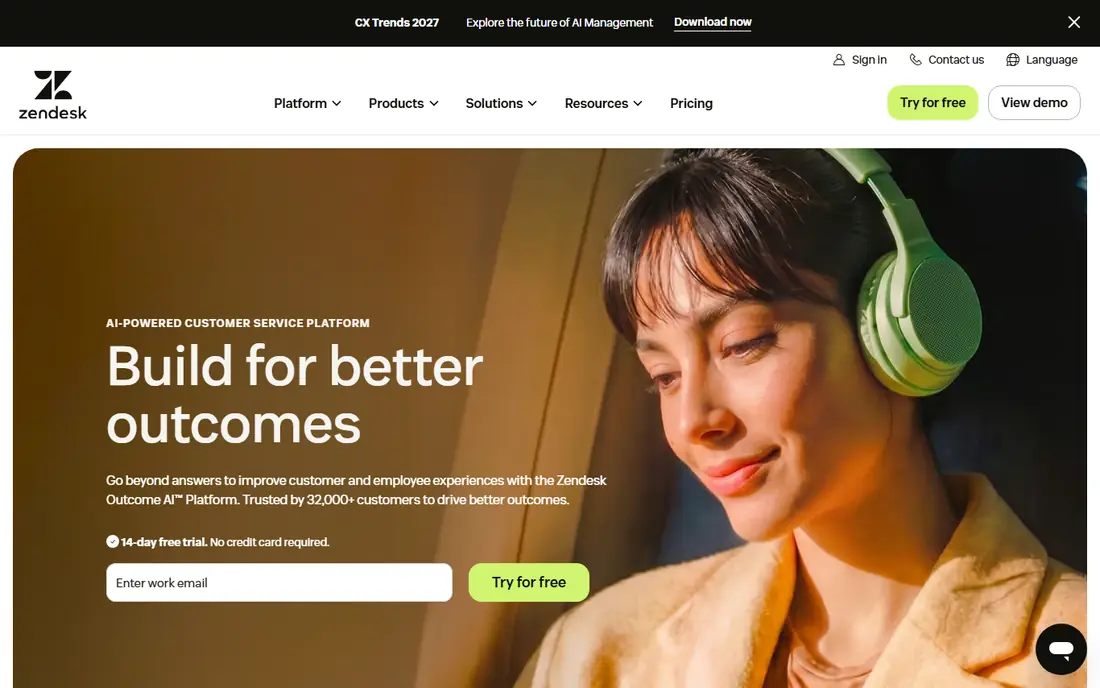
Zendesk suits a larger store or a company where support spans several departments and needs structured workflows, service level agreements and detailed reporting. It covers email, chat, voice and social channels, with automation rules and a large app ecosystem for integrations. That breadth helps a team that has outgrown a simple shared inbox.
Per-agent pricing means costs rise with team size, and AI resolutions and add-ons such as Copilot are charged separately, so the total bill needs modelling. A small store may find Zendesk more than it needs. For a large, complex support operation, Zendesk remains a leading, flexible choice.
- Broad helpdesk, chat, voice and reporting
- Strong workflow automation
- Large app ecosystem
- Per-agent pricing adds up for large teams
- Setup and AI costs need careful planning
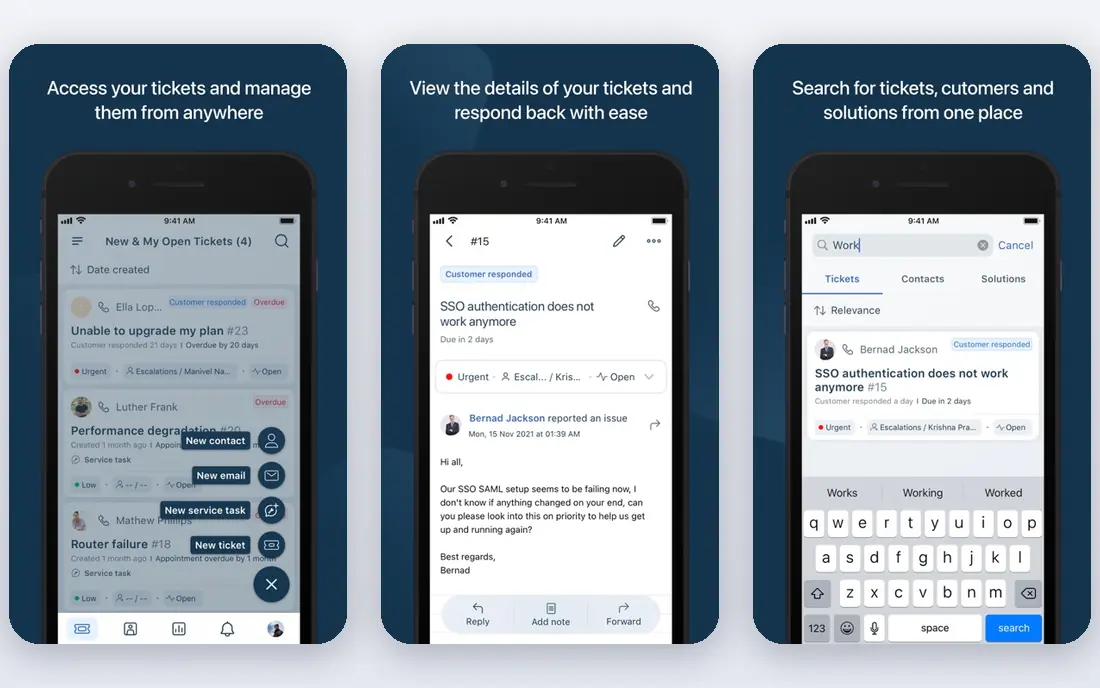
Freshdesk, from Freshworks, is a good budget starting point for a small store. It offers ticketing, a knowledge base, automation and chat, with a free tier for very small teams and affordable paid plans as a team grows. Setup is straightforward, and the interface is easy for a new agent to learn.
Its ecommerce integrations are less deep than Gorgias, so an agent may still need to open the store admin for some order actions. Advanced AI features also cost extra. For a small store that needs a solid helpdesk without a large monthly bill, Freshdesk offers strong value.
- Free tier for small teams
- Simple ticketing and automation
- Good value on paid plans
- Ecommerce integrations are less deep than Gorgias
- Advanced AI costs extra
Help Scout suits a team that mainly works by email and wants a clean, human-feeling support experience. Its shared inbox, saved replies and knowledge base help a small team answer consistently, without the complexity of a large enterprise suite. It also offers integrations for Shopify and other store platforms, though not as deep as Gorgias.
AI features are charged per resolution in addition to user pricing, so a team should check that cost. Very large teams with complex routing may need Zendesk instead. For a small, email-first store that values simplicity and a clear inbox, Help Scout is a strong choice.
- Clean shared inbox
- Helpful knowledge base tools
- Simple pricing per user
- AI resolution costs are separate
- Less suited to very large, complex workflows
Intercom is built around messaging, which suits a store that wants live chat, proactive messages and an AI agent on its site and in its app. Its Fin AI agent answers common questions and can look up order information where integrated, with a published price per resolved conversation. That clarity helps a team model AI costs.
Pricing combines per-seat fees with AI resolution costs, so a large team should model both. Intercom is less ecommerce-specific than Gorgias, and it suits digital-first teams as much as stores. For a chat-first store that wants strong messaging and AI, Intercom is a leading option.
- Strong live chat and messaging
- Fin AI agent with clear per-resolution pricing
- Good for onboarding and sales chat
- Per-seat pricing plus AI costs
- Less ecommerce-specific than Gorgias
Tidio is a low-cost way for a small store to add live chat and an AI agent. It offers a free plan, paid tiers for more conversations, and an AI agent add-on for common questions. Setup is fast, and a small team can start answering chats the same day, without a long implementation project.
Its helpdesk features are simpler than a full platform such as Gorgias or Zendesk, so a growing team may outgrow it. AI pricing also needs checking as volume rises. For a new or small store that mainly needs chat and simple automation, Tidio is a practical, budget-friendly pick.
- Free plan to start
- Live chat and AI agent
- Easy setup for small stores
- Helpdesk depth is limited compared with Gorgias or Zendesk
- AI costs rise with use
Richpanel is built for high-volume ecommerce stores that want to automate repetitive order questions, such as tracking, returns and cancellations, through AI and self-service. It shows order data in the ticket and lets customers resolve common issues without waiting for an agent. That automation can cut ticket volume a lot for a busy store.
Pricing depends on seats, volume and AI use, so a store should model costs at its real ticket numbers. A small store with a low ticket count may find a simpler tool cheaper. For a busy store where order questions dominate the queue, Richpanel is a strong, ecommerce-focused choice.
- Ecommerce-focused AI and self-service
- Order data in tickets
- Automation for returns and tracking
- Pricing depends on volume and AI use
- Smaller stores may not need its depth
eDesk suits a seller who sells on marketplaces such as Amazon and eBay as well as, or instead of, a direct store. It pulls messages from many marketplaces and channels into one inbox, with order data alongside each conversation. That unified view helps a team that would otherwise check several seller dashboards every day.
Its ecosystem is smaller than Zendesk or Gorgias, and pricing varies by channels and volume, so a seller should get a quote for its exact marketplaces. For a marketplace-led business, eDesk offers a focused advantage that general helpdesks do not match.
- Marketplace integrations for Amazon, eBay and others
- Unified inbox
- Ecommerce order data
- Less well known than Zendesk or Gorgias
- Pricing varies by channel and volume
Gladly is built for larger retail and ecommerce teams that need a single customer timeline across email, chat, voice and social channels. Instead of separate tickets for each channel, an agent sees one conversation history for a customer, which helps with complex or high-value support. Voice support is a particular strength for retail teams that still handle many phone calls.
Pricing is by quote and aimed at enterprise teams, so a small store will find it too costly. For a larger retail brand that needs voice, chat and a unified customer view, Gladly is a serious option to compare with Zendesk and Kustomer.
- Customer timeline across channels
- Strong voice and chat
- Built for retail teams
- Quote-based enterprise pricing
- Overkill for a small store
How we picked these
We compared official pricing and feature pages, product documentation and public comparison material for each tool. We kept only tools that still offer ecommerce customer service, helpdesk or chat features in October 2026, and we wrote See website where a vendor did not publish a simple starting price or where pricing depends on volume and AI use. We weighed ecommerce integrations, order data in tickets, channel coverage, automation, AI pricing, ease of setup and total cost. We did not claim hands-on testing.
How to choose for your store size
A new store should start with a tool it can set up in a day, such as Tidio for chat or Freshdesk for ticketing, plus a simple help centre with answers to tracking, returns and refund questions. That help centre alone can cut tickets, because many customers will find an answer without contacting you. Add a Shopify-focused tool such as Gorgias when ticket volume grows and agents spend too much time switching between the helpdesk and the store admin.
A larger store should model total cost, not just seat price. Compare ticket-volume pricing against per-seat pricing at your real agent count and ticket count, and add AI resolution costs at your expected automation rate. Check service level reporting, workflow automation and voice needs, and run a trial with real tickets before an annual commitment. A tool that fits your store platform and your ticket mix will save more time than a slightly cheaper general helpdesk.
Questions to ask before you buy
Ask how order, shipping and refund data appear in a ticket, and whether an agent can act on an order without leaving the helpdesk. Ask how AI pricing works, what counts as a resolution, and how to set guardrails so AI does not issue refunds it should not. Ask about migration help, help centre tools and reporting for first response time, resolution time and customer satisfaction.
Frequently asked questions
What is the best ecommerce customer service tool for a Shopify store?
Gorgias is our pick for most Shopify stores, because it shows order and shipping data in the ticket and lets agents take order actions without switching tools. Richpanel is a strong alternative for high-volume stores focused on AI automation, while Freshdesk suits a smaller Shopify store on a budget.
What is the best customer service ecommerce software for a small business?
Freshdesk and Tidio are strong budget options for a small business, with free tiers or low starting plans. Freshdesk suits ticketing and a help centre, while Tidio suits live chat and simple AI. A small store should start with one of these and move to Gorgias when ticket volume and order actions become the main bottleneck.
How much does ecommerce customer service software cost?
Costs vary by pricing model. Some tools charge per seat, some charge by ticket volume, and most now charge separately for AI resolutions. A small store can start free or at a low monthly cost, while a larger team may pay per agent plus AI fees. Model total cost at your real ticket volume and agent count before you sign.
Do I need AI for ecommerce customer service?
AI is not required, but it can help a busy store answer tracking, return and policy questions faster, and it can work outside business hours. Start with a help centre and saved replies, then test AI on your most common questions with clear guardrails. Check what counts as a paid resolution, so AI costs stay predictable.
What channels should an ecommerce store support?
Most stores should start with email, live chat and a help centre, since those cover most order and product questions. Add social messaging and phone only when volume, team size and customer expectations justify them. A unified inbox helps a team answer across channels without losing context.
Sources
See where you really rank - block by block
ProMapRanker scans Google Maps across a grid of your service area. Simple monthly plans from $19, white-label on every plan.
Start freeKeep reading
 zoro.to alternatives
Best Zoro.to Alternatives in 2026
We compare the best zoro.to alternatives in 2026, listing only legal licensed anime streaming services, from Crunchyroll to free options for fans today.
Read → zip alternatives
Best Zip Alternatives in 2026
We compare the best zip alternatives for buy now, pay later in 2026, covering pay-in-4 plans, fees, spending limits, and credit reporting options today.
Read → yesware alternatives
Best Yesware Alternatives in 2026
Compare the best yesware alternatives for sales email tracking, templates, and sequences, with current pricing and honest tradeoffs for small sales teams.
Read →