 ProMapRanker
Best Customer Data Platform in 2026

Key takeaways
- Segment is the easiest CDP to trial, with a free tier and a published paid starting price, while most rivals are quote-based.
- Warehouse-native CDPs such as Hightouch and RudderStack suit teams that already model data in a warehouse.
- Packaged CDPs such as Tealium, Treasure Data, and Adobe suit large enterprises with complex governance and many destinations.
- CDP pricing usually scales with profiles or tracked users, so a headline price is a floor, not a realistic total for a large audience.
Quick comparison
| Pick | Great for | Pricing starts at | Free tier | |
|---|---|---|---|---|
 Segment | General-purpose packaged CDP | $120 per month | Yes | Visit |
 Tealium | Enterprise real-time orchestration | See website | No | Visit |
 mParticle | Mobile-first consumer apps | See website | No | Visit |
 Treasure Data | Large-scale enterprise unification | See website | No | Visit |
 Adobe Real-Time CDP | Adobe Experience Cloud teams | See website | No | Visit |
 Salesforce Data Cloud | Salesforce-centred customer data | See website | No | Visit |
 RudderStack | Warehouse-native and open source | See website | Yes | Visit |
 BlueConic | Marketer-led CDP use | See website | No | Visit |
 Hightouch | Composable warehouse activation | See website | Yes | Visit |
The best customer data platforms
We compared CDPs on data collection, identity resolution, segmentation, activation destinations, governance, and pricing model. A customer data platform should unify customer data from many sources into usable profiles, then send those profiles and audiences to the tools that run email, ads, support, and analytics, with consent and access controls in place.
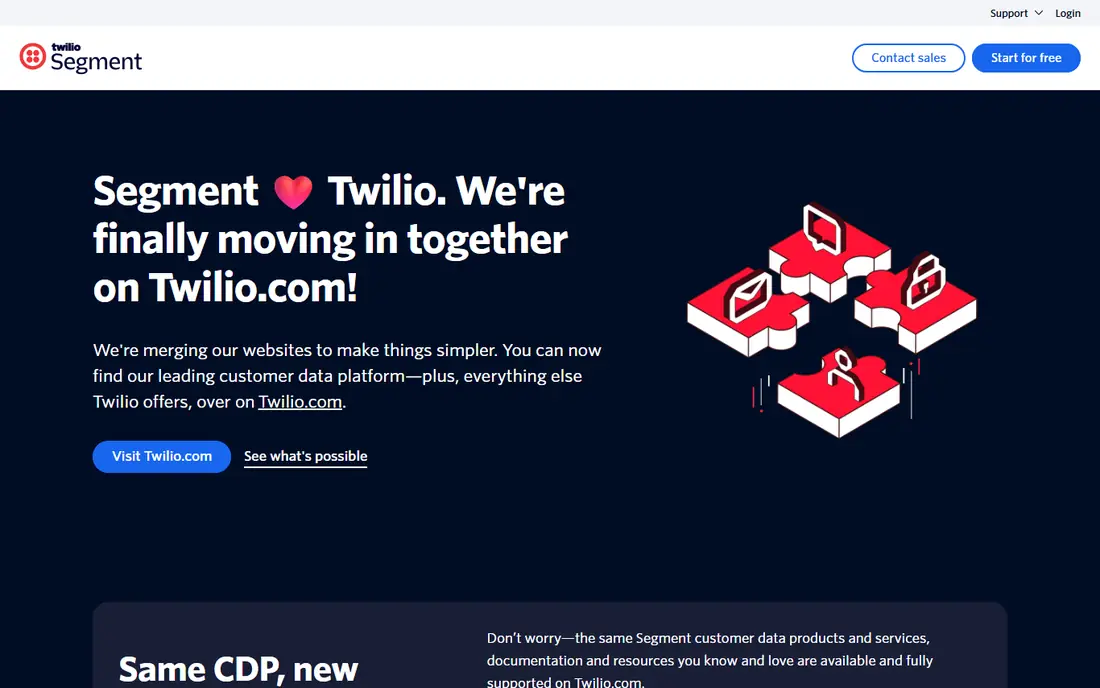
Segment, now part of Twilio, is the most widely used packaged CDP for teams that want one hub to collect, clean, and route customer data. Sources and destinations cover websites, apps, and many marketing and analytics tools, and Protocols helps teams enforce a tracking plan so data stays consistent. That breadth makes Segment a safe default for a team that does not yet know which destination will matter most.
Pricing is clearer than most CDPs: a free tier covers up to 1,000 monthly tracked users in sources checked in 2026, with a Team plan from $120 per month. Costs still rise with volume, so a large audience will pay more than the entry price. For a team that wants to trial a CDP properly before a sales conversation, Segment is the easiest place to start.
- Broad integration catalogue
- Free developer tier up to 1,000 monthly tracked users in sources checked
- Tracking plan and schema controls
- Paid costs rise with tracked users
- Large enterprise features sit on higher plans
- Needs engineering input for full setup
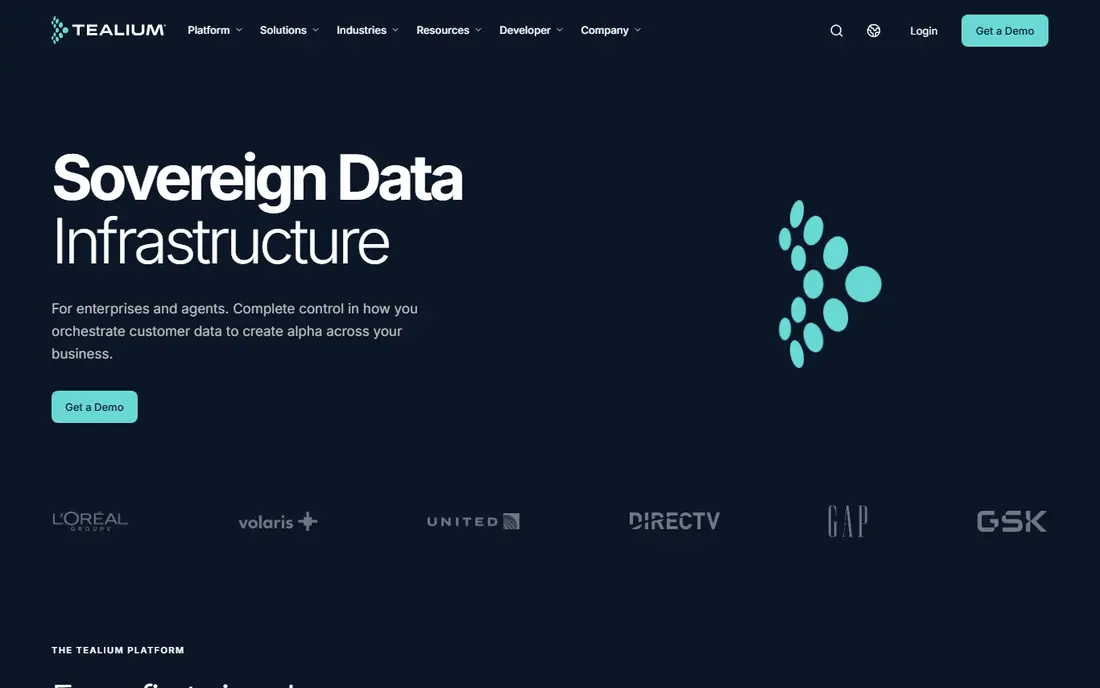
Tealium combines tag management with its AudienceStream CDP, building real-time customer profiles from web, app, and offline data. That real-time focus suits large brands that need to react quickly, such as updating an audience as a customer browses, buys, or contacts support. Consent management and governance controls are central, which matters for regulated industries and for teams operating across regions.
Pricing is quote-based and enterprise-level, so a small team cannot compare it quickly against Segment entry pricing. Implementation also takes planning, especially for tag and consent setup across many sites and apps. If you run a large, complex stack with strict governance needs, Tealium is a strong enterprise pick. If you run a small product, Segment or a warehouse-native tool will be faster to start.
- Strong tag management and real-time profiles
- Consent and governance controls
- Broad enterprise integrations
- Quote-based pricing
- Implementation can be involved
- Better for large teams than for small startups
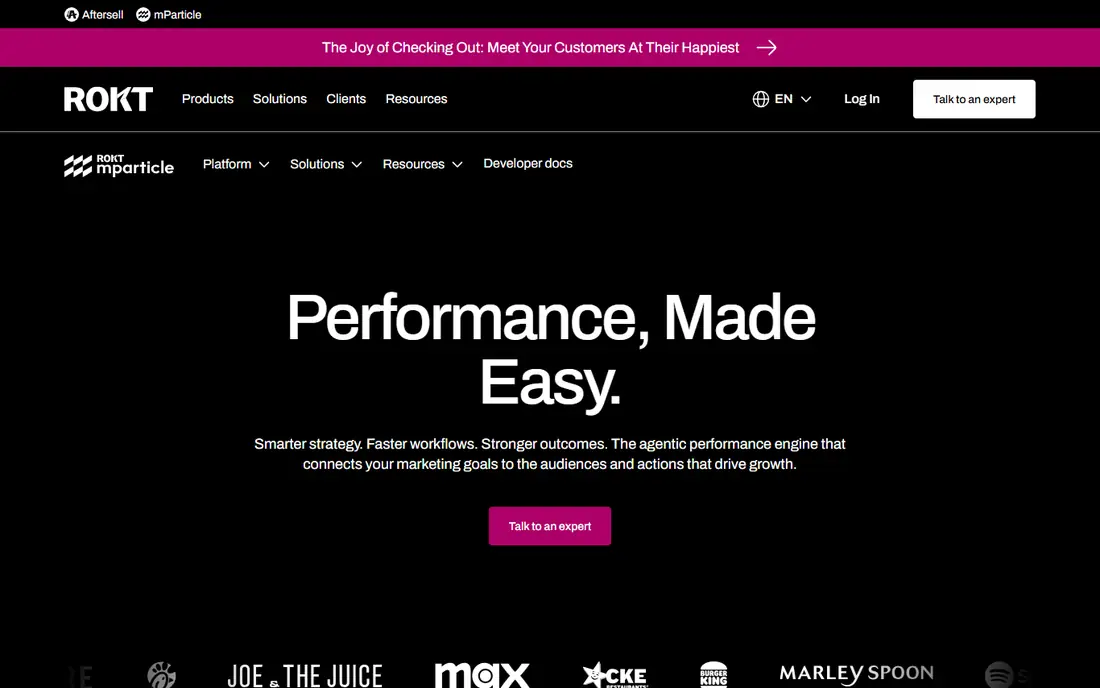
mParticle is a CDP built for mobile-first consumer products, where a customer may use an app, a website, and a connected device in one journey. It collects event and profile data across platforms, resolves identity across devices, and sends audiences to marketing, analytics, and advertising tools in real time. That mobile depth suits large consumer apps with high event volumes.
Like Tealium, mParticle is quote-based and aimed at larger teams, so pricing and setup need a sales conversation. A small web-only product will not use much of its mobile strength. A large app with millions of users, many events, and strict data quality needs will find mParticle a serious rival to Segment and Tealium.
- Strong mobile and multi-platform data handling
- Real-time audiences
- Identity resolution across devices
- Quote-based pricing
- Enterprise focus
- Needs data and engineering support for full use
Treasure Data is an enterprise CDP for large brands unifying customer data across many channels, brands, and regions. It handles large volumes, builds unified profiles, and supports audience modelling and activation for marketing and service teams. That scale suits retail, manufacturing, and other large enterprises with data spread across many systems.
Pricing is custom and enterprise-level, and the platform needs data team support to get full value. A mid-size team with a single brand and a modest audience will find it heavy and costly. A large enterprise that needs one customer view across many sources, with strong modelling, should include Treasure Data in a shortlist alongside Tealium and Adobe.
- Built for very large data volumes
- Unification across brands and regions
- Audience modelling and activation
- Quote-based enterprise pricing
- Needs data team support
- More than most small teams need
Adobe Real-Time CDP is the CDP inside Adobe Experience Platform, built for teams already using Adobe Analytics, Target, Journey Optimizer, or Campaign. Customer profiles are built in real time and shared across Adobe tools, so segments created in the CDP can drive personalisation and campaigns without a separate data transfer. That shared Adobe data model is the main reason to choose it.
Outside the Adobe estate, the value drops, since much of the benefit comes from Adobe-to-Adobe connections. Pricing is quote-based, and setup needs Adobe expertise. If your team already runs on Adobe, Real-Time CDP is a natural fit. If you run a mixed stack with no Adobe centre, Segment, Tealium, or a warehouse-native tool will usually fit better.
- Deep Adobe Experience Cloud integration
- Real-time profiles and segments
- Strong fit for Adobe analytics and marketing users
- Quote-based pricing
- Best value only inside Adobe estate
- Setup needs Adobe expertise
Salesforce Data Cloud, formerly Salesforce CDP, unifies customer data on the Salesforce platform and connects it with CRM, marketing, commerce, and service data. Teams can build unified profiles, segments, and activations that flow into Salesforce apps and external destinations. For a company already centred on Salesforce, that shared record avoids a separate data silo.
Pricing is quote-based, and the platform is most valuable inside a Salesforce estate. A team with little Salesforce use will not get the same return, and a mixed-stack team may prefer a neutral hub such as Segment. If Salesforce is your system of record, Data Cloud deserves a place in the evaluation, with a quote based on profiles and data volume.
- Unifies data on the Salesforce platform
- Connects CRM, marketing, and service data
- Activation across Salesforce apps
- Quote-based pricing
- Best inside Salesforce estate
- Complexity grows with data sources
RudderStack is a warehouse-native CDP that lets data teams collect events, store data in their own warehouse, and activate audiences back to marketing and product tools. An open source option exists, which suits teams that want control over deployment and data storage. That design fits teams that already model data in a warehouse and want the CDP to work with that model, not duplicate it.
The trade-off is skill. RudderStack is data-team led, so a marketing team without engineering support will find it harder to use than a packaged CDP. Pricing includes free and paid tiers in sources checked, with paid plans scaling by volume, so check the current pricing page for your event volume. For a warehouse-centred team, RudderStack is a strong, flexible choice.
- Warehouse-native design and open source option
- Event streaming and reverse ETL
- Data team control over storage
- Needs data engineering skill
- Published pricing varies by plan
- Less marketer-led than BlueConic
BlueConic is a CDP built for marketing teams to use directly, without needing SQL for core profile and segment work. Marketers can build unified customer profiles, create segments, and activate them across email, ads, and site personalisation from one interface. That marketer-led design suits teams where marketing owns the customer data work day to day.
Pricing is quote-based, and the integration catalogue is smaller than Segment, so check destination coverage for your stack before committing. A data-heavy team that wants warehouse-native control may prefer RudderStack or Hightouch. A marketing team that wants to build segments without waiting on engineering will find BlueConic a practical, focused option.
- Marketer-friendly profiles and segments
- No SQL needed for core use
- Real-time profile updates
- Quote-based pricing
- Smaller integration catalogue than Segment
- Enterprise pricing for larger audiences
Hightouch is a composable CDP, which means it activates data that already lives in your warehouse rather than storing a separate copy in a packaged CDP. Data teams model customers in the warehouse, and Hightouch syncs those models to email, ads, CRM, and analytics tools. That approach suits teams that already trust their warehouse as the source of truth and want to avoid duplicating data.
The limit is the starting point. Without a warehouse and good data models, Hightouch has little to activate, so a team without that foundation should start with a packaged CDP such as Segment. A free tier exists for small sync volumes in sources checked, with paid plans scaling by syncs and rows. For a warehouse-mature team, Hightouch is an efficient, modern way to run a CDP.
- Activates data directly from the warehouse
- No separate CDP data copy needed
- Syncs to many marketing and ad tools
- Needs a warehouse and data models first
- Paid pricing scales with syncs and rows
- Not a standalone packaged CDP
How we picked these
We compared official product pages, pricing pages, and recent CDP comparisons checked in October 2026. We kept platforms that are live, that unify customer data into profiles, and that activate those profiles to real destinations. We included packaged CDPs, warehouse-native and composable CDPs, and marketer-led CDPs, so the list covers different data architectures rather than one approach.
What to check before you buy
Start with where your customer data already lives. If you have a warehouse and a data team, a composable or warehouse-native CDP may fit best. If you have many sources and no central warehouse, a packaged CDP such as Segment or Tealium may be faster. If you live inside Adobe or Salesforce, the matching CDP will usually integrate best.
Next, check identity, consent, and governance before you check campaign features. Ask how profiles are merged, how consent is honoured across destinations, and how access is controlled. Then model pricing on your real profile or tracked-user volume, not the entry price, and ask for a quote that includes data volume, destinations, and support. Finally, trial with one real use case, such as a welcome audience or a churn segment, before migrating your full customer base.
Frequently asked questions
Which customer data platform is the best?
Segment is the best general starting point for many teams, because it has a free tier, a published entry price, and a broad integration catalogue. Tealium suits enterprise real-time needs, Hightouch and RudderStack suit warehouse teams, and Adobe and Salesforce CDPs suit teams inside those ecosystems. The best CDP depends on your data architecture.
What is the best customer data platform software for a small team?
Segment is the easiest small-team start, with a free developer tier up to 1,000 monthly tracked users in sources checked. RudderStack and Hightouch also offer free tiers for small volumes, but they need more data skill. Quote-only enterprise CDPs are usually too costly and complex for a small team.
How much does a customer data platform cost?
Segment Team starts at $120 per month in sources checked, while most other CDPs here use quote-based pricing that scales with profiles, tracked users, or data volume. Treat any entry price as a floor, and ask for a quote based on your actual audience size and destination count.
Is a CDP the same as a CRM?
No. A CRM stores customer records and manages sales and service relationships, while a CDP unifies data from many sources into profiles and activates those profiles across marketing, ads, and analytics tools. Many teams use both, with the CDP feeding audiences to the CRM and to other destinations.
Do I need a warehouse to use a CDP?
Not for a packaged CDP such as Segment, Tealium, or BlueConic, which store profiles themselves. You do need a warehouse for a composable CDP such as Hightouch, and warehouse skills help with RudderStack. Choose the architecture that matches the data team and systems you already have.
Sources
See where you really rank - block by block
ProMapRanker scans Google Maps across a grid of your service area. Simple monthly plans from $19, white-label on every plan.
Start freeKeep reading
 outreach alternatives
Outreach Alternatives in 2026
Compare outreach alternatives for 2026, from Salesloft and Apollo to HubSpot and Lemlist, with pricing, channels, features, limits, and honest trade-offs.
Read → best web conference tools
Best Web Conference Tools in 2026
Compare the best web conference tools for meetings, webinars and team calls, with current pricing, free plans and honest limits for each option here today.
Read → best voice cloning tools
Best Voice Cloning Tools in 2026
Compare the best voice cloning tools in 2026, from ElevenLabs and Descript to Resemble and Cartesia, with consent rules, pricing, licenses, and limits.
Read →