 ProMapRanker
Best CSPM Tools in 2026: 9 Tools Compared

Key takeaways
- Wiz, Orca Security, and Palo Alto Networks lead for agentless multi-cloud posture, but all three are quote based.
- Microsoft Defender for Cloud is the natural start for Azure heavy teams, thanks to its free baseline posture features.
- Prowler gives small teams a free open source starting point, while paid platforms add prioritization and remediation.
- Attack path context matters more than raw finding counts, so test how each tool ranks a real misconfiguration.
Quick comparison
| Pick | Great for | Pricing starts at | Free tier | |
|---|---|---|---|---|
 Wiz | Multi-cloud attack paths | See website | Free trial | Visit |
 Orca Security | Agentless coverage | See website | Free trial | Visit |
 Palo Alto Cortex Cloud | Enterprise CNAPP breadth | See website | Free trial | Visit |
 Microsoft Defender for Cloud | Azure first posture | See website | Yes | Visit |
 CrowdStrike Falcon Cloud Security | CrowdStrike customers | See website | Free trial | Visit |
 Lacework by Fortinet | Anomaly led cloud security | See website | Free trial | Visit |
 Sysdig | Container and Kubernetes | See website | Free trial | Visit |
 Datadog Cloud Security | Observability led teams | See website | Free trial | Visit |
 Prowler | Free open source checks | Free | Yes | Visit |
The best CSPM tools
Cloud security posture management tools scan cloud accounts for misconfigurations, exposed resources, and risky permissions, then rank what to fix first.
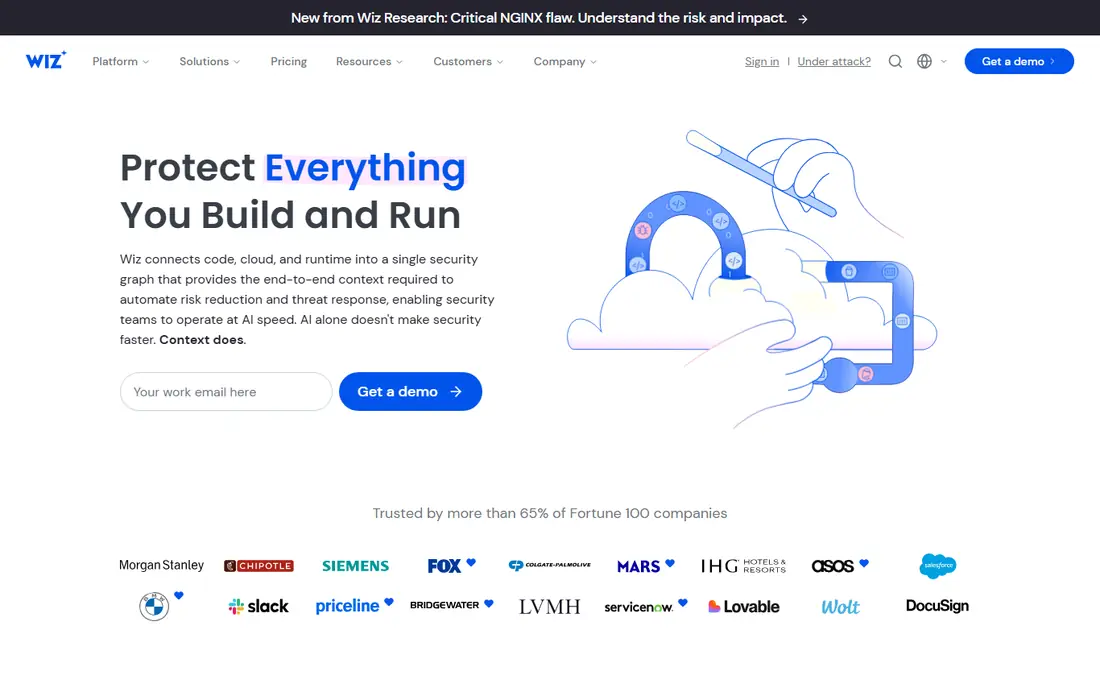
Wiz is the most widely shortlisted CSPM platform for mid to large companies, and its strength is context. Instead of handing security teams a long list of isolated findings, it maps how a misconfiguration, a vulnerability, and an exposed resource combine into a real attack path. Agentless scanning means teams can connect cloud accounts and see inventory quickly, without installing agents on every workload first.
The main drawback is price and sales process. Wiz does not publish a simple rate card, and enterprise deployments can be costly, especially as modules are added. Small teams should ask for a scoped quote tied to their actual workload count, and test the trial on their real accounts. For a multi-cloud estate that needs clear prioritization, Wiz is still the benchmark many rivals are measured against.
- Agentless scanning
- Clear attack path graph
- Broad multi-cloud coverage
- Quote based pricing
- Enterprise cost can be high for small estates
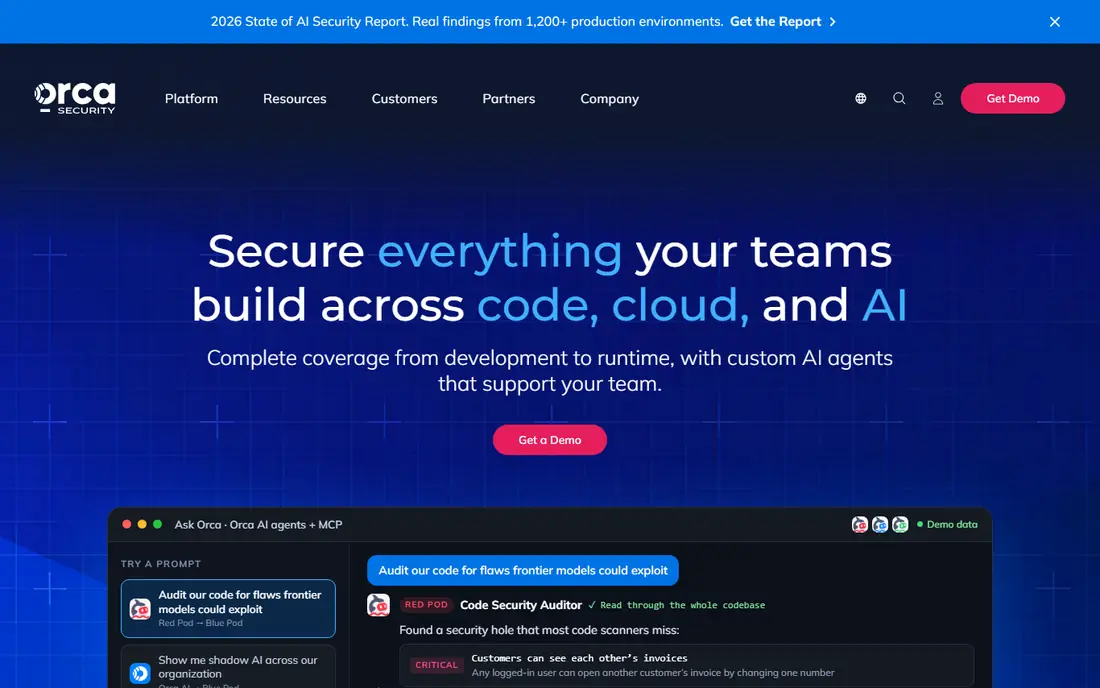
Orca Security built its name on agentless scanning, using its SideScanning approach to inspect cloud workloads, configurations, and identities without an agent on each resource. That makes deployment fast, which matters for teams with many accounts and limited time. It also ranks findings by attack path, so teams can focus on exposures that an attacker could actually reach.
Pricing is quote based and tied to scanned workloads, so small estates should confirm the minimum deal size before a deep evaluation. Runtime depth through an optional sensor is an add-on for teams that want agent based coverage beside the agentless baseline. For companies that want broad visibility without a long agent rollout, Orca is a strong alternative to Wiz.
- Full agentless SideScanning
- Fast deployment
- Attack path prioritization
- Quote based pricing
- Optional runtime agent costs extra for some use cases
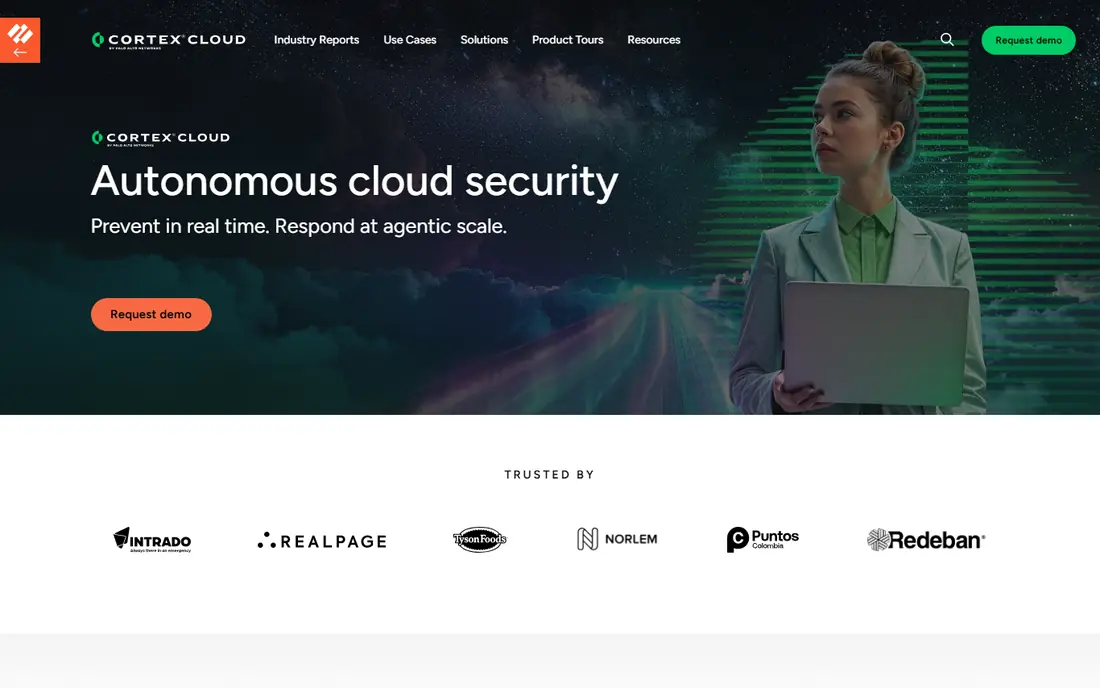
Palo Alto Networks Cortex Cloud, formerly Prisma Cloud, covers posture, workload protection, code security, and identity entitlements in one cloud-native platform. Its runtime depth, drawn from its workload protection heritage, suits enterprises that need more than posture scanning, including container and Kubernetes protection. Teams already using Palo Alto network or security operations tools will find useful integrations.
The buying model is the challenge. Credit based pricing maps to protected resources and modules, which can be hard to forecast without a careful scoping exercise. Smaller teams may also find the platform complex to run well. For a large enterprise that wants one vendor for code, cloud, and runtime security, Cortex Cloud offers the broadest single platform on this list.
- Broad code to cloud coverage
- Strong runtime depth
- Palo Alto ecosystem links
- Credit based pricing can be hard to forecast
- Complex for small teams
Microsoft Defender for Cloud is the natural starting point for teams centered on Azure. Its foundational posture features are free for Azure resources, giving secure score, compliance checks, and basic recommendations without a new vendor contract. Paid Defender plans add workload protection, threat detection, and deeper multi-cloud posture for AWS and Google Cloud.
The limit is focus. Azure coverage is deepest, and teams with a large AWS or Google Cloud estate may find a dedicated multi-cloud platform gives more even coverage. Still, every Azure team should turn on the free baseline first, fix the top recommendations, and only then judge whether a paid platform adds enough value to justify its cost.
- Free foundational posture for Azure
- Compliance scoring
- Deep Microsoft links
- Strongest on Azure
- Multi-cloud depth varies by workload plan
CrowdStrike Falcon Cloud Security pairs agentless posture scanning with agent based runtime protection, and it fits best for companies already running Falcon on endpoints. Cloud findings can be investigated beside endpoint and identity signals in the same console, which helps a security operations team connect a cloud exposure to a real host or user. Its prioritization aims to cut noise by focusing on risks that combine exposure, vulnerability, and identity weakness.
Standalone buyers get less of that benefit, since much of the value comes from the wider Falcon platform. Pricing is module based and quote driven, so confirm which cloud modules are included before comparing it with a pure CSPM tool. For a Falcon shop that wants cloud security in one console, it is a logical shortlist pick.
- Agentless posture plus runtime
- Falcon XDR integration
- Strong prioritization
- Best value inside Falcon
- Quote based module pricing
Lacework, now part of Fortinet, takes a behavior based approach, learning normal cloud activity and flagging anomalies that signature checks might miss. That suits teams worried about novel attacks and insider misuse, not just known misconfigurations. It covers posture, workload, and identity risks, with a machine learning baseline that aims to reduce alert noise over time.
Buyers should confirm the current product name, packaging, and support route after the Fortinet acquisition, since branding and sales details have shifted. Pricing is quote based, so ask for a clear scope tied to accounts and workloads. For teams that value anomaly detection beside posture checks, Lacework offers a different lens from graph based rivals.
- Behavior based anomaly detection
- Cloud posture plus workload coverage
- Fortinet links
- Quote based pricing
- Brand transition after Fortinet acquisition needs checking
Sysdig suits teams whose cloud risk lives mainly in containers and Kubernetes. Its runtime insight shows which vulnerabilities are actually loaded and in use, which helps teams ignore theoretical risks and fix what matters. That filtering is valuable in container estates where scanner output can otherwise overwhelm a small platform team.
As a general CSPM for a mixed estate of virtual machines, serverless, and SaaS, Sysdig is narrower than Wiz or Orca. Teams should treat it as a container led platform with posture features, not as a one to one replacement for a broad CSPM. For Kubernetes heavy companies, though, its runtime depth is a genuine advantage that general tools may not match.
- Deep container runtime insight
- Vulnerability filtering by use
- Kubernetes focus
- Less suited as a general CSPM for non-container estates
- Quote based pricing
Datadog Cloud Security appeals to teams that already watch their systems in Datadog. Posture findings sit beside logs, metrics, and traces, which helps engineers see a misconfiguration in the context of a real service, not as an isolated security ticket. Datadog also publishes pricing for several products, which makes early cost estimates easier than with pure quote based rivals.
The catch is platform fit. Teams that do not use Datadog for observability will get less value, and CSPM depth depends on which modules are enabled. It is best for engineering led teams that want security signals inside the tool they already use daily. For a security team that needs a standalone posture platform, a dedicated CSPM may be clearer.
- Posture beside logs and metrics
- Published per host pricing for some products
- Strong integrations
- Full value needs Datadog adoption
- CSPM depth varies by module
Prowler is the best free starting point for cloud posture, and it suits small teams, startups, and engineers who want checks without a sales call. The open source tool runs hundreds of checks mapped to common compliance frameworks across AWS, Azure, Google Cloud, and Kubernetes, and it can feed results into existing workflows. A paid cloud version adds a hosted dashboard for teams that want less manual work.
The trade is effort. Prowler reports findings, but it does not provide the same attack path prioritization, remediation workflows, or support as paid platforms. Teams need engineering time to run it, tune it, and act on results. For a small estate with a capable engineer, Prowler can cover the basics well. For a large estate, pair it with a paid platform or plan for the work it requires.
- Free and open source
- Hundreds of compliance mapped checks
- Multi-cloud support
- No vendor prioritization engine
- Needs engineering time to run well
How we picked these
We compared official product pages, vendor documentation, and 2026 CSPM and CNAPP guides, and we focused on tools that scan live cloud posture in October 2026. We mixed agentless leaders, enterprise platforms, a native cloud option, container specialists, and a free open source tool, so teams of different sizes can find a fit. We treated pricing as quote based where vendors do not publish a rate card, and we did not invent list prices for those tools.
What to check before you buy
Start with a trial on your real accounts, not a demo tenant. Connect a representative set of accounts, check how long full inventory takes, and look at the top ten findings: are they actionable, or are they noise your team will ignore? Ask how the tool builds attack paths, how it handles identity and data exposure, and how remediation is tracked to closure.
Next, scope the price honestly. Confirm what counts as a workload or credit, what happens when you add accounts, and whether runtime, code, and identity modules are included or extra. Check compliance mappings for the frameworks you actually face, and confirm export and ticketing links to your existing workflow. Finally, assign an owner for posture fixes, since even the best tool fails if findings sit unread.
Frequently asked questions
What is a CSPM tool?
A cloud security posture management tool scans cloud accounts for misconfigurations, exposed storage, risky permissions, and compliance gaps, then ranks fixes. It is part of the wider cloud-native application protection platform, which also covers workloads, code, and identities.
What is the best CSPM platform?
Wiz, Orca Security, and Palo Alto Cortex Cloud lead for large multi-cloud estates, while Microsoft Defender for Cloud suits Azure teams and Prowler suits small teams on a budget. The best choice depends on cloud mix, team size, and whether you need runtime protection too.
How much do CSPM tools cost?
Most enterprise CSPM tools are quote based, priced by workloads, accounts, or credits, and large deployments can be costly. Microsoft Defender for Cloud offers free foundational posture for Azure, and Prowler is free as open source, so small teams can start without a large contract.
Do CSPM tools need agents?
Not always. Wiz and Orca offer agentless scanning for posture and inventory, while runtime protection often uses an agent or sensor. Ask each vendor which findings need an agent, since that affects deployment time and coverage.
How is CSPM different from CWPP?
CSPM focuses on cloud configuration and posture, while cloud workload protection focuses on runtime security for virtual machines, containers, and serverless workloads. Many modern platforms combine both, which is why vendors now sell them as one CNAPP product.
Can small teams use CSPM tools?
Yes, starting with Microsoft Defender for Cloud on Azure or Prowler on any major cloud gives useful posture checks for free. Paid platforms become worth it when the estate grows, findings need prioritization, or compliance reporting takes too much manual time.
Sources
- https://www.wiz.io
- https://orca.security
- https://www.paloaltonetworks.com/cortex/cloud
- https://www.microsoft.com/en-us/security/business/cloud-security/microsoft-defender-for-cloud
- https://www.crowdstrike.com/en-us/products/cloud-security/
- https://www.lacework.com
- https://sysdig.com
- https://www.datadoghq.com/product/cloud-security/
- https://prowler.com
See where you really rank - block by block
ProMapRanker scans Google Maps across a grid of your service area. Simple monthly plans from $19, white-label on every plan.
Start freeKeep reading
 zscaler alternatives
Best Zscaler Alternatives in 2026
Looking for zscaler alternatives? We compare 9 SASE and zero trust platforms on architecture, data protection, pricing, and fit for your network and team.
Read → zapier alternatives free
Best Zapier Alternatives Free in 2026
Nine automation tools for zapier alternatives free in 2026, all with genuinely free tiers, plus free plan limits, starting prices and upgrade paths explained.
Read → which platform is best for online reputation
Which Platform Is Best for Online Reputation in 2026
Wondering which platform is best for online reputation? We compare 8 review, listing, and response tools for small and multi-location businesses and agencies.
Read →