 ProMapRanker
Best Crypto Compliance Software in 2026


Enterprise compliance and investigations · Pricing starts at: See website
Key takeaways
- Chainalysis, Elliptic and TRM Labs lead for enterprise screening, monitoring and investigations, all priced by quote.
- Crystal Intelligence and Scorechain suit investigation-led teams that need tracing and entity attribution.
- Solidus Labs, ComplyAdvantage and Merkle Science cover different parts of compliance, from trade surveillance to identity checks.
- Software alone does not make an organisation compliant, and rules vary by jurisdiction.
Quick comparison
| Pick | Great for | Pricing starts at | Free tier | |
|---|---|---|---|---|
| Chainalysis | Enterprise compliance and investigations | See website | No | Visit |
 Elliptic | Screening and cross-chain monitoring | See website | No | Visit |
 TRM Labs | Cross-chain risk and investigations | See website | No | Visit |
 Crystal Intelligence | Tracing and forensic investigations | See website | No | Visit |
 Scorechain | Screening for smaller crypto teams | See website | Free trial | Visit |
 Solidus Labs | Trade surveillance and market abuse detection | See website | No | Visit |
 ComplyAdvantage | Sanctions and AML screening data | See website | Free trial | Visit |
 Merkle Science | Risk monitoring and fraud detection | See website | No | Visit |
The best crypto compliance software
We compared official product pages and public compliance guides for tools that screen wallets, monitor transactions, trace funds and support investigations for crypto businesses.
This article gives general information only and is not legal or financial advice. Software alone does not make an organisation compliant, rules vary by jurisdiction, and no tool here guarantees an outcome, an approval or protection from loss.
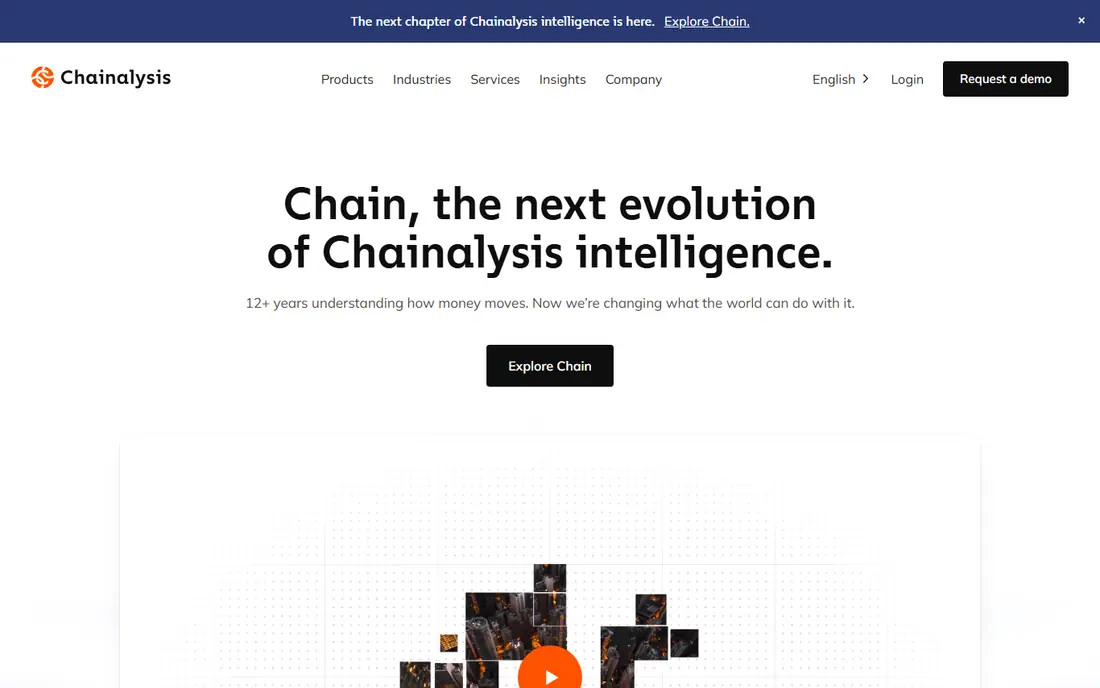
Chainalysis is the default enterprise name in this field for a reason. Screening, transaction monitoring, tracing and investigation tools sit on a large data set of labelled entities, which helps a compliance team judge whether a wallet or transaction carries sanctions, scam or other risk. Exchanges, payment firms and investigators use it to build a record that can support a decision or a report.
The barrier is scale. Pricing is by quote and enterprise contracts are costly, so a small crypto business may struggle to justify it before it has real volume. Implementation and staff training also matter, since a powerful tracing tool still needs a trained analyst to interpret the result.
- Broad screening, monitoring, tracing and investigation tools
- Large entity data set
- Widely used by exchanges and agencies
- Enterprise pricing by quote
- Smaller firms may find it heavy and costly
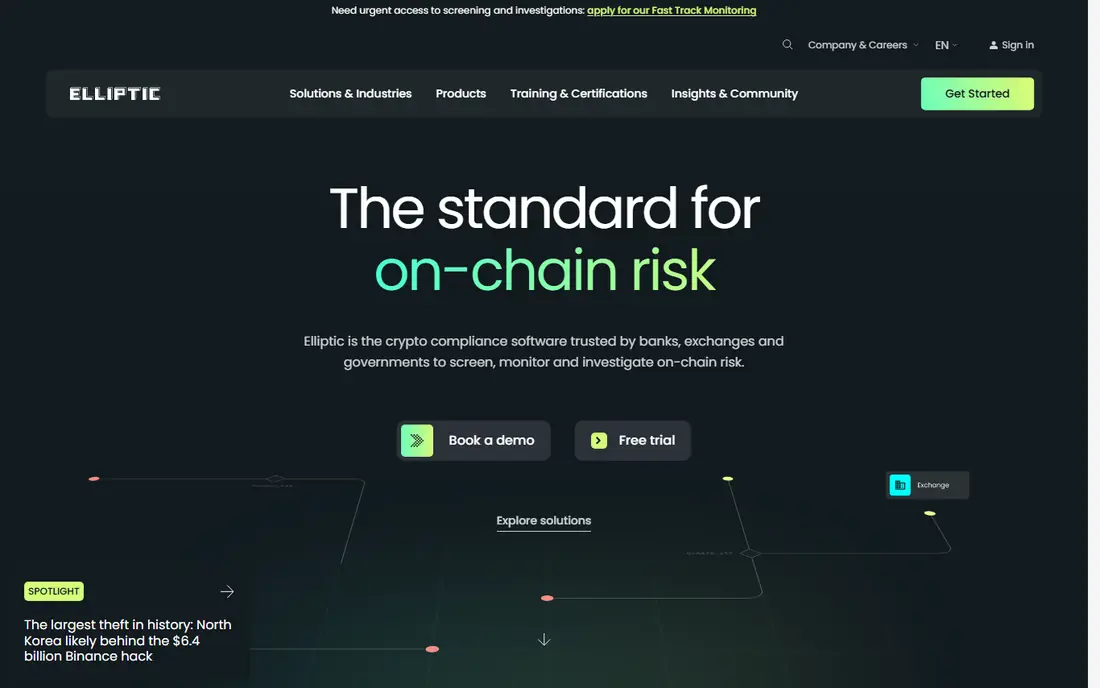
Elliptic focuses on answering one question fast: is this wallet or transaction risky, and why. Screening and monitoring tools score wallets and transactions across many chains, and investigation tools let analysts follow funds across chains when a case needs deeper work. That cross-chain view matters, since illicit funds rarely stay on one network.
As with Chainalysis, pricing is by quote, and the exact chain coverage, screening volume and support level depend on the contract. Teams should confirm which chains, screening limits and data retention terms are included, rather than assuming every chain is covered equally.
- Cross-chain screening and monitoring
- Holistic wallet and transaction risk scores
- Investigation tools
- Enterprise pricing by quote
- Coverage details vary by chain and plan
TRM Labs brings investigation, monitoring and risk work into one workflow, which helps a compliance team move from an alert to a case without switching tools. Cross-chain tracing, entity data and risk scoring support both real-time monitoring and deeper investigations into fraud or sanctions exposure. That unified flow is why many mid-size and large crypto firms shortlist it alongside Chainalysis and Elliptic.
Pricing is again by quote, and the value depends on case volume. A firm with only occasional alerts may pay for depth it rarely uses, while a firm with steady monitoring and investigation work will use the platform daily. Ask for pricing by screening volume and user count.
- Unified investigation, monitoring and risk workflows
- Broad cross-chain coverage
- Fast case building
- Enterprise pricing by quote
- Best value for teams with steady case volume
Crystal Intelligence, formerly Crystal Blockchain, suits teams that need to prove what happened, not just flag a risk score. Tracing across many blockchains, entity attribution and forensic reporting help investigators and auditors build a case file that can be shared internally or with authorities. That audit focus is useful when a regulator or a partner asks for evidence, not just a dashboard alert.
It is less of a plug-and-play screening API for a small app than some rivals, and pricing is by quote. Investigation-led firms, exchanges with a real case load, and professional services teams will get the most from it, while a tiny project may prefer a simpler screening tool.
- Tracing across many blockchains
- Verified entity attribution
- Audit-ready forensic reports
- Enterprise pricing by quote
- More investigation-led than a simple screening API
Scorechain gives smaller crypto teams a more accessible route into screening. Wallets and transactions can be checked and scored, and a trial lets a team test chain coverage and workflow before signing a contract. For a regional exchange, wallet provider or payment firm, that lower barrier matters, since enterprise tools can be out of reach at an early stage.
The honest limit is scale of data and depth. Scorechain does not carry the same entity data set or investigation breadth as Chainalysis or TRM Labs, so teams with complex cases may still need a larger tool. As a first screening layer, however, it is a credible and practical pick.
- Wallet and transaction screening
- Risk scoring
- Trial lets teams test coverage
- Smaller data set than the largest vendors
- Enterprise features need higher plans
Solidus Labs covers a different compliance job from wallet screening. It monitors trading activity across venues for market abuse, wash trading and other suspicious patterns, and it gives compliance teams case tools to review alerts. Exchanges and trading firms need this layer in addition to wallet screening, since on-chain risk scores do not catch abusive trading on their own order books.
That focus is also its limit. A firm that only needs wallet screening should not buy Solidus Labs as a substitute, and pricing is by quote for trading firms. Used alongside a screening tool, it closes a gap that many crypto compliance programmes miss.
- Trade surveillance across crypto venues
- Market abuse detection
- Case management
- Not a wallet screening tool
- Pricing by quote and aimed at trading firms
ComplyAdvantage supplies the off-chain side of compliance: sanctions lists, watchlists, politically exposed persons and adverse media data that can be screened through APIs. Banks, fintech firms and crypto businesses use it to check customers and counterparties against lists that on-chain tools do not cover on their own. That breadth across traditional finance and crypto makes it a useful complement to a blockchain tool.
It should not be mistaken for a tracing platform. On-chain fund flows, wallet risk and cross-chain hops need a dedicated blockchain tool, so teams should pair ComplyAdvantage with Chainalysis, Elliptic, TRM Labs or a similar product. Confirm crypto-specific coverage and screening volumes in the contract.
- Sanctions, watchlist and adverse media data
- Screening APIs
- Used beyond crypto
- Not a dedicated on-chain tracing tool
- Crypto coverage needs checking by use case
Merkle Science focuses on risk monitoring and fraud detection for Web3 businesses, with transaction monitoring, risk intelligence and case tools for compliance teams. Behavioural signals and network analysis help a team spot patterns that a simple blocklist would miss, such as a new scam pattern spreading across wallets. That focus suits exchanges, wallets and DeFi-facing firms that need ongoing monitoring.
Its profile is smaller than Chainalysis or Elliptic, so teams should test chain coverage and data quality for their own assets before committing. Pricing is by quote, and the contract should state screening volume, chains and support clearly, since those terms drive the real cost.
- Transaction monitoring and risk intelligence
- Fraud detection
- Case tools for compliance teams
- Pricing by quote
- Smaller profile than the largest vendors
How we picked these
We compared official product pages and public compliance guides, and we kept only tools that are sold today for crypto compliance, screening, monitoring or investigations. We marked pricing as "See website" where vendors price by quote, which is the norm for enterprise tools in this field. We did not claim hands-on testing, and we did not present any tool as a guarantee of compliance.
What to check before you buy
Start with the risk you must control. Wallet screening, transaction monitoring, trade surveillance and customer screening are different jobs, and one tool rarely covers all four well. List the chains, assets, volumes and jurisdictions involved, then test each vendor against that exact list.
Next, check the human side. Ask who will review alerts, how cases are documented, how data is stored, and how the vendor updates sanctions and entity data. A tool that produces alerts no one can explain will not help in a regulatory review, whatever its marketing claims.
Frequently asked questions
What is crypto compliance software?
It is software that screens wallets and transactions, monitors activity for risk, traces funds across chains and helps teams document cases. It supports anti-money laundering, sanctions and fraud controls, but it does not replace policies, staff training or legal advice.
How much does crypto compliance software cost?
Enterprise tools such as Chainalysis, Elliptic and TRM Labs price by quote, based on volume, chains, users and modules. Smaller screening tools may offer trials or lower entry contracts, but the total cost still depends on screening volume and support. Get a written quote for your exact volume.
Is Chainalysis or TRM Labs better?
Chainalysis suits large enterprises that want a broad platform for screening, monitoring and investigations. TRM Labs suits teams that want unified investigation and risk workflows with broad cross-chain coverage. Both are enterprise priced, so test them against your chains and case volume.
Does using compliance software make a crypto business compliant?
No. Software is one part of a compliance programme, alongside policies, risk assessments, staff training, record keeping and legal advice. Regulators judge the whole programme, not the tool alone, and rules vary by jurisdiction.
Can small crypto businesses afford compliance tools?
Some can, through smaller screening tools, trials and volume-based contracts, but enterprise platforms may be costly at low volume. Small firms should start with their highest-risk flows, get quotes for that volume, and seek legal advice on what their jurisdiction requires.
Sources
See where you really rank - block by block
ProMapRanker scans Google Maps across a grid of your service area. Simple monthly plans from $19, white-label on every plan.
Start freeKeep reading
 what’s the best risk software for enterprises
What Is the Best Risk Software for Enterprises in 2026
We compared what’s the best risk software for enterprises on risk registers, controls, third-party risk, and reporting, with pricing notes for large teams.
Read → what's the best pam software for enterprises
What is the Best PAM Software for Enterprises in 2026
Find what's the best pam software for enterprises, with vaulting, session recording, just in time access and pricing compared for large enterprise IT teams.
Read → what’s the best grc software
What Is the Best GRC Software in 2026
We compared what’s the best grc software on risk, compliance, audit and vendor risk, so teams can pick a platform that fits their frameworks and budget.
Read →