 ProMapRanker
Best Crowdfunding Platforms in 2026

Key takeaways
- Kickstarter suits creative products, while Indiegogo suits tech products and post-campaign sales, and both charge about 5 percent plus processing.
- GoFundMe suits personal and charitable causes, with no platform fee and a processing fee of 2.9 percent plus $0.30 per donation.
- Wefunder, StartEngine, and Republic suit startups raising equity, but fees, legal work, and investor risk are far higher than reward campaigns.
- Most campaigns succeed by bringing their own audience, so budget time for outreach before you launch, not after.
Quick comparison
| Pick | Great for | Pricing starts at | Free tier | |
|---|---|---|---|---|
 Kickstarter | Creative product launches | Free | Yes | Visit |
 Indiegogo | Tech products and preorders | Free | Yes | Visit |
 GoFundMe | Personal and charitable causes | Free | Yes | Visit |
 Patreon | Ongoing creator memberships | Free | Yes | Visit |
 Wefunder | Startup equity raises | See website | No | Visit |
 StartEngine | Larger equity raises | See website | No | Visit |
 Republic | Vetted early-stage equity | See website | No | Visit |
 Kiva | Zero-interest small business loans | Free | Yes | Visit |
 Fundable | Accredited investor fundraising | See website | No | Visit |
The best crowdfunding platforms
This is not financial advice. Fees and terms vary by platform and campaign type, and equity investing carries a risk of total loss, so read the fee page and offering documents before you launch or invest.
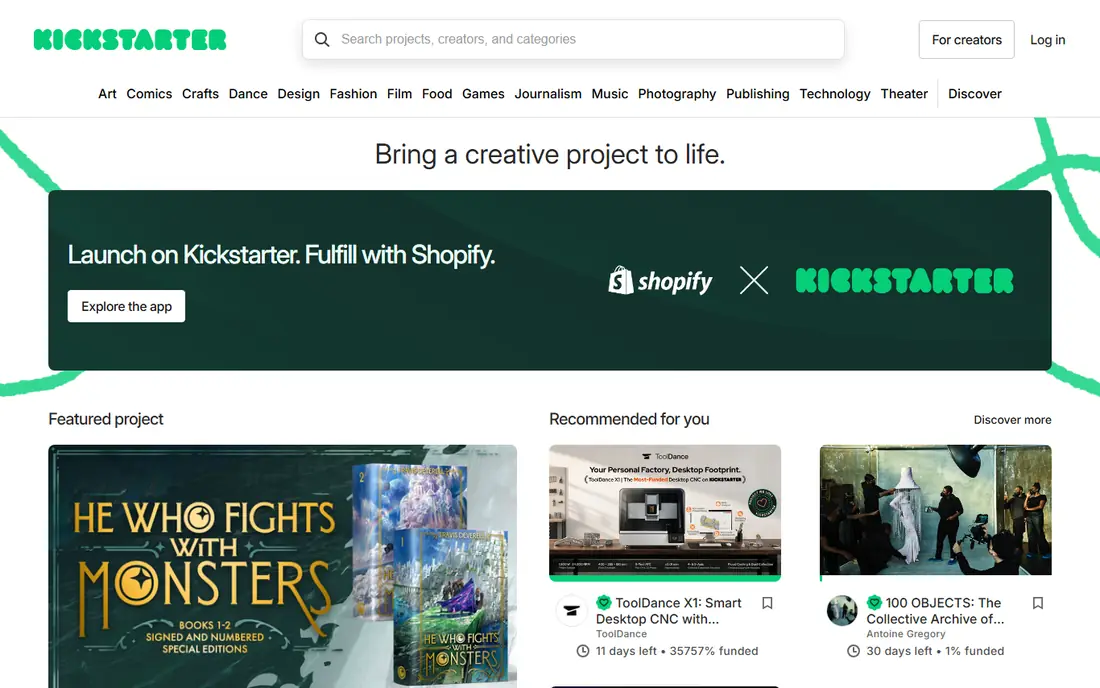
Kickstarter remains the best-known platform for creative products, from games and books to design and film. The audience already browses for new projects, which helps a well-prepared launch, and the all-or-nothing model means backers are not charged if the goal is missed. Reward tiers let creators offer early products, signed editions, and bundles that feel like a real preorder.
The catch is that Kickstarter does not bring the audience for you. Successful creators usually arrive with an email list, social following, or press contacts, and the fee total lands near 8 to 10 percent once processing is counted. If your project is creative and you can show a working prototype, Kickstarter is the strongest launchpad. If you need flexible funding, GoFundMe or a flexible model may fit better.
- Largest audience for creative products
- All-or-nothing funding protects backers if a goal is missed
- Clear reward tiers and campaign tools
- Platform fee of 5 percent plus processing of about 3 percent plus $0.20 per pledge
- Strict project rules
- No funding if the goal is missed
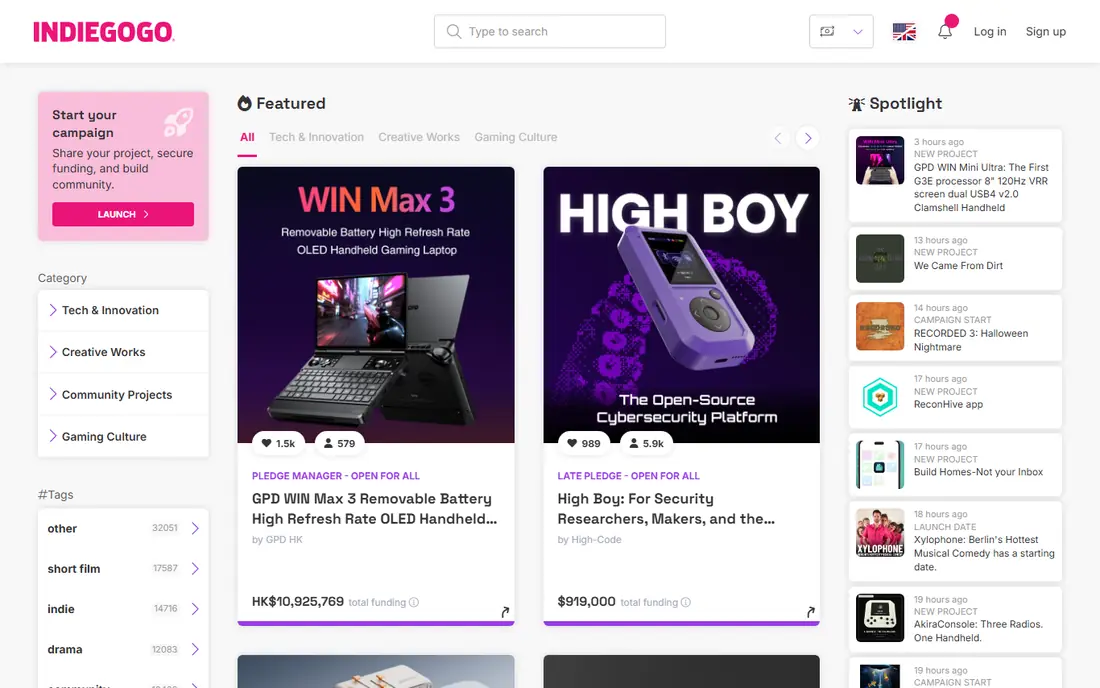
Indiegogo is the main alternative for tech founders who want a product launch with preorder momentum. The platform is known for gadgets and hardware, and InDemand lets a funded campaign keep selling after the main campaign closes, which helps products with longer production timelines. Backers browse for new tech, so a clear demo video and honest delivery timeline matter a lot.
The change to note is funding rules. Indiegogo ended flexible funding in October 2025, so campaigns now use all-or-nothing funding like Kickstarter, which removes its old differentiator. Fees are similar, at 5 percent plus processing. Choose Indiegogo when your audience and category fit tech, and choose Kickstarter when creative categories and community fit better.
- Strong for tech and gadgets
- InDemand sales after a campaign ends
- Global reach with many categories
- Platform fee of 5 percent plus processing
- Flexible funding ended in October 2025, so funding is now all-or-nothing
- Competition for attention is high
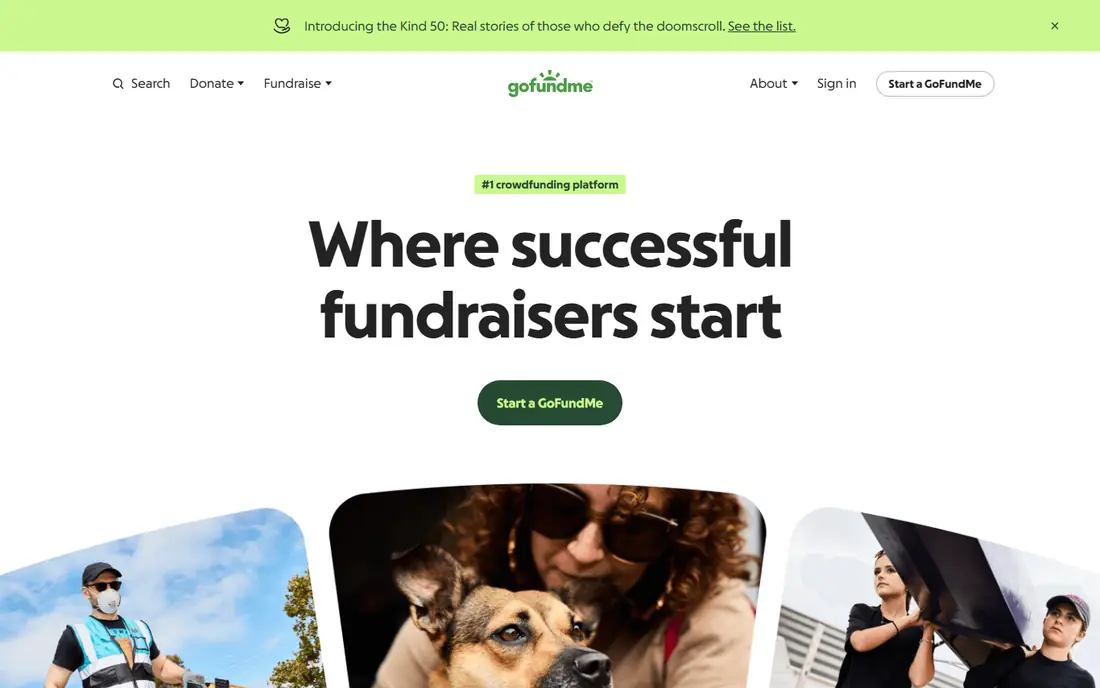
GoFundMe is the right platform for medical bills, emergencies, education, community projects, and charitable causes. Setup is simple, sharing is built for social networks, and donors trust the familiar checkout. Because there is no platform fee, more of each donation reaches the cause after processing, and you keep what you raise even if the goal is not met.
The limit is purpose. GoFundMe is not a product launch platform, and it does not offer reward tiers or equity in the way Kickstarter or Wefunder do. For a personal cause, that simplicity is a strength. For a product, use a rewards platform instead, and be clear about how donations will be used.
- No platform fee for personal fundraising
- Simple setup and social sharing
- Keep what you raise even if you miss a goal
- Processing fee of 2.9 percent plus $0.30 per donation
- Not built for product rewards or equity
- Success depends on personal networks
Patreon suits creators who publish regularly and want steady income rather than a single campaign. Podcasters, writers, artists, and video makers can offer membership tiers with early access, bonus content, and community perks, and fans pay monthly or per creation. That recurring model helps creators plan work without chasing a new launch every few months.
The drawback is retention. Members leave if content slows or tiers feel thin, and fees vary by plan, so check the current plan before you commit. Patreon is not the tool for a one-time product goal, but for a creator with an audience that wants ongoing work, it is the most proven membership platform.
- Recurring income from fans
- Membership tiers with exclusive content
- Tools for posts, messages, and community
- Platform fees of 5 to 12 percent depending on plan, plus processing
- Income depends on keeping members engaged
- Not a one-off launch tool
Wefunder lets startups raise equity from everyday investors, not just venture funds, under Regulation Crowdfunding. Founders keep control in most cases, since crowdfunding investors rarely take board seats, and customers can become investors who promote the product. The platform is open to many companies, which gives founders a faster path to listing than a tightly vetted platform.
The costs and risks are real. Platform fees, investor fees, legal work, and SEC filings can take 10 percent or more of a raise, and investors face a long hold with no guaranteed exit. Founders should also expect public scrutiny of their financials. If you have a customer base that wants to invest and you can handle the compliance work, Wefunder is a practical equity option.
- Open model that accepts many companies
- No upfront fee on success-based raises
- Familiar to startup investors
- Success fee around 7.9 percent for Reg CF raises, plus investor fees
- No secondary market for most deals
- Equity raises need legal and SEC filings
StartEngine suits larger startups and consumer brands with a big customer base that can drive investment. It supports both smaller Reg CF raises and larger Reg A+ raises, and its secondary marketplace gives some investors a path to sell, which smaller platforms lack. A strong brand story and a clear use of funds help a StartEngine campaign stand out.
The trade-off is cost and selectivity. Fees, equity, legal, and audit expenses can reach a large share of the raise, and not every company is accepted. Founders should budget months for preparation and marketing, not just the live campaign period. If your raise is large and your audience is broad, StartEngine is worth a direct conversation.
- Large registered investor base
- Reg CF and Reg A+ options
- Secondary marketplace for some offerings
- Fees typically run 6 to 10 percent plus equity in many deals
- Selective listing process
- Legal and audit costs add up
Republic positions itself as a more curated equity platform, with a review process that filters early-stage tech startups before listing. That selectivity can help a strong company stand out to investors who value screening, and low minimums let many small investors take part. The platform also supports several offering types, so a company can choose the structure that fits its stage.
The cost is still high, with cash fees plus an equity share, and acceptance is not guaranteed. Investors should remember that curation does not remove startup risk, and many early-stage companies fail. For a vetted startup with a clear story, Republic is a credible equity platform. For a founder who wants open access, Wefunder may be easier to join.
- Selective review that signals quality to investors
- Reg CF, Reg D, and Reg A+ options
- Low minimum investments on many deals
- Fees around 6 to 7 percent cash plus about 2 percent in securities
- Selective acceptance limits access
- Investors still face high startup risk
Kiva works differently from the platforms above, because backers are lenders, not donors or investors. Small business owners post a loan request, lenders fund it in small amounts, and the borrower repays with zero interest. That model suits food businesses, shops, and service providers that need a modest amount and can repay over time.
The limit is scale and obligation. A Kiva loan is debt, so you must repay it even if sales are slow, and the amount you can raise depends on lender support and your network. For a small, repayable need, Kiva is a low-cost and community-driven option. For a large product launch or equity raise, a rewards or equity platform fits better.
- Zero-interest loans crowdfunded by lenders
- No platform fee for borrowers in the core model
- Good for businesses that lack bank access
- Loans must be repaid, so this is debt, not a gift
- Fundraising depends on lender interest
- Loan sizes suit small needs, not large raises
Fundable suits startups that want to raise from accredited investors rather than a broad consumer crowd. The platform provides campaign pages, investor tools, and a structure for equity fundraising, which helps founders present a professional raise. Companies with a clear business model and existing investor contacts tend to do best here.
The drawback is access and cost. Pricing is not a simple consumer fee, and the accredited focus means the audience is smaller than Kickstarter or GoFundMe. Founders without investor relationships will still need to bring their own leads. If your raise targets accredited investors and you want a dedicated fundraising page, Fundable is worth comparing with Wefunder and StartEngine.
- Built for startups seeking accredited investors
- Campaign pages for equity and rewards
- Structured fundraising tools
- Pricing is quote-based and higher than consumer platforms
- Accredited focus limits the investor pool
- Needs a strong pitch and network
How we picked these
We compared official fee pages, funding rules, and October 2026 crowdfunding guides, and we kept only platforms that are live and serve US creators, causes, or startups. We mixed rewards, donation, membership, debt, and equity models so readers can match the model to the goal, not just the brand. We did not claim hands-on testing, and fees that varied by offering type are described as ranges or marked as See website.
What to check before you launch
Pick the funding model first
Rewards, donation, membership, debt, and equity each create different promises. A rewards backer expects a product, a donor expects a cause to be helped, a member expects ongoing content, a lender expects repayment, and an equity investor expects shares with real risk. Pick the model that matches what you can actually deliver.
Budget the full fee total
Platform fees are only part of the cost. Add payment processing, legal and accounting fees for equity raises, video and marketing costs, and fulfillment for rewards. A campaign that raises its goal on paper can still fall short after fees and shipping, so model the net amount before you set the goal.
Bring your audience before launch day
Platforms surface campaigns with early momentum, but they rarely create it from nothing. Build an email list, line up early backers, and prepare press and social posts before launch. The first 48 hours matter most, since early funding signals to later visitors that the campaign is worth joining.
Frequently asked questions
Which crowdfunding platform is best?
Kickstarter is best for creative products, Indiegogo for tech products, GoFundMe for personal causes, Patreon for ongoing creator income, and Wefunder or StartEngine for startup equity. The best platform depends on your goal, audience, and funding model, not on brand size alone.
How much do crowdfunding platforms charge?
Kickstarter and Indiegogo charge about 5 percent plus processing, GoFundMe charges no platform fee plus 2.9 percent plus $0.30 per donation, Patreon charges 5 to 12 percent by plan plus processing, and equity platforms often charge 6 to 10 percent plus legal and investor fees. Always read the current fee page before launch.
What happens if my campaign does not reach its goal?
On Kickstarter and Indiegogo, all-or-nothing funding means backers are not charged and you receive nothing if the goal is missed. GoFundMe lets you keep what you raise regardless of the goal, while Patreon has no goal to miss since income follows member count. Equity raises also use all-or-nothing rules in most cases.
Can I raise money for a business on a crowdfunding platform?
Yes. Rewards platforms suit product launches, equity platforms suit startups selling shares, and Kiva suits small businesses seeking a repayable loan. Each model has different legal duties, so check the platform rules and, for equity, SEC filing requirements before you launch.
Is crowdfunding safe for backers and investors?
Rewards backers face delivery risk if a creator fails to ship, donors should verify the cause and organizer, and equity investors can lose their full investment if a startup fails. This is not financial advice, and you should only invest money you can afford to lose. Read offering documents and campaign updates before you commit.
Sources
See where you really rank - block by block
ProMapRanker scans Google Maps across a grid of your service area. Simple monthly plans from $19, white-label on every plan.
Start freeKeep reading
 zoho inventory alternatives
6 Alternatives to Zoho Inventory, Compared on Price and Fit
Zoho Inventory alternatives: 6 tools compared on price, free plans and fit. Katana leads the list for manufacturers. Fit and flaws are laid out for each entry.
Read → zoho crm alternatives
Best Zoho CRM Alternatives (2026)
Need Zoho CRM alternatives? We compare 7 tools on cost, free access and who each suits. Every pick gets a straight assessment. Built for quick decisions.
Read → zelle alternatives
Best Zelle Alternatives in 2026
Compare the best Zelle alternatives for sending money to friends, paying sellers and moving funds abroad, with honest notes on fees, speed and safety in 2026.
Read →