 ProMapRanker
Best CRM Software for Sales Teams in 2026

Key takeaways
- HubSpot and Zoho CRM offer the most generous free starting points for small sales teams.
- Pipedrive suits teams that think in deal stages and want a clear visual pipeline.
- Salesforce suits larger sales organizations that need deep customization and a large app ecosystem.
- Close suits inside sales teams that live on calls and messages.
- Price per seat multiplies fast, so total the cost for your full team, including add ons, before choosing.
Quick comparison
| Pick | Great for | Pricing starts at | Free tier | |
|---|---|---|---|---|
 HubSpot Sales Hub | All round sales teams | Free | Yes | Visit |
 Salesforce Sales Cloud | Large sales organizations | $25 per user per month | No | Visit |
 Pipedrive | Visual pipeline | $14 per user per month | No | Visit |
 Zoho CRM | Value for small teams | $14 per user per month | Yes | Visit |
 Close | Inside sales and calling | $9 per user per month | No | Visit |
 Freshsales | Budget AI CRM | $9 per user per month | Yes | Visit |
 monday Sales CRM | Custom sales workflows | $12 per user per month | No | Visit |
 Attio | Flexible modern teams | Free | Yes | Visit |
The best crm software for sales teams
A sales CRM should help a team track leads, deals, calls and follow ups without adding busywork. We compared official pricing pages and public pricing checks from October 2026. Prices below are per user per month on annual billing unless noted, and free plans differ in user and contact limits.
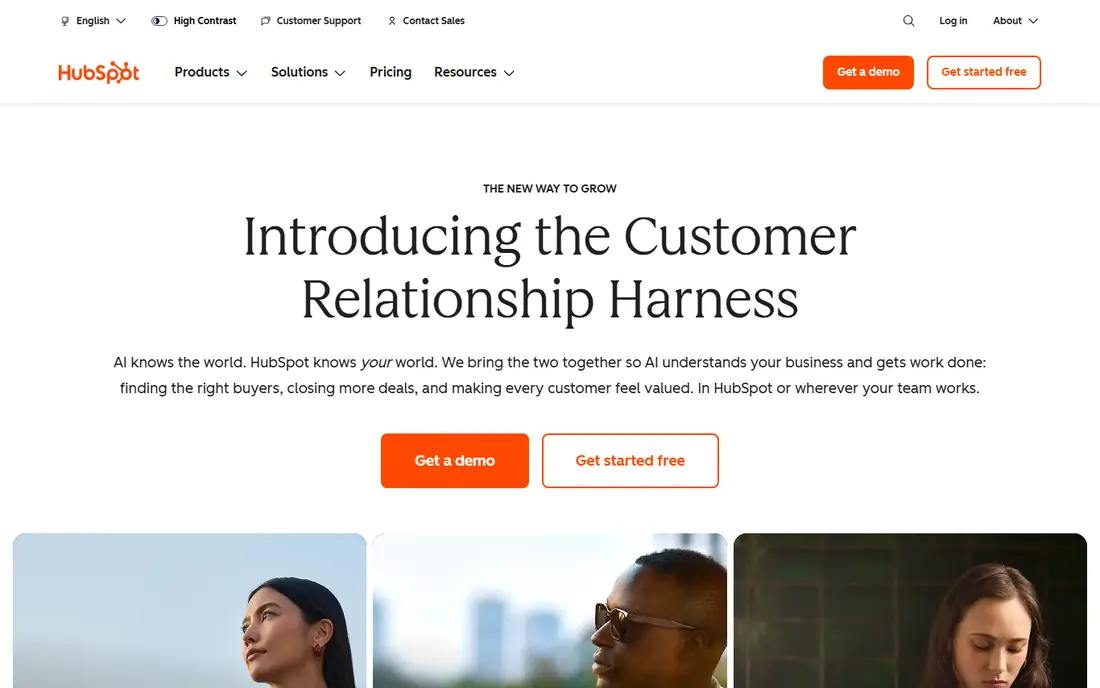
HubSpot is the safest all round pick for many sales teams, because the free CRM already covers contacts, deals, tasks, email tracking and live chat. Small teams can start without a subscription, learn the pipeline discipline, and upgrade only when automation, forecasting or custom reporting becomes essential. The wider HubSpot platform also connects marketing and service data to sales records.
The catch is the upgrade path. Sales Hub Starter is low cost, but Professional brings a large price jump, and some useful features sit behind higher tiers. Teams should map which features they need in the next year, not only the first month. HubSpot suits teams that want a gentle start and a clear growth path.
- Generous free CRM with contacts, deals and tasks
- Scales from free to enterprise
- Strong marketing and service tools alongside sales
- Paid jumps to Professional are steep
- Some features need higher hubs
- Free plan has contact and feature limits

Salesforce Sales Cloud remains the default for large, complex sales organizations. It handles multiple teams, territories, products and approval processes, with forecasting, pipeline inspection and a vast marketplace of apps. Companies with dedicated sales operations staff can shape it closely to their process, from lead routing to quote approval.
That power comes with cost and complexity. Implementation often needs specialist help, and the move from Starter at 25 dollars per user per month to higher tiers is steep. Small teams without admin time may find Salesforce heavy for simple pipeline tracking. Salesforce suits larger teams that need scale, control and ecosystem depth.
- Deep customization and automation
- Huge app ecosystem
- Strong forecasting and reporting for large teams
- Implementation can be costly and slow
- Starter to Pro jump is large
- Small teams may find it heavy
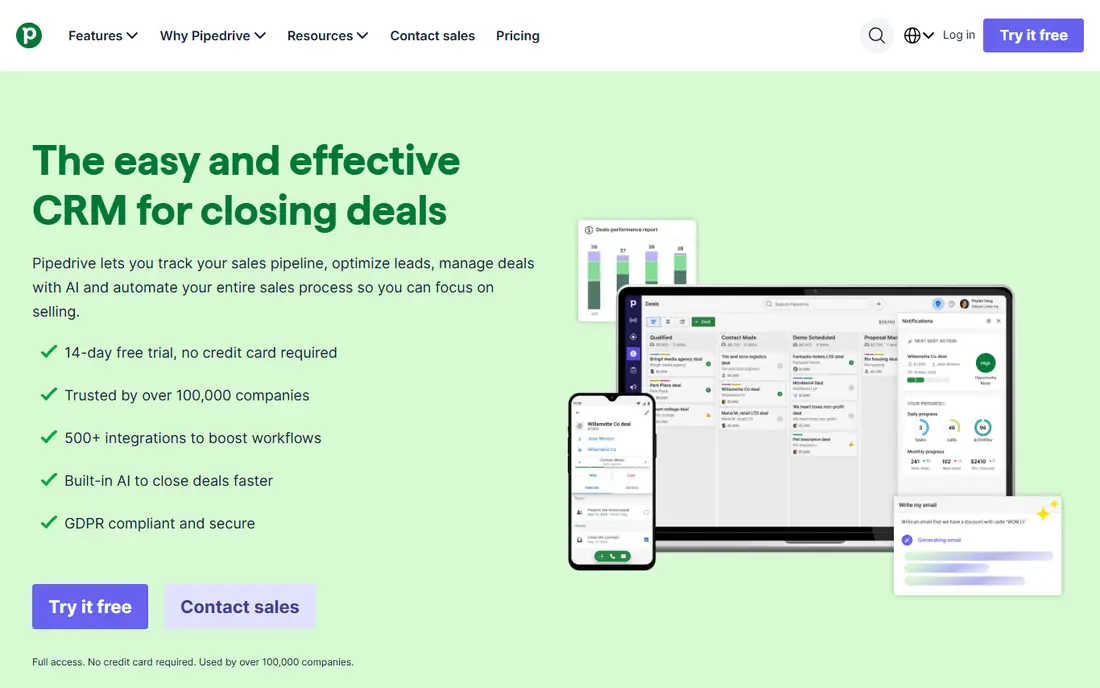
Pipedrive is built around the pipeline board, and that focus shows in daily use. Deals move by drag and drop, stages are easy to read, and sellers can see at a glance what needs action today. The Lite plan starts at 14 dollars per user per month on annual billing, which makes it affordable for small teams that want a clean sales tool without extra modules.
The honest limits sit in the plan structure. The cheapest plan with the automation builder is Growth at 39 dollars per user per month, and LeadBooster for chat and forms plus Campaigns for email marketing are add ons. Teams that need automation should price Growth, not Lite. Pipedrive suits pipeline driven teams that value clarity over breadth.
- Clear visual pipeline board
- Easy deal stage management
- Good mobile app for field and remote sellers
- No free plan
- Automations start on Growth at $39 per user per month
- LeadBooster and Campaigns are paid add ons
Zoho CRM offers strong value, with a free plan for up to three users and a Standard plan from 14 dollars per user per month on annual billing. It covers leads, deals, tasks, automation, email and reporting, and it connects with the wider Zoho suite for finance, support and marketing. Small teams that already use Zoho apps gain extra value from that integration.
The weakness is polish and setup. The interface can feel inconsistent across modules, and getting automation and custom fields right takes time. AI features such as Zia summaries sit on higher tiers, so budget teams should not expect full AI help at entry level. Zoho CRM suits value focused teams willing to invest setup time.
- Free plan for up to three users
- Broad feature set for the price
- Deep Zoho app ecosystem
- Interface can feel inconsistent
- Setup takes care
- AI features sit on higher tiers
Close is built for inside sales teams that spend the day calling, emailing and messaging leads. Calling and SMS are built in, so reps can dial, log and follow up without switching tools, and the lead workflow stays fast and focused. Recent pricing lists Solo from 9 dollars per user per month, which makes it accessible for small outbound teams.
Marketing breadth is the trade off. Close is not a marketing platform, and it lacks the campaign and landing page tools of HubSpot or Zoho. Phone lines and some advanced features cost extra, so teams should total the calling cost. Close suits outbound and inside sales teams that prioritize call volume and speed.
- Built in calling and SMS for inside sales
- Fast lead and deal workflow
- AI assistant on every plan in recent pricing
- Minimal marketing tools
- Phone lines cost extra
- Less suited to field sales or complex enterprise processes
Freshsales, from Freshworks, is a budget friendly CRM with a free plan and a Growth plan from 9 dollars per user per month on annual billing. It covers leads, deals, contacts, built in phone and email, and AI assistance on higher plans, with a clean interface that small teams can learn quickly. Setup is faster than enterprise CRMs, which helps teams that need to start selling at once.
Customization is the limit. Freshsales does not match Salesforce or Zoho for deep workflows, custom objects or large team governance. The free plan also limits integrations, so teams that rely on many connected tools should check the plan details. Freshsales suits small sales teams that want a low cost, easy start with room to grow.
- Low entry price
- Free plan for small teams
- Built in phone, email and AI features on higher plans
- Customization is lighter than Salesforce or Zoho
- Free plan limits integrations
- Advanced AI needs add ons
monday Sales CRM builds on the monday work platform, using boards, automations and dashboards to run a sales pipeline. Teams already using monday for projects can keep sales work in the same system, with custom stages, views and reports. The Basic plan starts at 12 dollars per user per month, with a three seat minimum.
The weakness is depth. As a general work platform, monday lacks some native sales features found in Pipedrive or Close, such as built in calling depth and advanced sales forecasting. Basic also caps contacts, so growing teams should check limits. monday Sales CRM suits teams that already live on monday boards and want sales work in the same place.
- Flexible boards teams already know
- Custom pipelines and dashboards
- Good for teams on monday work management
- Three seat minimum on paid plans
- Native sales features are thinner than dedicated CRMs
- Contact limits on Basic
Attio is a modern CRM with a flexible data model, letting teams shape contacts, companies, deals and custom objects to their own process. The free plan covers small teams, and the interface feels closer to a modern productivity tool than a traditional CRM. AI assistance helps with research and data entry, which suits teams that dislike manual record keeping.
The trade offs are price and depth at scale. Pro pricing is higher than budget CRMs, and sales forecasting is lighter than Salesforce or HubSpot. The app ecosystem is smaller, so teams with unusual integration needs should check the catalog. Attio suits modern, flexible teams that want a CRM shaped around their process rather than a fixed pipeline.
- Free plan for small teams
- Flexible data model for custom objects
- Modern interface with AI assistance
- Pro pricing is higher than budget rivals
- Sales forecasting is lighter
- Smaller app ecosystem than Salesforce
How we picked these
We compared official pricing pages and public pricing checks from October 2026, and we favored CRMs with a clear sales team focus, current availability and a range of price points. We included free, budget, pipeline focused and enterprise options, plus a flexible modern choice. Per seat prices multiply with team size, so the vendor pricing page and add on list are the final checks.
How to choose a CRM for your sales team
Start with how your team actually sells. Inside sales teams need calling and speed, field teams need mobile pipeline access, and larger teams need forecasting, territories and approvals. Write down the five daily jobs the CRM must handle, such as logging calls, moving deals, sending follow ups, reporting pipeline and forecasting revenue. A tool that does those five jobs well beats a larger tool with features nobody opens.
Next, run a two week trial with real deals, not demo data. Import a sample pipeline, log real calls and emails, and check the mobile app on the road. Count admin time, since a CRM that needs constant cleaning will be abandoned. Total the cost for your full team, including seats, add ons and phone lines, before you sign a yearly deal.
Rollout tips that help adoption
Keep stages simple, with no more than six or seven deal stages at launch. Assign one owner for data quality, and review the pipeline weekly for stale deals. Train on the daily workflow first, and add automation only after the basic pipeline habit is in place.
Frequently asked questions
Which CRM software is best for sales teams?
HubSpot suits most small to mid size teams as an all round pick, Pipedrive suits pipeline driven teams, and Salesforce suits large organizations. Close suits inside sales, while Zoho CRM and Freshsales suit budget teams. The best choice depends on team size, selling style and total seat cost.
What is the best CRM tool for sales teams on a budget?
Zoho CRM offers a free plan for up to three users, Freshsales offers a free plan, and HubSpot offers a generous free CRM. Paid entry plans from Close and Freshsales start at 9 dollars per user per month. Compare free plan limits on contacts, users and integrations before choosing.
What is the best free CRM software for sales teams?
HubSpot free CRM is the most generous free option for many teams, with contacts, deals and tasks included. Zoho CRM free covers up to three users, and Attio free suits small flexible teams. Free plans work best for small teams, since limits appear as contact counts and team size grow.
Is Salesforce too much for a small sales team?
Salesforce can be too much for a very small team without admin time, since setup and customization take effort. Starter at 25 dollars per user per month covers basic needs, but larger value comes with higher tiers and implementation help. Small teams often start with HubSpot, Pipedrive or Zoho CRM and move later if needed.
How many seats should we buy?
Buy seats only for people who will work deals daily, plus sales managers who need pipeline visibility. Support or marketing staff who only view data may not need full paid seats on every platform. Check each vendor for free viewer or collaborator options before buying a seat for every employee.
Sources
See where you really rank - block by block
ProMapRanker scans Google Maps across a grid of your service area. Simple monthly plans from $19, white-label on every plan.
Start freeKeep reading
 zoho inventory alternatives
6 Alternatives to Zoho Inventory, Compared on Price and Fit
Zoho Inventory alternatives: 6 tools compared on price, free plans and fit. Katana leads the list for manufacturers. Fit and flaws are laid out for each entry.
Read → zoho crm alternatives
Best Zoho CRM Alternatives (2026)
Need Zoho CRM alternatives? We compare 7 tools on cost, free access and who each suits. Every pick gets a straight assessment. Built for quick decisions.
Read → zelle alternatives
Best Zelle Alternatives in 2026
Compare the best Zelle alternatives for sending money to friends, paying sellers and moving funds abroad, with honest notes on fees, speed and safety in 2026.
Read →