 ProMapRanker
Best CRM for Pharmaceutical Companies in 2026

Key takeaways
- Veeva Vault CRM and Salesforce Life Sciences Cloud are the two most purpose-built choices for large pharma commercial teams.
- IQVIA OCE stands out when a team wants healthcare data and targeting built into the same system as its CRM.
- General CRMs such as Zoho, Creatio and SugarCRM can work for smaller pharma suppliers, but they need careful configuration for regulated work.
- No CRM alone makes a company compliant; teams must configure approvals, audit trails and content controls for their own rules.
Quick comparison
| Pick | Great for | Pricing starts at | Free tier | |
|---|---|---|---|---|
 Veeva Vault CRM | Large pharma field teams | See website | No | Visit |
 Salesforce Life Sciences Cloud | Enterprise life sciences on Salesforce | $350 per user per month | No | Visit |
 IQVIA OCE | Data-driven HCP engagement | See website | No | Visit |
 Microsoft Dynamics 365 | Microsoft-based pharma teams | See website | No | Visit |
 Indegene Omnipresence | Omnichannel life sciences engagement | See website | No | Visit |
 Zoho CRM | Smaller teams on a budget | See website | Free trial | Visit |
 Creatio | Configurable pharma workflows | See website | Free trial | Visit |
 SugarCRM | Customisable mid-size CRM | See website | No | Visit |
 Pega CRM | Complex regulated workflows | See website | No | Visit |
The best CRM for pharmaceutical companies
We compared life sciences CRMs on field usability, compliance controls, healthcare data, medical and commercial coverage, and pricing transparency. This guide gives general information only, and regulated work still needs review by your compliance and legal teams.
Veeva Vault CRM is the reference choice for many large pharmaceutical companies, and for good reason. It is built around field visits, healthcare professional data, approved content and sample management, rather than adapted from a generic sales tool. Reps can plan calls, record interactions and use approved materials in the field, while managers gain a consistent view of activity.
The downside is cost and effort. Pricing is quoted per customer and depends on modules and users, so budget talks start with a sales conversation. Smaller companies may find the full platform more than they need, but for a large field force it remains our pick for most teams.
- Built for life sciences from the ground up
- Field and medical workflows
- Approved content and sample controls
- Enterprise pricing on request
- Implementation takes planning and change management
Salesforce Life Sciences Cloud
Great for: Enterprise life sciences on Salesforce
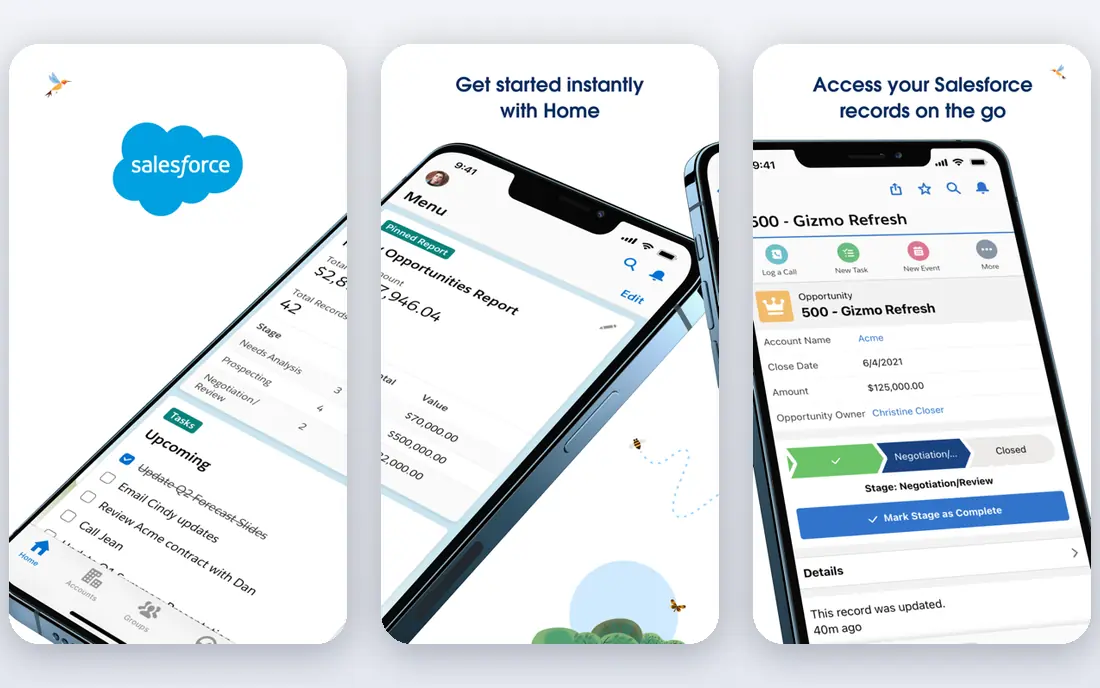
Salesforce Life Sciences Cloud brings pharma-specific data models to the Salesforce platform, covering clinical, medical and commercial work. Its published US pricing starts at $350 per user per month billed annually for the Core edition, with Advanced at $525. That transparency helps budgeting, even if the total rises with add-ons and implementation.
Its strength is breadth. A company already on Salesforce can add life sciences capabilities without moving to a separate platform, and the partner network is large. The honest catch is that breadth needs shaping: out-of-the-box models still need configuration for your products, territories and approval rules.
- Published US pricing from $350 per user per month
- Clinical, medical and commercial data models
- Broad partner network
- Higher tiers rise to $525 and above
- Needs life sciences implementation expertise to configure well
IQVIA Orchestrated Customer Engagement, known as OCE, pairs CRM with IQVIA healthcare data such as prescriber universes and market trends. That pairing lets commercial teams target, segment and plan engagement from data in the same system, rather than importing lists from elsewhere. It also coordinates rep visits, remote engagement and digital channels against one customer view.
OCE fits data-heavy commercial organisations best. Smaller teams may find it heavy and costly, and its full value depends on how much of the IQVIA data offering you adopt. For a large brand team that plans from market data, though, that integration is a real advantage.
- Healthcare data and analytics built in
- Orchestrated personal and digital engagement
- Global scale
- Enterprise pricing
- Value depends on buying into the IQVIA data ecosystem
Microsoft Dynamics 365 appeals to pharmaceutical companies already standardised on Microsoft tools. It integrates with Outlook, Teams and Power Platform, and it can be configured for sales, service and field processes across a large organisation. Security and admin controls suit enterprise IT teams.
The trade-off is specificity. Dynamics 365 is a general platform, so pharma teams usually add partner solutions or custom work for sample tracking, approved content and healthcare professional data rules. Budget for that configuration time, and test the field mobile experience with real reps before rollout.
- Fits Microsoft 365 and Teams environments
- Flexible configuration
- Strong enterprise security options
- Pharma-specific features need partners or add-ons
- Compliance configuration is a project, not a switch
Indegene Omnipresence is designed for life sciences customer engagement across personal and digital channels. It covers contact management, sales and marketing automation, content distribution and analytics, with an eye on regulated communication. That focus makes it a credible alternative for teams that want a specialist vendor without the scale of the two market leaders.
Its smaller profile is both a strength and a weakness. You may get closer attention from the vendor, but you should check reference customers in your therapy area and region. Ask for a demo built around your actual call planning and approval steps, not a generic script.
- Life sciences focus
- Multichannel engagement and content distribution
- Analytics for commercial teams
- Less widely known than Veeva or Salesforce
- Pricing and module details require a sales conversation
Zoho CRM suits a small pharma supplier, distributor or services firm that needs solid contact, pipeline and activity tracking without enterprise pricing. Its workflow automation, custom fields and integrations cover many day-to-day needs, and a trial lets a small team test fit before committing.
Pharma teams must be clear-eyed about the gap. Zoho does not ship with pharma-specific sample, consent or approved-content controls, so regulated work needs custom configuration and documented processes. For non-promotional or supplier-side work that balance may be fine, but promotional field work needs extra care.
- Lower cost than enterprise life sciences platforms
- Flexible workflows and automation
- Free trial to test fit
- Not built for pharma compliance out of the box
- Regulated controls need careful setup and validation
Creatio gives a pharma team a highly configurable CRM that business users can shape without heavy coding. That matters when approval steps, territory rules or medical inquiry routing change often. Sales, marketing and service processes can live in one system, which helps smaller commercial and medical affairs teams share a customer view.
The work is in the setup. Creatio is a platform first, so pharma-specific processes must be designed, tested and documented by your team or a partner. If you have the internal capacity to own that design, it is flexible; if not, a purpose-built life sciences CRM may reach value faster.
- No-code workflow configuration
- Sales, marketing and service in one platform
- Free trial available
- Life sciences templates need building
- Enterprise pricing is quoted rather than published
SugarCRM has long appealed to mid-size companies that want a CRM they can shape around their own processes. For a pharmaceutical services firm or mid-size manufacturer, it can track accounts, contacts, opportunities and service cases in one place. Its customisation options suit teams with distinct territory or account structures.
As with other general CRMs, pharma-specific controls are not automatic. Sample handling, consent capture and content approval need deliberate design, and regulated teams should validate those workflows with compliance before launch. Price it as a platform plus configuration, not just a licence fee.
- Flexible data model and customisation
- Sales and service coverage
- Suits mid-size teams
- Pharma depth depends on configuration
- Add-ons and services add to total cost
Pega CRM, part of the Pega Platform, fits pharmaceutical companies with complex, rules-driven processes. Its case management and workflow automation handle multi-step approvals, medical inquiries and service journeys that cross teams. Governance and audit features suit organisations that must show how decisions were made.
That power comes with scope. Pega projects are enterprise efforts, and pricing is quoted for the platform and services together. It is best for a large organisation that already thinks in workflows and has the team to govern them, rather than a small team seeking a quick field CRM.
- Strong workflow and case management
- Automation for complex processes
- Enterprise governance controls
- Enterprise scope and cost
- Implementation needs experienced partners
How we picked these
We compared official product pages and pricing, life sciences analyst and review coverage, and each platform's stated field, medical and compliance features. We favoured tools that are live in October 2026 and genuinely used by pharmaceutical or life sciences teams, and we kept general CRMs only where their configuration options plausibly fit smaller pharma use cases. We did not claim hands-on testing or compliance certification for any product.
How to choose for a regulated team
Start with the work your team actually does. A field sales team needs call planning, sample tracking and approved content. A medical affairs team needs inquiry handling and scientific engagement records. A commercial operations team needs targeting, segmentation and omnichannel coordination. One platform rarely leads on all three, so rank your must-have workflows before you compare feature lists.
Then test compliance in practice. Ask each vendor to walk through an approval change, a consent withdrawal, an audit trail export and a content expiry. Check how the system handles healthcare professional data, what controls limit off-label content, and how mobile use works offline in clinics. These demos reveal more than a brochure, and they give your compliance team material to review early.
Finally, price the whole programme. Licence fees are only part of the cost, alongside implementation, data migration, integrations, training and ongoing admin. Ask for reference customers of similar size and therapy focus, and confirm support hours and upgrade cadence. A cheaper licence that needs constant partner help can cost more over three years than a purpose-built platform.
Frequently asked questions
What is the best CRM for a pharmaceutical company?
For large field teams, Veeva Vault CRM and Salesforce Life Sciences Cloud are the most purpose-built options. Smaller teams may use IQVIA OCE for data-driven engagement, or a configurable general CRM where regulated needs are lighter and well controlled.
Does a pharma CRM guarantee regulatory compliance?
No. A CRM can support approvals, audit trails and content controls, but compliance depends on how your company configures, validates and uses it. Always involve compliance and legal teams in design, testing and change control.
How much does pharma CRM software cost?
Salesforce Life Sciences Cloud publishes US pricing from $350 per user per month, while Veeva, IQVIA OCE and most enterprise options are quoted per customer. Smaller general CRMs cost less, but configuration and services add to the total.
Can a general CRM work for pharma?
Yes, for supplier, distributor or non-promotional work, and sometimes for small commercial teams with careful setup. Promotional field work, sample management and medical engagement usually favour a purpose-built life sciences platform.
What should we check in a demo?
Ask for call planning, sample handling, approved content use, consent capture, audit trails and offline mobile use. Have compliance review the demo, and ask for reference customers in a similar therapy area and market.
Do these CRMs include healthcare professional data?
Veeva and IQVIA OCE offer healthcare data as part of their ecosystems, while other platforms rely on integrations or third-party data. Confirm data coverage for your countries, update frequency and consent rules before you commit.
Sources
See where you really rank - block by block
ProMapRanker scans Google Maps across a grid of your service area. Simple monthly plans from $19, white-label on every plan.
Start freeKeep reading
 worlds best local seo company
8 Worlds Best Local SEO Companies for Map Pack Growth in 2026
Compare the worlds best local seo company options for Google Business Profile work, citations, reviews, and multi-location rankings and reporting in 2026.
Read → world's best web hosting company
World's Best Web Hosting Company in 2026
Searching for the world's best web hosting company? We compared 10 hosts on price, renewal rates, speed, and support to help you choose well today in 2026.
Read → who's got the best nanny tax services
Who's Got the Best Nanny Tax Services in 2026
We answer who's got the best nanny tax services, comparing full filing, back taxes, software, and pricing so families can handle nanny taxes correctly.
Read →