 ProMapRanker
Best CRM Email Marketing Software in 2026

Key takeaways
- HubSpot offers the strongest all-in-one path, with a free CRM and paid Marketing Hub plans for automation.
- ActiveCampaign at $15 per month suits email-driven businesses that want deep automation without enterprise cost.
- Brevo at $9 per month is the budget pick, with a free plan covering 300 emails a day.
- Zoho CRM at $14 per user per month suits sales-led teams that want a CRM first and email second.
- Mailchimp remains the simplest choice for segmented campaigns, with a free tier for small lists.
Quick comparison
| Pick | Great for | Pricing starts at | Free tier | |
|---|---|---|---|---|
 HubSpot | All-in-one marketing and sales | Free | Yes | Visit |
 Mailchimp | Segmented email campaigns | Free | Yes | Visit |
 ActiveCampaign | Deep email automation | $15 per month | Free trial (14 days) | Visit |
 Zoho CRM | Sales-led teams on a budget | $14 per user per month | Yes | Visit |
 Brevo | Budget email and SMS | Free | Yes | Visit |
 Salesforce | Enterprise CRM and marketing | See website | No | Visit |
 Keap | Service businesses with pipelines | See website | Free trial (14 days) | Visit |
 Constant Contact | Simple campaigns for small teams | $12 per month | Free trial (30 days) | Visit |
The best crm email marketing software
CRM email marketing software keeps contact records and email campaigns in one system, so a campaign can use purchase history, deal stage, and behaviour, and sales can see what a contact opened or clicked. We compared tools on whether the CRM is built in or an add-on, how automation works, and what the entry price actually includes.
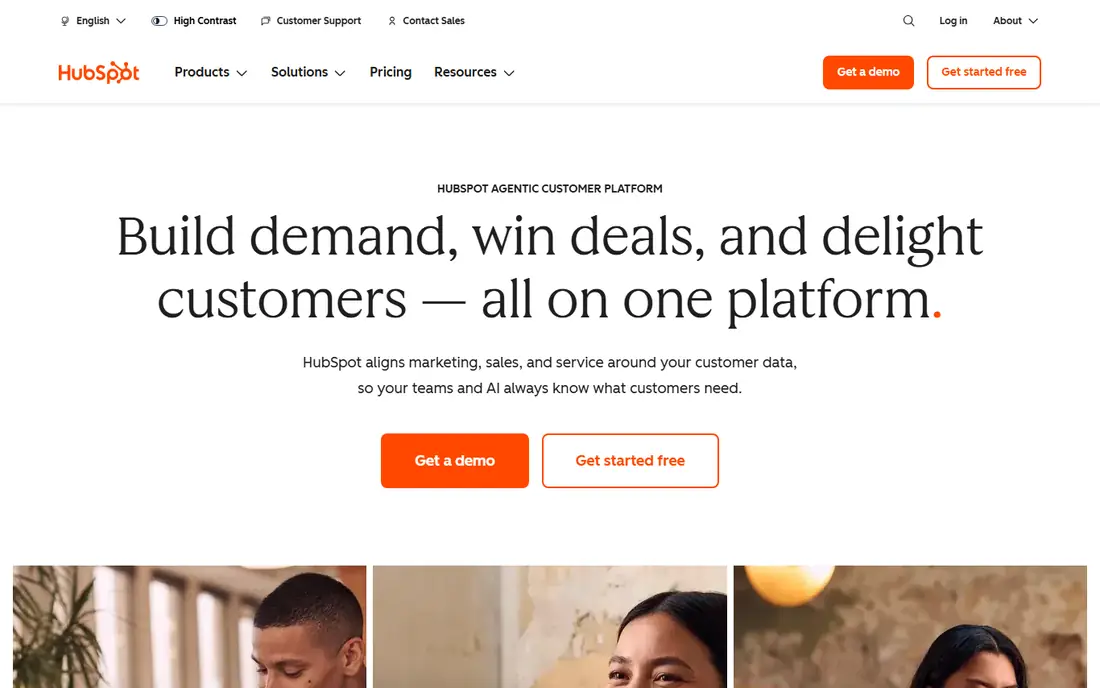
HubSpot is the all-in-one pick here. The free CRM covers contact management, deal pipelines, and basic email, while Marketing Hub adds automation, landing pages, and reporting on paid plans. Because marketing, sales, and service share one contact record, a handoff from a campaign to a sales rep does not lose context, and reporting can follow a contact from first click to closed deal.
The catch is that the free tier is a starting point, not the full product. Advanced marketing automation, lead scoring, and deeper reporting need a paid Marketing Hub plan, and seat-based pricing can climb for larger teams. For a team that wants one system for CRM and email marketing and plans to grow into it, HubSpot is still the safest long-term choice.
- Free CRM with contact management
- Marketing, sales, and service hubs share data
- Strong reporting
- Advanced automation needs a paid Marketing Hub plan
- Costs rise with seats and contacts
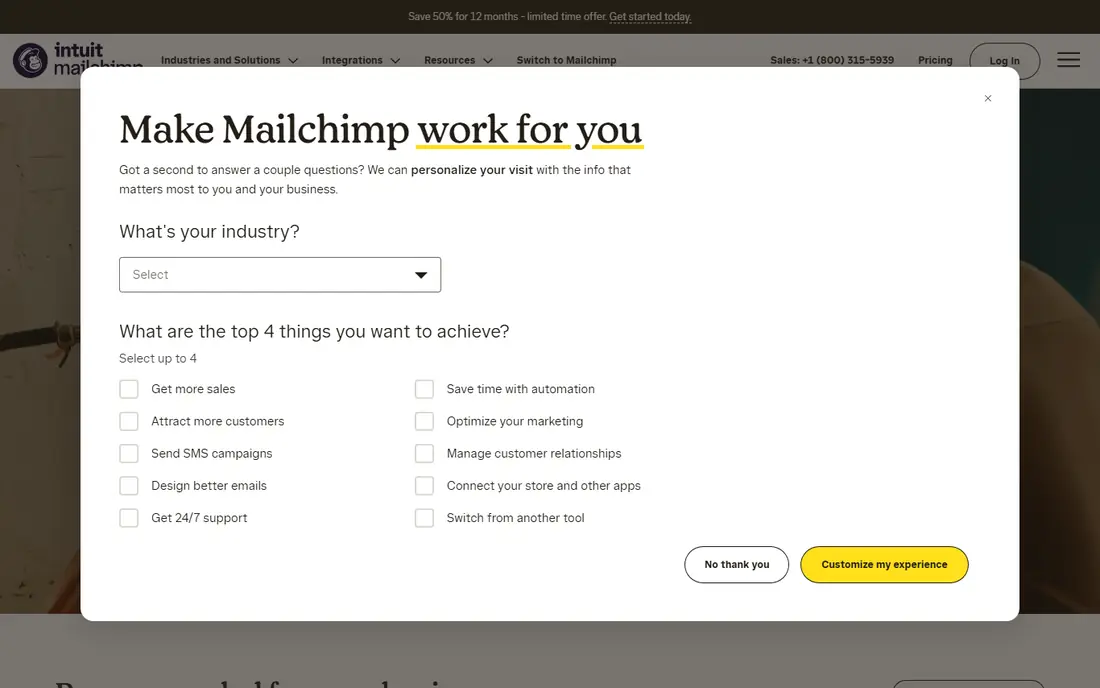
Mailchimp remains the simplest tool for segmented email campaigns. The drag-and-drop editor, templates, and audience segments make it easy for a small team to send a newsletter, a welcome series, and a promotion without training. A free tier covers small lists, and paid plans start at $13 per month, with Standard plans at $20 per month for 500 contacts in some listings.
Mailchimp is marketing-first, so its CRM depth is lighter than a dedicated CRM. Deal tracking, sales pipelines, and service tools are not its strength, and contact-based pricing climbs quickly as a list grows. For a business whose main job is email campaigns with basic contact data, Mailchimp is the easiest pick; for a sales-led team, Zoho or HubSpot fits better.
- Easy editor and templates
- Good segmentation
- Broad store and app connectors
- CRM features are lighter than HubSpot or Zoho
- Contact-based pricing climbs fast
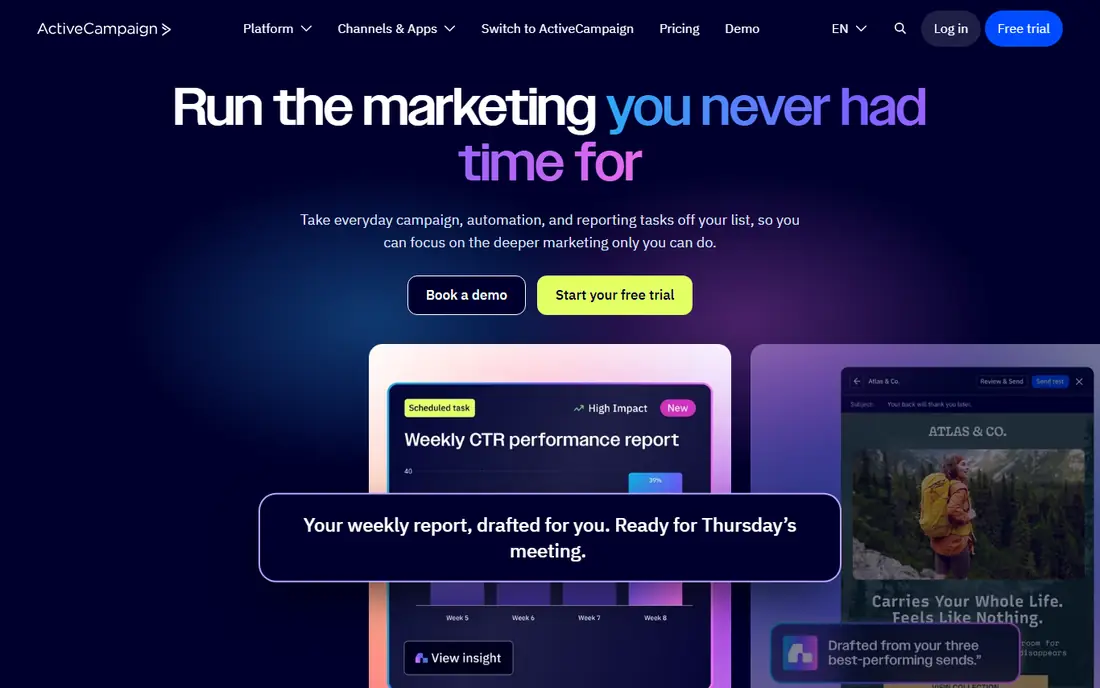
ActiveCampaign suits email-driven businesses that want automation depth without enterprise pricing. The visual builder supports multi-step journeys based on clicks, site visits, and purchases, and higher tiers add split testing and personalised content blocks. Starter plans start at $15 per month for 1,000 contacts billed annually, with Plus and Pro tiers for deeper automation.
Two limits matter. The Starter plan caps automations at five actions per automation, which is tight for real workflows, and deal pipelines and sales CRM features need a paid add-on on Plus and higher plans. For a marketing team that lives in email automation, ActiveCampaign is still the strongest value here, but a sales team should price the CRM add-on too.
- Strong visual automation builder
- Behavioural triggers
- Good deliverability tools
- Starter plan limits automation actions
- CRM features need a paid add-on
Zoho CRM is the sales-first pick. It offers pipelines, lead scoring, workflow rules, and email integration at $14 per user per month for the Standard plan billed annually, with a free plan for up to three users. For a sales-led team, that per-user model scales more predictably than contact-based pricing, and the wider Zoho suite covers books, projects, and support in the same account.
Email marketing is the weaker side. Zoho Campaigns, a separate product, handles bulk email, and the CRM email tools suit sales follow-up more than large marketing campaigns. Setup can also feel complex, since Zoho offers many apps and options. For a team that needs a CRM first and email second, Zoho CRM is the best value here.
- Affordable per-user pricing
- Wide Zoho app suite
- Customisable pipelines and email
- Email marketing depth is thinner than Mailchimp
- Setup can feel complex
Brevo, formerly Sendinblue, is the budget pick for CRM email marketing software. The free plan covers 300 emails a day, and paid plans start at $9 per month for the Starter tier, with pricing based on emails sent rather than contacts stored. That model suits a business with a large list but modest send volume, and the platform also covers SMS and WhatsApp automation.
The CRM itself is simpler than HubSpot or Salesforce, and advanced team features sit on a much higher tier. A team that needs deep deal management or complex reporting may outgrow it. For a cost-conscious owner who wants email, SMS, and basic CRM in one low bill, Brevo is hard to beat.
- Free plan with 300 emails a day
- Priced by sends, not contacts
- Email, SMS, and WhatsApp in one place
- Advanced team features jump in price
- CRM is simpler than HubSpot
Salesforce pairs Sales Cloud CRM with Marketing Cloud for enterprise email marketing, with AI-driven segmentation, journey building, and analytics at scale. For a large company with complex sales processes, multiple teams, and strict governance, that depth is unmatched in this list. Custom objects, workflows, and integrations can model almost any business process.
Small teams should not start here. Pricing is quoted, implementation needs admin skill, and the platform rewards a dedicated owner. A business with a few hundred contacts and one marketer will get the same campaign result faster from HubSpot, ActiveCampaign, or Brevo. Shortlist Salesforce when complexity and scale justify the investment.
- Deepest CRM customisation
- Marketing Cloud for enterprise campaigns
- Strong AI and analytics
- Quote-based enterprise pricing
- Needs admin skill
- Overkill for small teams
Keap suits established service businesses that want CRM, pipelines, email automation, appointments, and invoicing in one product. A coach, consultant, agency, or home services firm can run lead capture, follow-up sequences, booking, and payment reminders without stitching several tools together. That all-in-one scope is why service firms stay with Keap once it is set up.
The entry cost is higher than most tools here, and pricing has changed over time, so check the current plan page before budgeting. Implementation also takes time, since Keap rewards a clear pipeline and automation design. For a service business that will use the full suite, Keap earns its price; for email alone, a cheaper tool fits better.
- CRM, pipelines, and email automation in one product
- Appointment and invoicing tools
- Good for service firms
- Higher entry cost than rivals here
- Implementation takes time
- Pricing has changed often
Constant Contact is the straightforward pick for small teams that want to send good campaigns without learning automation. The editor and templates are easy, event marketing and survey tools suit nonprofits and local businesses, and support is geared to beginners. Paid plans start at $12 per month, with a 30-day trial for new accounts.
Automation and CRM depth are lighter than ActiveCampaign or HubSpot. A team that needs behavioural journeys, lead scoring, or deal pipelines will hit limits fast. For a small business, nonprofit, or local shop that mainly sends newsletters, promotions, and event invites, Constant Contact is a comfortable, low-friction choice.
- Simple editor and templates
- Event and survey tools
- Helpful support for beginners
- Automation is simpler than ActiveCampaign
- CRM depth is light
- Pricing rises with contacts
How we picked these
We compared vendor pricing pages, free plan limits, and whether CRM features are built in or paid add-ons. We favoured tools with a published entry price or free tier, a real CRM or contact system, and email automation that a small team can run. We left out email-only tools with no CRM function and CRM-only tools with no email marketing, since the topic asks for both together.
How to choose the best email crm software for your team
Decide which side leads. If sales leads, pick a CRM-first tool such as Zoho CRM or HubSpot, and check that its email tools cover your campaign needs. If email leads, pick ActiveCampaign, Mailchimp, or Brevo, and check whether its contact and deal features are enough for sales follow-up. That one decision narrows the list to two or three tools.
Price the list you actually have
Contact-based pricing, as on Mailchimp and ActiveCampaign, climbs with list size, while per-user pricing, as on Zoho CRM, climbs with team size. Price both for your current contacts and team, then again for the size you expect in a year. A tool that is cheap for 500 contacts can be costly for 5,000, and the reverse is true for per-user tools.
Test one real campaign end to end
Use the trial to import a real segment, build a welcome or follow-up sequence, send it to a test list, and check reporting and CRM updates. Watch for the two common failures: contacts do not sync to the CRM, or unsubscribes do not update everywhere. A tool that passes that end-to-end test with your data is worth more than a longer feature list.
Check deliverability and consent handling
Ask how the tool handles opt-ins, unsubscribes, bounces, and spam complaints, and whether it offers a dedicated sending domain. Poor list hygiene hurts deliverability on any platform, so clean the list before import and keep consent records. A tool with clear suppression and consent tools saves trouble later, even if its editor is plainer.
Frequently asked questions
What is the best crm and email marketing software for a small business?
HubSpot is the safest all-in-one pick, with a free CRM and paid marketing plans as you grow. ActiveCampaign suits email-driven small businesses, Brevo suits budget-conscious owners, and Zoho CRM suits sales-led teams. Pick by whether sales or email leads in your daily work, then compare price for your contacts and team size.
Is Mailchimp a CRM?
Mailchimp includes contact management and segmentation, but it is marketing-first, so its CRM depth is lighter than HubSpot, Zoho CRM, or Salesforce. It works well as a CRM for email marketing when the main job is campaigns and basic contact data. A sales team that needs pipelines and deal tracking should choose a dedicated CRM with email built in.
How much does crm email marketing software cost?
Entry prices here run from free plans on HubSpot, Mailchimp, and Brevo, to $9 per month on Brevo, $12 on Constant Contact, $14 per user on Zoho CRM, and $15 on ActiveCampaign. Enterprise tools such as Salesforce and Keap are quoted or higher. Contact-based tools climb with list size, so price your actual list, not the headline tier.
What is the best email automation software for CRM users?
ActiveCampaign offers the deepest automation for its price, with behavioural triggers and multi-step journeys. HubSpot Marketing Hub offers strong automation tied to CRM data, while Brevo covers email, SMS, and WhatsApp automation on a budget. Test the automation builder with a real journey, since a simple editor can hide limits that only appear in a live campaign.
Can I use one tool for CRM, email, and SMS?
Yes. HubSpot, Brevo, Keap, and Salesforce cover CRM plus email, and Brevo adds SMS and WhatsApp in the same platform. Klaviyo and similar store tools cover email and SMS with lighter CRM depth. If SMS matters, check whether it is built in or an add-on, and whether SMS costs are per message on top of the plan.
Sources
See where you really rank - block by block
ProMapRanker scans Google Maps across a grid of your service area. Simple monthly plans from $19, white-label on every plan.
Start freeKeep reading
 outreach alternatives
Outreach Alternatives in 2026
Compare outreach alternatives for 2026, from Salesloft and Apollo to HubSpot and Lemlist, with pricing, channels, features, limits, and honest trade-offs.
Read → best web conference tools
Best Web Conference Tools in 2026
Compare the best web conference tools for meetings, webinars and team calls, with current pricing, free plans and honest limits for each option here today.
Read → best voice cloning tools
Best Voice Cloning Tools in 2026
Compare the best voice cloning tools in 2026, from ElevenLabs and Descript to Resemble and Cartesia, with consent rules, pricing, licenses, and limits.
Read →